
You sit down for the 1:1. You open your laptop, glance at the project board, and say "so, how's everything going?" They say "good." You nod. Thirty minutes later you know nothing you didn't know before, and neither do they. If that sounds familiar, the problem is not the meeting. It is the questions.
The best one-on-one meeting questions for managers fall into four categories: rapport and wellbeing, blockers and support, growth and career, and upward feedback. Effective 1:1s rotate questions across these categories instead of repeating the same status-update prompts. Tailor your question bank by cadence, because weekly check-ins call for different questions than quarterly career conversations.
4 Categories at a Glance
Why One-on-One Meeting Questions Matter
Weekly 1:1s correlate with 1.5 times higher employee engagement (Workhuman, 2024). The reverse is equally true: managers who skip structured 1:1s, or rely on status updates instead of intentional questions, miss early signals of disengagement, burnout, and attrition risk.
The cost of bad 1:1 questions is not just a poor meeting. It is the slow erosion of trust that happens when employees feel they are talking to a project tracker rather than a leader who genuinely cares about their growth and wellbeing. Three things great 1:1 questions accomplish that status updates cannot:
- They surface blockers before they become crises
- They keep career development conversations alive between formal reviews
- They create the psychological safety required for honest upward feedback
By the Numbers
Sources: Workhuman (2024), Salesforce Research, Gallup Workplace Research
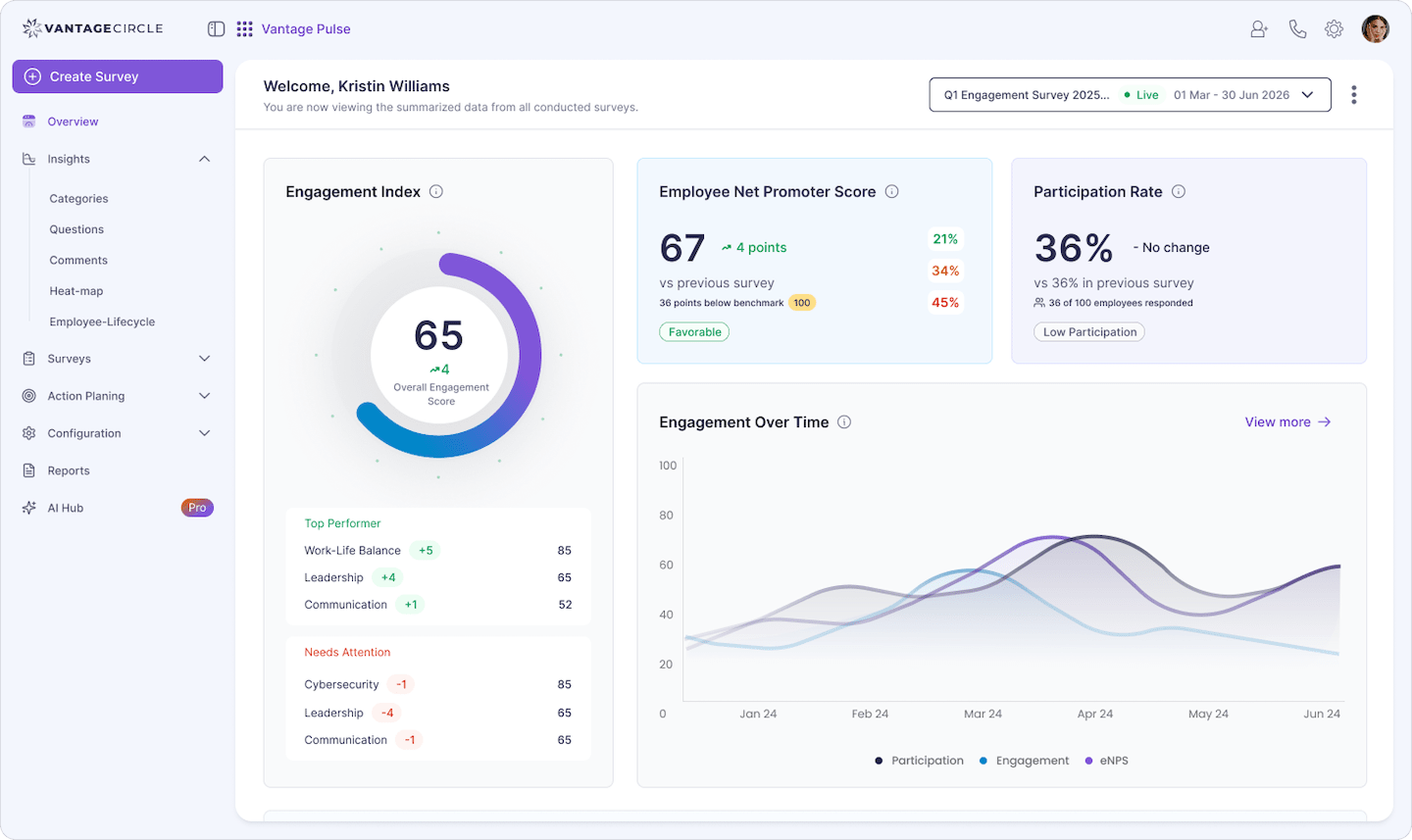
Vantage Pulse surfaces team engagement and sentiment data continuously, so managers walk into each 1:1 with informed talking points rather than blank-page prompts.
Free Download: 1:1 Questions Cheat Sheet — 12 core questions, 8 to rotate in, a cadence table, and a 4-block agenda in a printable one-pager. Open the template
90 One-on-One Meeting Questions by Category
These 90 manager-tested questions are organized into 4 categories: rapport and wellbeing, blockers and support, growth and career, and upward feedback. The 4-category structure mirrors how search engines group this topic, and it mirrors how the most effective managers actually sequence their attention across a 30-minute conversation.

Rapport & Wellbeing (21 questions)
Rapport questions open the meeting and surface mental health, energy, and satisfaction signals before the task conversation begins. A manager who starts with these 21 questions signals that the person matters more than the project.
- How are you doing, honestly?
- What has been the highlight of your week, in or out of work?
- Is anything keeping you awake at night?
- Do you feel like you have a sustainable work-life balance right now?
- How comfortable do you feel with your current workload?
- What has been most energizing for you lately?
- Is there anything stressing you out that I should know about?
- How is your energy level compared to a month ago?
- What would make your day-to-day work more enjoyable?
- Are you getting enough time to recharge outside of work?
- How are things going for you outside of work, if you are open to sharing?
- What is something you are looking forward to this week?
- Do you feel supported by the team right now?
- What is one thing I could do to make your work environment better?
- On a scale of 1 to 10, how motivated do you feel this week?
- Is there anything on your mind that you would like to talk about or get support with?
- What is something that has brought you joy or excitement recently?
- How can I support you better in your role or overall well-being?
- How well do you understand how your work contributes to the company's success?
- On a scale of 1 to 10, how connected do you feel to the company's mission and values?
- How often do you feel excited about the work you are doing?
"Feeling listened to and understood is a fundamental human need."
— Carl Rogers, Humanistic Psychologist
Blockers & Support (24 questions)
Blocker questions surface the practical help the direct report needs. Every unaddressed blocker is a slow tax on output. These 24 questions help managers clear the path so the team can move faster.
- What is the biggest roadblock you are facing right now?
- What one thing can I do this week to make your job easier?
- Where do you feel you are drowning or falling behind?
- Is there a project or task taking longer than it should?
- What resources or tools are missing that would improve your output?
- Are there any processes or workflows slowing you down?
- Who or what is creating the most friction in your work right now?
- What decisions are waiting on you that you need help prioritizing?
- Is there information or context from me that you need but have not received?
- What is the most frustrating part of your current work situation?
- Is there anyone you are struggling to collaborate with right now?
- What would you change about how we run our team processes?
- Are there any unclear expectations or goals we should clarify together?
- What did you not get done last week that you wanted to? What got in the way?
- Is there anything that feels like unnecessary overhead we could cut?
- Do you have everything you need to hit your goals this quarter?
- Where do you feel least confident in your work right now?
- What would free up the most of your time if it were resolved?
- Is there something I said or decided that confused or concerned you?
- What is one thing I could stop doing that would make your work easier?
- If you could improve one aspect of your workflow, what would it be?
- How comfortable do you feel communicating openly with your team?
- Who on the team do you work best with, and why?
- What is one thing the company could do to help you feel more engaged?
Growth & Career (25 questions)
Growth questions keep the long-term development conversation alive between formal reviews. These 25 questions help managers understand where direct reports want to go and what support they need to get there.
See also: Career development resources for managers
- What skills do you want to sharpen in the next quarter?
- What stretch project would you take on if time allowed?
- Where do you see yourself in 18 months?
- What aspects of your current role do you enjoy most?
- What parts of your work would you like to do more of?
- Are there any skill gaps you feel you need to address?
- What learning opportunities would be most useful for you right now?
- Is there a role or function in the company you are curious about?
- Who in the organization do you want to learn from, and how can I connect you?
- What is one area where you feel you could contribute more if given the chance?
- Do you feel challenged in your current role? Too much, too little, or just right?
- What does your ideal career path look like in the next two to three years?
- What feedback have you received recently that you are working on acting on?
- Is there a project outside our team you would like to contribute to?
- What training or certification would most accelerate your growth?
- What is one thing you would like to be known for professionally in the next year?
- How do you feel about the quality and frequency of feedback you receive?
- What would help you feel more confident in your role?
- What is one skill you have that you feel is underutilized?
- How can I better advocate for your career growth?
- Do you see a clear path for your career growth within the company?
- Do you feel you have enough opportunities for career advancement here? Why or why not?
- What kind of support or mentorship would help you grow in your career?
- How do you prefer to receive feedback to stay motivated and improve your performance?
- What recent accomplishment are you most proud of, and what made it successful?
Upward Feedback (20 questions)
Upward-feedback questions build trust by inviting the direct report to evaluate the manager. Managers who ask these 20 questions model the openness they want to see from their teams.
See also: Employee feedback best practices
"Leadership begins with humility. The best leaders admit mistakes and seek feedback."
— Patrick Lencioni, The Five Dysfunctions of a Team
- What one thing could I do differently to support you better?
- Am I giving you enough clarity on team direction?
- What do I do that slows you down?
- Do you feel comfortable coming to me with concerns? If not, what would help?
- What is one thing I do well as a manager that you would like me to keep doing?
- Have there been decisions I made that you did not fully understand or agree with?
- Am I giving you enough autonomy in your work?
- Do you feel I recognize your contributions adequately?
- How would you describe my communication style, and is it working for you?
- Is there something I should know about the team that I may be missing?
- Are there topics we avoid in our 1:1s that we should address?
- Do you feel I listen to your ideas and act on them?
- Am I giving you the right amount of feedback, or would you like more or less?
- What is one change I could make that would improve our team's culture?
- Do you feel I am fair and consistent in how I manage the team?
- What is something I could improve in how I run our team meetings?
- Is there anything I said or did that made you feel unsupported?
- Do you feel I prioritize your development, or does it get overshadowed by delivery pressure?
- What is one blind spot you think I have as a manager?
- If you were coaching me, what is the first thing you would tell me to work on?
One-on-One Questions by Cadence
The right questions depend on the meeting cadence. Weekly check-ins address different priorities than quarterly career conversations. Use this 5-cadence framework to rotate your question bank intentionally across the full performance management cycle.
| Cadence | Primary Focus | Sample Questions |
|---|---|---|
| First 1:1 | Relationship and working-style discovery | "What does a great manager look like to you?" / "How do you prefer to receive feedback?" |
| Weekly | Rapport, blockers, and this-week priorities | "What is your biggest priority this week?" / "What roadblock can I help remove?" |
| Monthly | Goal progress and medium-term development | "How are you tracking against your goals?" / "What skill do you want to develop next month?" |
| Quarterly Career Conversation | Career trajectory and stretch goals | "Where do you see yourself in 18 months?" / "What skill gap should we close this quarter?" |
| Annual / Review-Adjacent | Performance reflection and recognition | "What are you most proud of this year?" / "What do you want to prioritize next cycle?" |
The First 1:1 (Day 1 / Week 1)
The first 1:1 is about relationship-building and working-style discovery, not project status. Ask these 5 questions to understand how the person works, what they need from a manager, and what a good working relationship looks like to them.
- What does a great manager look like to you?
- How do you prefer to receive feedback, recognition, and difficult news?
- What are the three things you want me to understand about your role?
- What is working well on the team that you hope I will not change?
- What is one thing you wish your previous manager had done differently?
Weekly 1:1
Weekly meetings focus on rapport, immediate blockers, and this-week priorities. Keep the question list to 3 to 5 so there is room for the conversation to go where it needs to go.
- What is your biggest priority this week?
- What roadblock can I help remove before Friday?
- How are you feeling coming into this week?
- Is there anything from last week that is still unresolved?
- What is one win I should make sure to recognize from the past week?
Monthly 1:1
Monthly meetings track progress on medium-term goals and open space for skill development conversations.
- How are you tracking against your goals this month?
- What skill or area do you want to develop in the next 30 days?
- What is one thing that went well last month that we should repeat?
- Where do you need more support than you are currently getting?
- How satisfied are you with the balance of challenge and support in your role right now?
Quarterly Career Conversation
Quarterly meetings are the primary vehicle for career trajectory and stretch goal conversations. Block 45 to 60 minutes rather than the standard 30.
- Where do you see yourself in 18 months?
- What skill gap should we close this quarter?
- Is there a stretch project or new responsibility you want to take on this quarter?
- What would make this quarter feel like a success to you personally?
- How can I better advocate for your career growth in the next 90 days?
Annual / Review-Adjacent 1:1
Annual meetings close the performance reflection loop and open the next cycle with aligned priorities and clear recognition.
- What are you most proud of this year?
- What do you want to do more of next cycle?
- What is one habit or behavior you want to leave behind next year?
- How do you feel about the recognition you received this year?
- What is the one thing you most want to accomplish in the next 12 months?
Skip-Level Meeting Questions
Skip-level questions surface signals about middle-manager effectiveness from direct reports two levels down. These 10 questions help senior leaders understand team health without filtering through the direct manager. When face-to-face skip-levels are not feasible at scale, Vantage Pulse provides an anonymous alternative: pulse responses surface signals that direct reports might not share in person.
- What is your manager doing well that you want leadership to know about?
- Where could your manager improve, in your view?
- What information is not reaching you from leadership that should be?
- Do you feel the team has what it needs to do great work?
- What is one thing senior leadership could do to make your team more effective?
- Are there any team dynamics or tensions that leadership should be aware of?
- Do you feel your manager gives you clear direction and expectations?
- Is there anything you wish you could tell senior leadership directly?
- How supported do you feel by the broader organization, beyond your immediate team?
- What is one change that would make the biggest difference to your daily work?
30-60-90 Day Questions for New Managers
New manager 1:1 questions follow a 30-60-90 rhythm: listen and learn in the first 30 days, surface and prioritize in days 31 to 60, and align and act in days 61 to 90. This 3-phase framework prevents the common new-manager mistake of moving too quickly into fixing mode before understanding the team.
Day 1 to 30: Listen and Learn
The goal in the first 30 days is understanding, not changing. Ask these 5 questions to build a clear picture of how the team works, what is valued, and where trust has been earned or broken.
- What are the three things you want me to understand about your role?
- What is working well on the team that I should make sure not to change?
- What do you wish your previous manager had done differently?
- How do you prefer to receive feedback and recognition?
- What does a successful working relationship with your manager look like to you?
Day 31 to 60: Surface and Prioritize
In the second month, shift from listening to diagnosing. These 5 questions help identify blockers, team dynamics, and expectations gaps before they compound.
- What roadblocks have surfaced in the past month that need my attention?
- What is one team dynamic or tension I should understand better?
- Where do you feel the team's biggest skill or resource gap is?
- What could I clarify about my expectations or direction?
- What is one decision I should make sooner rather than later?
Day 61 to 90: Align and Act
In the third month, shift from diagnosing to committing. These 5 questions help the team see that their input has led to concrete changes.
- How well do you think the team understands and buys into our goals for this quarter?
- What recognition rhythm would you like to see from me going forward?
- What is one thing I could do to signal that I value your work specifically?
- Do you feel I have earned your trust over these first 90 days? What would strengthen it?
- What is the one thing you most want me to prioritize in the next quarter?
Fun One-on-One Meeting Questions
Fun questions break the status-update routine and humanize the 1:1 relationship. Use these 10 questions to open a meeting on a lighter note, especially when the team has been heads-down on a demanding stretch.
- What is a hobby you want to learn or pick up this year?
- What is the best thing you have watched, read, or listened to lately?
- If you could swap roles with anyone in the company for a week, who would it be and why?
- What is something most people at work do not know about you?
- If you had an extra hour each day, what would you do with it?
- What is your go-to way to recharge after a tough week?
- What is something you are genuinely excited about right now, inside or outside of work?
- If you could work from anywhere in the world for a month, where would you go?
- What is a book, podcast, or course that has changed how you think about your work?
- What is one thing that happened this year that you are proud of, outside of work?
How to Structure a Productive One-on-One Meeting
A productive 1:1 follows a 4-block structure: Rapport, Blockers, Growth, and Upward Feedback. This sequence builds trust first, solves problems second, and invests in the future third, so no part of the 1:1 relationship gets permanently crowded out by delivery pressure.

The 4-Block Agenda
Use this 4-block agenda as a starting point and adjust the time allocation by cadence:
- Rapport (5 minutes): One well-being question to open the meeting and read the room
- Blockers (10 minutes): Surface what is slowing the direct report down and commit to specific help
- Growth (10 minutes): One development or career question to keep long-term conversations alive
- Upward Feedback (5 minutes): One question about what you as a manager could do better
The default is 30 minutes. For monthly or quarterly meetings, expand Growth to 20 minutes and reduce Rapport and Upward Feedback to 5 minutes each.
Documentation That Survives the Meeting
A 1:1 without a shared document is a conversation that leaves no trace. Keep a shared running note for each direct report with three fields: action items (owner and deadline), open questions, and growth notes. Review the previous meeting's action items at the start of every session so accountability becomes a habit rather than an afterthought.
The Recognition Close
End every productive 1:1 with a specific piece of employee recognition tied to a concrete achievement or behavior from the past week.
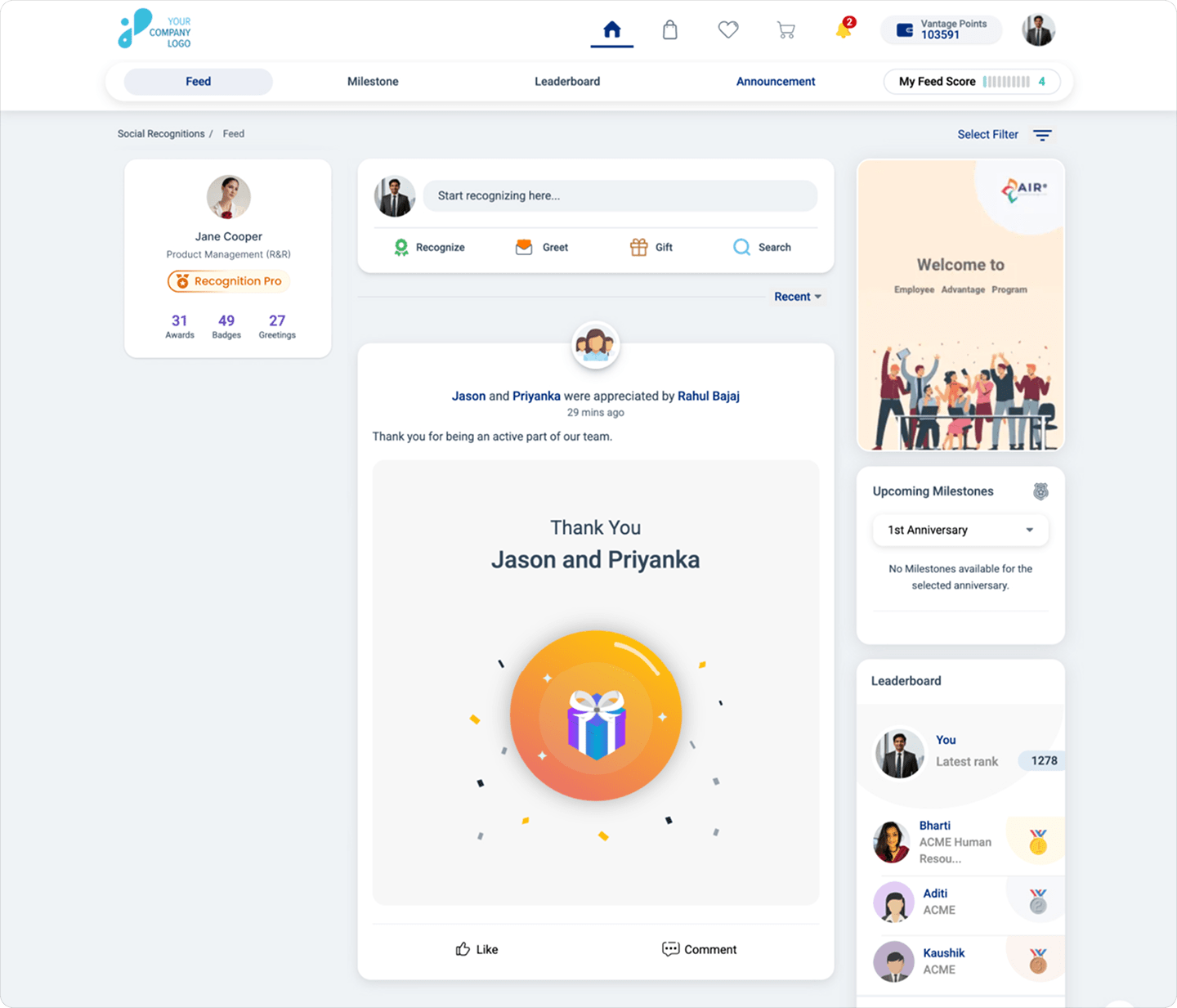
Vantage Recognition lets managers tag recognition to a specific 1:1 conversation, which is how a one-time mention becomes a reinforcing pattern over time. Recognition tied to specifics lands differently than generic praise at the end of a meeting.
Frequently Asked Questions
What questions should I ask on 1 on 1 with manager?
The most effective questions in a 1:1 with your manager address four areas: your wellbeing, what is blocking you, where you want to grow, and how your manager can support you better. Start with "What is the one thing you could do this week to make my job easier?" and "What skill should I be developing right now?" These two questions surface immediate support needs and long-term investment signals in a single 30-minute conversation.
What is the 30-60-90 rule for managers?
The 30-60-90 rule for managers is a framework that divides the first 90 days into three phases: listen and learn in days 1 to 30, surface and prioritize in days 31 to 60, and align and act in days 61 to 90. The rule prevents the common mistake of moving too quickly into fixing mode before understanding the team. Each phase uses a different 5-question bank, as outlined in the 30-60-90 section above.
What are the 5 C's of management?
The 5 C's of management are Clarity, Communication, Consistency, Coaching, and Culture. Effective 1:1 questions address all five: clarity questions surface misaligned expectations, communication questions open feedback channels, consistency questions check whether the team experiences fair treatment, coaching questions track development progress, and culture questions reveal how team norms are experienced day to day.
What are the 5 P's of a meeting?
The 5 P's of a meeting are Purpose, Participants, Process, Preparation, and Payoff. For a 1:1 specifically: the Purpose is trust-building and development rather than status reporting; Participants are the manager and direct report only; Process follows the 4-block agenda (Rapport, Blockers, Growth, Upward Feedback); Preparation means both parties review open items before the meeting; and Payoff is a clear set of action items and at least one piece of specific recognition.
How often should one-on-one meetings happen?
One-on-one meetings should happen weekly for most manager-direct report relationships. Weekly cadence correlates with 1.5 times higher employee engagement (Workhuman, 2024). Monthly meetings are acceptable for senior individual contributors who prefer less frequent check-ins, but should include a longer growth and career block to compensate for the reduced touchpoint frequency.
What should I avoid asking in a 1:1?
Avoid questions that can be answered by reading a project tracker: "Where are you on the deliverable?" or "Did you finish the report?" These questions signal that the 1:1 is a status check rather than a development conversation, and they erode the psychological safety that makes honest feedback possible. Also avoid hypothetical performance-ranking questions ("If you had to rank the team..."), which create loyalty conflicts and rarely surface actionable information.
Bottom Line
The best one-on-one meeting question is the one that surfaces a signal you could not have gotten from a status update. Use the 4-category framework, rotate by cadence, and track what you learn across sessions. Over time, a consistent 1:1 practice becomes one of the highest-leverage tools in any manager's kit: it reduces attrition risk, surfaces meaningful employee recognition moments, and builds the kind of trust that makes teams resilient under sustained pressure.
Thirty minutes, once a week. That is all a great 1:1 requires — not a longer meeting, not a new process, not a different tool. Just one better question per block, asked consistently enough that the person across from you starts to believe the conversation is genuinely for them. When that happens, the meeting stops feeling like a meeting. It becomes the reason good people stay.

This article is written by Lupamudra Deori. Lupamudra is a content marketing specialist at Vantage Circle, focused on creating clear, research-driven content on employee engagement and workplace culture.
Connect with Lupamudra on LinkedIn.


