
For a profession that is well paid and in steady demand, that is a striking result. The problem is that disengagement among engineers rarely announces itself. Performance may look perfectly fine on the surface while curiosity, collaboration, and enthusiasm quietly start to disappear.
Over time, that withdrawal can turn into burnout, and burnout often ends in a resignation.
The causes are well documented, and so are the remedies. Most are practical, inexpensive, and within a manager's control.
This blog looks at why employee engagement matters in software, what drives burnout in engineering teams, ways to keep developers engaged, and the warning signs managers should watch for.
Why Employee Engagement Matters in the Software Industry?
In the IT sector, where every sprint counts and innovation drives the bottom line, employee engagement is a game-changer. Think about it: engaged developers, engineers, and tech pros aren’t just doing their jobs; they’re solving problems creatively and delivering products that wow customers.
Engaged employees are the ones who stick around, align with your mission, and keep the momentum going. They are the ones who consistently enhance customer satisfaction by creating user-centric products and delivering exceptional service, boosting brand reputation and revenue.
And let’s be real—the cost of replacing one skilled developer can easily range from $50,000 to $100,000 or more, including expenses for job postings, interviews, and recruiter fees. That’s not counting the ripple effects on your team’s productivity and project timelines.
Vantage Influencers Podcast
Uncovering the Top Drivers of Employee Engagement
with Nancy Zakharia Ohanessian, Talent & Organizational Development Architect and Leadership Coach
The Real Cost of Disengagement: Burnout
Much of the conversation around software engineer burnout is aimed at the engineers experiencing it. Take a break. Set boundaries. Protect your weekends. Ask for help.
All useful advice. But it leaves out an important part of the picture: the people who design the work.
Managers and HR leaders have a direct influence on how much work lands on an engineer's plate, how much control they have over it, and whether their effort is noticed. When those conditions stay unhealthy for long enough, burnout can start to look less like an individual problem and more like a predictable outcome of the way work is organized.
The numbers suggest this is already happening.
Engineering Burnout by the Numbers
Sources: LeadDev, 2025, Jellyfish, 2024, Harness, 2024
That combination is hard to ignore.
More responsibility. Longer hours. Less room to recover.
That disconnect matters. Leaders may see a team that is shipping, meeting deadlines, and keeping production running. Employees may be seeing late nights, mounting technical debt, constant context switching, and another "quick" request added to an already full sprint.
What leaders see
- A team that is shipping
- Deadlines being met
- Production running smoothly
What engineers see
- Late nights
- Mounting technical debt
- Constant context switching
- Another "quick" request added to a full sprint
By the time burnout becomes visible to leadership, the damage may already be done.
10 Ways to Keep Software and Engineering Teams Engaged
1. Recognition and Reward Programs
Recognition programs work best in engineering when they acknowledge behind-the-scenes contributions as well as major launches. Examples include a refactor that shortened build times, a careful code review that helped a junior colleague, or a late-night incident resolved without fanfare.
Peer-to-peer recognition is especially valuable, since teammates usually see this work before managers do. A points-based reward system adds tangible value, allowing employees to redeem rewards that suit their preferences.
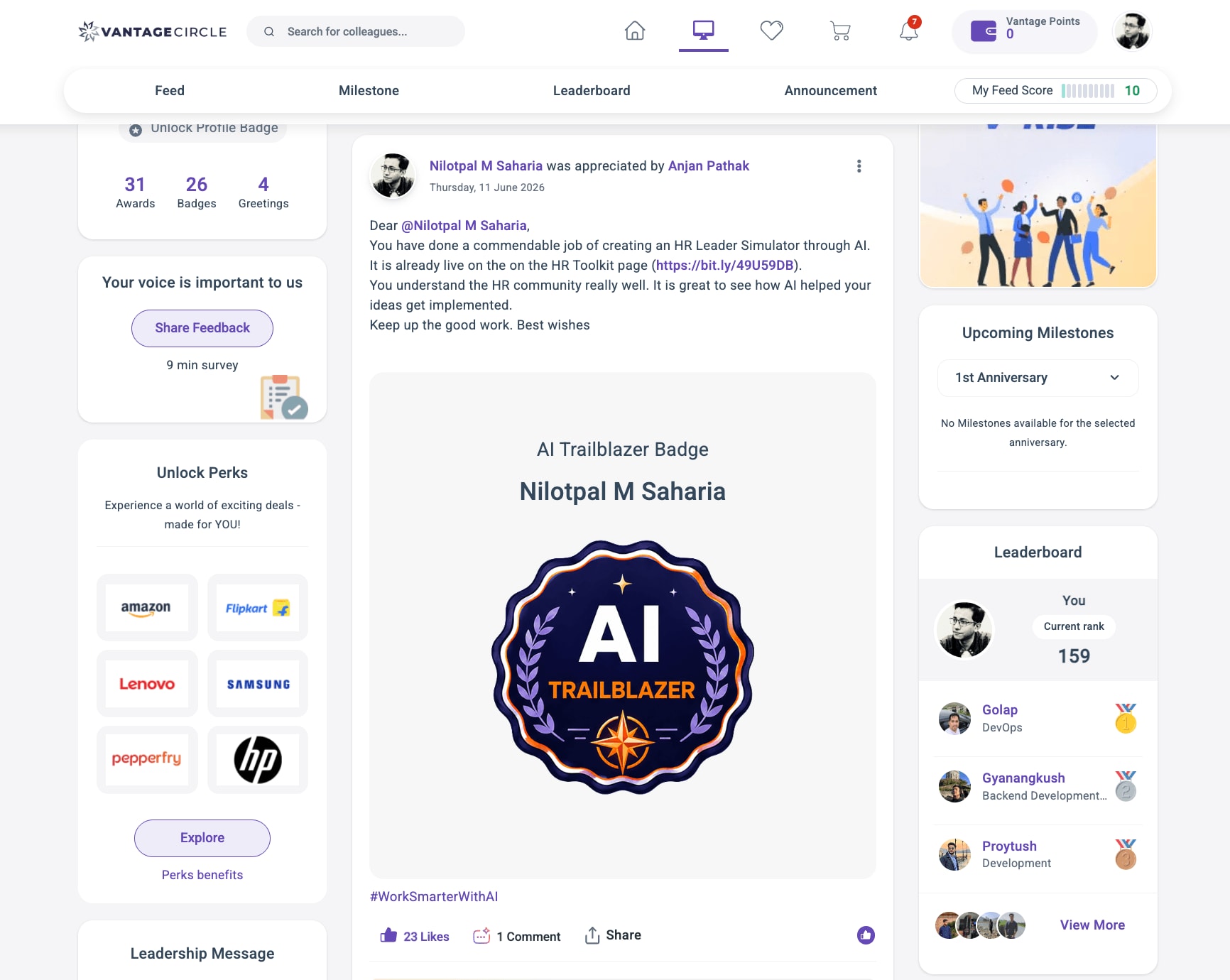
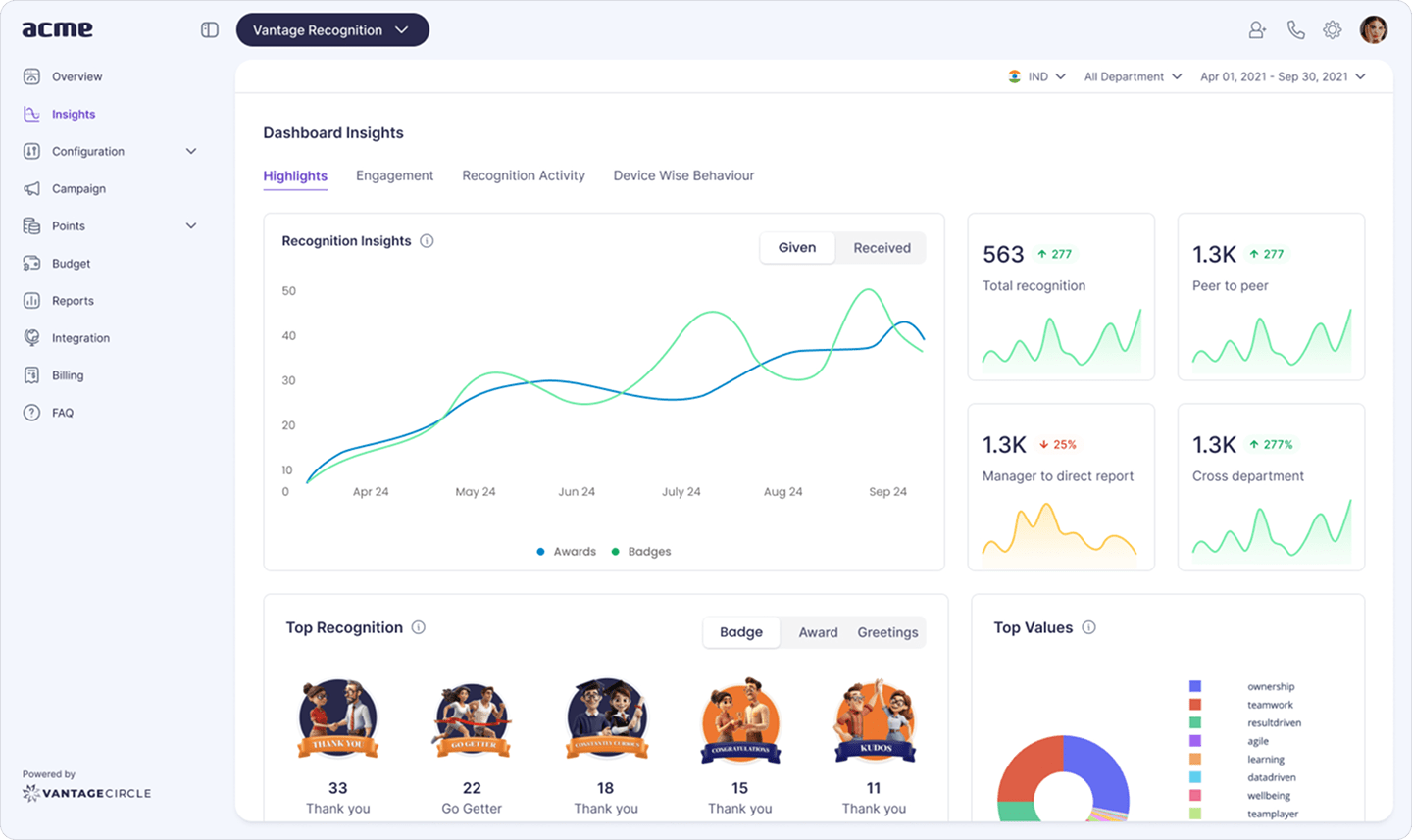
Recognition data can also serve as an early warning. When a team that once recognized one another often becomes quieter, the decline may indicate strain across the group rather than one person's mood.
Recognition Analytics in Vantage Recognition tracks frequency by team, so leaders can see which engineering groups need attention first.
2. Customized Rewards
Rewards that let engineers choose what they value are more effective than uniform perks. Preferences vary widely. Some employees prefer tech equipment, others a gym membership or a wellness app subscription, and others a ticket to an industry conference.
A reward catalog that includes technology, software tools, experiences, and wellbeing options accommodates that range and shows employees that their individual preferences are taken seriously.
3. Hackathons and Coding Competitions
Hackathons give engineers the chance to work on projects they choose, which is uncommon in a backlog-driven role. They are most useful when focused on real needs, such as internal tools, developer experience issues, or customer requests that have not reached the roadmap.
Follow-through matters. If successful projects are never developed further or reviewed by leadership, participation in future events is likely to decline.
4. Spot Bonuses and Incentives
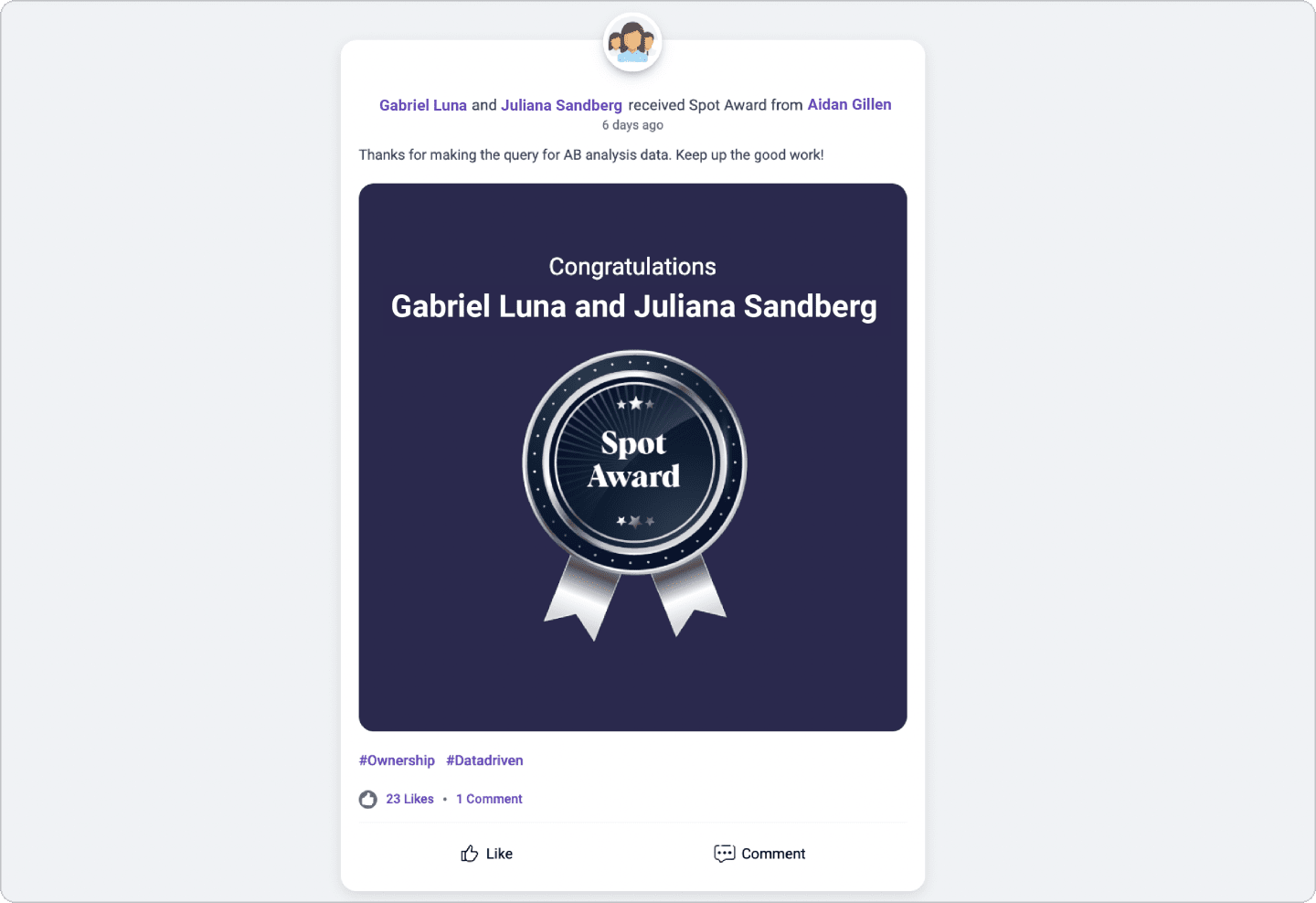
Spot bonuses recognize exceptional effort soon after it happens, which makes the recognition more meaningful. Waiting until an annual review to acknowledge a difficult release weakens the message.
One practical approach is to give engineering managers a modest quarterly budget for spot awards, with a simple requirement: each award should name the specific contribution being recognized. Specific recognition is more memorable and more likely to reinforce the behavior.
5. Tech Talks and Workshops
Regular tech talks help engineers keep their skills current and share expertise across the organization. External speakers on AI, security, and cloud architecture bring fresh perspectives. Internal speakers are equally valuable, and inviting an engineer to present their work also serves as a form of recognition.
6. Open-Source Contributions
Supporting open-source work connects engineers with the wider developer community and strengthens the company's reputation among potential hires. Clear guidelines on what can be shared, along with dedicated time for contributions, make participation practical. Many developers already code outside work, so this support builds on existing motivation.
7. Virtual Team-Building Activities
Virtual team-building is most effective when activities are short, optional, and enjoyable. Trivia sessions, online escape rooms, and asynchronous challenges in team chat can help recreate some of the informal familiarity that remote work reduces.
Rotate who organizes them so team-building does not quietly become the manager's second job. Also give people different ways to participate. Not everyone wants to appear on camera for a virtual game, and forcing participation can make an already busy day feel even longer.
Recommended Read: Virtual Team Building Activities and Games: 30 Ideas by Category, Duration, and Team Size
8. Regular Virtual Check-ins
Regular one-on-ones and short pulse surveys help managers learn about problems before they lead to departures. One-on-ones held weekly or every two weeks should focus on obstacles, workload, and career growth rather than routine status updates.
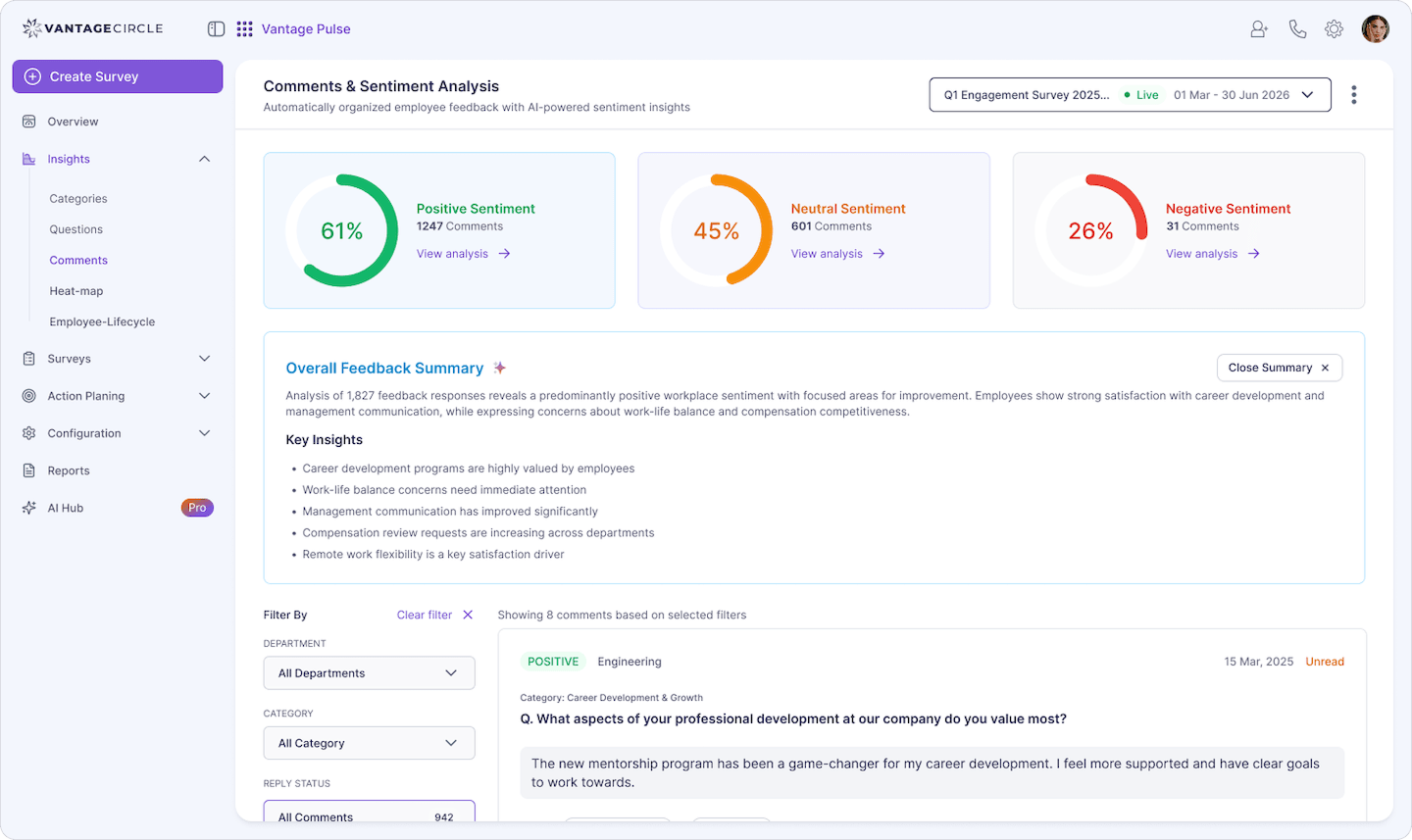
Pulse surveys provide a wider view. A short survey every two weeks gives leaders an ongoing measure of team sentiment, particularly when responses are anonymous.
9. Flexible Work Arrangements
Flexibility in when and where engineers work has become a standard expectation in the industry. Complex technical work benefits from long, uninterrupted periods, which are often easier to find outside a busy office.
A useful practice is to set shared core hours for collaboration and keep the rest of the day free of meetings. This gives engineers more control over their time, which the burnout research identifies as a key protective factor.
10. Professional Development and Growth
A career path should give engineers somewhere to go, not just somewhere to work. When developers cannot see how their skills will grow inside the company, even a good job can start to feel like a holding pattern.
In HackerRank's 2024 Developer Skills Report, 44% of developers said opportunity was more important to them than security when considering their careers. Yet only 22% said they were regularly given time at work for upskilling, while 48% said they had to find the time themselves.
That gap is where many development programs fall short. A company can pay for certifications and give employees access to a learning platform, but if an engineer has to squeeze a course into evenings and weekends, development starts to feel like another responsibility rather than an investment in their career.
What Can Managers Do to Catch Burnout Early?
The most useful early-warning practice is a short, recurring pulse survey with open-text questions.
Software engineer burnout seldom announces itself. Few engineers tell their manager directly that they are burned out, and by the time they do, many have already begun looking for another job.
The earlier signs tend to appear as a pattern of behavior. Managers should watch for:
Less recognition.
An engineer who regularly thanked colleagues in team channels stops doing so.
Longer hours, lower output.
Work extends later into the evening, but fewer pull requests are completed.
Shorter code reviews.
Detailed review comments give way to brief approvals.
Less specific feedback.
Survey comments move from concrete suggestions to general complaints about workload or priorities.
Withdrawal.
Optional team events, demos, and retrospectives are skipped.
A single sign is not conclusive. Several together warrant a conversation about workload and support.
Anonymity is particularly important in engineering teams. Engineers under pressure may hesitate to raise workload concerns with the person who sets their deadlines. Anonymous Responses in Vantage Pulse provide a safe way to do so.
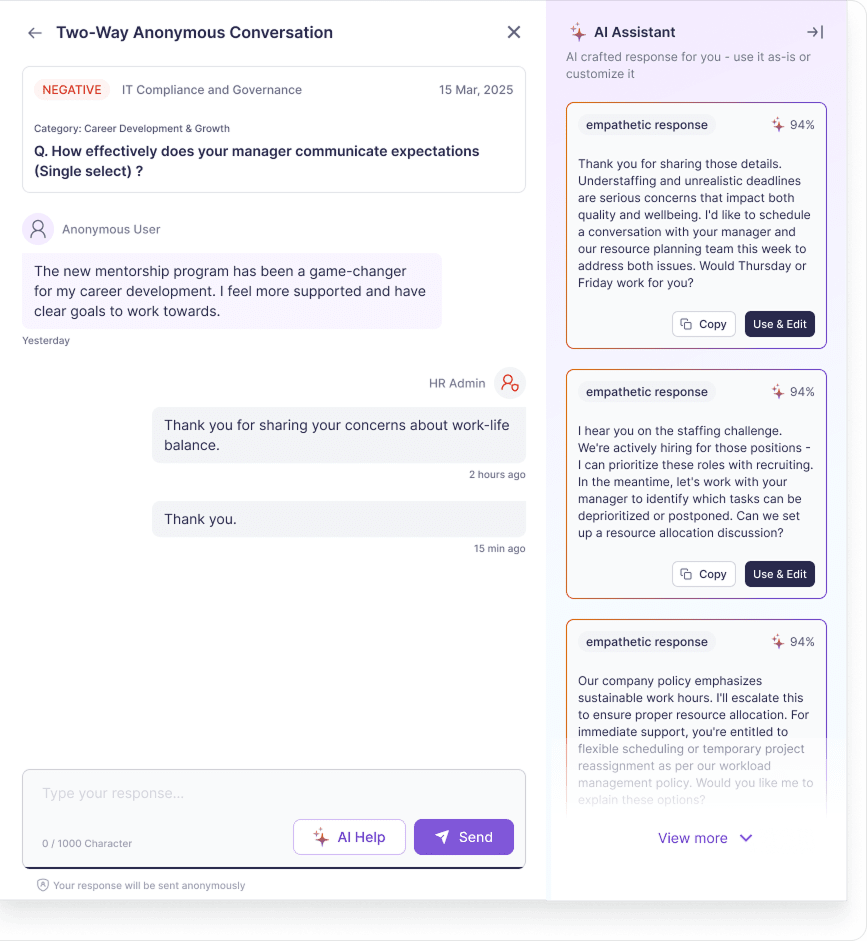
Acting on the results is what sustains trust. When a survey identifies a concern, managers should share what they learned and what will change, even if the change is modest. Employees who see no response tend to stop participating, and that disengagement can develop into quiet quitting.
Conclusion
Burnout in engineering teams rarely results from a single difficult sprint. It usually develops over months, through small signals that go unnoticed without a system for tracking them.
The organizations that retain their strongest engineers are not necessarily those with the most generous perks. They are the ones that pay consistent attention to how their teams are doing.
FAQs
1. Why are so many Software Engineers Burnt out?
Software engineers often face heavy workloads, tight deadlines, constant change, and pressure to keep learning new technologies. Long hours and limited autonomy can turn sustained pressure into burnout.
2. What are the Warning Signs of Developer Burnout?
Look for declining motivation, irritability, withdrawal from teammates, reduced creativity, and frequent after-hours work. A sudden drop in participation or quality can also signal that an engineer is struggling.
3. What can Managers do to Prevent Developer Burnout?
Managers can prevent burnout by balancing workloads, protecting employee autonomy, setting realistic deadlines, and addressing recurring sources of friction. Regular check-ins can help surface problems before they become resignations.
4. How can HR Measure Engagement in Software Teams?
HR can use pulse surveys, engagement scores, eNPS, open-text feedback, recognition data, and retention trends to track engagement. Looking at the data by team or function can also reveal where workload or morale problems are concentrated.

Shikha Gogoi is a Content Marketing Specialist focused on SEO-driven content around employee engagement, recognition, and workplace culture, helping build people-first workplaces.
Connect with Shikha on LinkedIn.