
What Is an Employment Personality Test?
An employment personality test is a validated psychometric assessment used in hiring to predict job performance, role fit, and cultural alignment. Schmidt and Hunter's 1998 meta-analysis found personality predicts job performance at r = .31 when combined with cognitive ability, making it one of the most research-backed hiring tools.
Personality tests in hiring are no longer a side experiment. They are a structured way to reduce guesswork.
Unlike cognitive tests that measure intelligence or skills assessments that evaluate capability, personality tests focus on behavioral tendencies. They reveal how a candidate is likely to think, respond, and interact in real work situations.
Most modern assessments are rooted in I-O psychology (Industrial-Organizational psychology) and frameworks like the Big Five model, which was validated by Barrick and Mount (1991) as a strong predictor of job performance across industries. For HR leaders refining their overall hiring strategies, this adds a measurable layer to decision-making.
Why Employers Use Personality Tests in Hiring
Personality tests help employers make more consistent and evidence-based hiring decisions.
1. Predict Job Performance
Research by Schmidt and Hunter (1998) shows personality, when combined with cognitive ability, significantly improves hiring accuracy.
2. Assess Cultural Fit
Skills can be trained. Behavioral alignment is harder to fix. Personality tests help identify candidates who naturally align with team dynamics and company values, which directly impacts cultural fit.
3. Reduce Turnover
Hiring mismatches are expensive. Personality assessments reduce early attrition by aligning expectations with reality and improving long-term employee retention.
4. Bring Structure to Hiring
Interviews can be biased. Personality tests introduce a standardized layer of evaluation and improve the overall recruitment process.
Where this gets interesting: Personality tests predict who should succeed. Post-hire engagement data shows whether they actually do. Tools like Vantage Pulse use eNPS and pulse surveys to validate whether hiring decisions translate into real employee engagement outcomes.
The 7 Best Employment Personality Tests
The most effective employment personality tests combine scientific backing with practical usability. Here are the seven most widely used options:
1. Big Five (OCEAN Model)
Measures openness, conscientiousness, extraversion, agreeableness, and emotional stability. This is the most research-backed framework and widely used in talent acquisition.
2. Myers-Briggs Type Indicator (MBTI)
Classifies individuals into 16 personality types. Popular for team understanding, though less predictive for hiring outcomes.
3. DISC Assessment
Focuses on dominance, influence, steadiness, and conscientiousness. Common in sales and customer-facing roles.
4. 16PF (16 Personality Factor Questionnaire)
Developed by Raymond Cattell. Offers deeper personality insights for complex roles.
5. Hogan Personality Inventory
Widely used in leadership hiring. Assesses personality traits, risks, and motivators.
6. Caliper Profile
Designed specifically for hiring decisions. Maps personality traits directly to job performance.
7. CliftonStrengths (StrengthsFinder)
Focuses on strengths rather than weaknesses. Often used post-hiring during employee onboarding and development.
Connecting this to real outcomes: A test tells you what traits a candidate has. Recognition data shows which traits actually show up at work. Platforms like Vantage Rewards help track value-aligned behaviors through peer recognition, turning personality insights into visible workplace actions.
How to Choose the Right Personality Test for Your Role
Choosing a personality test based on popularity is a mistake. The right test depends on role requirements.
Role-Based Recommendations
| Role | Recommended Tests |
|---|---|
| Sales | DISC + Big Five |
| Engineering | Big Five + 16PF |
| Customer Support | DISC + Big Five |
| Leadership | Hogan + Big Five |
| Operations | Caliper + Big Five |
| Creative Roles | Big Five + CliftonStrengths |
Quick Selection Checklist
- Is the test scientifically validated?
- Does it measure job-relevant traits?
- Can results be interpreted consistently?
- Is it legally compliant?
For organizations refining their candidate experience, selecting the right test also ensures candidates feel evaluated fairly rather than filtered arbitrarily.
EEOC and Legal Compliance: Using Personality Tests the Right Way
Personality tests are legal only when they are job-related, consistent, and non-discriminatory.
Key Legal Standards
Griggs v. Duke Power Established that employment tests must demonstrate business necessity.
Uniform Guidelines on Employee Selection Procedures (1978) Require employers to validate hiring tools and document their relevance.
Americans with Disabilities Act (ADA) Prohibits personality tests that function as medical or psychological diagnoses.
Common Legal Risks
- Using clinical assessments like MMPI
- Lack of validation documentation
- Disproportionate rejection of certain groups
- No adverse impact analysis
If your hiring framework cannot justify why a test exists, it does not belong in your process.
10 Sample Personality Test Questions (With Interpretations)
Most employment personality tests use scaled or situational questions to evaluate behavior.
- I enjoy solving complex problems
- I prefer structured schedules over flexibility
- I feel energized when working in teams
- I remain calm under pressure
- I adapt quickly to new situations
- I take initiative without being asked
- I prefer clear rules over ambiguity
- I enjoy influencing others' decisions
- I stay consistent in my work habits
- I handle criticism constructively
What Employers Look For
There is no universal "correct" answer. The right response depends on the role.
- High conscientiousness suits operations
- High extraversion suits sales
- High emotional stability suits leadership
How to Administer a Personality Test in Hiring
Personality tests should support hiring decisions, not replace them.
6-Step Framework
- Define role-specific traits
- Choose a validated assessment
- Introduce the test at the right stage
- Interpret results using structured criteria
- Document hiring decisions
- Validate outcomes after hiring
The step most teams skip: Post-hire validation. This is where engagement analytics come in. By tracking employee engagement, feedback, and recognition trends, HR teams can create a measurable feedback loop between hiring inputs and employee outcomes.
Post-Hire Validation: Did the Test Work?
A personality test is only valuable if its predictions hold true in the workplace.
To validate effectiveness, track:
- Performance reviews
- 90-day engagement levels
- Retention rates
- Peer recognition trends
This is where employee engagement data becomes critical.
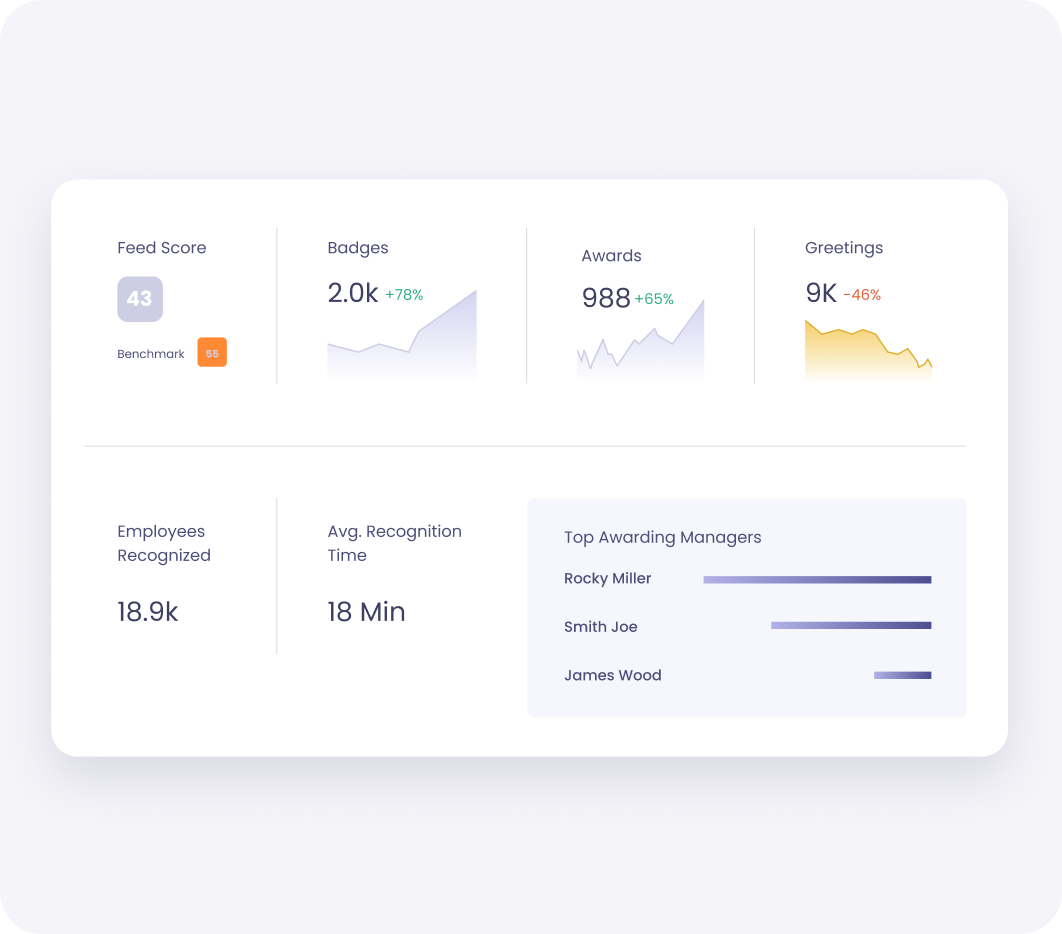
Tools like Vantage Pulse and recognition analytics help HR teams:
- Identify whether new hires are integrating well
- Detect mismatches early
- Improve future hiring decisions
Without this loop, personality testing remains a one-time assumption instead of an evolving strategy.
The 2026 Shift: AI in Personality Testing
Personality assessments are evolving beyond traditional questionnaires.
Emerging Trends
- AI-driven assessments
- Game-based behavioral testing
- Real-time personality inference
Platforms like HireVue and Pymetrics are leading this shift.
The Risk
AI increases speed but also introduces bias. Regulations like New York City's Automated Employment Decision Tool law now require transparency and bias audits.
This is why combining AI assessments with post-hire sentiment and engagement analysis is becoming essential. It creates a second layer of validation that purely algorithmic hiring lacks.
What Candidates Should Know About Personality Tests
Personality tests are not exams you can "pass."
Best Practices
- Answer honestly
- Avoid extreme responses
- Stay consistent
- Think in a professional context
Attempts to manipulate results often fail due to built-in consistency checks.
Frequently Asked Questions
What personality test do most employers use?
The Big Five model is the most widely used due to its strong research backing and predictive reliability.
What is the Big 5 personality test for employers?
It measures five traits: openness, conscientiousness, extraversion, agreeableness, and emotional stability.
How do you pass a personality test for employment?
You do not pass or fail. Consistency and honesty are the key factors.
What are the 4 personality types at work?
The DISC model categorizes behavior into dominance, influence, steadiness, and conscientiousness.
How to pass a personality assessment test for a job?
Focus on answering consistently and in alignment with professional behavior.
Are personality tests accurate predictors of job performance?
Yes, when validated tools are used. Schmidt and Hunter (1998) found measurable predictive value, especially when combined with other assessments.
Final Thoughts
Personality tests do not replace hiring decisions. They improve them.
When used correctly, they bring structure, reduce bias, and improve long-term outcomes. When validated after hiring, they become one of the most reliable tools in a modern HR strategy.
The real advantage lies in connecting hiring decisions with real employee engagement outcomes.
And that is where most organizations still have the biggest gap.

This article is written by Lupamudra Deori. Lupamudra is a content marketing specialist at Vantage Circle, focused on creating clear, research-driven content on employee engagement and workplace culture.
Connect with Lupamudra on LinkedIn.


