
Ask most managers about competition on their team and the answer tends to come with a wince, because somewhere along the way they watched it curdle: leads hoarded, credit claimed by whoever spoke first, a top performer quietly making sure nobody caught up. The usual fix is to strip competition out entirely and swap leaderboards for vague talk about collaboration.
That overcorrects, because the hoarding was never really about competition existing, it was about competition being rigged. A sales team that celebrates whoever closes the most deals this month, with standings anyone can check, is playing a genuinely open game, and it has little in common with a team where the same person wins every quarter because the criteria favor them. One gives people a real reason to keep reaching. The other just teaches everyone else the target was never theirs to hit.
Structured this way, competition becomes a real source of employee motivation rather than dread, and the difference comes down to whether people believe they have an honest shot. What follows is what that structure looks like, real examples of it holding up, and how to build it so it stays on the right side of the line.
What Is Healthy Competition in the Workplace?
Healthy competition in the workplace is competition where everyone has a genuine chance to win, effort gets recognized alongside results, and people are pushed to improve rather than to undermine each other. It shows up as structured, time-boxed contests, not a constant undercurrent running through every task.
Four traits separate healthy competition from the version that damages a team: fair and visible rules, a focus on growth over raw output, respect for whoever else is competing, and an underlying sense of collaboration even between rivals. When these four hold, competition pushes people to do their best work. When even one breaks down, the same competition starts to feel personal, and that is usually where the trouble begins.
Signs of Healthy vs. Unhealthy Competition
The clearest way to tell healthy competition from unhealthy competition is to look at how people react when someone else wins.
Healthy Competition
- Rules and scoring are visible to everyone before the contest starts
- Rewards improvement and effort, not just the final number
- Colleagues congratulate the winner, because anyone could have won
- Contained to a set time frame, with clearly low stakes
- Effort and participation are acknowledged, not only the top performer
Unhealthy Competition
- Criteria are vague or shift after the fact, so no one is sure how winners are picked
- Only the outcome counts, no matter how it was reached
- Colleagues resent the winner, because the process felt rigged
- Ongoing and high-stakes, often tied to job security or reviews
- Recognition goes to the winner alone, everyone else goes unnoticed
Why Healthy Competition Matters at Work
Healthy competition matters because it gives people a low-risk way to push themselves, and it is one of the more reliable levers for lifting engagement without spending on a raise.
In TalentLMS's 2019 Gamification at Work survey, 89% of employees said gamified elements like leaderboards and challenges made them more competitive and more productive, and 87% said the same elements gave them a stronger sense of belonging at work. Those numbers hold because the mechanism is simple: a visible contest gives people a reason to try harder today, not just at review time, and a public leaderboard gives that effort somewhere to be seen.
The same research also points to the risk. Competition only produces those gains when people trust the rules. The moment that trust breaks, the same mechanic that drove engagement starts driving resentment instead, which is why the next two sections matter as much as the idea itself.
Examples of Healthy Competition in the Workplace
A workplace example only counts as healthy competition if it has three things: a defined time frame, rules everyone can see, and recognition that extends past just the winner. Five scenarios consistently meet that bar.
Sales leaderboard done right. A four-week sales sprint with a live, visible leaderboard, where the top closer gets recognized alongside the most-improved rep. Campaign Management tools that let you set a clear start and end date keep a contest like this contained to a specific goal, instead of turning into a permanent, exhausting undercurrent in daily work.
Team-based innovation challenge. Cross-functional teams pitch improvement ideas over a two-week sprint, judged by a mixed panel of peers and leadership. Because the unit of competition is the team, not the individual, the format channels rivalry into collaboration instead of internal one-upmanship.
Peer-nominated recognition contest. An "Employee of the Month" that colleagues nominate and vote on, instead of one a manager picks alone. Moving the decision to peers is what keeps the criteria feeling fair, since managers only see part of what actually happens day to day.
Wellness step challenge. A company-wide steps challenge run in teams rather than individually, through a platform like Vantage Fit. Team-based scoring is what makes this the lowest-stakes, most inclusive version of workplace competition, since it does not depend on any one person's fitness level.
Cross-department trivia. A monthly trivia hour that mixes people from different teams onto the same side. Low stakes, genuinely fun, and one of the few competitive formats that builds relationships across departments instead of reinforcing existing team lines.
What ties all five together is the same pattern from the comparison table above: visible rules, a defined end date, and recognition that reaches past whoever finishes first.
5 Effective Ways to Encourage Healthy Competition in the Workplace
Companies that focus solely on internal competition face real disengagement risk. To make competition work in a team's favor, the goal is to inspire people to lift each other, not just outscore each other. Here is how.
1. Non-Monetary Rewards

(Credits: Unsplash)
Cash prizes are the fastest way to turn healthy competition unhealthy, because a monetary reward invites people to compare paychecks instead of celebrating the win.
Humans are competitive by nature, though some show it more than others. Even people who prefer to stay on the sidelines respond to rewards once the stakes feel achievable.
Rewards push people to put in more effort toward a specific goal, and companies know this, which is why cash incentives remain the default reward for a lot of contests. That default is the issue. Cash-based rewards create the most direct comparison possible between colleagues, and direct comparison is what breeds jealousy and inner competition that has nothing to do with the actual contest.
Non-monetary rewards avoid that comparison entirely. A free vacation, an experience voucher, or a wellness credit gives someone a genuine reason to celebrate without inviting a peer to do the math on what they make relative to a colleague. It also makes the win easier to share: a person is far more likely to talk about a trip they earned than a dollar figure they were paid, which means the reward spreads goodwill through the team instead of quietly seeding resentment.
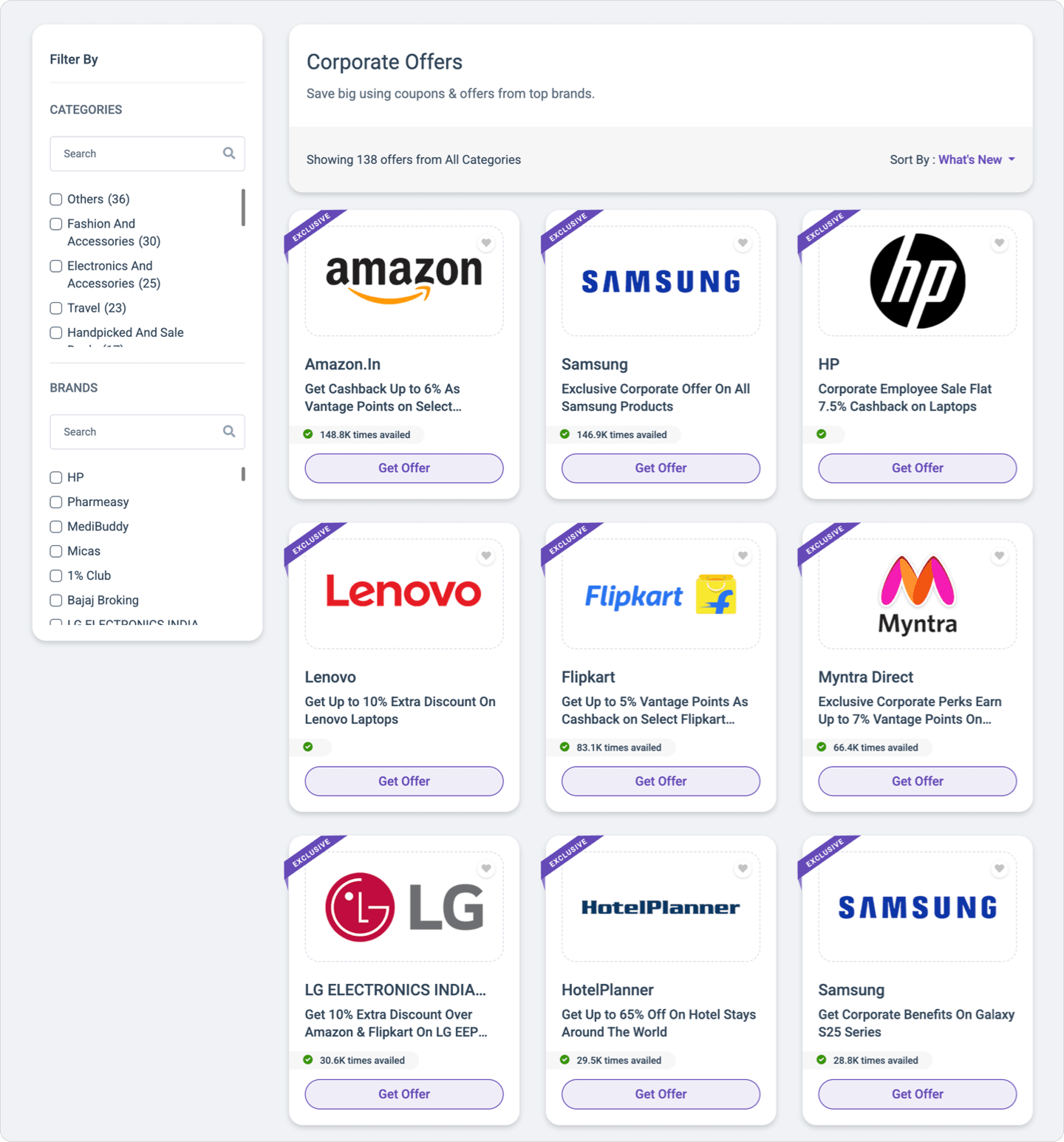
Vantage Perks takes this further with a catalog of dining vouchers, wellness credits, and experience-based rewards. Swapping a cash prize for something from a catalog like this removes the direct pay comparison that tends to breed resentment between colleagues, while still giving the winner something concrete.
Recommended Article: 15 Types Of Employee Benefits That Won't Break The Bank
2. Peer-to-Peer Recognition

(Credits: Unsplash)
Recognition from peers, not just from a manager, is what decides whether a competitive culture stays healthy, because people are pack animals who need to feel accepted by the group they compete inside of.
A negative competitive culture shows up first in how teammates treat each other, not in the scoreboard itself. When competition turns unhealthy, colleagues start working against one another instead of toward the same goal, and that erodes the team's foundation faster than any single lost contest could. Building a peer recognition culture is what prevents that shift.
The mechanics are simple, if not always practiced. Recognize people publicly, say thank you even for a small win, and give colleagues an easy way to celebrate each other without waiting for a manager to notice first.
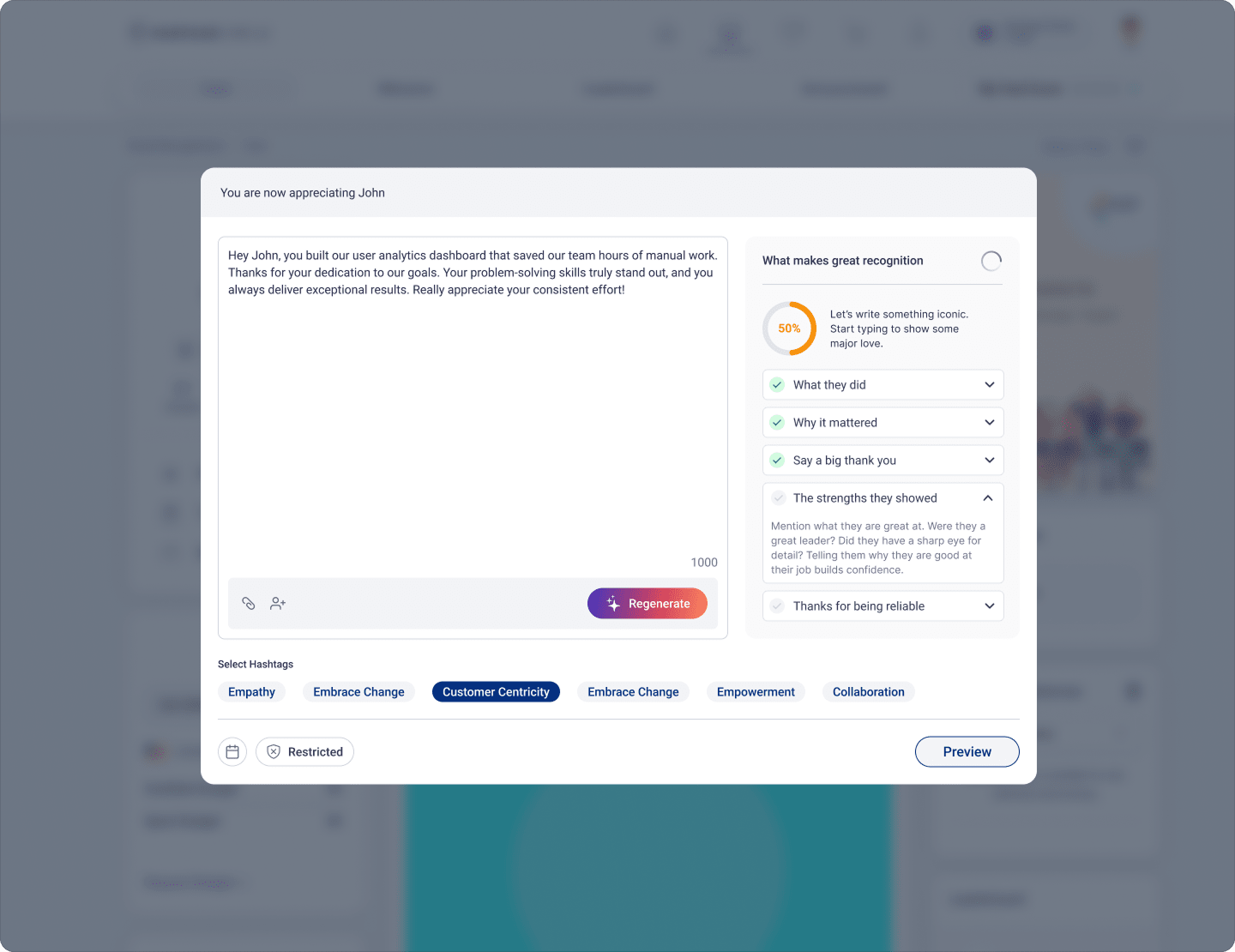
Healthy competition needs exactly this: a way for people to celebrate someone else's win without it feeling like their own loss. A peer-to-peer recognition feed gives colleagues an easy, public way to do that, which is what keeps a leaderboard from turning into a source of quiet resentment.
Practiced consistently, this becomes a culture rather than a one-off gesture, and a team that recognizes each other's effort routinely sees the payoff in better collaboration, stronger outcomes, and real team support.
3. Team-Based Activities

(Credits: Unsplash)
Team-based competition is the safest format to start with, because the unit that wins or loses is the group, not any one person.
Team-based activities channel competitive energy into a shared goal instead of an individual one. Split people into teams and run almost any format: strategy games, karaoke nights, trivia nights. The format matters less than the fact that no single person carries the win or the loss alone.
That structure is exactly why this kind of internal competition rarely produces resentment or jealousy the way individual contests can. Instead, it pushes people to combine ideas, notice how a team wins by accepting help from each other, and think more creatively under a bit of friendly pressure.
A cross-functional trivia night between engineering and sales, for instance, does more for cross-team familiarity in an hour than most scheduled mixers manage in a quarter, because the competitive format gives people an actual reason to talk to each other. Teams that compete together also tend to collaborate better afterward, since the contest already forced them to coordinate under a shared goal.
Recommended Article: 8 Ways to Foster Team Collaboration
4. Brainstorming Sessions

(Credits: Unsplash)
Brainstorming sessions work as a competitive format because they flatten the usual hierarchy down to one thing: the idea itself.
No matter someone's job title or department, a brainstorming session values whatever they bring to the table, which makes it one of the few workplace formats where a junior employee's idea can beat a senior leader's on merit alone.
Sessions like this benefit everyone in the room, since every person walks away with fresh perspectives they would not have run into inside their own team. Structured as an open discussion, they surface genuinely new ideas that a single department working in isolation tends to miss.
To keep the format competitive without making it tense, add a small, unanimously voted incentive for whichever idea the group picks as the strongest. The vote itself is what keeps this healthy: because the group decides together, no one can claim the process favored a particular person, which is the same transparency principle that keeps any other competition from turning sour.
A monthly "innovation hour" works well as a recurring version of this: thirty minutes, one prompt, and every idea pitched in under two minutes so nobody dominates the room. Because contribution stays short and the vote stays open, quieter employees end up participating at close to the same rate as the most vocal ones, which is rarely true of open-floor brainstorming without a structure like this.
5. Diversity and Inclusion

(Credits: Unsplash)
A competitive culture is only as healthy as its access is equal, which is why diversity and inclusion decide whether a contest feels fair before a single round even starts.
The core aim of healthy competition is to give everyone a genuine chance to succeed, and that goal falls apart without real inclusion behind it, especially where workplace discrimination already tilts the playing field before a contest even begins.
Tying competition criteria explicitly to shared values, not just raw output, is what keeps the playing field level across roles and backgrounds where output is not directly comparable to begin with. A support engineer and a sales rep cannot be measured on the same output metric, but both can be measured against the same set of company values, which is a fairer basis for any contest that spans departments.
An organization that puts diversity at the center of its stated values should extend the same principle to how it runs competition. Everyone, regardless of gender, sexual orientation, or age, deserves the same access to opportunity and respect inside a contest as outside one.
Before running any competitive format, it is worth asking whether every employee would describe their role in the contest the same way. Do they feel comfortable raising an issue if the criteria seem unfair? Do they believe their contribution gets noticed? If the honest answer is no for even one group, that is the gap to close before the next contest launches, not after.
How to Structure Competition So It Stays Healthy
Competition stays healthy when three design choices are in place before it launches: transparent scoring, equal starting conditions, and recognition for effort as well as outcome. Miss any one of the three, and the same contest that was meant to motivate people starts to erode trust instead.
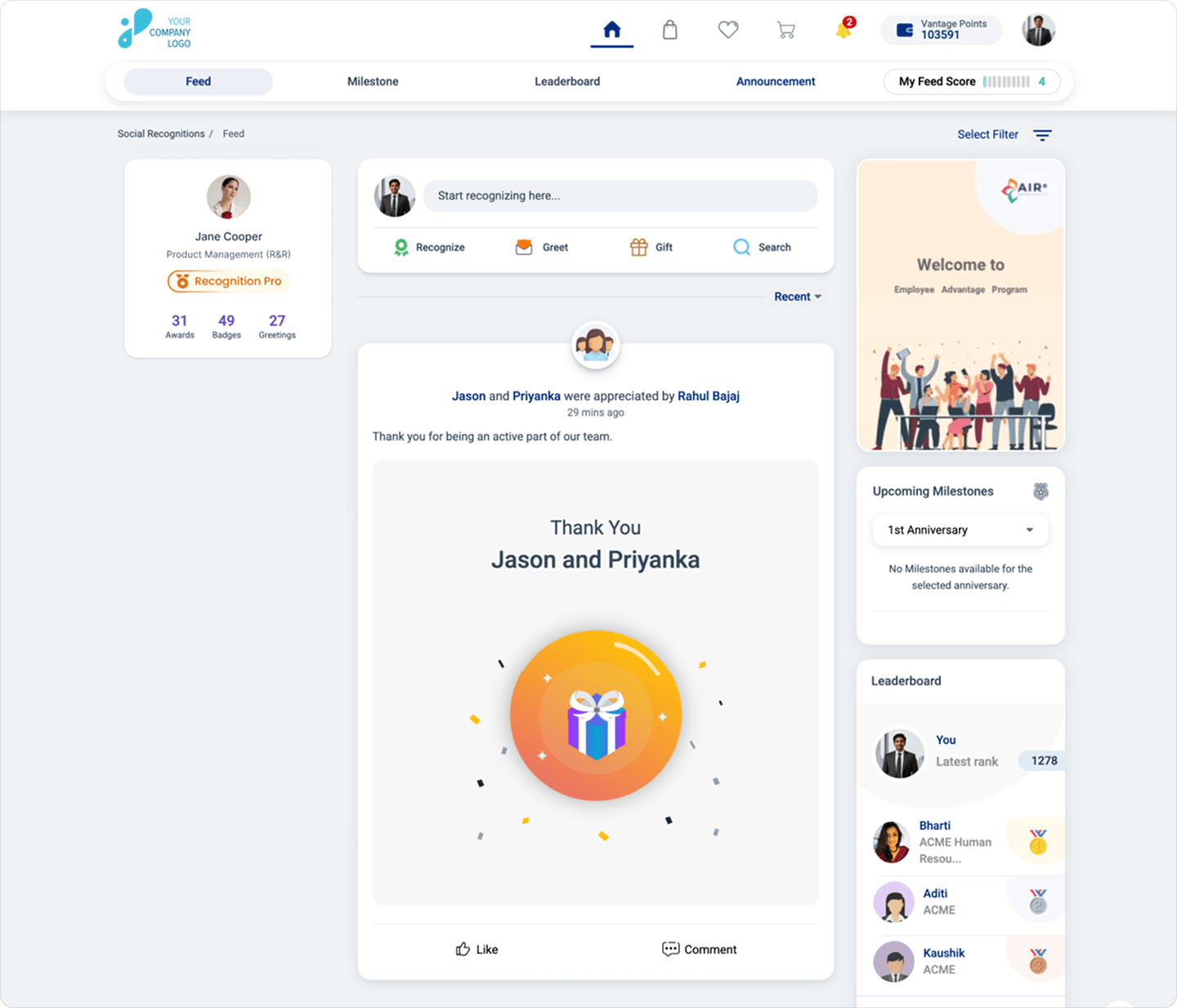
1. Transparent scoring. A leaderboard only stays healthy when the scoring is visible to everyone in real time. When employees can see exactly how standings are calculated, competition stays transparent instead of feeling arbitrary or rigged. A Leaderboards feature that updates live and shows the underlying criteria removes the single biggest source of distrust in any workplace contest: not knowing how the numbers got there.
2. Equal starting conditions. A contest that pits a five-year veteran against someone hired last month, using the same raw output metric, is not actually a fair contest, even if the scoring is transparent. Structuring competition by tenure band, department, or role, or scoring on improvement rather than absolute output, is what keeps the starting line level for everyone entering.
3. Recognition for effort, not only outcome. The winner should not be the only person who gets acknowledged. A public shout-out for the most improved performer, alongside the top scorer, tells everyone in the contest that trying counts for something even if they do not finish first. This is also the design choice most competitors in this space skip entirely, since it costs nothing but a moment of attention and does more than any prize to keep morale intact after the contest ends.
Put those three together and a competition stops depending on luck or on trust in a manager's judgment, and starts running on rules everyone can verify for themselves. A recognition platform that logs every award against these three rules, visible criteria, tenure-adjusted scoring, and effort-based shout-outs, turns this from a one-time policy decision into something a team can audit at any point mid-contest, which is usually enough on its own to head off the complaint that a competition felt rigged before it even gets voiced.
What Causes Competition to Turn Unhealthy?
The single biggest trigger for unhealthy competition is unclear or unequal criteria. When people cannot tell how a winner gets picked, they assume the process is rigged, and resentment follows even when the process was actually fair.
A few other patterns reliably tip healthy competition into toxic territory:
1. Cash-only rewards, which turn every win into a direct pay comparison between colleagues instead of a shared moment to celebrate.
2. The same person winning every round, which signals a structural problem with the criteria long before anyone says it out loud. If one person wins five contests in a row, the format is measuring something that person already has an unfair advantage on, not something the whole team is genuinely competing over.
3. Competition tied to job security or performance reviews, which raises the stakes high enough that people stop taking chances and start protecting their position instead, sometimes at a colleague's expense.
4. Public comparison without private context, where a leaderboard shows the gap between top and bottom performers with no acknowledgment of the very different starting points, workloads, or circumstances behind those numbers.
A contest that looks successful on a leaderboard can still be quietly demoralizing a team underneath. Sentiment analysis on open-text survey responses catches that mismatch before it shows up in turnover, since the leaderboard itself will never show you who is quietly checking out.
Frequently Asked Questions
1. What are examples of healthy competition?
Time-boxed sales leaderboards with visible standings, cross-functional innovation challenges judged by a mixed panel, peer-nominated recognition contests, team-based wellness step challenges, and cross-department trivia are common examples. Each one works because the rules are visible upfront and recognition extends past just the top performer.
2. What are some good competitions to have in the workplace?
Low-cost, low-pressure formats tend to work best: trivia over lunch, a short sales sprint, a team steps challenge, an innovation hour, or a peer-nominated recognition contest. The common thread is a clear time frame and transparent rules, not the size of the prize.
3. Can you give me an example of positive competition?
Two sales reps pushing each other to close more deals in a month, with both ending the sprint recognized publicly, one for hitting the highest number, the other for the biggest improvement, is a clear example. Both people feel like they won something, even though only one topped the leaderboard.
4. What is an example of competition in the workplace?
Any structured, time-boxed contest with rules everyone can see counts: a sales leaderboard, a hackathon, an innovation challenge, or a peer-nominated recognition award. What separates a genuine example from an unhealthy one is whether the criteria stay consistent and visible throughout.
5. What are some easy competition ideas?
Ideas that need no budget include a trivia lunch, a most-creative-idea vote, a team step challenge, or a scavenger hunt split across departments. These work well as a starting point precisely because the low stakes make it easy to test whether a team responds well to competitive formats at all.
6. What is the difference between healthy competition and unhealthy competition?
Healthy competition runs on transparent, consistent criteria and rewards effort alongside outcome, so colleagues can congratulate the winner without resentment. Unhealthy competition runs on vague or shifting criteria, rewards only the final result, and tends to produce the same winner repeatedly, which breeds resentment instead of motivation.
Conclusion
Healthy competition in the workplace is not about eliminating rivalry. It is about designing rivalry well enough that it pushes people forward instead of against each other. The difference comes down to three things covered throughout this guide: transparent rules everyone can verify, rewards that avoid direct pay comparison, and recognition that extends to effort, not just the final score.
Start small. Pick one format from the examples above, run it for a defined period with visible criteria, and pay attention to how people react when someone else wins. That reaction, more than the leaderboard itself, will tell you whether the competition is actually healthy.

Shaoni Gupta is a content marketing specialist at Vantage Circle, with expertise in scriptwriting and copywriting in the field of employee rewards and recognition.
Connect with Shaoni on LinkedIn.


