
Your company’s employee recognition program is probably broken. I don’t mean it’s poorly executed or underfunded. I mean the entire premise is wrong.
I discovered this uncomfortable truth while listening to an episode of the Vantage Influencers Podcast, between Dave Ulrich, known to many as the Father of Modern HR, and Partha Neog. Within minutes, they dismantled everything I thought I knew about employee recognition.
The moment that struck me was when Dave said:
The most powerful recognition is just recognizing who they are as a person and who they hope to become.

Suddenly, every corporate recognition ceremony I’d ever witnessed looked different. The awkward applause. The generic “great work” speeches. The employees who smile politely while clutching their service awards, then return to feeling invisible the other 364 days of the year.
We’ve been solving the wrong problem entirely.
Dave and Partha revealed that recognition isn’t a program you implement, it’s a leadership behavior you institutionalize. They didn’t just diagnose the problem. They mapped out exactly how leaders can transform employee recognition from a checkbox exercise into a multiplying force that shapes careers, builds cultures, and creates legacies that outlast the leaders themselves.

Vantage Influencers Podcast · Dave Ulrich
Leadership's Role in Employee Recognition
Listen Now →Why Most Recognition Programs Fail Without Leadership
Recognition programs don’t fail because they lack features. They fail because leaders aren’t visibly using them.
The Jo et al. 2025 meta-analysis (published in NIH PMC, cited 105 times) found that peer-recognition systems alone lift engagement by 8–12%, but peer systems paired with leader modeling lift engagement by 31–44%. The difference is not the software. It is the behavior the leader models.
Here’s what typically happens: HR launches a recognition platform. The first week, five leaders give 30 recognitions. By week 12, that number has dropped to two. Employees see recognition as something leaders do occasionally, not something the organization values. The program becomes one more system nobody uses.
The counter-intuitive insight from Gallup 2025 research says that it takes only three months of consistent leader-led recognition for the culture signal to reach the entire organization. Three months. If a leader recognizes one specific behavior per week, the culture shift is detectable in pulse surveys by week 12. But if employee recognition stops, so does the signal.
The Recognition Topology: A 3-Tier Framework That Changes Everything
The job of a leader is to use his or her power to empower others. When leaders use their power to empower others and make them better, they succeed.
One of the most interesting parts of their discussion was when Dave introduced a three-tier framework for understanding how leaders should structure recognition. The model moves beyond “employee of the month” or “spot bonus” thinking. It prompts a deeper question: what is the recognition actually trying to activate in the employee?
The answer reveals three distinct types of recognition, each triggering different psychological and behavioral outcomes. Leaders who use all three create compounding culture change. Leaders who rely on only one (usually transactional spot bonuses) create fatigue instead.
Tier 1: Task Recognition
Task recognition acknowledges the work itself. It could be the project, the output, or the contribution to a specific business outcome. It answers the question: “Do you see that I did something that mattered?”
When a leader delivers task recognition, they are confirming that the work had significance. Employees who receive consistent task recognition report higher sense of purpose and higher intrinsic motivation, according to research by Kouzes and Posner (2014, Encourage the Heart).
In practice, effective task recognition is specific and directly tied to impact. For example: “Your analysis of the Q1 churn data caught the pattern we missed. That insight shaped the retention strategy for three product lines. That was significant work.”
Tier 2: Feed-Forward Feedback
Feed-forward recognition does not celebrate what was done. It recognizes the specific behavior and explicitly connects it to what the leader wants to see more of. It requires them to notice, name, and reinforce the actions they want repeated.
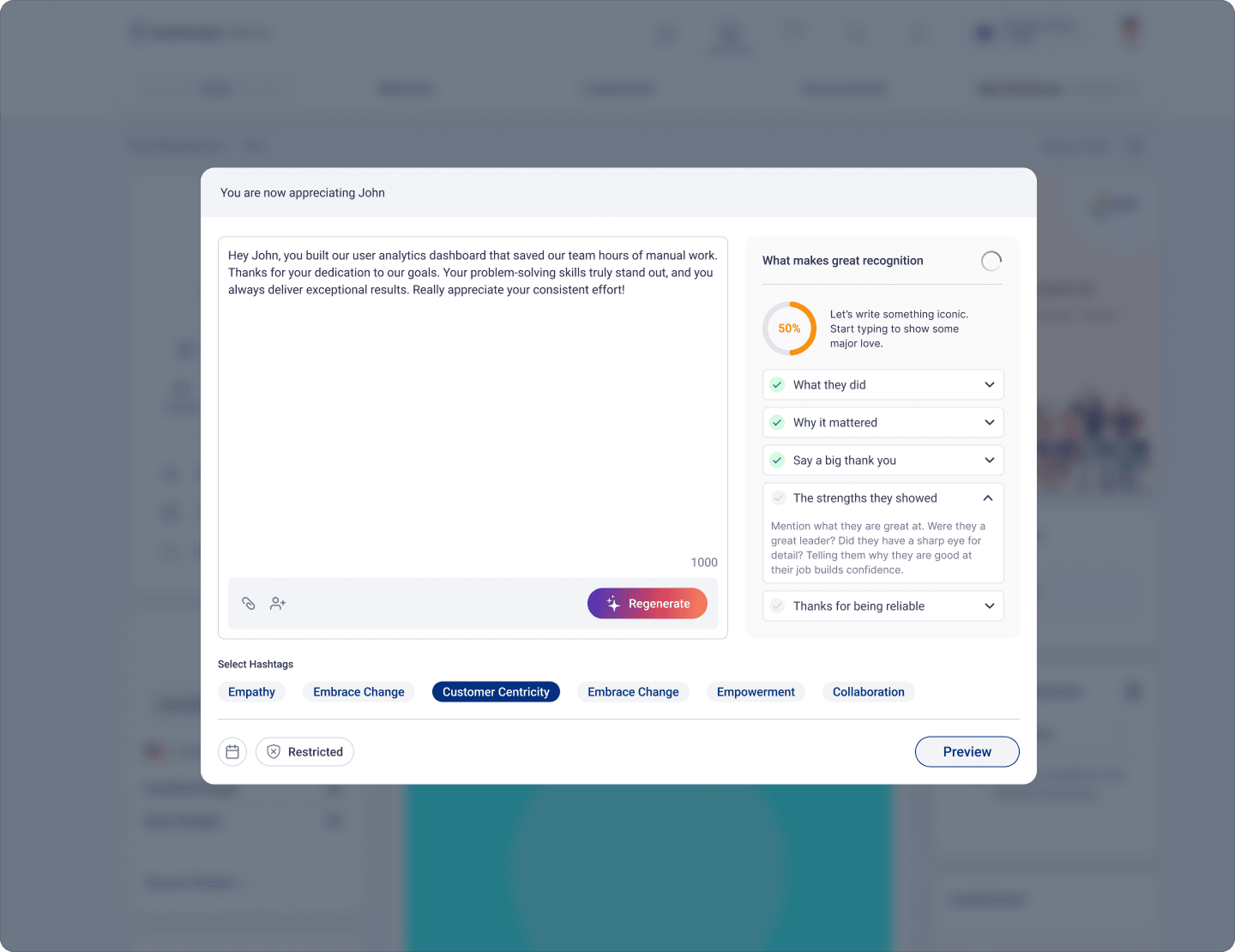
Feed-forward recognition is the lever that turns one leader’s modeled behavior into organizational practice.
In practice, it sounds like this: “In that meeting, you waited for the quieter voices in the room before you shared your idea. That’s how we create psychological safety. I want to see more of that.”
Tier 3: Agency and Autonomy
The third tier is the most powerful and the least used. It recognizes people by giving them real authority and autonomy. This is what Ulrich calls “recognition through trust.” Autonomy-based recognition activates the highest levels of engagement because it moves beyond acknowledgment into opportunity.
Gallup Q12 research shows that employees who experience autonomy-based recognition report 2.3x higher engagement than those who receive only verbal or monetary recognition.
A simple example of this would be: “I’m asking you to lead the product team’s customer research sprint. I trust your judgment on methodology and stakeholder access. You have full authority here.”
| Recognition Tier | What Leaders Do | Behavior Signal | When to Use |
|---|---|---|---|
| Task Recognition | Name the specific output and its impact | “Your work mattered to this outcome” | Weekly — anchor recognition in concrete deliverables |
| Feed-Forward Feedback | Recognize the specific behavior and connect it to organizational values | “I saw the behaviors we’re building” | During or immediately after you observe the behavior |
| Agency/Autonomy | Expand scope, assign high-stakes leadership, visibly defer to expertise | “I trust you with authority” | When the person has demonstrated capability; quarterly or when appropriate opportunity arises |
Transactional vs Relational Recognition (The Mindset Shift)
Most leaders operate in transactional recognition mode. They identify a good outcome, deliver a compliment or bonus, and move on. The recognition lands in isolation. It feels good for a moment, then the organizational silence resumes.
Relational recognition is different. It is built on the premise that recognition is not an event; it is an ongoing signal about what the organization values. Relational recognition compounds over time. The more a leader recognizes aligned behaviors, the more employees internalize the organizational values.
Here is how the two differ:
| Dimension | Transactional Recognition | Relational Recognition |
|---|---|---|
| Trigger | Achievement, outcome delivered | Behavior aligned to values; consistency |
| Frequency | Sporadic, tied to milestones | Consistent, woven into weekly rhythms |
| Tone | Formal, ceremonial | Conversational, genuine |
| Specificity | Generic (“great job”) or outcome-focused | Behavior-specific; names what the leader saw |
| Outcome Focus | Short-term morale lift; “feels good” | Long-term culture signal; “this is who we are” |
| Impact Horizon | Individual recognition lands; others don’t witness it | Public recognition creates a cultural cue for everyone |
5 Behaviors That Define a Recognition-Led Leader
1. Make Recognition Non-negotiable on the Calendar
Leaders who succeed with recognition treat it as a business ritual. It’s something they intentionally schedule, consistently track, and actively report on. They remove the guesswork and turn appreciation into a habit rather than an occasional gesture.
One Fortune 500 HR leader told us: “I put ‘30 minutes for recognition’ on my calendar every Friday at 4 p.m. Same time, same place. I write three handwritten notes, I craft three Slack messages, and I have three 1:1 conversations where I name a specific behavior I saw that week. Thirty minutes. By month 3, employees were noticing the pattern.”
If you want to bring the same discipline into your own routine, start small but stay deliberate. Here’s a list of things you can do:
- Schedule 20–30 minutes weekly for recognition
- Write at least one handwritten note
- Give at least one face-to-face recognition
- Post at least one public recognition
2. Distribute Ownership Beyond HR
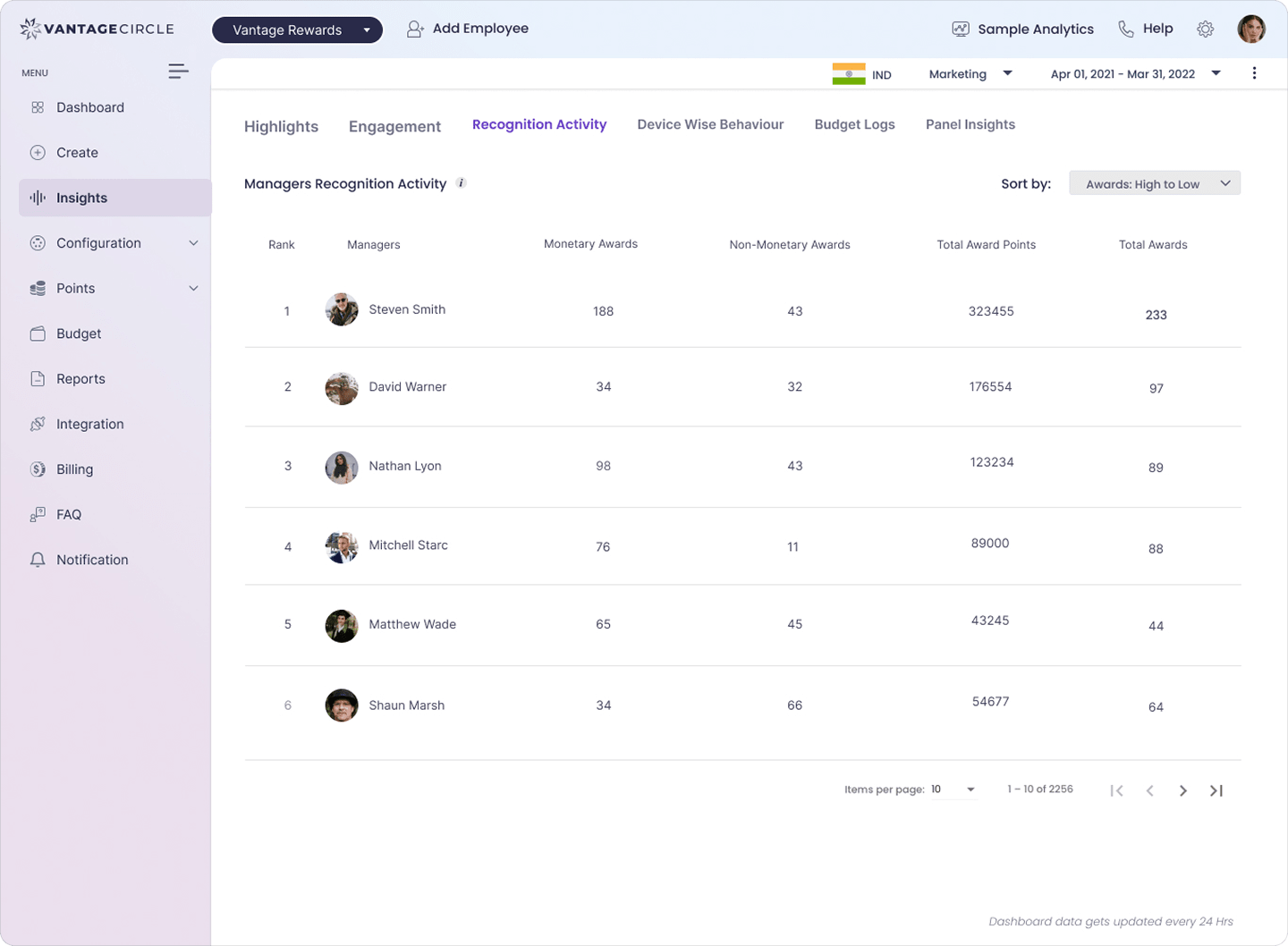
The fastest way to kill a recognition culture is to make it HR’s responsibility.
When leaders delegate recognition entirely to HR, it signals that recognition is not a core part of how the organization operates.
That signal cascades quickly. Peer recognition often dies because peers don’t see their leaders doing it. Managers disengage, assuming HR has it covered. What started as a cultural lever quietly turns into an administrative task for HR to manage, rather than a behavior the organization lives every day. Reversing this requires leaders to reclaim ownership, explicitly and visibly.
3. Recognize Specific Behaviors, Not Personality Traits
“You’re a great team player” is not a recognition. It is a personal compliment. It tells the person nothing about what they actually did.
Real recognition is behavior specific. It sounds more like: “In that customer call, you asked clarifying questions instead of jumping to solutions. That’s the service mindset we’re building. I saw it, and I want you to keep doing it.”
The difference matters. According to research by Kouzes & Posner (2014), recognition tied to specific behaviors increases the likelihood of behavior repetition by 2.7x compared to generic compliments.
4. Model Recognition Publicly
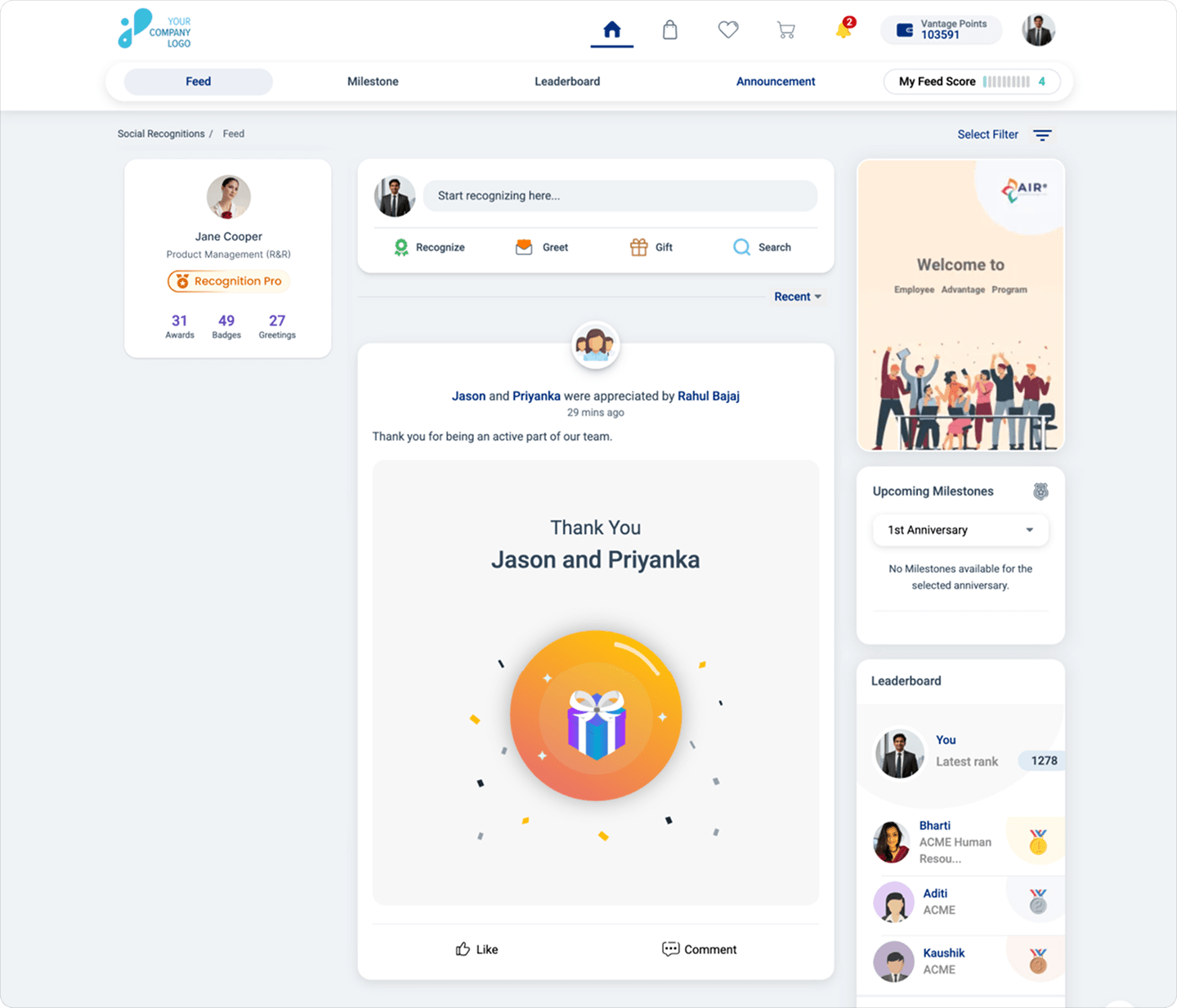
A leader who recognizes someone in private creates one moment of clarity. A leader who recognizes someone publicly creates a culture cue for everyone watching.
This is the multiplication effect. One leader’s recognition behavior, made visible, becomes a template for others to follow. Employees see how recognition sounds, looks, and feels. They start replicating it.
Turning this into a habit is less about the channel and more about the consistency. Make at least one recognition public every week, whether it’s a team meeting callout or even a mention in a leadership update. The medium doesn’t matter. The visibility does.
5. Give Feed-forward, Not just Feed-back
Feed-forward recognition shifts the focus to the future by highlighting the behaviors worth repeating and building on. The distinction is critical. Backward feedback often lands as criticism, even when it’s intended as improvement. Feed-forward recognition lands as clarity and possibility.
In practice, this is a small but powerful shift. In your 1:1s, replace one feedback conversation each month with a feed-forward recognition conversation. Call out a capability you see, name the behavior you want repeated, explain the impact it creates, and ask what support they need to keep doing it.
Leader vs Manager vs Peer Recognition
| Recognition Type | Source | Signal Sent | Best Used For |
|---|---|---|---|
| Leader recognition | Executives, senior leaders | "The organization sees and values this" | Setting culture tone; modeling behavior; high-stakes achievements |
| Manager recognition | Direct supervisor | "I see you and value your work" | Weekly habits; specific behavior; belonging signals |
| Peer recognition | Colleagues, cross-functional teams | "We see each other and appreciate this" | Everyday wins; high-volume signaling; scaling culture |
| System/AI recognition | Platform automation | "The organization remembers and honors this" | Anniversaries, milestones, hygiene events |
The Multiplication Effect: How Leader Recognition Becomes Culture
One leader’s recognition behavior does not create culture. Culture happens when the behavior is visible, repeated, and adopted by others.
This is the multiplication effect. One leader recognizes someone publicly. A peer sees it and recognizes a colleague. Another peer sees that and starts recognizing. Within 12 weeks, recognition is no longer a leader initiative. It is a peer practice. The culture becomes self-sustaining.
Dave Ulrich explained that recognition behaviors create “genealogy charts” of influence that compound over time. It doesn’t just impact the immediate recipient. It teaches them how to recognize others, creating a ripple effect that transforms entire organizational cultures.
And that influence doesn’t stop at the office door. Alumni, too, carry it forward. The best organizations understand that alumni are assets, not losses. It is the alumni who go on to build great things elsewhere while staying connected to the culture that shaped them.
Final Thoughts
The recognition you give today, whether it’s a quiet conversation acknowledging someone’s potential or a public shout-out, has the power to shape not just immediate performance, but generations of leaders who will carry those behaviors forward.
The choice is yours! Will you treat recognition as another program to implement, or as the fundamental leadership mindset that transforms how your organization sees and develops its people?
Frequently Asked Questions
How can Leaders build a Culture of Recognition?
Start with the calendar. Schedule 20–30 minutes weekly for recognition. Use that time to give at least one meaningful acknowledgment, whether it’s a handwritten note or a public shoutout.
Give a few examples of Leader-led Recognition?
Calling out a team member’s contribution, sending a personalized note highlighting a specific behavior and its impact or nominating an employee for a formal award while clearly articulating why they deserve it are a few examples of leader-led Recognition.
What is the Difference between Manager Recognition and Peer Recognition?
Manager recognition carries formal weight. It reinforces priorities, sets direction, and signals what success looks like within the team or organization. Peer recognition, on the other hand, builds connection and trust across the team. It captures everyday contributions that leaders might not always notice.
How do Leaders Measure if Recognition is Working?
Leaders can measure if recognition is working or not by tracking engagement scores, retention trends, and qualitative feedback. If the same positive behaviors show up more often, recognition is doing its job.

Shikha Gogoi is a Content Marketing Specialist focused on SEO-driven content around employee engagement, recognition, and workplace culture, helping build people-first workplaces.
Connect with Shikha on LinkedIn.