Your top-performing salesperson just closed a $ 2 million deal. So, walk up to them excitedly and say, "Good job" .
You may think this is a perfectly normal thing. But your top salesman just realized that they were only given a "Good job" for all their efforts. And before you notice, you may have just handed your top talent to your competitor.
The generic praises you think are supportive may not be enough. It can make your top talent doubt whether their contributions truly matter. The disconnect between achievement and recognition is what is costing companies their best performers. Unfortunate but true.
Therefore, this blog will show you how to move beyond generic praise to recognition that motivates your employees.
Key Takeaways
- What Is Meaningful Recognition?
- What Drives Employee Loyalty in Today's Workplace?
- Types of Meaningful Recognition Programs with Examples
- Best Practices for Implementing Meaningful Recognition
- Overcoming Meaningful Recognition Implementation Challenges
What Is Meaningful Recognition?
Meaningful recognition is authentic, specific, and timely acknowledgment of an employee's contribution, tied to what the organization values. Unlike a generic "good job," it names the exact action and the difference it made, so the person feels genuinely seen rather than politely thanked. Its 3 core elements are specificity, personalization, and timeliness. It's the piece of employee recognition that determines whether people actually feel valued, not just thanked.
Definition and Core Principles

In leading organizations, recognition is more than polite compliments. It's a strategic practice designed to reinforce behaviors that drive performance, engagement, and retention.
Meaningful recognition is defined as timely, authentic, and specific acknowledgment of an employee's effort. These achievements are aligned with organizational values and goals.
It builds a deeper emotional connection between the employee and the workplace. Therefore, generic praises like "good job" simply cannot do.
This approach operates on four fundamental principles that will set you apart from outdated and traditional methods
Let me walk you through these principles:
- The first principle is specificity over generality. Instead of saying "good job," detail exactly how your team members' work benefited the company.
For example, "This quarter, we saw a 15% increase in customer satisfaction due to three product improvements that were identified by your customer feedback analysis."
- The second principle is personalization to the individual preferences. Every team member has their motivators; some are incentivized by public recognition, while others prefer private appreciation or developmental opportunities.
The more you tailor employee recognition to personal priorities, the more meaningful and impactful it will be.
- The third principle is timeliness. You see, recognition loses its impact if delayed beyond 48 hours.
This is further backed by research. According to a study by MIT, immediate recognition strengthens neural pathways in our brain. This makes positive behavior more likely to repeat.
In short, the sooner you appreciate a win, the deeper it lands. Timely feedback doesn't just reinforce actions, it also builds momentum. This is why fast, instant recognition consistently outperforms recognition that waits for a quarterly review.
Meaningful Recognition vs. Traditional Recognition
Let's look at the distinction between what you should be doing and what you're most likely doing right now.
Traditional recognition follows standardized patterns that make each team member feel impersonal. Monthly employee awards, uniform emails, and yearly ceremonies treat recognition as one-size-fits-all. These methods treat employees like interchangeable parts. They're disconnected from actual performance.
Meaningful recognition is timely, targeted, and aligned with each person's unique contributions. It acknowledges what was achieved and why it mattered for your work environment and business.
| Dimension | Generic Recognition | Meaningful Recognition |
|---|---|---|
| Specificity | "Good job" or "great work," with no reference to what was done | Names the exact action and its measurable impact |
| Timing | Delayed, often bundled into a monthly or annual review | Delivered within 48 hours, while the impact is still fresh |
| Personalization | Same message and format for everyone | Matched to how the individual prefers to be recognized |
| Values link | Praise for effort alone, disconnected from company priorities | Ties the achievement to a specific organizational value or goal |
| Effect on trust | Can read as a box-ticking exercise; erodes trust when it feels routine | Signals the manager actually understands the work |
| What people remember | Forgotten within days; feels interchangeable | Recalled as proof their specific contribution mattered |
Here's what you can do instead-
Make your recognition contextual by aligning it directly to your business goals and outcomes. This strategy goes beyond token gratitude to produce long-lasting effects.
Your employees are treated as distinct contributors whose individual strengths propel organizational success.
The Psychology Behind Effective Recognition
Recognition affects both conscious and unconscious motivation and brain processes in your employees. Therefore, understanding the psychological mechanism behind meaningful recognition will make you a more effective HR professional.
Maslow's Hierarchy and Recognition
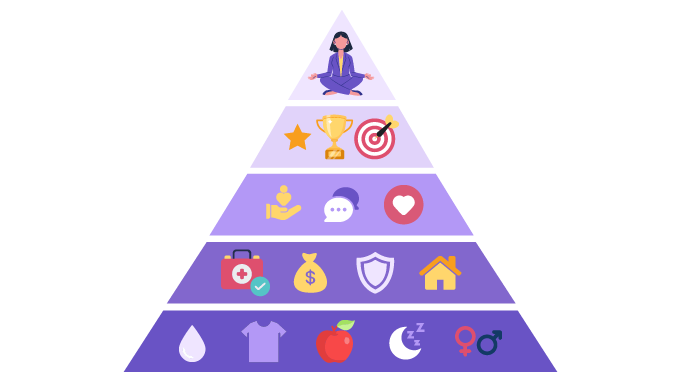
To understand why meaningful recognition strategies work, let's refer to Maslow's hierarchy of needs. After basic safety needs are fulfilled, individuals seek belonging, esteem, and self-actualization.
Basic recognition fulfills only self-esteem; people feel partially valued. In contrast, meaningful recognition fulfills deeper needs and increases job satisfaction and sense of belonging.
You're not just acknowledging their work, you're affirming who they are. And that sort of recognition fosters a stronger bond, a sense of purpose, and enduring dedication.
Neurological Impact of Recognition
Here's something fascinating: meaningful recognition triggers the release of dopamine and oxytocin. These are the chemicals that promote social connection and satisfaction, from the brain's reward centers.
Meaningful recognition creates enduring neural pathways that reinforce positive behavior, in contrast to monetary rewards that quickly wear off.
This rewires the brain for optimal performance over time. This explains why meaningful employee recognition, rather than merely temporary motivation, results from regular, targeted recognition that leads to sustained excellence.
Importance of Meaningful Recognition
ROI and Measurable Benefits
Organizations with effective employee recognition programs demonstrate superior performance across key business metrics. It helps create tangible returns on investment that you can present to your leadership team.
Retention and Turnover Reduction

Employee turnover is one of the most significant hidden costs in modern businesses. Recognition programs provide a tried-and-true remedy.
Organizations with strong recognition programs see a 31% drop in voluntary turnover, as per a SHRM Report.
Replacing a single employee can cost between 50 and 200 percent of their yearly salary. A 10% reduction in turnover saves about $1.8 million yearly for a 1,000-person company with average wages of $60,000.
Retained staff preserve institutional knowledge, maintain client relationships, and require no ramp-up time.
Productivity and Performance Improvements
Increased employee engagement brought about by recognition results in quantifiable performance improvements.
According to a 2024 report, companies with highly engaged employees see a 23% increase in productivity. Moreover, it was observed that engaged team members are 87% less likely to leave a company and perform 20% better.
The message is clear: Employees who feel valued are less likely to burn out and are more engaged.
Furthermore, meaningful employee engagement results in higher-quality work, more creativity, and improved teamwork. This has an immediate positive impact on your company's competitive edge.
Financial Returns and Cost Savings

A recent study shows that engaged workforces have a 68% increase in employee well-being, which promotes a healthier, more resilient workforce. Moreover, around $8.9 trillion, or 9% of global GDP, is lost to the global economy because of low engagement levels.
So you see, recognition produces real business results; it is not merely a sentimental task.
When you integrate recognition into your culture, it'll help lower costs in many ways. This includes fewer sick days due to increased engagement and lower hiring costs due to lower turnover.
In short, meaningful recognition doesn't just make people feel good—it makes the business run better.
Impact on Employee Engagement and Culture
Engagement Statistics and Data
Organizations with recognition programs in the top quartile report 45% lower employee turnover and 21% higher productivity.
This directly results in lower hiring expenses, quicker project completion, and more money made per worker.
Companies that routinely reward excellence keep their top talent and inspire teams to surpass performance goals.
The ROI is obvious: investing in recognition is one of the best ways to drive organizational success because it pays for itself through higher output and lower turnover costs.
Cultural Transformation Benefits

Recognition strengthens the values of your company. It makes behavioral expectations very clear.
Consistent practice leads to gradual cultural integration. Across departments, positive behaviors start to reinforce themselves.
This ensures excellence is expected and naturally celebrated at work.
Types of Meaningful Recognition Programs with Examples
Let me demonstrate how you can build an ecosystem of comprehensive recognition. These blends structured programs with spontaneous appreciation. Additionally, they also establish several touchpoints to recognize contributions at different levels.
Formal Recognition Systems
Formal recognition gives you the consistency and organizational structure you require. It guarantees that noteworthy accomplishments are duly acknowledged.
Structured Award Programs

You must concentrate on impactful programs that go beyond the typical "Employee of the Month" choices. Concentrate on particular actions that reflect your values.
For example, you can create categories like "Innovation Champion", "Customer Hero," and "Collaboration Leader" with transparent evaluation processes and uniform nomination criteria.
Performance-Based Recognition
Performance recognition links recognition to quantifiable results. It honors both strategies and actions that produce outcomes.
For example, Salesforce's "Trailblazer" program incentivizes both team and individual accomplishments. This reaffirms that positive approaches and robust outcomes are necessary for success. It upholds morale and cooperative cultures.
Milestone and Service Recognition

Go beyond tenure recognition to include milestone recognition. Acknowledge the growth of employee contributions. You should highlight specific ways that workers gradually increase their influence.
For example, instead of a standard 5-year award, highlight Sarah's growth. She went from a junior analyst to mentoring three new hires. She also led two important process improvements.
Informal Recognition Practices
Informal recognition can create daily moments of appreciation, while formal systems offer structure. This is where you can make a daily impact.
Peer-to-Peer Recognition
Peer recognition is significant. It originates from coworkers who have firsthand experience with the impact of their contributions.
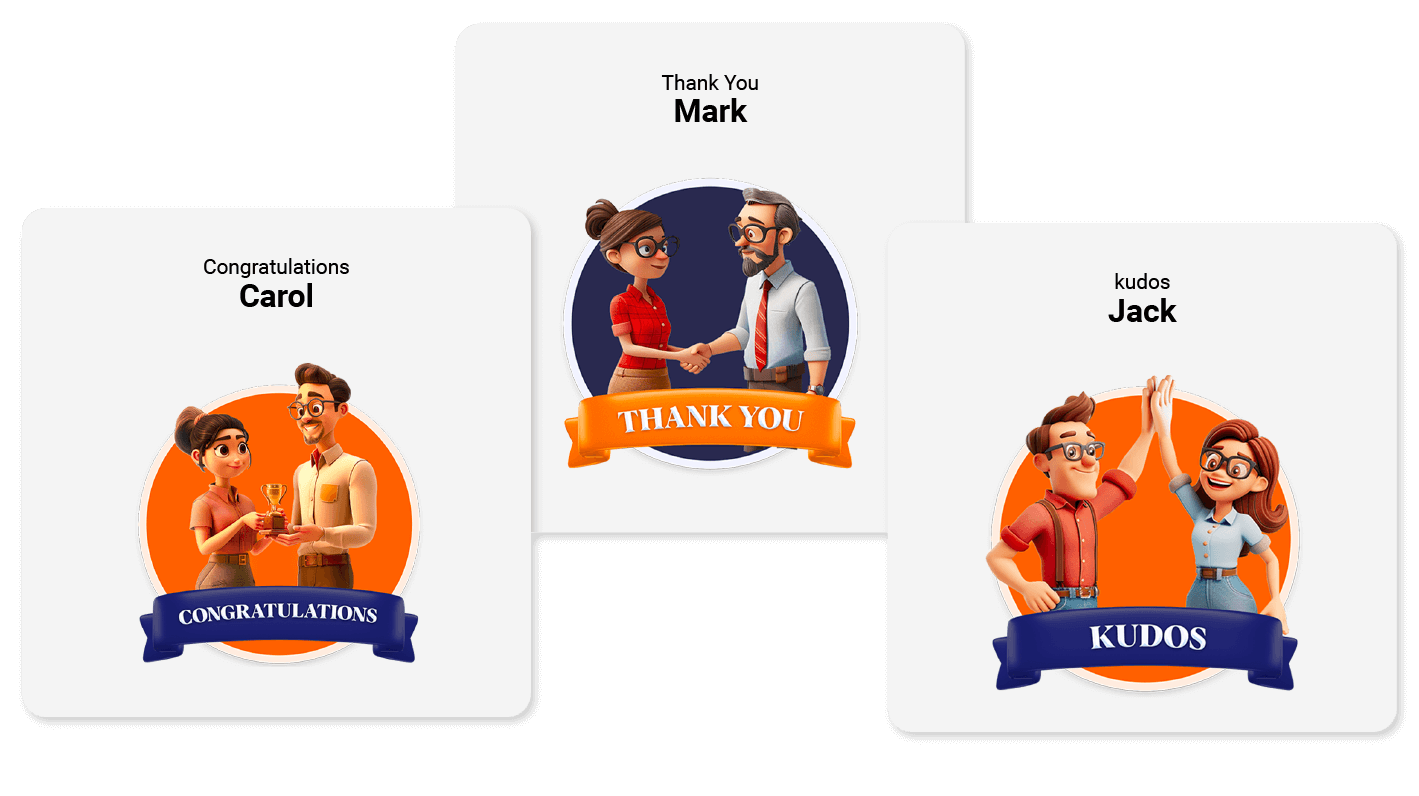
For example, internal communication channels like "#props-to-peers" let team members share appreciation messages. These messages are visible to the whole department. This kind of visible, shared appreciation is the essence of social recognition.
[Source: Vantage Rewards]
Manager-to-Employee Recognition
Developing appreciation as a core competency is necessary for effective manager recognition. This entails continuously spotting chances for recognition. It involves outlining precise contributions and business impact.
In team meetings, managers say, "Jessica's work on the database made report generation 40% faster. This helped us respond to clients better this quarter."
Spontaneous Appreciation Methods
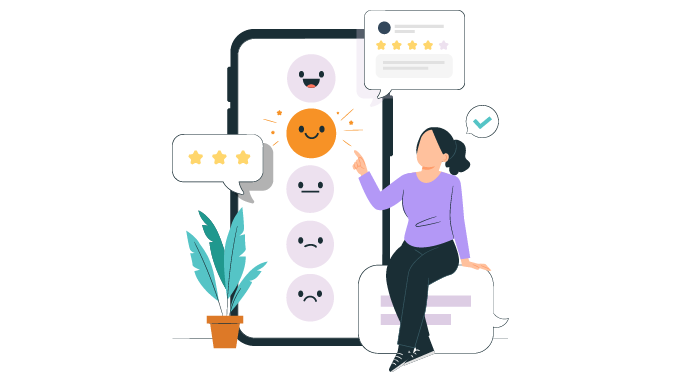
Spontaneous appreciation power is captured by spontaneous recognition. Try generating positive anticipation through unexpected recognition.
Surprise your team members with handwritten notes. Organize spontaneous celebrations that leave a lasting impression.
When Rachel got a big client, her manager quickly ordered pizza for the support staff, while announcing the strategies she used.
Best Practices for Implementing Meaningful Recognition
Here we have outlined the most effective practices for implementing meaningful recognition.
Core Implementation Principles
There are four fundamental principles you should focus on that will guide you with all aspects of your recognition programs.
Specificity and Clarity Requirements
You must have a thorough understanding of contributions to recognize them effectively. You must articulate the precise impact transparently. Moreover, you should invest time in understanding your team's work in detail.
For example, "Your analysis of customer feedback revealed three crucial enhancements. User satisfaction rose by 18%. We directly met our quarterly retention goals."
Timeliness and Frequency Guidelines
You need to keep in mind that delays reduce the effectiveness of recognition. One study found that delays make recognition less effective. The impact drops by about 50% in just 24 hours. Frequent acknowledgment of both smaller and larger contributions creates consistent recognition.
Personalization Strategies

Understanding individual preferences and career goals is necessary for effective personalization. Some of your employees would rather be acknowledged in front of the group during meetings.
Others cherish opportunities for personal development or appreciation. Individual differences exist in monetary motivation as well. Regular conversations can help you develop this understanding.
Authenticity and Sincerity Standards
Your authentic recognition must come from genuine gratitude, not duty or policy compliance. This requires genuine relationships and emotional intelligence.
Your employees can quickly spot fake recognition. This can undermine motivation and erode trust. Keep in mind that inadequate recognition is worse than none at all.
Step-by-Step Implementation Guide
Program Design and Planning
The first step should be to define clearly and objectively what behaviors your recognition should support.
- Which business results should your programs aim to achieve?
- How are you going to gauge success?
Recognition criteria should be in line with your programs' priorities and values. Establish a direct connection between each person's contributions and the business's overall success. If you're building a program from scratch, start by benchmarking where you sit today against the levels of recognition.
Training and Development

You must offer the structured training and development needed for recognition skills. This covers both practical application and conceptual understanding.
Your training should cover timing, customization, and communication techniques.
Make use of peer review meetings, role-playing games, and continuous coaching assistance for your managers.
Technology Integration
Technology should improve human connection, not replace personal interaction. Digital platforms make it easier to track and share recognition.
But the best recognition technology feels invisible. Through a personal touch, it preserves emotional ties while making it more straightforward to give and receive gratitude.
Cultural Integration Methods
Instead of considering recognition as an optional program, you need to integrate it into your company culture.
This implies integration into current workflows, consistent messaging, and leadership modeling. It must be incorporated into your current business procedures.
Overcoming Meaningful Recognition Implementation Challenges
Generic Recognition versus Meaningful Recognition Disconnect

Why is this a challenge
Employees' trust in you and your company declines when they receive inauthentic recognition because it feels fake. As per one study, employees lose 60% of their trust in management when they receive meaningless praise.
Generic compliments like "Good job" don't give any feedback. It provides no advice on how to carry on with certain behaviors. Your employees are left in the dark about the impact on the success of the organization.
How to overcome it
According to research by the Harvard Business Review, specific recognition improves performance 2.5 times more effectively than generic praise.
Employers should train managers to give meaningful praise. This praise should explain the employee's achievements and their importance to the company.
Time Constraints and Recognition Frequency
Why is this a challenge
31% of employees have cited a lack of time as the main barrier to giving recognition. While generic praise can be given quickly, managers must fully understand individual contributions to provide meaningful recognition. The work required to develop accurate, tailored responses is necessary for adequate acknowledgment.
How can you overcome it
Specific recognition is significantly more effective than generic praise, so your managers need to be trained to comprehend contributions fully.
They must offer thorough acknowledgements that clarify achievements and their significance. Develop systems that instantly record achievement details. Make use of peer review systems and project tracking tools.
Personalization versus Scalability
Why is this a challenge
Each employee has their preference when it comes to recognition. While some prefer private praise, others thrive on public recognition.
Personalized recognition involves customizing rewards and recognition to each employee's preferences, accomplishments, and personality. Many organizations struggle to manage the complexity that this creates effectively.
How can you overcome it
Start implementing recognition preference profiles. These represent each team member's preferred method of recognition. You can determine cultural preferences with the aid of digital platforms. While preserving program consistency, they offer suitable recognition techniques for various cultural contexts.
Authentic Connection in Recognition Programs

Why is this a challenge
Employees are 7 times more likely to perceive recognition as genuine when it feels meaningful and honest. However, it can be challenging to maintain this authenticity in structured programs, particularly in remote settings.
How to overcome it
Leaders must demonstrate dedication by modeling recognition behaviors and actively participating in recognition events. By genuinely getting to know employees as individuals and their values, you can personalize recognition so that it doesn't feel forced or transactional.
Leadership Engagement and Support
Why this is a challenge
One of the three most prevalent issues with employee recognition is a lack of leadership involvement. Employees seek validation from their leaders. This is why recognition programs often fail to have a lasting impact without support from executives.
How to overcome it
To bring about cultural change, obtain clear leadership support, and set an example of behaviors that are rewarded. Effective recognition strategies must be thoroughly taught to managers and staff by leaders, especially with a focus on timeliness, specificity, and personalization.
Budget Constraints and Cost Concerns

Why is this a challenge
Organizations frequently refrain from implementing recognition programs due to financial concerns. Many organizations are unable to provide substantial rewards or implement extensive recognition programs due to financial constraints. The most significant barrier to implementation is prohibitive costs.
How to overcome it
Research suggests that, when done correctly, non-monetary recognition can be just as effective. Increase efforts for non-monetary recognition, such as company spotlights, peer-to-peer recognition, and symbolic recognition.
Inconsistent Recognition Across Departments
Why is this a challenge
Inconsistent recognition in different departments can cause friction within your organization. Employees in one department may feel undervalued compared to their colleagues in other teams. This can lead to dissatisfaction and disengagement.
How to overcome it
Provide precise rules for when and how recognition should take place throughout the entire company. Create a central recognition system. This system will standardize how we recognize team members. It will also teach managers and team leaders to regularly acknowledge their team's efforts.
Unclear Recognition Criteria and Guidelines
Why is this a challenge
Frustration may arise when reward criteria are unclear. Employees become confused about what is eligible for recognition when a recognition system lacks clear guidelines. This results in uneven implementation and a sense of unfairness.
How to overcome it
Organizations should communicate recognition requirements, standards, and rules to maintain equity and openness. Use clear guidelines that help managers identify recognition opportunities. Tie recognition to strategic objectives and organizational values.
Manager Training and Skills Development

Why is this a challenge
Many managers struggle to recognize the contributions of their team members effectively. Manager awareness, skill, and dedication to using recognition are the fundamental components of sustained recognition.
How to overcome it
Managers should receive extensive training in recognition techniques. Active listening, feedback techniques, and avoiding typical recognition pitfalls should be part of the training.
Program Integration and Tool Accessibility
Why is this a challenge
20% of employees say they lack a defined procedure or resources for recognition. Companies haven't included recognition features in everyday tools. This creates barriers to regular recognition.
How to overcome it
You can consider implement digital platforms like employee recognition platform that facilitate recognition at every organizational level. Don't forget to align them with existing workflows. Recognition should not be seen as an add-on; it should be part of the organizational culture.
Meaningful Recognition in Nursing and Healthcare
Meaningful recognition is one of the American Association of Critical-Care Nurses' (AACN) six Healthy Work Environment (HWE) standards, first established in 2005 and updated in 2016. The standard calls for a comprehensive system, not just individual gestures, that consistently recognizes nurses and every team member for the specific value they bring to patient care.
This matters for retention. Nurses who feel individually and meaningfully recognized report greater fulfillment, and healthcare organizations that implement more of AACN's six HWE standards see measurably healthier work environments. The same principles that make recognition land in any workplace, specificity, personalization, and timeliness, are what the AACN standard asks healthcare leaders to build into formal processes rather than leave to chance.
The core mechanics don't change outside of healthcare. Whether you're running a hospital unit or a sales floor, generic praise still reads as an afterthought, and specific, values-linked acknowledgment still builds trust. For recognition program ideas built specifically for clinical teams, see our guide on employee recognition programs in healthcare.
Conclusion
Saying "thank you" isn't enough to achieve meaningful recognition. The goal is to show your employees that their efforts are valued by you, the team, and the company.
Recognizing employees by their specific accomplishments is a serious task.
And this timely, targeted, and personalized recognition remains. It increases loyalty, performance, and engagement. Unlike generic praises, which dwindle quickly
This is the first step in creating a high-performing culture, retaining top talent, and lowering burnout. Therefore, be consistent, start small, and scale wisely.
FAQs
What is meaningful recognition?
Meaningful recognition is authentic, specific, and timely acknowledgment of an employee's contribution that ties directly to what the organization values. It goes beyond a generic "good job" by naming the exact action taken and the impact it had, which is what makes the person feel genuinely seen rather than just thanked.
What is a good recognition message?
A good recognition message names the specific action, states its measurable impact, and connects it to a company value or goal. For example: "Your analysis of customer feedback revealed three key enhancements that raised user satisfaction by 18%, directly supporting our quarterly retention goal." It should be delivered promptly, ideally within 48 hours of the achievement. For more sample scripts, see our positive feedback examples.
What are the 4 types of recognition?
The 4 types of recognition, as categorized by Achievers, are informal, formal, social, and monetary. Informal recognition is unplanned, in-the-moment appreciation like a thank-you note; formal recognition is structured, such as service awards and promotions; social recognition is shared and visible, like a peer shout-out on a recognition feed; and monetary recognition includes bonuses, gift cards, and points-based rewards. For a deeper breakdown, see our full guide to types of employee recognition.
What does meaningful recognition look like?
In practice, meaningful recognition looks like a manager naming a specific contribution and its business impact, delivered soon after the fact, in the format that person actually values. It can be a peer shout-out on a recognition feed, a manager's comment in a team meeting that cites a real result, or a values-tagged award, as long as it is specific, timely, and personalized rather than a standardized, one-size-fits-all gesture.

Shaoni Gupta is a content marketing specialist at Vantage Circle, with expertise in scriptwriting and copywriting in the field of employee rewards and recognition.
Connect with Shaoni on LinkedIn.