
Have you ever been recognized in a way that truly spoke to who you are and what you’ve achieved, so much so that it stayed with you for weeks? That's the power of personalized recognition.
If you ask me, a simple "thank you" email or a generic company-wide shoutout rarely leaves a lasting impression. And, that's because the emotional connect is missing. It is the very factor that drives employee engagement.
"The true power of Recognition and Rewards lies not in what is given, but in what is genuinely felt."
— Partha Neog, CEO and Co-founder, Vantage Circle
When recognition feels flat, it fails to resonate on a personal level, becoming just another forgettable moment in a busy workday. Real appreciation is personal, meaningful, and unforgettable.
In this blog, I'll break down exactly how to craft employee recognition that hits differently. Whether you're struggling with quiet quitting or building a high-performance team, mastering personalized recognition might be your secret weapon.
So, let’s get started!
What is Personalized Recognition?
Personalized recognition is thoughtfully tailored appreciation that honors an individual's unique contributions, preferences, and identity.
To make recognition personalized it has to have these three elements:
The key to personalized recognition is to make it meaningful and authentic. Think of it as the difference between receiving a mass-produced greeting card versus a handwritten note that references your specific achievements.
Generic Recognition vs Personalized Recognition
The difference is not budget, it is specificity. Generic recognition is built around the program, while personalized recognition is built around the person.
| Generic Recognition | Personalized Recognition |
|---|---|
| Triggered by a date on the calendar (work anniversary, quarter-end) | Triggered by a specific action or outcome |
| Same message sent to everyone: "Great job, team!" | References the exact contribution and its impact |
| One reward format for the whole company | Delivered in the form the employee actually values |
| Sent automatically by HR or a system | Comes from someone who genuinely saw the work happen |
Why Personalized Recognition Works
Personalized recognition works because it signals attention, not just approval. The employee sees that the organization noticed the person, not only the output. That is a different message, and the retention data tracks it.
A generic "great job" acknowledges that work was completed. A thoughtful message that names the problem an employee solved, the choice they made, or the colleague they helped tells them their contribution was actually seen. Recognition becomes more credible when it reflects knowledge of the person and their work.
The data supports the importance of getting recognition right.
The Recognition Effect — GPTW India x Vantage Circle, 2025 · 5.7M employees across 2,000+ organizations
more likely to feel motivated when employees perceive recognition as fair.
more likely to stay when they perceive recognition as fair.
of employees in high-recognition cultures report feeling motivated at work.
say their organization is a great place to work in high-recognition cultures.
Fairness is the hinge. Personalization is one way organizations make fairness visible.
Consider three employees who deliver comparable results. One receives public praise because they enjoy being recognized in front of others. Another receives a learning opportunity because they value professional growth. The third receives a private note from their manager because public attention makes them uncomfortable.
The recognition is different, but the underlying standard is consistent: each employee's contribution is acknowledged in a way that feels meaningful to them. Without that consideration, even well-intentioned programs can create a recognition gap.
How to Personalize Recognition: A 4-Step Framework
Step 1: Learn What the Person Values
The first rule of personalized recognition is to ask people what they value. Personalization fails far more often from never asking than from never budgeting.
The questions do not need to be complicated. Add them to onboarding and revisit them during the first one-on-one of each year:
- When you do something you are proud of, would you prefer public or private recognition?
- Who would you most like to hear it from: your manager, peers, or senior leadership?
- If you received a reward tomorrow, what would you actually use or enjoy?
The answers should live somewhere managers can access before the next recognition moment, not in a spreadsheet that disappears into an HR folder. Preferences can change, too, so treat them as a starting point rather than a permanent profile.
At scale, short pulse surveys can reveal broader patterns across teams and employee groups. This is where reward segmentation becomes useful: segmentation helps identify what a group tends to value, while individual preferences prevent those patterns from becoming assumptions.
Step 2: Match the Form to the Person
The easiest way to personalize recognition at scale is to give employees more say in what they receive. Organizations often try to choose the perfect reward for everyone, but even a thoughtful reward can miss the mark when it is based on assumptions about what people want.
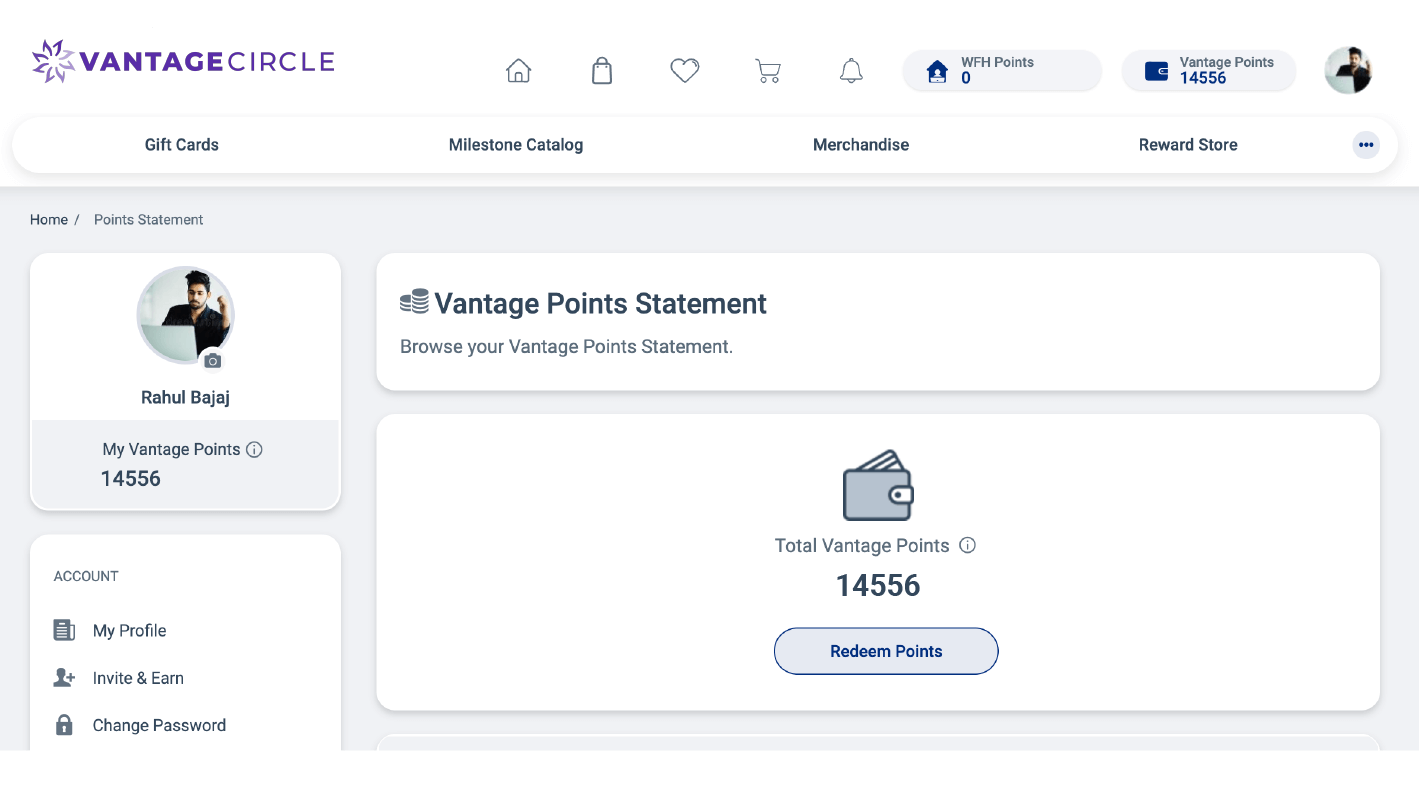
A points-based reward system changes that dynamic. Instead of deciding on an employee's behalf, the organization connects points to a specific contribution and lets the employee choose how to redeem them. The recognition remains consistent, while the reward becomes personal.
Source: Vantage Recognition
Step 3: Choose the Right Messenger
Recognition carries more weight when it comes from someone whose opinion the employee values and who understands the work being recognized. For many employees, it could be their direct managers. For others, it may be a peer who worked alongside them, a senior leader who noticed their impact, or a customer who benefited from their effort.
Gallup's research on memorable recognition found that employees most often identified their manager as the person who gave them the most meaningful recognition. Here's how the sources of the most memorable recognition break down:
The lesson is not that every recognition moment should come from the most senior person available. It is that the messenger should match the contribution and the relationship.
The goal is not to centralize recognition with managers or senior leaders. It is to make room for appreciation from the people who can speak about the contribution with credibility and specificity.
Step 4: Make the Words Specific
Name the behavior, explain its impact, and connect it to a value. That sequence turns recognition from a polite compliment into evidence that someone's work was genuinely noticed.
"Great job on the project" may be positive, but it could apply to almost anyone. Specific recognition gives employees something more useful: a clear understanding of what they did well and why it mattered.
A simple sentence pattern can help:
The Formula
"When you [specific action], it meant [specific effect]. That is [company value] in practice."
In Action
"When you rebuilt the onboarding deck the night before the Nashville pitch, the client stopped asking about implementation risk. That is ownership in practice."
Action Effect Value
The example works because it does more than praise the outcome. It identifies the action, shows the effect, and connects the contribution to a value the organization wants to reinforce. This is the foundation of focused recognition.
It is also the part managers often skip. Not necessarily because they do not care, but because writing a thoughtful message can feel difficult at the end of a busy day. "Thanks for all your hard work" is easier to type than explaining exactly what made the work valuable.
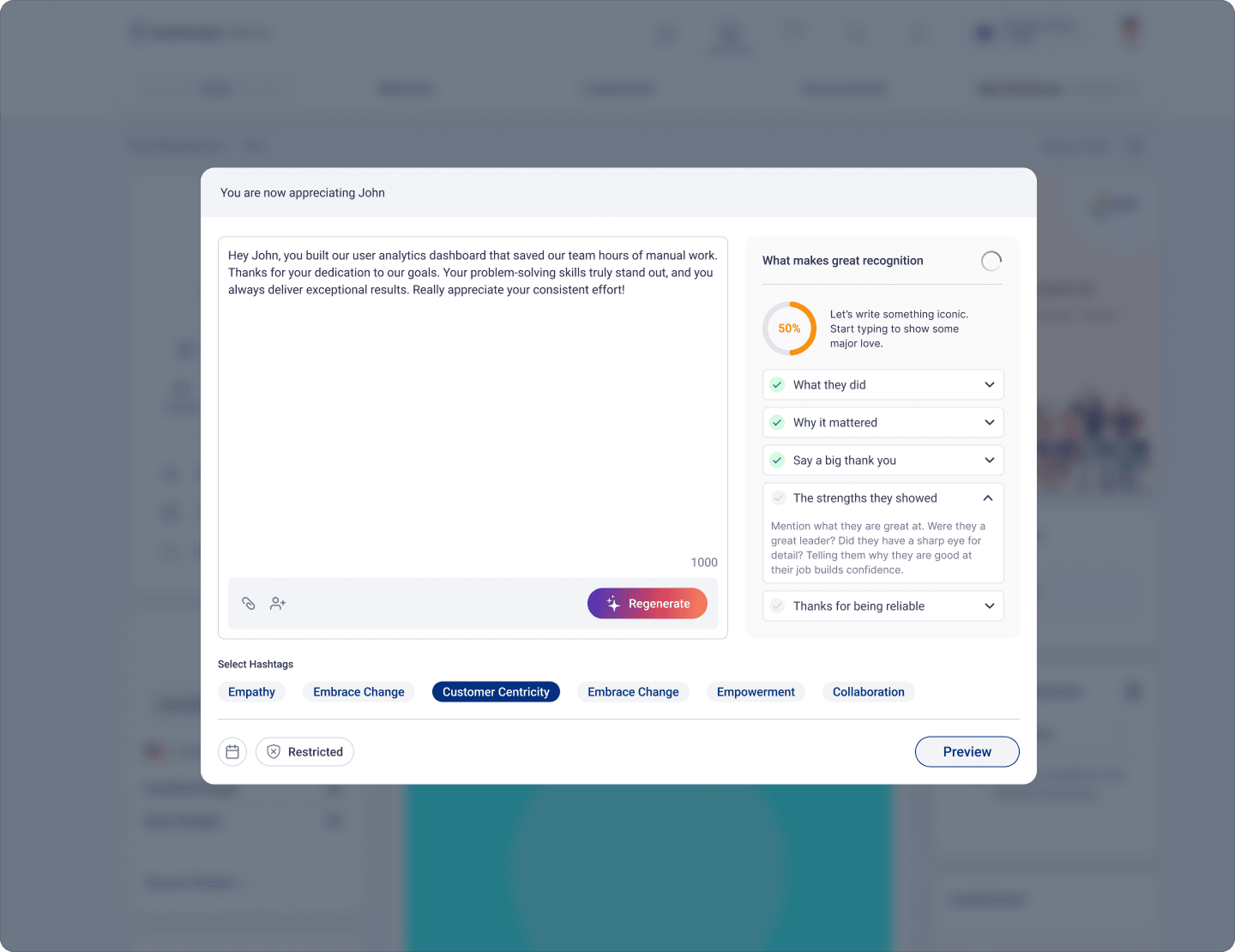
Technology can help with the wording, but it cannot supply the observation. The manager still needs to identify the contribution and provide the context. The tool simply helps turn those inputs into recognition that sounds more specific, relevant, and human.
Source: Vantage Recognition
Types of Personalized Recognition
Personalized recognition comes in many forms, and its effectiveness depends on both the individual employee and the company culture.
Here are some common types of personalized recognition:
| Type | Best For | How to Personalize It |
|---|---|---|
| Specific verbal or written praise | Everyday contributions and quiet work | Name the decision, not the outcome. Deliver it in the setting the person prefers |
| Choice-based rewards (points) | Any contribution worth a tangible reward | Let the employee pick the redemption. Never pre-select on their behalf |
| Experiences matched to interests | Milestones and standout projects | Tie the experience to a known interest: a concert, a class, a weekend trip |
| Growth opportunities | Early and mid-career employees | Offer the specific thing they asked for: a conference, a stretch project, exposure to leadership |
| Peer recognition | Distributed, cross-functional, and frontline teams | Let teammates write it themselves. Do not sanitize the wording |
1. Specific Verbal or Written Praise
A thoughtful message can be one of the most personal forms of recognition, especially when it names the contribution rather than relying on generic praise. A manager might recognize how an employee handled a difficult client, a colleague might acknowledge someone who stepped in during a deadline, or a senior leader might call out work that had a wider business impact.
2. Peer Recognition
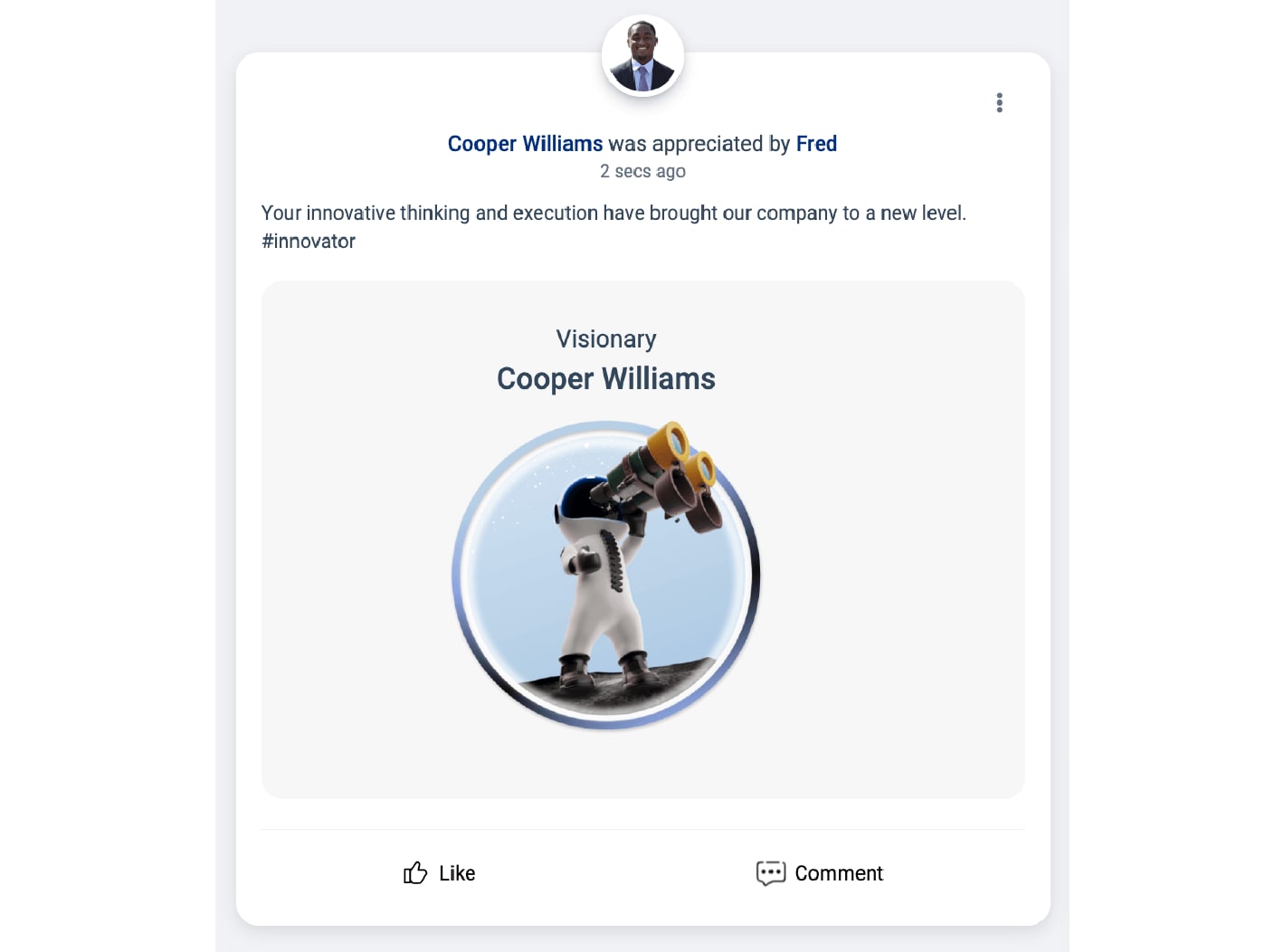
Peer recognition allows appreciation to come from the people who experience the work firsthand. A teammate may be best positioned to recognize someone for sharing knowledge, helping during a difficult project, making collaboration easier, or quietly supporting others behind the scenes. Because peer recognition is often immediate and grounded in shared experience, it can feel especially authentic.
Source: Vantage Recognition
3. Choice-Based Rewards
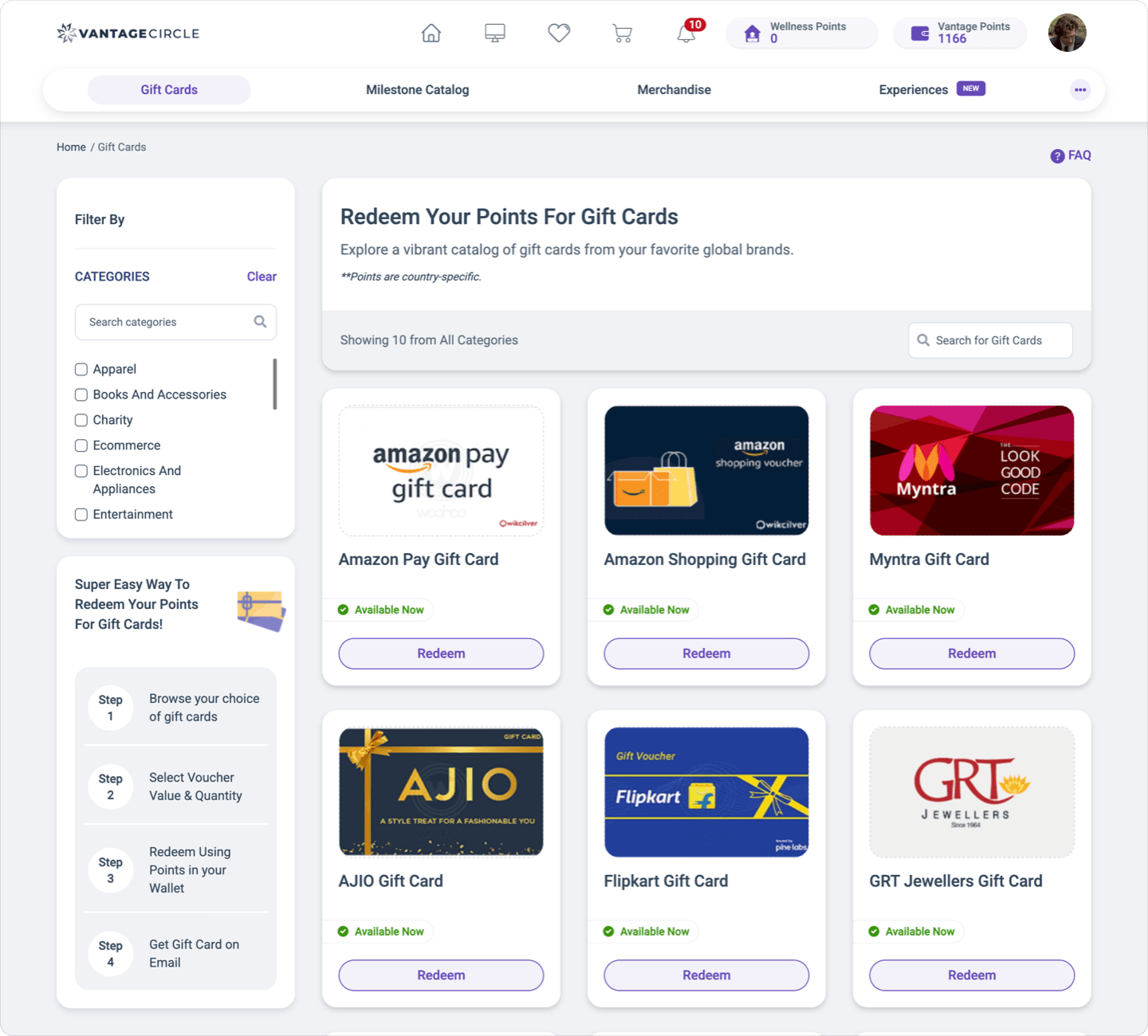
Choice-based rewards give employees control over what recognition looks like after they earn it. Instead of receiving the same gift card, merchandise, or reward as everyone else, employees can redeem points for something they genuinely need, enjoy, or value.
This approach makes personalization easier at scale. The organization sets the recognition criteria and reward budget, while the employee makes the final choice.
Source: Vantage Recognition
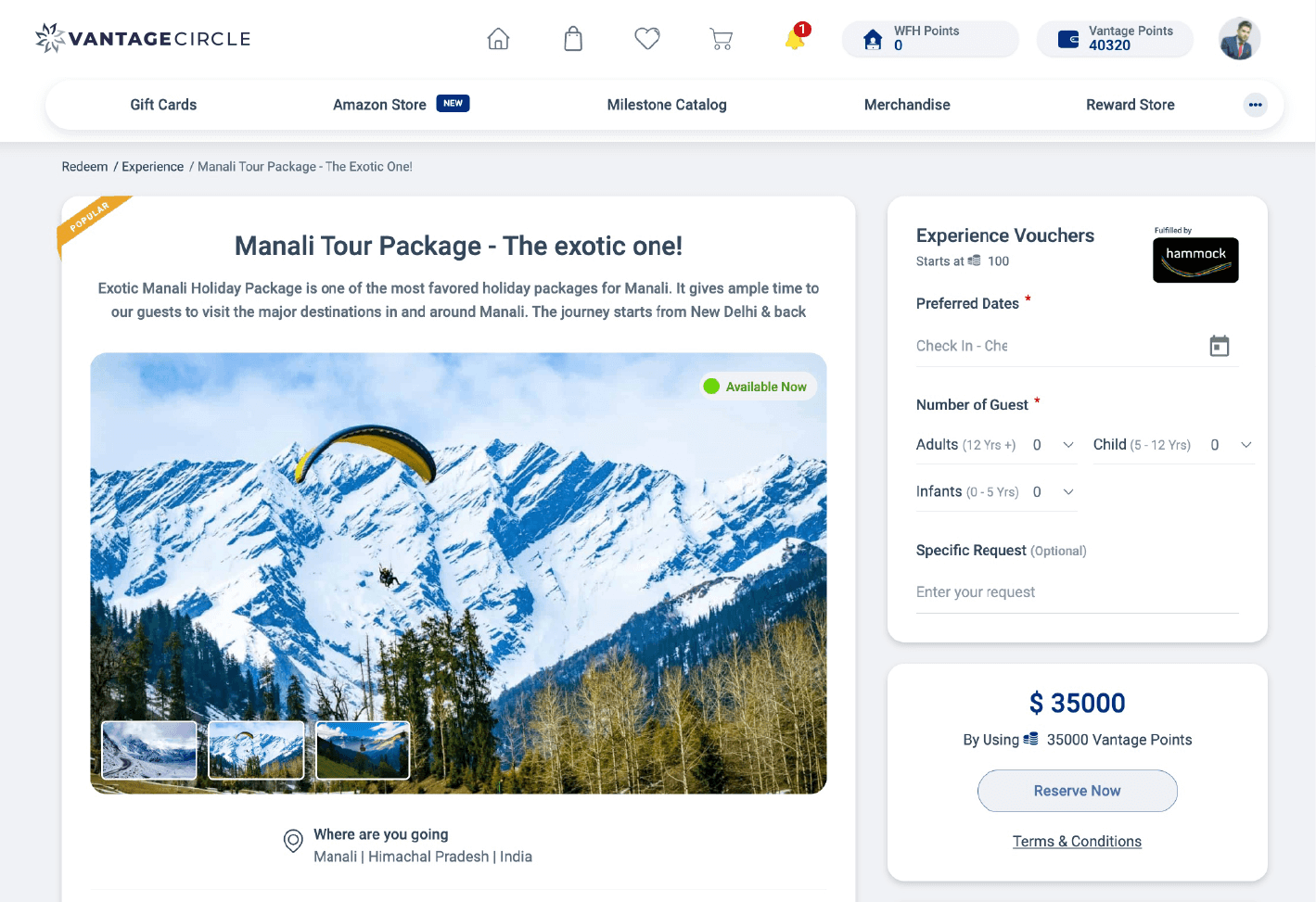
4. Experiences Matched to Interests
Experiences can make recognition feel more memorable when they connect with an employee's interests outside their day-to-day work. Depending on the person, that could mean a cooking class, concert tickets, a wellness activity, a weekend getaway, or a meal at a favorite restaurant.
The important part is to avoid assuming that one experience will appeal to everyone. An experience becomes meaningful when it reflects what the employee actually enjoys, rather than what the organization thinks makes a good reward.
Source: Vantage Recognition
5. Growth Opportunities
For some employees, the most meaningful recognition is an opportunity to develop rather than a physical reward. This could include access to a course, attendance at an industry conference, mentorship with a senior leader, participation in a high-visibility project, or time to explore a new skill.
Personalizing Recognition by Career Stage and Generation
Recognition preferences often have more to do with career stage than age. Earlier-career employees may value visible, frequent recognition that reinforces progress, builds confidence, and connects their work to future growth.
Meanwhile, later-career employees may place greater value on substantive acknowledgment of their expertise, judgment, and long-term contribution. These are useful patterns, not fixed rules.
The Recognition Effect, a 2025 report from Great Place to Work India and Vantage Circle, found that recognition experience varies by generation:
Gen Z
Millennials
Gen X
Share of employees who report a positive recognition experience, by generation
The figures suggest that younger employees may be experiencing recognition less consistently than their older counterparts. But the answer is not to assume that every Gen Z employee wants public praise or that every Gen X employee prefers a private note.
The more useful takeaway is to examine whether recognition is reaching employees in ways that reflect their level of experience, career expectations, and individual preferences.
| Cohort | What They Tend to Value | Example |
|---|---|---|
| Gen Z | Frequent, visible recognition that reinforces progress and builds confidence early on | A public shout-out in a team channel after completing a first solo project |
| Millennials | Recognition tied to growth, purpose, and how their work connects to a bigger goal | A manager linking a completed initiative to the team's broader mission |
| Gen X | Substantive acknowledgment of expertise, judgment, and long-term contribution | A private note recognizing years of consistent, high-trust decision-making |
One Caution
Never assume preference from generation alone. A 24-year-old engineer may dread public praise, while a 58-year-old plant supervisor may love the all-hands moment. The cohort table tells you where to start the conversation, not what to conclude.
Personalizing Recognition for Remote, Hybrid, and Frontline Teams
When teams are distributed, hybrid, or deskless, the challenge is not changing the principle of recognition. It is changing the way recognition reaches people. The informal moments that make appreciation feel natural, such as a hallway compliment, a quick desk-side thank-you, or a conversation after a shift, do not happen equally across every workforce.
Personalization, therefore, must account for where employees work, how they communicate, and who is most likely to see their contributions.
Remote Employees
Remote employees often miss the spontaneous recognition that happens in physical workplaces. Written recognition works better than verbal here because it can be reread, forwarded, and kept.
Ask remote employees whether they want recognition in the team channel or in a direct message; the answers split more evenly than managers expect.
Hybrid Teams
Hybrid work introduces a different risk: proximity bias. Employees who spend more time in the office may receive more spontaneous recognition simply because their work is more visible.
The solution is not to question managers' intentions, but to examine the distribution of recognition across locations, schedules, teams, and roles.
Ask whether remote employees are being recognized as often as their in-office peers, whether important contributions are visible to decision-makers, and whether recognition channels work equally well for both groups.
Frontline and Deskless Employees
Frontline and deskless employees need recognition that fits into the realities of their workday. A process that requires a laptop, a long form, or access to a corporate inbox may exclude the very people whose contributions deserve attention.
Recognition should be mobile-friendly, easy to give during or immediately after a shift, and accessible without requiring employees to sit at a desk. Shift-level peer recognition, quick supervisor nominations, mobile reward redemption, and team-based acknowledgments can make appreciation part of the working day.

Vantage Influencers Podcast
Impactful Global Strategies For Inclusive Rewards & Recognition
Meghdoot Mukherjee, Head of Compensation & Benefits at the India Center of Excellence for Booking Holdings
Listen to the Episode10 Personalized Recognition Examples and Messages
Below are 10 personalized recognition examples, each with a message you can adapt in under a minute. Notice what they share: a named behavior, a named effect, and no adjectives doing the work alone.
The quiet fix nobody saw
An analyst catches a broken formula before a board deck goes out.
“You caught the error in the Q3 model before it reached the board. Nobody would have noticed if you had let it go. You did not. Thank you.
The unglamorous rescue
Someone covers a colleague's shift on short notice.
“You took Priya's Saturday shift with 4 hours' notice and the floor never slipped. That is the kind of thing a team remembers.
The hard conversation
A manager gives difficult feedback well.
“You gave Marcus feedback he needed and did it in a way that kept him in the room. That is the harder version of good management.
The first-time win
A new hire ships something on their own.
“Your first solo client call, and you handled the pricing question better than most of us did in year 1. Well earned.
The 2-year grind
A long, invisible project finally lands.
“You carried the migration for 22 months, through 2 reorgs. The people using it every day have no idea how hard that was. We do.
The person who trains everyone
A senior teammate keeps onboarding new hires.
“Every new hire on this team says the same thing: you were the one who made it make sense. That is 6 people you have set up to succeed.
The customer save
Someone turns around an unhappy account.
“The Cleveland account was 1 call from churning. You listened for 40 minutes before you said a word about renewal. That is why they stayed.
The idea that got adopted
A process suggestion becomes standard practice.
“Your intake checklist is now how the whole department works. You did not ask for credit for it, so here it is.
The peer-to-peer note
A teammate recognizes a teammate.
“You unblocked my sprint twice this month and never once made me feel like I was interrupting. Sending you points because I mean it.
The milestone with substance
A work anniversary that says something real.
“5 years, and the thing that stands out is not the tenure. It is that 3 of the people you hired are now leading their own teams.
Common Personalization Mistakes
1. Assuming Preference from Role
It is tempting to believe that sales employees enjoy public praise, engineers prefer private acknowledgment, or senior employees only value formal awards. These assumptions may occasionally be accurate, but they are unreliable as a recognition strategy.
Instead, use role, department, and career stage to identify possible patterns, not to make final decisions. The individual is still the best source of information.
2. Personalizing the Gift but Not the Message
An engraved trophy, branded item, or carefully selected gift card can still feel impersonal if it comes with a generic message. The words provide the context. They explain what the employee did, why it mattered, and why the organization chose to recognize it.
A modest reward paired with a thoughtful, specific message can feel more meaningful than an expensive gift attached to a standard card.
3. Over-Personalizing Until It Feels Invasive
Personal recognition requires knowing something about employees, but that does not mean every personal detail belongs in a recognition message. Referencing someone's medical leave, family situation, financial difficulty, or private struggle in a public setting can turn appreciation into unwanted exposure.
Use information employees have willingly shared and that is relevant to the recognition. When in doubt, keep sensitive details out of public messages and ask whether the employee is comfortable with the recognition being shared.
4. Reserving Personalized Recognition for Top Performers
Employees contribute in different ways. Some deliver major business outcomes, while others support teammates, solve recurring problems, improve processes, mentor colleagues, or keep operations running smoothly. Those contributions also deserve to be noticed.
Recognition is already scarce enough without narrowing it further. Only 2% of employees receive daily recognition, and 29% report receiving none at all. Reserving personalization for a handful of standout performers only widens that gap.
Personalization should improve the quality of recognition across the workforce, not narrow who receives it.
5. Doing It Once and Calling It a System
One well-written message in March cannot compensate for nine months of silence. Recognition loses its meaning when personalization appears only during annual awards, milestone celebrations, or occasional engagement campaigns.
The goal is not to create a few impressive recognition moments. It is to build a consistent habit of noticing and acknowledging contributions throughout the employee experience.
Conclusion
In a world driven by automation and digital communication, genuine appreciation stays with us even after the project ends. And the best part about personalized recognition is that it doesn't always require a large budget or extensive planning.
Start small by incorporating one or two of these approaches into your leadership practice. Notice how your team responds. Over time, you'll develop an instinct for recognizing people in ways that truly matter to them.
FAQs
What are Good Employee Recognition Ideas?
Good employee recognition ideas include specific praise, peer-to-peer appreciation, choice-based rewards, professional development opportunities, extra time off, and experiences aligned with employees' interests.
What are Some Examples of Personalized Employee Appreciation Gifts?
Personalized gifts can include preferred gift cards, hobby-related items, books, wellness experiences, meal vouchers, travel experiences, or charitable donations.
What are some Fun Employee Recognition Awards?
Fun recognition awards can include "Problem-Solver of the Month," "Team Energy Booster," "Customer Champion," "Behind-the-Scenes Hero," or "Most Helpful Teammate."
What are some Good Words to Recognize an Employee?
Use specific words that describe the employee's contribution, such as dependable, thoughtful, resourceful, collaborative, proactive, or resilient.

Shikha Gogoi is a Content Marketing Specialist focused on SEO-driven content around employee engagement, recognition, and workplace culture, helping build people-first workplaces.
Connect with Shikha on LinkedIn.