How To Create An Engaging Culture In The New Normal
Episode Overview
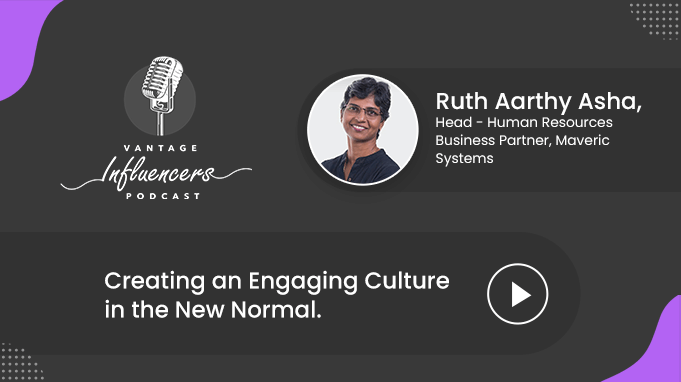
Ruth Aarthy Asha, Head of HR Business Partnering at Maveric Systems, joins the podcast during the early months of the pandemic to unpack what employee engagement really requires once the familiar rituals of office life (coffee breaks, hallway greetings, casual desk side check ins) disappear overnight. Her central argument is that engagement is not a program bolted onto work, it is a byproduct of culture and leadership. Where leaders model empathy, stay transparent about financials and business decisions, and offer genuine flexibility around personal needs, teams stay connected even when they are working from separate rooms, separate cities, and sometimes separate emotional states. Where that kind of leadership is missing, no survey or engagement initiative can make up the difference.
Her sharpest point cuts against a common assumption: technical skill and people leadership are not the same competency, and organizations often promote for the former while expecting the latter to follow automatically. Ruth describes coaching talented, innovative managers who struggled to lead people well, not for lack of care, but because they had never been asked to practice patience and tolerance as a skill in its own right. Her fix at Maveric was concrete: rather than leaving engagement solely to HR, she asked leadership to nominate specific manager champions to drive engagement within their own teams, with HR acting as a support partner rather than the sole owner. That shift, from HR owning engagement to managers owning it with HR backing them, is what she credits for closing the gap between well intentioned leaders and genuinely engaged teams.
Episode Highlights
- Employee engagement is a byproduct of culture and leadership, not a stand alone initiative layered on top of daily operations.
- During the shift to remote work, frequent informal check ins and empathetic conversations about associates' home situations reduced stress more than formal delivery meetings did.
- Disengagement shows up in visible signs: unexplained absences, resistance to team initiatives, friction with managers, and a general disconnect from peers and leadership.
- Maveric Systems built its engagement approach around visible career growth paths, frequent skill development, and transparency on financials and expansion plans.
- Being technically brilliant does not make someone a good people manager; some of the most innovative leaders struggle most with patience and connection.
- Rather than centralizing engagement inside HR, Ruth had leadership nominate manager champions to drive engagement within their own teams, with HR supporting from the side.
About the Guest
Ruth Aarthy Asha, Head, HR Business Partner, Maveric Systems
Ruth Aarthy Asha brings more than 23 years of experience in HR to her role at Maveric Systems, where she aligns the HR function with business strategy and transformation. Her core strengths span business partnering, talent management, performance management systems, OD strategy, employee experience, communication platforms, HR policy design, and HR operations. Before joining Maveric, she held HR roles at GAVS Technology, Capgemini, Gislen Software Private Limited, Polaris Financial Technology Limited, and JTS Technology, and she is an alumna of the University of Madras.
Host
Susmita Sarma, Vantage Influencers Podcast Host
What You Will Learn
- How to treat employee engagement as an outcome of culture and leadership rather than a separate initiative.
- Practical ways to spot employees who are quietly disengaged before it starts affecting performance.
- Why frequent, informal check ins matter even more during periods of remote or hybrid work.
- How to build career growth, skill development, and financial transparency into an engagement strategy.
- Why technically strong leaders may need extra coaching to become strong people managers.
- How to shift engagement ownership from HR alone to managers who are supported by HR.
Key Topics & Timestamps
| Timestamp | Topic |
|---|---|
| 01:03 | Ruth's journey across HR roles in the corporate world |
| 02:30 | The role of employee engagement as COVID-19 disrupts work |
| 04:10 | Spotting frustrated or disengaged employees |
| 05:50 | Employee engagement best practices at Maveric Systems |
| 07:10 | Challenges leaders face while engaging their teams |
| 09:49 | Working under a supervisor who doesn't prioritize engagement |
| 11:39 | How engagement will need to change after the pandemic |
| 13:20 | Advice for HR on building an engaging culture in the new normal |
Full Transcript
Click to read the full episode transcript
Welcome to the Vantage HR Influencers Podcast. This podcast is sponsored by Vantage Circle, the leading employee benefits and engagement platform. As companies navigate a new normal, employee engagement is more important than ever. It provides employees with optimistic feelings and thrives in a working environment that promotes communication, growth, development, respect, and trust.
Susmita Sarma: Hello everyone, this is Susmita from the Vantage HR Influencers Podcast, and today we're having a discussion on creating an engaging culture in the new normal. With me is Ruth Aarthy Asha, who is the Head, Human Resources Business Partner at Maveric Systems. Ruth comes with a total experience of more than 23 years in the HR industry. At Maveric, she specializes in aligning the HR function to business, focusing on transformation and strategy. Her core competencies lie in business partnering, talent management, performance management systems, OD strategies, employee experience, communication platforms, designing HR policies, and HR operations. Welcome to the show, Ruth.
Ruth Aarthy Asha: Hi Susmita, my name is Ruth.
Susmita Sarma: Before we start, please tell us a little more about your journey in the corporate world.
Ruth Aarthy Asha: It's been a challenging experience, and also one of continuous learning and unlearning. I've spent a good part of my career in the IT industry, and I've had the opportunity to work closely with CEOs and CFOs, which has kept me deeply invested in the business itself, not just in HR as a function on its own. I often wondered what was really driving me: was it the professional targets, the numbers, the customers? Over time I realized it was really about preparing the organization's mindset for the years ahead and building a robust future leadership pipeline. Having played roles across both corporate HR and business HR has made me more comfortable handling difficult situations, even when they've been genuinely tough at times. What I value most is that I've stayed connected with the people I've worked with over the last twenty years. The teams have been patient with me, and I've genuinely enjoyed those conversations with people across HR, feeling that I've left a professional footprint with them. It's been a rewarding journey, especially having worked with organizations that valued good ethics.
Susmita Sarma: Coming to today's topic: there's no question that COVID-19 has upset the working world and prompted a number of changes. Employees are stressed and distracted, workforces are compressed as employers struggling financially are forced to make layoffs, and employees are taking on extra work as a result. In such a situation, what do you think is the role of employee engagement in workplaces?
Ruth Aarthy Asha: Frequent check ins, paired with support around delivery, matter a great deal. I strongly feel that the way we're all working right now is very individual and private: you don't always know if someone is working alone in a single room apartment or with their family right beside them during an online session. Being empathetic goes a long way in understanding that reality. Leadership needs to stay empathetic about the working model while still engaging with clients, and frequent communication along with casual catch up calls eases a lot of the stress associates are carrying. When we ran a survey in the early phases of the COVID lockdown, the responses largely pointed to a need for more frequent check ins and catch up calls beyond just delivery meetings. So we started scheduling discussions with business leadership that made room for lighter moments alongside the work, and associates have genuinely been enjoying those sessions.
Susmita Sarma: So how do you identify employees who are not engaged, or who are frustrated or disengaged?
Ruth Aarthy Asha: The first signal often comes through customer feedback, or through a dip in performance. Managers can also easily sense whether an associate is connected or working in silos, disconnected from the team; that's an easy pickup for everyone, even other team members. You'll notice someone who is consistently at odds with others or overly aggressive, someone who won't participate and even resists initiatives coming up within the team. They never quite align with the manager or with their teammates, and it's very evident. These aren't traits specific to this particular period, they're commonly observed patterns. Other signs include unexplained absences from the desk, long breaks taken without informing anyone, or spending a lot of time on personal calls in the corridors. You'll typically see this among people who were already less engaged to begin with, who have a history of such behavior, or who may be serving out a notice period. Those are all fairly visible signals, whether it's someone spending unusual amounts of time in the cafeteria, on the balcony, or away at lunch.
Susmita Sarma: So what, according to you, are the best practices for employee engagement? Are there any processes that you follow at Maveric Systems?
Ruth Aarthy Asha: Yes, we have an endless list, but I think it largely depends on culture and leadership. Maveric has embraced a very distinct model of culture for the last twenty years: one that is empathetic, people driven, and highly conscious of associates' career growth. We run several initiatives focused specifically on career growth, and our learning and development platform is built to support that kind of ongoing development and change. Skill enhancement is monitored frequently and taken care of to the point where competencies get genuinely built into the system. Even our lateral hires have been giving us positive feedback and, quite frequently, referring new applicants. That's really where we've been very accommodating, both about the culture and about our people.
Susmita Sarma: Right, so do your leaders face any major challenge while engaging their employees?
Ruth Aarthy Asha: Every organization definitely has its challenges, and I wouldn't rule that out for us either. But drawing on the best practices we follow at Maveric and elsewhere, and on my own past experience, I'd say we try to be an inspiring organization that runs the race alongside our associates and keeps them aligned to shared goals. There's a lot of transparency around financials and expansion plans, and a lot of employee programs are actually built by brainstorming with the associates themselves. When that transparency and involvement are missing, that's when engagement becomes a real challenge. I'd add a culture of fairness and honesty to that list too, and all of it begins with leadership. If you don't have a good boss or a good CEO at the top, the whole thing falls apart. Flexibility matters just as much: accommodating an associate's personal needs, like picking up a child from school during work hours and giving them that window of about twenty minutes. Both male and female associates value that kind of flexibility to manage a personal need, and feeling understood in that way matters a great deal. Hiring also makes a real difference: when you bring the right pedigree into the system, it changes things. That's something I'd say to the wider HR fraternity too: we need to invest much more in potential assessment models and in employee referrals, which are one of the most effective tools for bringing in the best talent. We need to make associates' potential visible by looking closely at their track record, their past accomplishments, and their style of working, so we bring out the best that's already inside them.
Susmita Sarma: So there are many companies in India who don't care about employee engagement. In that circumstance, how can an employee deal with a supervisor who does not care about employee engagement?
Ruth Aarthy Asha: We rarely come across genuinely bad people, but it's fairly common to find managers who simply aren't tuned in to employee engagement, some even refer to their team members as resources rather than by name. That may not be surprising to those of us who've experienced it, but as HR leaders, we have to work with it: understand each manager's strengths, and walk that path alongside them. I've worked with technical leaders who were highly innovative and creative but turned out to be poor people managers. Learning to lead people is imperative, and it's an inevitable part of the process as they grow. In one case, I put the responsibility back on the leadership team, asking them to identify specific managers within the system to drive engagement initiatives, while I stayed involved only as the HR business partner supporting those nominated people managers. While doing this, I noticed the same manager come back to me several times seeking support on decisions, which was a genuine sign that even though he wasn't naturally a people person, he wanted to support his team and was trying to catch up. That's where real transformation begins, though it's a long journey, and it does pay off over time. As HR professionals, we need to be patient, and above all tolerant, with these managers as they work through their own struggle to get there.
Susmita Sarma: Right, so do you think that there will be any changes required in the way employees were engaged prior to this pandemic? And if so, what will engagement look like after the crisis is over?
Ruth Aarthy Asha: It used to be easy to greet each other while picking up a coffee, or to stop and chat while walking past a colleague on the way to the restroom, and it will likely be difficult for people to get back to standing close by and talking the way they once did. It's easy to have a conversation over the phone, and we've grown used to that over the last five months; I don't know how long that will persist. I think breaking that monotony will require a lot more connection and communication. As an HR person, I'd say that regardless of meeting schedules and delivery timelines, we need to make people feel wanted within the system. It's not just about job security, it's about them feeling insignificant in their day to day presence. Reassuring associates that they are performers, that they are the backbone of the organization, goes a long way. They've been driving the organization through the last few months while away from office premises, still holding the business together and helping the transition succeed. It's going to be a challenging transition, but as HR professionals, we need to make up for all the ground we've covered, and all the change we've absorbed, over the last five or six months.
Susmita Sarma: So would you like to give any suggestions to HRs for creating a better, more engaging culture in the new normal?
Ruth Aarthy Asha: We have to be more flexible. It's a well known fact globally that people are spending more than eleven or twelve hours at work, and that shift has been different and difficult for people across the board. As associates return to some normalcy back at the office, HR needs to acknowledge and communicate that yes, being back at work is required, but we've also been living this new normal for the last five or six months, and that transition needs to be handled with care. This becomes essential for HR professionals to hand hold and push through the floor with managers as well, because once people are back, it becomes about revenue, numbers, deliverables, and customers again. That makes it essential for us to educate associates and bring them into alignment. I also think communication needs to be strengthened and made more frequent, not necessarily just from the HR desk, but from across the organization: from the communication team, from the CEO's desk, from business heads. All of that matters, and it gives associates the confidence that they are progressing and that they are wanted in the system. There's a lot more nuance to it, but when we talk about HR practices in general: let's be open, let's be fair in how we treat our associates, and let truthful communication do the rest. It goes a long way.
Susmita Sarma: So nicely explained, Ruth. In case our listeners want to know more about employee engagement in the workplace from you, please let us know how they can reach out to you.
Ruth Aarthy Asha: I have my official email address at Maveric Systems, and listeners can also reach out to our communication team since it's available on the company website. They're welcome to follow us on LinkedIn as well for the latest updates.
Susmita Sarma: Great, we'll put that in the show notes. That was a great conversation with you, Ruth. Thanks a lot for joining me.
Ruth Aarthy Asha: Thank you, thank you Susmita, thank you so much.
Thanks for listening to the Vantage HR Influencers Podcast. Please do subscribe to the Vantage HR Influencers Podcast on Apple Podcasts and Spotify for new episodes.
FAQ
How does workplace culture affect employee engagement?
Ruth argues that engagement is largely a byproduct of culture and leadership rather than a program run on the side. Where leadership is empathetic, transparent about financials and business decisions, and consistently fair, associates feel connected and stay engaged even during difficult periods like the pandemic. Where that foundation of leadership is missing, engagement initiatives on their own cannot make up the difference.
How can managers spot disengaged employees?
Ruth points to visible behavioral signals such as unexplained absences, long unaccounted for breaks, resistance to team initiatives, friction with managers and peers, and a general sense of working in silos. Customer feedback and dips in performance are also early indicators that a manager or HR partner can act on before disengagement becomes entrenched.
Can a great technical leader also be a poor people manager?
Yes, and Ruth says this is a pattern she has seen repeatedly. Highly innovative and technically skilled leaders can still struggle to lead people well because leading people requires patience and tolerance, skills that are not automatically part of technical expertise. She addressed this at Maveric by having leadership nominate specific manager champions to drive engagement, with HR supporting them rather than owning the initiative outright.
How should employee engagement change in a hybrid or remote work environment?
Ruth recommends more frequent, informal check ins that go beyond delivery and status meetings, paired with genuine empathy for each associate's home situation. She also stresses reassuring people that they are valued contributors and not just resources, since remote work strips away the casual, in person moments that used to convey belonging.
Related Reading
Also listen on