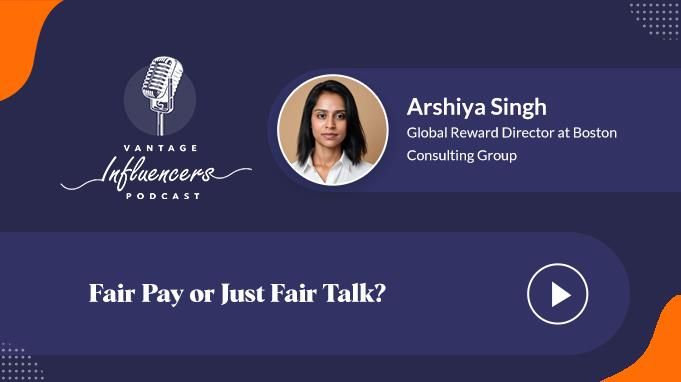
What Employee Benefits Work Best and What Don't?
Episode Overview
Enrique Rubio built his career journey from electronics engineering into human resources before founding Hacking HR, a global learning community that brings HR practitioners together to rethink benefits for a changed world of work. His central argument is that the traditional definition of employee benefits (salary, paid time off, tuition support) sells the concept short. He reframes benefits as everything an organization uses to compensate people, not only financially, and to give them a genuinely good experience at work so they can deliver high performance. That reframing only holds, he stresses, once a company clears a baseline: employees have to be paid fairly before any other benefit conversation matters.
Once that baseline is met, Enrique's sharpest point is that flexibility, broadly defined as letting employees decide the how and when of their work rather than dictating it, has become the single most powerful benefit across every generation, a shift he traces directly to the pandemic. He backs this with concrete examples: large employers such as SAP, IBM, Deloitte, Microsoft, Google, Facebook, TikTok, and PwC have told tens of thousands of employees they do not have to return to the office, and he argues the data now shows flexible workers are more productive, not less. He is equally clear that flexibility looks different by role (a barista or hospital receptionist cannot work remotely) and that companies must set those boundaries transparently rather than pretend the same policy fits everyone.
Episode Highlights
- Enrique redefines employee benefits as everything a company uses to compensate and support people, not just salary, PTO, or tuition assistance.
- Fair pay is the non-negotiable baseline: no other benefit conversation matters if employees feel underpaid for their work.
- Flexibility, letting people choose how and when they work, has become the most desired benefit across generations since the pandemic.
- Enrique distinguishes flexibility from work-life balance, framing it instead as handing employees control over the how and what of their schedule while HR communicates the why.
- Large employers like SAP, IBM, Deloitte, Microsoft, Google, Facebook, TikTok, and PwC have shown flexibility scales even across tens of thousands of employees.
- Flexibility cannot be one-size-fits-all: roles that require a physical presence, like a barista or hospital receptionist, need different forms of flexibility, and HR must communicate those boundaries with transparency.
About the Guest
Enrique Rubio, Founder, Hacking HR
Enrique Rubio is an HR, technology, and future of work expert, keynote speaker, and founder of Hacking HR, a global learning community operating at the intersection of the future of work, technology, business, and organizations, with thousands of members worldwide. He is ranked among the top 100 HR global influencers. Before founding Hacking HR, Enrique was the founder and CEO of Management Consultants, a Human Resources firm in Venezuela, and earlier worked in telecommunications as a Senior Project Engineer for Telefonica and other companies. He has advised the Chief Human Resources Officer at the Inter-American Development Bank and has contributed as a guest author to several publications on innovation, management, and human resources. Enrique is a Fulbright Scholar with more than twenty years of experience, an Electronics Engineer, and holds an Executive Master's in Public Administration from the Maxwell School at Syracuse University.
Connect with Enrique on LinkedIn
Host
Susmita Sarma, Vantage Influencers Podcast Host
What You Will Learn
- Why the traditional definition of employee benefits (salary, PTO, tuition help) sells the concept short.
- Why fair pay has to be the baseline before any other benefit initiative can work.
- Why flexibility, not perks, has become the most valued benefit across every generation since the pandemic.
- How to give employees control over the how and what of their work while HR still owns the why.
- How large enterprises have rolled out flexible, remote-friendly policies at scale without losing productivity.
- How to design flexibility fairly for roles that require a fixed physical presence.
Key Topics & Timestamps
| Timestamp | Topic |
|---|---|
| 01:06 | Enrique's journey from engineering to HR entrepreneurship |
| 02:09 | What Hacking HR does as a global learning community |
| 04:16 | Defining employee benefits beyond salary and PTO |
| 05:52 | Why flexibility is the top benefit across generations |
| 13:27 | Finding the right benefits program for a multi-generational workforce |
| 21:42 | Employee benefits software and platforms |
| 24:02 | Companies with standout employee benefit packages |
| 25:50 | Enrique's closing advice for HR leaders |
Full Transcript
Click to read the full episode transcript
Welcome to the Vantage HR Influencers Podcast. This podcast is sponsored by Vantage Circle, the simple and AI-powered rewards and recognition platform for employee engagement. Employee benefits are changing dramatically as the workplace evolves. If you ask any employer how important employee benefits are to achieving the company's objectives and goals, they will tell you that they are extremely crucial. In fact, they are growing increasingly attentive to their employees' requirements, and are attempting to match their benefit plans to those demands. In this episode of the Vantage HR Influencers Podcast, let's know more about employee benefits.
Susmita Sarma: I'm Susmita Sarma. Today our guest speaker is Enrique Rubio, an HR, tech, and future of work expert, keynote speaker, and founder of Hacking HR, a global learning community at the intersection of the future of work, technology, business, and organizations, with thousands of members from all over the world. Welcome to the show, Enrique.
Enrique Rubio: Thank you. Thank you for inviting me.
Susmita Sarma: Once again, thank you so much for joining me. So before we start with today's topic, employee benefits, give us a brief about your journey in the corporate world.
Enrique Rubio: Yeah, well, just briefly, I started my career as an engineer. I am an electronics engineer, and then a little over ten years ago, I got a little bored of just working with technology, even though I love technology, and I wanted to do something different. And I found the world of human resources, and I became very passionate about it and decided to switch from engineering to HR. So I started working in consulting, then I did corporate work, and now I'm full time with Hacking HR. That's how my career started: from engineering to HR to entrepreneur, and all the pieces come together very nicely in all that I do.
Susmita Sarma: Right. So what's Hacking HR about? What do you do, basically?
Enrique Rubio: Well, Hacking HR is a global learning community of HR leaders and HR practitioners from all over the world that we bring together through events, chapters, learning programs, and our social platform called the Hacking HR Lab. We bring this community together for three things. Number one, to learn and bring HR up to speed with the new world of work and to become a leader in business. Number two, for this community to create community and come together. And number three, for them to be able to collaborate, to find opportunities to work on projects and programs, solving challenges and tackling opportunities together. That's ultimately what we do, and we do it all at the intersection of the topics around future of work, technology, organizations, people, transformation, innovation, and evidently how all of that impacts the world of HR. So Hacking HR is a global learning community. We bring people together for learning, community, and collaboration.
Susmita Sarma: I'm sure you must be teaching and training people about employee benefits as well, and that's the topic we've taken up today for discussion.
Enrique Rubio: Yeah, we do include some conversations around benefits, especially when they pertain to thinking of benefits aligned with this new world of work, rather than just as a transaction that HR has to run. It's more from the design perspective, more from understanding how to rethink or reframe compensation and benefits so companies and organizations are competitive in attracting and retaining the greatest talent they can attract and retain.
Susmita Sarma: Yeah, I'm sure employee benefits are a wide, broad thing to discuss. But let's start with the questions. So first, the often-asked question: what are employee benefits, or how do you define employee benefits, and why are they important?
Enrique Rubio: Yeah, well, let me begin by saying what employee benefits are not. Basically, when you look at the traditional model of benefits, you generally think about elements such as the salary somebody's earning for doing their job, the time they get for sick leave or paid time off. And maybe you think about some added traditional benefits, like paying for children's education or the worker's own education, and things of that kind. So traditionally, those are the elements that fall in the category of employee benefits. But the way I think about it is broader than that. It is everything you use to, number one, compensate someone, not only financially but in the many other ways you can compensate somebody for the work they are doing, and number two, what you provide and give back to your employees to give them a great human experience at work, and make sure they have all they need from you as an employer to be able to deliver the promise of high performance, high productivity, high value at work. So it's a much more comprehensive idea that goes well beyond just salary and the other benefits I just mentioned.
Susmita Sarma: Right. So of course, employee benefits also depend on what different generations want. So it's definitely a very dynamic thing, right? What kind of employee benefits are the most popular among the various generations?
Enrique Rubio: Well, the first thing I've got to say about this question, and about all the questions that pertain to benefits, is that you need to start from a baseline. If your people are underpaid and overworked, it's very hard to think about other benefits beyond the salary you need to be paying those people. So the questions I'm going to respond to now, in our conversation, I'm thinking we are beginning from a baseline of you, as a company, as an employer, paying your people a decent salary and compensating them for the work they do in a decent way. I've got to say this because I want to talk about elements like human experience and all that, but if somebody is underpaid at work, it's really hard to have any of these conversations. You need to start from the base of the pyramid, if we can call it that, when we think about Abraham Maslow. So beginning from that baseline of paying people a decent salary that truly dignifies their contribution to work, then you move on to, for example, I think the one benefit that has now become very powerful because of COVID, and this applies across generations, is flexibility in the way people work. And when I say flexibility, I mean that concept very broadly, because for somebody who is, say, in their mid to late, senior leadership career, flexibility might mean making sure they can spend time with family while doing the work they do. In a tactical way, that may mean they want to work on a schedule that accommodates giving priority to their family while still delivering whatever deliverables they need to work on in their job.
Susmita Sarma: So it's more like work-life balance.
Enrique Rubio: I don't like to call it work-life balance, because that implies you need to keep a level of balance between work and life, and sometimes work takes priority and sometimes life takes priority. Having this balance really depends on a number of factors. I like to talk about flexibility instead, because this, once again, is about you as a company putting the decision on how to work in the hands of the employee. You have to make sure, as an employer, that you're communicating the expectations, the expected outcomes, so you're communicating the why of what they're doing. But the what and the how, the nitty-gritty, that's the benefit I call flexibility. If you can put that in the hands of an employee, you're creating a great opportunity for empowerment, and a great opportunity for people to say, if I'm getting this benefit right now, the benefit of deciding with flexibility what makes sense for me, maybe I don't work nine to five. Maybe I work how I like: I wake up at three or four in the morning and start working, but by two or three p.m. I'm already burned out and don't want to work anymore. But there are other people whose day begins at 1 p.m. and ends at midnight, because that's the way they like to work. So if you provide that benefit of flexibility, you're empowering your employee to decide how to work in the way that's best for them. And that one benefit, I think, as of now, trumps almost every other benefit, again, taking as a baseline the fact that you're paying your people well. That employee benefit of flexibility applies across the board, across generations, in different ways, but it's the underlying principle of flexibility.
Susmita Sarma: Right, right. So basically, what you're saying is that first, HR should take care of salary. If salary isn't up to the mark of employees' expectations, all the other benefits don't matter much. Is that right?
Enrique Rubio: I think it's important for them to shape some things and to architect, because, for example, at the end of the day, you can be flexible, but there will always be boundaries to flexibility. If somebody comes to you and says, "Hey, you're going to hire me to do this job, but I only want to work one month out of the entire year, and I still expect you to pay me," that's ridiculous, and that's never going to happen. So there are some boundaries. The highlight here is that traditionally, the way we've thought about benefits, and mostly everything else in HR, is boundaries first, then fitting people within those boundaries. What I'm proposing here, and not just me, a lot of people are talking about this, is: how do you keep those boundaries clear, but make sure you give people enough opportunity to operate within those boundaries? I think this becomes a problem when HR, and by HR I don't mean HR by itself, I mean HR representing the company they work for, forces people to work nine to five, five days a week, dictating when to take time off and how to do their work. Instead, if HR says, "We're educating our leaders and our organization to focus on deliverables, on results, on outcomes, rather than on inputs or outputs," when you change your mindset that way, you're telling people, "I don't mind if you work eight hours in one day or seven or nine, as long as you're delivering the product you needed to deliver this week." Going back to your question about generations: there are people who like to produce their work by sitting at a computer all the time. There are others who work differently, like me. I'm at the computer, but I like to go for a run once or twice a day, and when I'm running outside, I'm thinking, I'm creating, I'm generating ideas in my mind, and then I come back to the computer and start executing on them. So I don't want anybody telling me I have to sit at a computer from eight to five because that's how we measure productivity here, because that wouldn't make sense for me. The same applies to a lot of people who have different ways of working. So once again, the ultimate goal here is thinking of benefits with a very flexible approach.
Susmita Sarma: Yeah, so as you rightly mentioned, it's different for different people: some want to work one way, others want to work another way. So how do you know this is the best benefits program for your company, with a multi-generational workforce?
Enrique Rubio: Because the science already proves it. There were two opposing currents happening. One was how work was working, which wasn't really working at all, because forcing people to behave in a way that isn't natural to them was actually counterproductive to the company. The other opposing current was people who knew that if you gave employees freedom and flexibility, they would work better and deliver better value. Those opposing currents ran alongside each other for a long time. But what we have now is the science that proves that when people can make decisions about how they want to work, on the how and the what, and they have that flexibility, they actually deliver more value. Their performance is higher, their productivity is higher, and so on. So the case for this flexible approach to how a business operates right now relies on the fact that we have the science to show that. And again, flexibility, there are boundaries, as I said before, but when you tell people you want to be a more flexible workplace, what you're telling them is: we still have to be productive, we still have to deliver high performance, we still have to produce our outcomes and deliverables, but we don't want to tell you the nitty-gritty of how to do this. We want you to make the decisions on how to do that. We want you to be empowered to make those determinations. That creates a whole new level of commitment to the work, and of performance and productivity. And again, the science is there to show that's actually the case.
Susmita Sarma: So this flexible approach seems to be the best employee benefit a company can provide to its remote workers, right? But what about people who have to go to the office and work nine to five? They don't get that option for flexibility, isn't it?
Enrique Rubio: That's a fantastic question. Here's what happens: there are people who will never be able to work remotely, because of the nature of their job. If you're a waiter or waitress, you have to be in the restaurant or the coffee shop where you're working, whatever it is. If you're the receptionist at a hospital, you have to be there. So, backtracking a little, one thing the organization has to decide is what types of jobs can have certain kinds of flexibility. You have to acknowledge that some jobs can have more flexibility, or a different kind of flexibility, than others in that same organization. So, number one, you have to think through this very carefully as an HR leader and as a business leader in your organization. Number two, you have to communicate these decisions with transparency and honesty, and create enough space for people to also be creative about this. What I mean is: if you have a bartender or barista working in a coffee shop, I don't think any of them would ever expect the flexibility to work from home, because they know that's not the job they're doing. But when they see their coworkers can work from home, that may create some tension that you have to manage by communicating clearly why some people can have that level of flexibility and why those who need to be in the office don't have that same level. So, number one, decide from the beginning what jobs can have more flexibility than others. Number two, communicate with transparency, clarity, and honesty why you're making certain determinations. And number three, even though some jobs require people to be in the office all the time, you may think about a different kind of flexibility for them: maybe a little extra time off, or a little flexibility in hours during the week that you may not offer to people who have the other kind of flexibility. So again, this goes back to the principle that if you're putting forward the concept of flexibility, it's not necessarily going to be the same for everybody. And that's okay. I don't think anybody in the workplace expects to operate the same way as everyone else. Therefore, one person's flexibility may be somebody else's constraint, and vice versa. So you have to be very clear about this. We think, once again, about the boundaries of what you can actually do.
Susmita Sarma: Yeah, so is all this appropriate for small and medium-sized firms as well?
Enrique Rubio: Well, not necessarily. There are very large organizations doing this now. Recently, I think it was SAP, IBM, Deloitte, Microsoft, Google, Facebook, TikTok, and PwC. All of these companies have told their employees, "You have flexibility. You don't have to come back to the office if you don't want to." And we're talking about companies with 50, 60, 100, 200,000 employees. So I actually think it's sometimes quite the opposite: it's a little more difficult for smaller companies, because the way they operate requires a different pace of communication among their employees, and there may be a stronger temptation for them to be together in a physical space, compared to large organizations where everybody is focused on one smaller piece of the entire company's product.
Susmita Sarma: So you mentioned that in small and medium-sized firms, communication becomes a major challenge when working from home. So that might not be a problem in a giant corporation?
Enrique Rubio: Well, if you do it right, it shouldn't be a problem anywhere, neither in small nor bigger organizations. But what happens, and I say this because I've worked in both big and small organizations, is that when you're working at a small organization, say one with about 20 people, a small startup, most likely every one of those 20 people will be handling a number of tasks, projects, and activities that in a larger organization would be spread out among more people. That means the pace and frequency of communication you need in those small teams is different, faster, a different approach than in larger organizations. So this could be one reason why small companies may want their people to come back together in person, to make sure there's no friction in their communication process. In larger organizations, that can happen too, but because there are so many more people, and often so many more tools to make communication seamless, I don't want to say it's easier, but it's definitely different. So maybe they have less temptation to force people back into the office than a small organization.
Susmita Sarma: Okay, so Enrique, what's your take on the employee benefits software and platforms we see today?
Enrique Rubio: Well, again, it depends on how people think about employee benefits. If you're thinking about benefits just as salary, PTO, or paid sick leave, then you need very transactional technology tools. But if you're thinking about benefits in terms of flexibility, which is the common topic we've discussed throughout this podcast, then you may need tools that allow for seamless communication among your team, and there are tools that do that. I don't generally mention specific tools, just to be respectful of everyone in our community, but you have communication tools, and tools that allow you to take a pulse survey or measure employee productivity, engagement, experience, and performance on a very regular basis, which allows you to make quick decisions. So technology is there to help you do anything you want, especially to personalize the human experience of your people at work, which means you can further this concept of flexibility. Because, as we spoke about before, flexibility looks different for every person, not only across generations but within generations, people are very different. So flexibility has very different flavors to it, and technology can help you truly understand how each of your individual workers actually feels about this concept of flexibility and how they want to implement it. So anyway, there's technology for everything. It's you, as an HR leader or business leader, in your design of benefits and flexibility, who has to decide what you want flexibility to look like in broad terms for your company, and then bring the technology on board to help you do that.
Susmita Sarma: So if we look into the specific benefits and perks of companies from around the world, which companies have the best employee packages and benefits, in your view?
Enrique Rubio: Once again, I don't talk about specific company names, just to be mindful, since we have a very diverse community in Hacking HR, and I remain mindful about that without wanting to single out any specific company. But when you look across the board, especially at the space of technology companies, and I don't just mean Silicon Valley-type companies, there are companies in that space doing very innovative things, not only leveraging data to truly understand what flexibility could mean for them, but also acting on that data, saying, "We're finding that people are being productive and delivering high performance when working remotely." So for some of those companies, the question becomes: why would we want to bring them back to the office if they're delivering high performance while working remotely, whether from home, a coworking space, or wherever it is? So they leverage the data and then act on it. Without mentioning any names, I think the companies that are being very successful in this way are the ones truly unpacking the concept of flexibility and acting on it, not only as a human imperative but also because they have the science telling them that making those flexible decisions is actually delivering high value for them.
Susmita Sarma: Okay, so any suggestions you'd want to give to our listeners today?
Enrique Rubio: Just one last thing: I think the common theme in our conversation today was flexibility, right? We boiled all of it down to flexibility, benefits, and human experience. My one recommendation for HR people would be: be flexible. You don't have to control everything, you don't have to know everything. People want the freedom to work. It's funny, because I have never in my life come across anybody who tells me they hate work. What they tell me is they hate this job, or they hate this approach to work, but I've never heard anybody tell me they hate the actual process of growing personally and professionally through delivering their craft. What this means is that if people already enjoy delivering that kind of value and doing things in a way that makes sense for them, make sure you leverage that and maximize the opportunities that can come from it. The way to do it is by giving your people enough freedom to decide how best to deliver their craft, instead of telling them how to do it, because otherwise you're basically treating them like three-year-old children rather than adults who have gone through life experience and know what to do and what not to do. They may need coaching and mentoring and support, of course, but give them the freedom. Be flexible. Build a workplace around flexibility, and individually, as a leader or business leader, be flexible.
Susmita Sarma: Really, and finally, how can our listeners reach out to you?
Enrique Rubio: Mainly LinkedIn, that's my main means of communication, under Enrique Rubio. They can also go to our Hacking HR LinkedIn page or our Hacking HR website. I'd love to continue connecting with people and learning from everybody, and hopefully sharing some of my insights as well. So thank you.
Susmita Sarma: Thanks for all your insights, and thanks a lot for joining me on the Vantage HR Influencers podcast.
Enrique Rubio: Thank you so much for inviting me.
FAQ
What is the biggest employee benefit trend right now, according to Enrique Rubio?
Enrique argues that flexibility, letting employees decide how, when, and where they do their work, has become the single most valued benefit across every generation, a shift he ties directly to the pandemic. He is careful to note this only works once a company is already paying people fairly; flexibility is not a substitute for decent pay.
Does flexibility mean the same thing as work-life balance?
No. Enrique deliberately avoids the term work-life balance because it implies a fixed equilibrium between the two. He prefers flexibility because it puts the decision about how and when to work directly in the employee's hands, while the employer still communicates the why and the expected outcomes.
Can employees in office-based or customer-facing roles get the same flexibility as remote workers?
Not in the same form, and Enrique says that is fine. Jobs like a barista, waiter, or hospital receptionist require a physical presence and cannot offer remote flexibility, but employers can offer a different kind of flexibility for those roles, such as extra time off or flexible hours, as long as the reasoning is communicated transparently.
Is flexible work only realistic for small or startup-sized companies?
Enrique says the opposite is often true. He points to large employers such as SAP, IBM, Deloitte, Microsoft, Google, Facebook, TikTok, and PwC, all of which have told tens of thousands of employees they do not need to return to the office. He suggests smaller teams sometimes struggle more with flexibility because their faster internal communication needs can create pressure to stay in one physical space.
Related Reading
Also listen on