
Why does a simple 'thank you' or a shout-out in a meeting make us feel so good? This isn't just about manners; it's about the profound impact of recognition on our brains and behaviors.
Understanding the psychology of employee recognition reveals why simple acts of appreciation, such as a 'thank you' or a public commendation, have such a profound impact on workplace morale and productivity.
This blog looks at what sits beneath the surface of employee recognition, and why it does more for an organization than lift job satisfaction.
We’ll navigate through the principles of Abraham Maslow's hierarchy of needs and the latest in neuroscience to discover why effective recognition goes beyond mere management strategy to touch on essential aspects of human psychology.
Key Takeaways
- Importance of the Psychology of Employee Recognition
- The science behind recognition
- Maslow’s Hierarchy of Needs
- Key Psychological Needs Fulfilled by Employee Recognition
- What Makes Recognition Meaningful?
- 7 Examples of Effective Recognition Strategies
Why Should You Care About the Psychology of Recognition?
Employee recognition is an integral part of every organization. But why should you care about the psychology of recognition behind it?
The answer is simple - employee engagement. Your goal is to engage your employees in order to -
- Motivate your employees
- Boost employee productivity and performance
- Increase retention and reduce employee turnover
- Enhance employee well-being and company culture
Understanding the psychology behind employee recognition will allow you to achieve all the above-mentioned goals without struggle.
The Science Behind Recognition: How Does It Impact Your Employees?
Before understanding what happens inside a human brain when we receive recognition, we need to understand why we crave recognition in the first place. And what better way than to understand the concept of Maslow’s Hierarchy of Needs theory.
Maslow’s Hierarchy of Needs
Maslow's Hierarchy of Needs is a psychological theory proposed by Abraham Maslow in 1943, usually drawn as a pyramid with five levels of need stacked in order.
The reason it matters to recognition is narrower than the theory itself. Recognition sits at the fourth level, esteem, which Maslow described as the need for respect and the approval of others. That places it above basic comfort and security but below self-actualization, and it explains why recognition stops working when the levels beneath it are unmet.
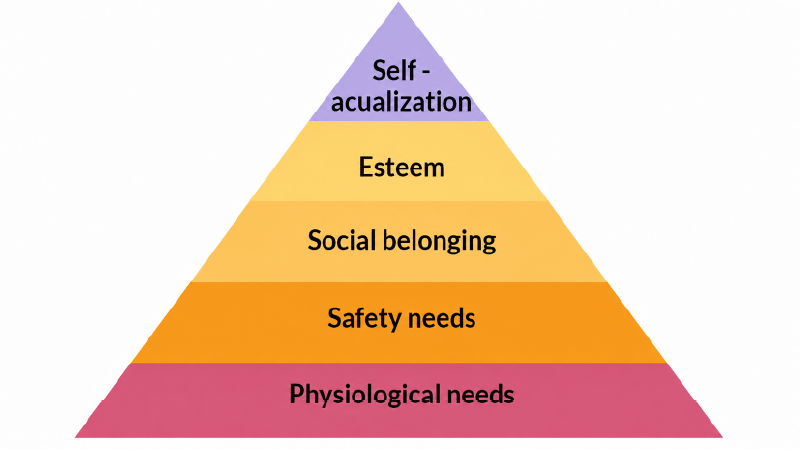
Here is how each level translates to the workplace, and where recognition does and does not help.
| Level | At work | Can recognition address it? |
|---|---|---|
| Physiological | Comfortable environment, adequate lighting, ergonomic setup | No. Fix the conditions first. |
| Safety | Stable employment, clear expectations, financial security | No. Recognition cannot substitute for job security or fair pay. |
| Social | Belonging, camaraderie, team connection | Partly. Peer recognition builds connection between colleagues. |
| Esteem | Respect, competence, visible achievement | Directly. This is recognition's home. |
| Self-actualization | Growth, challenge, realizing potential | Indirectly. Recognition signals which growth is valued. |
That distinction is the practical takeaway. Recognition is a poor tool for problems that live lower on the pyramid. An employee worried about job security or underpaid relative to the market will not be reached by a shout-out, and a program aimed at them will look like it has failed when the real gap was elsewhere.
We have understood the psychology behind recognition. Now, let’s understand -
What happens inside the brain while receiving recognition?
Recognition in the workplace is more than just a pat on the back. It taps into the complex neuroscience of motivation and reward. Let me explain it in a simple way.
Inside our brains, there's a special path that lights up when something good happens. Think of it as a happiness highway. This path is called the "mesolimbic pathway." When a person gets recognized, this pathway gets busy!
First, a part of the brain called the "ventral tegmental area" or VTA for short, starts working. It sends out a special chemical called dopamine, which is like the brain's own happy juice. This dopamine travels through the happiness highway to a place called the "nucleus accumbens," which is really good at making us feel joyful and satisfied.
When the dopamine arrives, it's like throwing a happiness party in the brain. It makes the person feel really good, like they've just won a prize or eaten their favorite snack. This happy feeling is the brain’s way of saying, "Hey, that was great! Let's do that again!"
So, when people at work are recognized and feel this burst of happiness, they are likely to work harder and do their jobs even better, hoping to feel that great again. This not only makes them happier but also helps everyone do better together.
That's how recognition works in our brains, explained in simple language. Understanding the neuroscience behind recognition can help organizations tailor their employee recognition programs to enhance engagement and achieve desired outcomes.
Key Psychological Needs Fulfilled by Employee Recognition
Competence: Valuing Skills and Expertise
Recognition at the workplace really underscores an employee’s value to the team. It’s not just about saying "good job". It's about acknowledging someone’s specific skills and the stellar job they’re doing.
This kind of appreciation boosts their confidence and drives home to the point that their skills and expertise are making a real difference. It’s about letting them know that their hard work isn’t just noticed; it’s essential.
Autonomy: Boosting Ownership and Initiative
When employees are recognized for their unique contributions, it does more than just make them feel good. It validates their choices and strategies, showing that their way of tackling tasks is appreciated.
This kind of nod enhances their sense of independence at work, empowering them to take the lead on projects and make decisions confidently without feeling micromanaged.
Research indicates that 79% of employees demonstrate higher engagement levels, heightened accountability, and improved performance output when granted autonomy in their workplace roles.
Relatedness: Enhancing Team Bonds
A little recognition goes a long way in making everyone feel like they’re part of the team. Whether it’s a public thank you or a team award, acknowledging individual or group efforts strengthen vital connections among team members.
It creates a supportive atmosphere where people feel genuinely connected and valued, making the workplace a lot more welcoming and cohesive.
Now that you can be confident about understanding the psychology of employee recognition, let’s have a look at the power of recognition.
The Power of Effective Recognition: What Makes Recognition Meaningful?
Specificity: Zooming in on the Details
When it comes to recognition, the details matter. It’s not just about acknowledging someone; it’s about pinpointing exactly what they did that was so great. Recognizing specific achievements or contributions highlights their direct impact on the team or project. This makes the recognition feel more deserved and substantial.
Example: When recognizing specificity, a Performance Award can be very effective. For instance, if an employee successfully completes a challenging project under budget and ahead of schedule, a specific award for 'Excellence in Project Management' can be given.
Timeliness: Strike While the Iron’s Hot
Timing is everything with recognition. To really make an impact, accolades should follow closely after an achievement. This not only shows that you’re paying attention but also connects the positive feedback directly to the actions, reinforcing the behavior you want to see again.
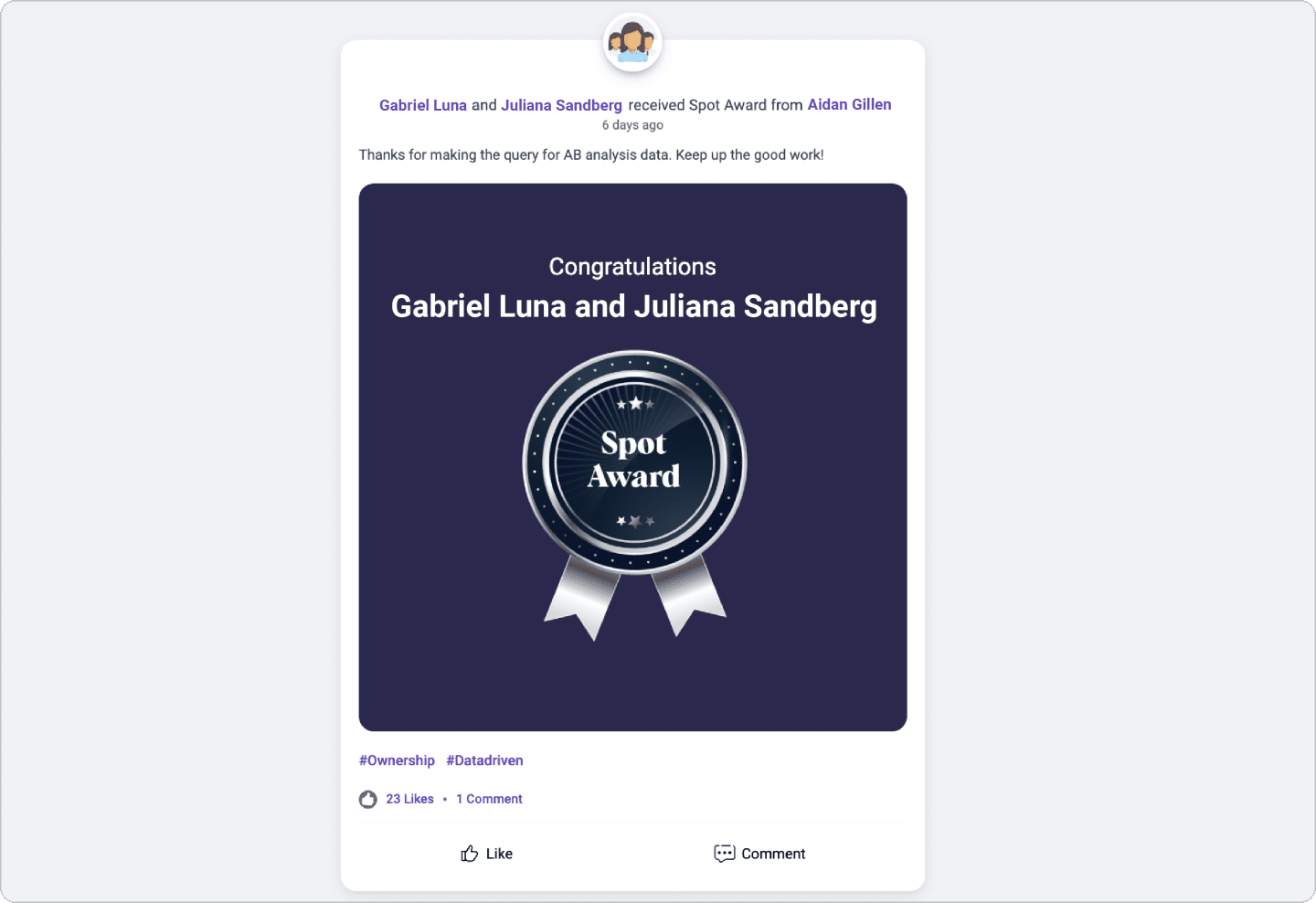
Example: A Spot Award is perfect for timely recognition. These are typically given right after a significant achievement, like right after a salesperson lands a major client or an IT staff member resolves a critical issue.
Source: Vantage Recognition
Sincerity: Keeping It Real
Nothing beats genuine appreciation. Recognition should always come from a place of sincerity for it to truly resonate. Employees can tell when compliments are just going through the motions. Genuine recognition makes employees feel truly seen and valued, not just as workers, but as indispensable parts of the organization.
Example: Personal Thank-You Notes from a supervisor or the management can embody sincerity. When a note specifically mentions what the employee did and expresses genuine appreciation for their effort, it can make the employee feel personally valued.
Personalization: Making It Meaningful
Personalization can turn ordinary recognition into something extraordinary. This means tailoring how you recognize someone to fit their personal preferences or their unique style.
Whether it’s a quiet word of thanks, a public shout-out, or something else entirely, making sure the recognition feels tailored to the individual makes it more impactful.
Example: Choice-Based Rewards allow for personalized recognition. For instance, offering an employee a choice between types of rewards (like a dinner voucher, extra day off, or tickets to a concert) lets them pick what they value most, showing that the company respects their personal preferences and lifestyle.
Turning the Psychology Into a Program: The AIRe Framework
Specificity, timeliness, sincerity, and personalization describe what good recognition feels like. Designing a program that produces those qualities at scale needs a structure, and that is what the AIRe framework provides.
AIRe breaks recognition into four dimensions, each mapping onto a psychological need discussed above.
| Dimension | What it covers | Psychological need it serves |
|---|---|---|
| Appreciation | Acknowledging effort and contribution, independent of outcome | Esteem, relatedness |
| Incentivization | Tangible rewards tied to performance | Competence |
| Reinforcement | Repeating recognition close to the behaviour so it recurs | Competence, autonomy |
| eMotional Connect | Whether recognition feels personal and sincere | Relatedness, esteem |
Reinforcement is where the neuroscience earlier in this article becomes actionable. A dopamine response fades; a signal delivered months later has nothing left to reinforce. Vantage Circle's research with Mercer on the future of total rewards found a 12% increase in productivity from continuous behavioral reinforcement rather than annual feedback cycles.
The pattern holds at program level too. In the Global Recognition & Rewards Report 2025, among organizations that rated their programs highly effective on both engagement and behavioral reinforcement, 86% also reported high effectiveness on productivity and performance.
Read against the pyramid above, that is a useful corrective. Most programs over-invest in Incentivization, the dimension that is easiest to budget for, and under-invest in Reinforcement and eMotional Connect, the two that actually carry the psychology.
7 Examples of Effective Recognition Strategies
Public Praise and Acknowledgment: Employee of the Month Showcase
Private Recognition: Customized gifts such as a handwritten thank-you note, a book by their favorite author, or a gift card
Peer-to-Peer Recognition: Digital Kudos Board or a digital recognition platform
Experiential Rewards: Travel, luxury experiences, special dining with a leader of the organization, etc.
Celebratory Events: Team lunch, outing, or an after-work gathering
Career Advancement Opportunities: Opportunity to lead a project
Long Service Awards: Milestone celebrations with a custom engraved plaque, a monetary bonus or extra vacation days
In The End
The psychology of employee recognition is deeply embedded in the way we perceive and respond to our environments. In this article, we have talked about how recognizing employees does more than acknowledging their achievements. It taps into psychological needs that are essential for personal and professional development.
Organizations that understand this psychology, and design their programs around it, can build a culture of appreciation that produces more than a happier workforce. It produces a more dynamic, innovative, and successful enterprise.

Nilotpal M Saharia is an Assistant Manager, Content Marketing at Vantage Circle and a recognition-and-rewards (R&R) strategist with 9 years of experience spanning Marketing, HR, and content strategy. He helps HR leaders turn employee recognition and leadership research into practical workplace programs.
Connect with Nilotpal on LinkedIn.