
Sales rep turnover runs at nearly 35% annually, almost double the cross-industry average. And with only 28% of reps hitting quota in 2023, down from 44% the year before, the pressure on sales managers to keep their teams motivated has never been greater.
The right sales incentives do more than reward past performance. They signal to your team that their work is valued, build loyalty, and create the kind of sustained motivation that drives consistent results over the long term.
This guide covers everything from the types of sales incentives available, to why non-monetary options consistently outperform cash, to 20 proven ideas you can start using today.
Table of Contents
- What Are Sales Incentives?
- Types of Sales Incentives
- Why Non-Monetary Incentives?
- Top 20 Non-Monetary Sales Incentives
- How to Build an Effective Sales Incentive Program
- Frequently Asked Questions
What Are Sales Incentives?
Sales incentives are rewards tied to performance, used by sales managers to recognize exceptional results, whether that's hitting quota, landing a big account, or carrying the team through a tough quarter.
Traditionally, this meant cash. Bonuses, commissions, salary bumps. And while money matters, most sales managers get one thing wrong: they assume it's the main thing. Research and your best reps will tell you otherwise.
Types of Sales Incentives
Sales incentives fall into two broad categories. Understanding both is important before you decide which to prioritize.
Monetary Incentives
These are financial rewards directly tied to performance:
- Commissions: A percentage of revenue earned per sale, the most common form of sales compensation across B2B organizations
- Performance bonuses: Lump-sum payments when reps hit quarterly or annual targets
- SPIFFs (Sales Performance Incentive Funds): Short-term cash bonuses tied to specific goals, such as selling a new product or closing end-of-quarter deals
- Profit sharing: A portion of company profits distributed to the sales team
- Salary increments: Structured raises tied to sustained performance over time
Non-Monetary Incentives
These are experience- and recognition-based rewards. Research from Aberdeen Group found that non-cash rewards cost just $0.04 per incremental dollar of revenue generated, compared to $0.12 for cash.
Key Takeaway
- Non-monetary incentives cost $0.04 per incremental dollar of revenue generated
- Cash incentives cost $0.12 per incremental dollar — three times more expensive
- Non-cash rewards are 3x more cost-efficient per unit of output (Aberdeen Group)
What I find is particularly of high performance teams is that they're more after impact, growth, mentorship, innovation, the factors that will help them grow and create a legacy. I found that people really gravitate to those type of rewards more so than cash.
— Matt Burns & Alim Dhanji, Head of People & Culture at Equinox Group, on The Bottom Line with Matt Burns

For a deeper look at how these two categories compare, see our guide on cash vs. non-cash incentives.
Why Non-Monetary Incentives?
Cash-based incentives are rarely seen as a recognition measure and more of a commission cut. As a result, sales reps are often plagued by high turnover rates, burnout, and even low engagement levels.
Think about it this way: a cash bonus gets spent and forgotten within days. A dinner with the CEO, a public shoutout in front of the whole team, a week off that nobody had to beg for. These create memories. And memories create loyalty in a way that bank transfers simply cannot. Non-monetary incentives meet the deeper need every sales rep has: to feel that the work they do actually matters to someone.
According to Gallup (2024), well-recognized employees are 45% less likely to have left their company after two years. Employees receiving high-quality recognition are 65% less likely to be actively job-searching and nine times more likely to be engaged at work.
The most proven principle of management and performance is you get what you reward. Whatever you recognize will be repeated.
— Dr. Bob Nelson, author of 1001 Ways to Reward Employees and inventor of Employee Appreciation Day
One sales manager Bob Nelson worked with told his team: whoever hits their goal this month, I'll call your mom and tell her what a great job you did. And he really did it. The calls went out. The moms cried. The reps performed beyond expectations. That is the kind of recognition that cash simply cannot replicate.
Top 20 Amazing Yet Non-Monetary Sales Incentives
To motivate your team, the sales manager has to respect their employees' bottom line as well.
Your sales staff expect compensation that matches the hard work they put into converting the sale. At the same time, cash rewards do hit that sweet spot but very rarely effectively retain sales reps for the long term.
Before the full breakdown, here's the list at a glance.
| # | Incentive | What It Offers |
|---|---|---|
| 1 | Luxe Dinner Experience | Exclusive recognition with leadership |
| 2 | Team Outings | Morale boost + team bonding |
| 3 | Time Off | Rest, recharge, work-life balance |
| 4 | Gift Cards | Flexible, personal rewards |
| 5 | Cover Happy Hours | Informal celebration + team bonding |
| 6 | All Paid Vacation | Premium reward for top performers |
| 7 | Wellness Gifts | Physical and mental wellbeing support |
| 8 | High-End Electronics | Aspirational, long-lasting reward |
| 9 | Self Care Services | Stress relief and personal enrichment |
| 10 | Best-In-Class Essentials | Improved daily work experience |
| 11 | Learning Compensation | Professional growth and upskilling |
| 12 | Shoutout And Recognition | Visibility, belonging, and pride |
| 13 | Remote Working Days | Autonomy and flexibility |
| 14 | Extra Leave | Valued time for rest and personal life |
| 15 | Flexible Work Hours | Trust and work-life balance |
| 16 | Opportunities To Volunteer | Community purpose and engagement |
| 17 | Mentorship Program | Career development and knowledge transfer |
| 18 | Employee Stock Ownership Plan | Long-term ownership and loyalty |
| 19 | Commuter Incentives | Reduced daily stress and cost savings |
| 20 | Free Meals At Work | Everyday comfort and morale |
1. Luxe Dinner Experience
Everyone wants to see what lies on the other side of success. Luxury can prove to be an excellent motivator for your sales team.
Reward an exceptional sales performance through an exclusive night of fine class dining, expensive wine, and a 5-star experience with the company's CEO and other channel partners. Being in the presence of industry leaders can make the winner feel critical about their work.
In short, make it an unforgettable experience that motivates the sales workers to do their utmost best to succeed.
2. Team Outings
Sales teams are inherently competitive. That is by design, but it also means people spend most of their time measuring themselves against their colleagues, not connecting with them.
A team outing flips that. Outside the office, the leaderboard disappears. People actually talk to each other. And teams that genuinely like each other tend to cover for each other, push each other, and stick around longer.
Keep it cheap, keep it fun, and let the team pick where they want to go. The destination matters less than the fact that you made it happen.
3. Time Off
Sales reps burn out at a higher rate than almost any other role. The pace, the rejection, the pressure of a visible quota. It compounds. And unlike most jobs, they rarely get to fully disconnect because their phone is always a potential commission.
Compensated time off forces a proper break. Not a "take a day if you need it." A structured reward that says: you earned this, now actually use it. Sabbaticals, extra PTO, a surprise day off after a big close. The rep who comes back rested will outperform the one who pushed through.
The research backs this up too. Well-rested employees are more productive, more engaged, and more likely to stay.
4. Gift Cards
Gift cards provide your sales team with the flexibility and ease of choosing the rewards they want. Additionally, gift cards are easy to store, distribute, and manage, thus making them the ideal form of compensation.
Giving a gift card is like gifting an experience. Employees can get a gift that they always wanted or even indulge in a shopping spree with their families. The countless options of things that can be purchased add to the charm.
The IRF's 2023 Industry Outlook found that North American incentive budgets allocated to gift cards were projected to grow 48%, a strong signal of how valued they are as a form of recognition.
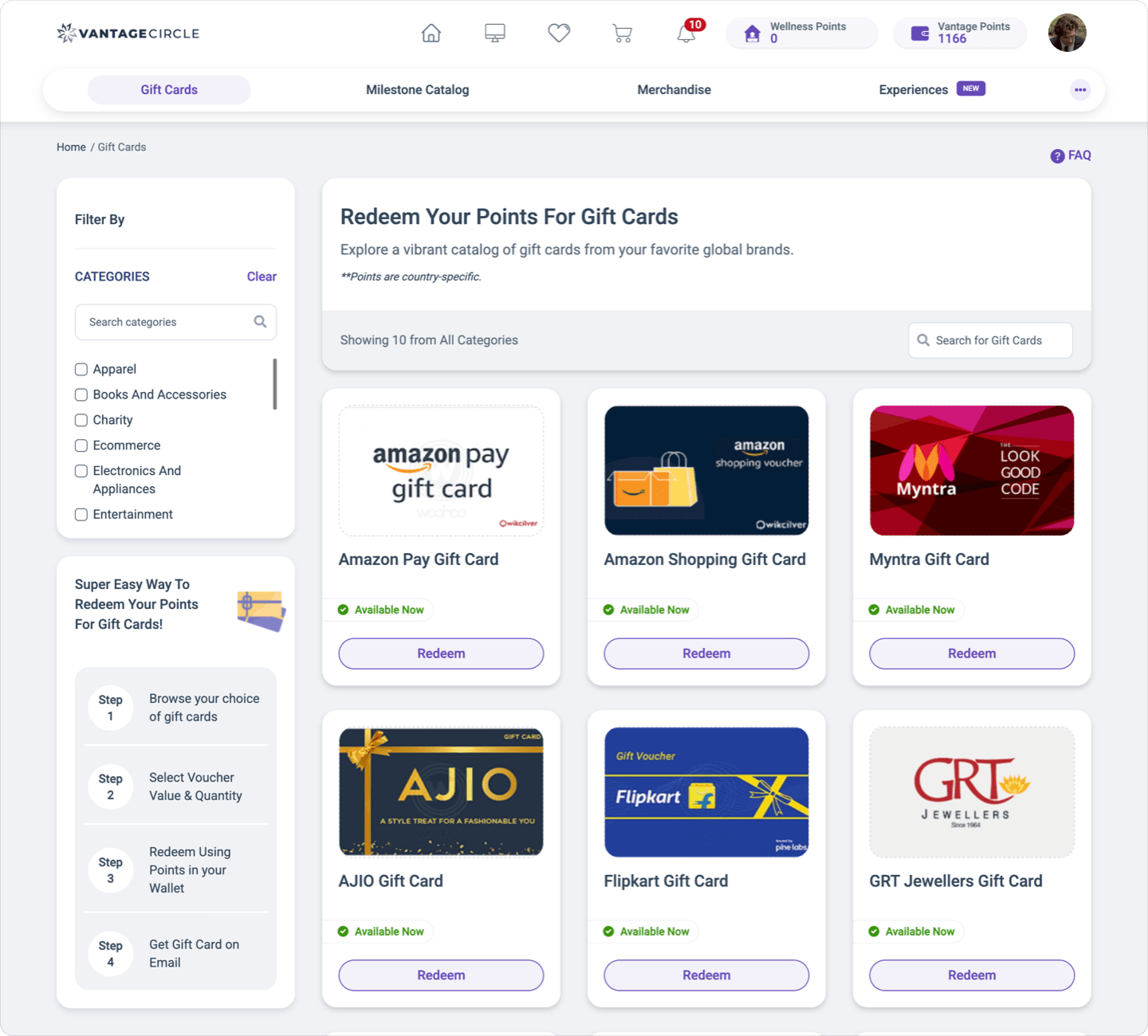
Vantage Recognition's Digital Gift Vouchers let HR teams issue fixed-value vouchers to individuals or groups instantly, with employees choosing their preferred brand at redemption from a catalog spanning 70+ countries. No print logistics, no procurement overhead.
5. Cover Happy Hours
There are two well-established facts.
- Being a sales rep is a taxing job.
- Most people like to have an occasional drink.
Happy hours that the organization is covering are an incredible incentive for the whole sales team. After a long week or month, it is the ideal chance to relax and celebrate your achievement alongside individuals who have contributed to it.
What makes this incentive work is not the drinks. It is the signal. When a company covers the tab, it is telling the team: you earned this, and we are celebrating it with you. That distinction matters more than the amount on the bill.
6. All Paid Vacation
For your star sales representative, an all-paid holiday is a great way to show appreciation for all the hard work they go in every day. To make the reward sweeter, take the staff's recommendations about where they want to go and present an opportunity to take an extra person on holiday.
The key word is "all paid." A vacation where the rep is quietly watching their budget, or worried about covering their own flights and hotel, is not a reward. It is homework. When the company removes every financial concern from the trip, the rep can actually switch off. And a sales rep who genuinely recharges comes back sharper, with more energy for the next quarter.
7. Wellness Gifts
Salespeople have a fragile balance between work and life, which in turn often affects their overall wellbeing. In short, mental and physical wellbeing are highly influenced by both.
A smart way to counter these problems is to provide the sales staff with wellness-based incentives, such as gym passes, meditation app subscriptions, nutritious food hampers, and more.
Platforms like Vantage Fit make this easy to run at scale, with step challenges, wellness challenges, and real rewards that drive participation across distributed and frontline teams.
Recommended Article: Corporate Wellness Guide
8. High-End Electronics
Gadgets that are flashy and fashionable are a well-sought opportunity that everybody would enjoy. Specific products, such as Apple devices, are seen as a sign of luxury and can be used by sales managers to meet important sales targets or quotas.
Additionally, the number of options is daunting. Each electronic category has incredible choices to offer, starting from smartwatches, high def-TVs, headphones to laptops.
Unlike cash, a premium gadget is visible. It sits on the desk, goes in the bag on client calls, and travels on sales trips. Every time the rep uses it, it is a quiet reminder of what they achieved to earn it, and what they can earn again.
9. Self Care Services
There might not be enough time for the sales team to indulge in any self-care. Self-care is not only about physical enrichment but also about mental glow-up. It is a generous gesture on your part to provide such self-care facilities, such as a golf course pass, painting classes, spa days, or even concert tickets.
Sales is one of the most stressful jobs there is. Rejection is daily, quotas are relentless, and the emotional toll of client-facing work adds up in ways that do not always show up on a dashboard. Offering self-care says: we see all of it.
10. Best-In-Class Essentials
Since sales representatives either spend a lot of their time in the office or on the highways, make sure they have access to the very best essentials to make it easier for them to perform better.
Digital organizers, personalized workstations, ergonomic chairs, quick snack options, free lunches. The possibilities are countless for designing a workplace experience that is comfortable and convenient for your team.
None of this needs a formal approval process. A quality headset for a rep who spends five hours on calls every day, or a standing desk for someone managing back pain, costs less than a single sales dinner and delivers value every single working day.
The first 10 are the ones that feel good in the moment. The next 10 are the ones that make a rep think about staying.
11. Learning Compensation
The best sales reps are not just closers. They are students. They read, listen to podcasts, attend conferences, take courses. Because they know the edge comes from knowing more than the person across the table.
Covering the cost of that learning is a reward that pays both ways. The rep develops. The company gets a sharper rep. And unlike a cash bonus, the skill does not get spent. It compounds.
Recommended Article: Why The Habit Of Continuous Learning Is Important
12. Shoutout And Recognition
It is not always about tangible awards; recognition can be just as rewarding. According to Gallup (2024), well-recognized employees are 45% less likely to have left their company after two years. Employees with high-quality recognition are also 65% less likely to be actively job-searching.
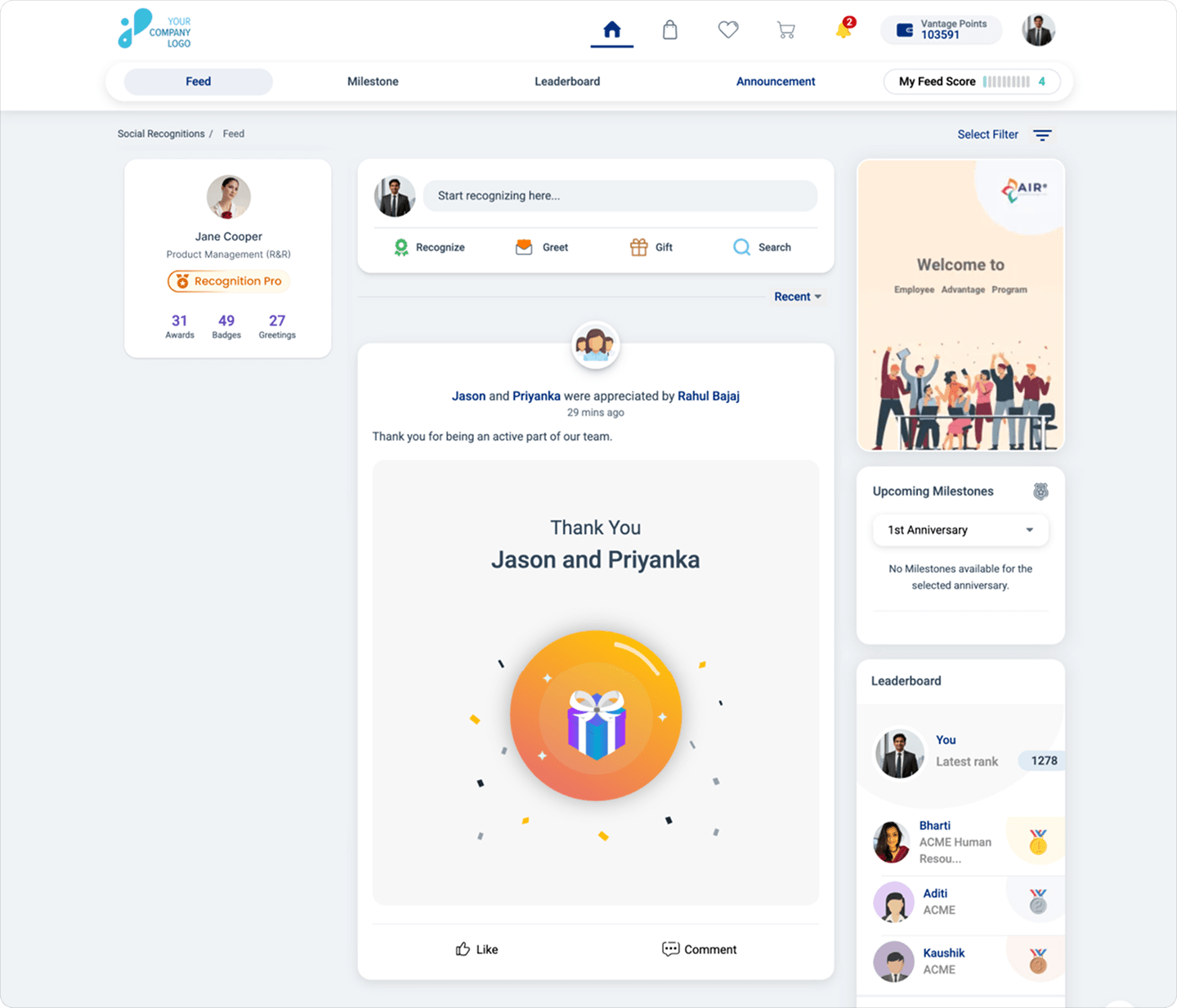
Vantage Rewards makes peer recognition as simple as sending a message. No budget needed, no approval required. Wipro saw a 97.5% increase in non-monetary awards within two years of building this habit into their daily culture.
13. Remote Working Days
Remote working days cost nothing to give but tend to mean a lot to the person receiving them. Flexible work arrangements consistently rank among the top non-monetary incentives employees value, and they serve a dual purpose: rewarding past performance while giving sales reps the focused time they need for deep work, client follow-ups, or strategic planning without the friction of a daily commute.
Even a single day of remote work can greatly affect an employee's attitude. It takes off a lot of pressure from employees to travel to and from work and allows for more flexible management of their time.
Meeting clients may sometimes take up the entire working day. Traveling to the office just to report the task at the beginning and end of the day can put unnecessary pressure on your sales team. Remote working days will allow them to better manage their time and optimize productivity.
However, we have to keep in mind that not everyone is disciplined enough for such a remote setup or might not prefer the solitude it brings.
14. Extra Leave
Aside from remote working days, extra leaves serve as a great reward. Because who would say no to an extra day of rest?
Apart from weekends and other public holidays, an extra half day or full day off is always welcome. Getting an extra leave as a reward will make your sales reps feel recognized for all the hard work, and they will be motivated to work harder. However, you should do this depending on your business needs and how it affects your ROI.
For a rep with young kids, an aging parent, or just a life outside of work, an extra day off means more than most managers realize. A bonus gets spent. A day gets used on something that actually matters to them.
15. Flexible Work Hours
Having a flexible schedule is something every employee dreams of. Flexible work hours allow your employees to enjoy more time with their families and friends and it also shows you trust them. Which is exactly what makes it such a great non-monetary reward.
If your sales team meets your expectations, then there is no reason not to let them have a flexible schedule. This also works well to better accommodate international clients or adjust to specific timings for more efficiency in work.
There is also something worth saying about what flexibility communicates. When you let a high performer manage their own time, you are telling them you trust them. For a lot of reps, that alone is worth more than a bonus.
16. Opportunities To Volunteer
Employee volunteerism has been shown to reduce turnover by approximately 50%. That is a striking number for a benefit that costs relatively little to offer.
The reason it works is that people want to feel like they are part of something beyond a quota. Sales in particular can feel transactional. Give reps a chance to do something that has nothing to do with revenue, and many of them will surprise you with how much it matters to them.
Paid volunteer days, community partnerships, team-based projects. Any of these count. The key is making it real, not just a line in the employee handbook.
17. Mentorship Program
Ask a great sales rep what made them great, and most of them will name a person rather than a training program. A manager who gave them real feedback. A senior colleague who showed them how to handle a tough negotiation. Someone who invested time in them when they did not have to.
That is what a mentorship program offers, and why it works as an incentive. Pairing a junior rep with someone they genuinely admire signals that the company is thinking about their future, not just their current quarter. The junior develops faster. The mentor sharpens their own thinking by having to articulate what they know. Both sides get something real.
18. Employee Stock Ownership Plan (ESOP)
You tend to take better care of things if you own them. That is the entire logic behind ESOP.
When a sales rep has equity in the company they are selling for, the dynamic shifts. It is no longer just about this quarter's commission. It is about the long-term health of something they have a stake in. That changes how people show up.
ESOPs reward tenure and contribution. Stock is distributed based on company contributions, with no cost to the employee. If the company grows, their stake grows with it. For your longest-serving, highest-contributing reps, it is one of the most meaningful rewards on this entire list.
19. Commuter Incentives
Commuting everyday to and from work especially during the rush hour can be tiring. Set aside a budget for commuting for your employees not just for everyday commute to office but also for any traveling your employees might have to undertake for work.
You can also incentivize your employees to take public transport options or to start a co-worker carpool and reward them with perks for doing so. This will not only help your company's carbon footprint, but it's the perfect fringe benefit for employees looking for alternate means of commuting.
The average commuter spends hundreds of hours a year just getting to and from work. Most companies never think about that. Covering the cost removes the part of the day that starts before work even begins, and that small thing changes how someone shows up.
20. Free Meals At Work
We all know how hard managing our time is. Taking care of work and the home and having three meals daily, especially when you live alone, can be overwhelming. You can help your employees by incentivizing them with free breakfast or lunch in the office.
This simple yet effective perk can go a long way in increasing employee morale. There is also a side effect worth mentioning: people who eat lunch together actually talk to each other. And teams that talk to each other outside of Slack threads tend to work better together.
How to Build an Effective Sales Incentive Program
Most sales managers have a list of incentives. What they rarely have is a system. A sales incentive program is what turns one-off rewards into something that consistently changes behavior. The IRF found that well-designed programs generate a 2:1 to 5:1 return on investment. Here is what that looks like in practice.
1 Define clear, measurable goals
Tie incentives to specific behaviors such as new account acquisition, upsell rate, or customer retention, not just revenue alone. Vague goals produce vague motivation.
2 Know what your team actually values
Survey your sales reps before designing rewards. A remote work day may motivate one rep far more than a dinner experience motivates another. Personalization matters. The AIRe Framework, developed by Vantage Circle in collaboration with Mercer, shows that recognition and rewards are most effective when they account for Appreciation, Incentivization, Reinforcement, and Emotional Connect.
3 Make the program transparent
Every rep should know exactly what they need to do to earn a reward. Ambiguity kills motivation faster than a missed quota.
4 Reward consistently and promptly
Timing matters more than most managers think. If someone closes a big deal on Tuesday and gets recognized at next month's all-hands, the moment is gone. Reward as close to the behavior as you can.
5 Measure and iterate
According to CaptivateIQ's 2024 report, fewer than 40% of companies actively measure how their incentive programs are performing, and fewer than 35% adjust them based on market conditions.
Track what is working, drop what is not, and optimize regularly.
For more ideas on keeping your team energized beyond the incentive program itself, see our guide on employee engagement activities for sales teams.
Want the research behind what makes recognition programs actually work? Download the AIRe Framework Report, a Vantage Circle x Mercer whitepaper on applying behavioral science to Total Rewards programs.
Frequently Asked Questions
1. What is a sales incentive?
A sales incentive is a reward, monetary or non-monetary, offered to a salesperson to motivate specific behaviors, drive performance, or recognize achievement. Examples include commissions, bonuses, gift cards, recognition awards, extra time off, and learning opportunities.
2. What are the most effective sales incentives?
The most effective incentives vary by individual, but research consistently shows that non-monetary rewards, especially recognition, flexible work, experiential rewards, and career development, create stronger and more lasting motivation than cash. Gallup's 2024 data shows well-recognized employees are 45% less likely to leave within two years and nine times more likely to be engaged.
3. What is the difference between monetary and non-monetary sales incentives?
Monetary incentives are financial rewards: commissions, bonuses, SPIFFs, and profit sharing. Non-monetary incentives are experience- or recognition-based: time off, gift cards, mentorship, wellness perks, and public acknowledgment. Non-monetary options are often three times more cost-efficient per unit of incremental revenue (Aberdeen Group).
4. What is a SPIFF in sales?
A SPIFF (Sales Performance Incentive Fund) is a short-term, tactical cash bonus designed to incentivize a specific, immediate sales goal, such as selling a new product line, clearing inventory, or hitting an end-of-quarter push target.
5. How do you create a sales incentive program?
Start by defining the specific behaviors you want to incentivize, understand what your reps value, set transparent criteria for earning rewards, deliver recognition promptly, and measure the program's impact on performance and retention over time. See our full guide on sales team performance for more.
6. How do you measure the ROI of a sales incentive program?
Track leading indicators such as activity rates, pipeline health, and quota attainment, alongside lagging indicators like revenue growth, rep retention, and time to productivity, before and after program implementation. IRF research shows well-designed programs can generate 2:1 to 5:1 returns on investment.
Summing It Up
The best sales teams are not just well-compensated. They feel like the company is actually invested in them. The programs that achieve that combine fair monetary compensation with non-monetary incentives that make reps feel genuinely seen and valued.
The difference between a sales team that grinds through the quarter and one that genuinely performs comes down to how valued they feel. Not just compensated. Valued. Getting that right is worth more than any SPIFF or bonus cycle.
Ready to see what a recognition-driven sales culture looks like in practice? Schedule a free demo with Vantage Circle today.

Susmita Sarma is a Digital Marketer at Vantage Circle, making employee recognition less of a checkbox and more meaningful - helping organizations say we value our people and truly mean it.
Connect with Susmita on LinkedIn.