
What Are Affirmations and Why They Matter at Work
Positive affirmations are short, intentional statements you repeat to rewire your mindset, overcome self-doubt, and build confidence in your professional abilities. At work, affirmations help you stay focused under pressure, recover from setbacks, and affirm your capacity to succeed. Peer recognition and manager feedback reinforce these internal beliefs and make them stick.
Most affirmation guides treat the practice as a solo activity: repeat the statement, believe it, move on. But HR leaders and managers navigating real workplace pressures need more than a list of quotes. Belief compounds when it is validated externally, through peer recognition, structured feedback, and visible team wins.
An MRI study by Cascio et al. *Social Cognitive and Affective Neuroscience* demonstrates that consistent self-affirmation actively stimulates the brain regions tied to self-processing and reward. While the science behind this is undeniably solid, relying solely on internal practice has its limits. To help bridge that gap, this guide provides you with 30 workplace-tested affirmations organized by type, alongside a science-backed practice framework. Furthermore, it offers a clear picture of how a strong employee recognition culture can amplify everything these personal affirmations are trying to achieve.
The Science Behind Affirmations
Affirmations are not wishful thinking. The neurological evidence for their effectiveness is well-established, and understanding the mechanism will help you practice them more deliberately.
How Affirmations Work in the Brain
The study by Cascio et al. scanned participants who practiced daily self-affirmations and found that brain regions tied to self-processing and reward were significantly more active compared to non-affirming participants. Affirmations aren't simply a feel-good concept, they physically activate the reward circuitry associated with positive self-concept.
Building on this, Cohen and Sherman's review in *Annual Review of Psychology* found that self-affirmation helps people respond more openly to uncomfortable information and think more clearly under pressure. And the workplace implications are significant. Employees who practice affirmations respond better to critical feedback, recover faster from failure, and demonstrate greater persistence on difficult tasks.
Why Affirmations Alone Are Not Enough (And How Recognition Amplifies Them)
Internal belief is the foundation. But belief is fragile without external reinforcement. When you repeat "I am capable," your brain works to accept it. When a peer says "your work on this project was outstanding," your brain has evidence.
When a colleague names the exact strength you have been affirming, in a team meeting, a written note, or a structured recognition moment, it does something an affirmation alone cannot: it provides proof. That external signal is what converts repeated self-talk into grounded belief.
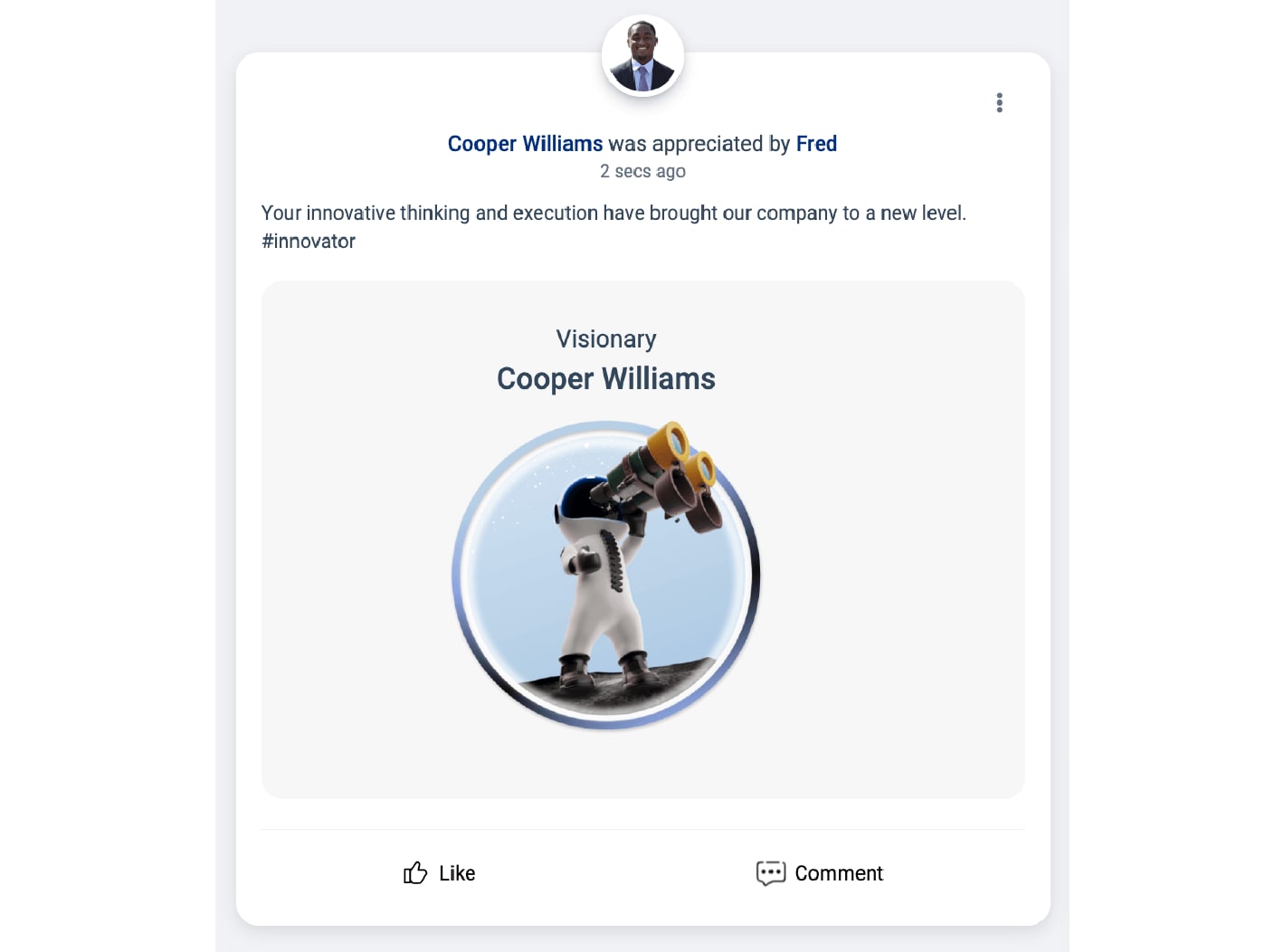
This is where the environment you work in matters as much as the practice itself. A culture where recognition flows consistently, where people name each other's strengths specifically and often, turns affirmations from a solo habit into something the whole team reinforces. Peer-to-peer recognition programs, including platforms like Vantage Rewards, are designed to make that habit systematic rather than accidental.
The 5 Types of Workplace Affirmations
Not all workplace affirmations serve the same purpose. The most effective affirmation practice uses targeted statements that match the specific challenge you are facing. Here are the 5 core types every HR leader and manager should know.
1. Confidence and Self-Worth Affirmations (for overcoming imposter syndrome)
These affirmations address the internal narrative that questions whether you belong, deserve success, or are qualified enough. They are most powerful for employees navigating new roles, high-stakes presentations, or performance reviews. Examples: "I bring unique value to this team." "My experience and perspective matter."
2. Resilience and Adversity Affirmations (for bouncing back from setbacks)
These affirmations interrupt the rumination cycle after failure, feedback, or rejection. They do not minimize the setback; they reframe it as information rather than identity. Examples: "Setbacks are part of the process, not evidence of failure." "I grow stronger through challenges."
3. Growth and Learning Affirmations (for skill development and career progression)
These affirmations are designed for professional development contexts: learning new tools, taking on stretch assignments, or building skills outside your current comfort zone. Examples: "I am expanding my capabilities every day." "Learning takes time, and I am committed to the process."
4. Achievement and Abundance Affirmations (for goal-setting and business success)
These affirmations reinforce momentum toward specific professional goals. They are particularly effective when used alongside performance management frameworks and goal-tracking practices. Examples: "I achieve my goals with focus and consistency." "Success is built through daily disciplined action."
5. Collaboration and Team Affirmations (for building psychological safety in teams)
These affirmations extend the practice beyond the individual. They are most valuable for team leads and managers who want to model psychological safety and create cultures where peers affirm each other. Examples: "My team is stronger when I contribute openly." "I help create an environment where everyone can do their best work."
Match the Affirmation to the Workplace Moment
Use this quick guide to choose affirmations that fit the employee's context, from confidence-building to collaboration and growth.
1
Confidence and Self-Worth
Confidence
"I bring unique value to this team."
Best Used When
Confidence and Self-Worth
2
Resilience and Adversity
Resilience
"Setbacks are part of the process, not evidence of my failure."
Best Used When
Resilience and Adversity
3
Growth and Learning
Growth
"I am expanding my capabilities every day."
Best Used When
Growth and Learning
4
Achievement and Abundance
Achievement
"I achieve my goals with focus and consistency."
Best Used When
Achievement and Abundance
5
Collaboration and Team
Collaboration
"I help create an environment where everyone can do their best work."
Best Used When
Collaboration and Team
How to Use Affirmations Effectively at Work
Knowing the right affirmation is not enough. Consistency and context determine whether affirmations shift your mindset or fade into background noise. Here is how to build a practice that holds up under real workplace conditions.
Daily Practice: Morning and Night Routines
A 3-step daily framework:
A Simple Daily Affirmation Routine
Affirmations work best when they are repeated with intention. Here is a simple three-step routine employees can use across the day.
Morning · 2 Minutes
Start with intention
Say 3 affirmations aloud before your first meeting. Speaking aloud, rather than reading silently, activates the auditory cortex and strengthens neural encoding.
Midday · 30 Seconds
Reset before pressure
Before a high-pressure interaction, repeat one targeted affirmation specific to the challenge ahead.
Evening · 1 Minute
Anchor it with evidence
Recall one moment from the day where your affirmation proved true. This helps anchor the belief with real evidence.
Affirmations During High-Pressure Moments
Performance reviews, difficult conversations, and tight deadlines are when self-doubt is loudest. A single pre-rehearsed affirmation, repeated quietly before entering the room, interrupts the threat-response cycle that impairs performance. Managers who practice this before delivering feedback report feeling more grounded and less reactive in difficult conversations.
Pairing Affirmations with Peer Recognition and Manager Feedback
Affirmations gain power when paired with structured recognition. When you tell yourself "my contributions are meaningful" and then receive specific peer recognition affirming exactly that, the two reinforce each other. Organizations using employee recognition platforms see this effect at scale: internal conviction and external validation create a compounding loop.
Note for HR leaders: If your team implements a combined affirmation and recognition program, tracking eNPS scores alongside recognition frequency before and after launch will generate meaningful internal data on confidence and engagement impact.
Tracking Progress with Affirmations
Keep a simple log: date, affirmation used, situation, outcome. After 30 days, patterns emerge. You will see which affirmations you reach for most, which situations still feel resistant, and where your mindset has genuinely shifted.
30 Powerful Affirmations for Workplace Success
The 30 workplace-tested affirmations below are organized by the five types covered above. Use the "when to use" note under each one to find the affirmations that fit where you are right now.
6 Affirmations for Confidence and Self-Worth
I bring a perspective to this team that no one else can.
Use this when: imposter syndrome surfaces in meetings where others seem more experienced or vocal.
My track record is evidence that I am capable.
Use this when: before high-stakes situations where past performance is relevant but doubt is drowning out the evidence.
I deserve a seat at this table.
Use this when: before leadership conversations, promotion discussions, or any moment where you are asking for something significant.
I am qualified to do this work, and I am doing it.
Use this when: taking on new responsibilities and the gap between current ability and required skill feels wide.
My voice adds value, even when I feel uncertain.
Use this when: before contributing in meetings where you feel junior, unfamiliar with the topic, or under-confident.
I become more confident in my abilities with each challenge I face.
Use this when: during stretch assignments when progress is slow and visible evidence of growth is limited.
6 Affirmations for Resilience and Bouncing Back
This setback is information, not a verdict on my potential.
Use this when: after receiving critical feedback, a project failure, or a missed promotion to interrupt the self-blame cycle.
I recover quickly because I learn faster than most.
Use this when: rebuilding after a difficult period and you need to reconnect with your capacity for adaptation.
Every difficult quarter has made me sharper.
Use this when: during periods of prolonged stress or underperformance when the future feels uncertain.
I am resilient enough to outlast this challenge.
Use this when: facing an ongoing difficulty, such as a demanding project, a dysfunctional team dynamic, or a major organizational change.
One failure is not the end of my story.
Use this when: after significant professional setbacks where the emotional weight is heavy and forward motion feels impossible.
I am not defined by what went wrong. I am defined by what I do next.
Use this when: you need to shift from rumination to action, especially when you feel watched or judged by colleagues.
6 Affirmations for Growth and Career Development
I am investing in skills that will compound over time.
Use this when: during the uncomfortable early phase of learning something new, when progress is invisible and frustration is high.
Discomfort is the signal I am growing.
Use this when: on stretch assignments or in new roles where the gap between your current ability and what is required feels large.
I ask for feedback because I am committed to getting better.
Use this when: before requesting developmental feedback from a manager or senior colleague when vulnerability feels risky.
My career is built one skilled action at a time.
Use this when: daily tasks feel routine or disconnected from larger goals, to reconnect individual effort to long-term progression.
I attract opportunities because I show up prepared.
Use this when: during periods of waiting, for a promotion decision, a new project, or a leadership opportunity, to stay engaged rather than passive.
The skills I am building now will open doors I cannot yet see.
Use this when: current work feels disconnected from your desired career direction.
6 Affirmations for Achievement and Business Success
I set ambitious goals and I follow through on them.
Use this when: at the start of a new quarter, goal cycle, or project to anchor commitment before momentum builds.
I create results that matter to my organization.
Use this when: working on long-timeline projects where visible impact is delayed and motivation is hard to sustain.
My consistency is what separates good intentions from real achievement.
Use this when: motivation dips but deadlines remain; discipline is more reliable than inspiration.
I am building something worth being proud of.
Use this when: during high-effort projects where the day-to-day grind has obscured the larger purpose.
Success in my career is the result of choices I make daily.
Use this when: facing a decision that trades short-term comfort for long-term progression.
I generate ideas and I execute them.
Use this when: before creative or strategic sessions where you want to contribute with both vision and follow-through.
6 Affirmations for Collaboration and Team Building
I contribute to a team that is stronger because I am in it.
Use this when: you feel like a peripheral contributor or doubt whether your presence is moving the team forward.
I listen to understand, not just to respond.
Use this when: before high-stakes conversations, cross-functional meetings, or any interaction where assumptions tend to create friction.
I create space for others to succeed alongside me.
Use this when: for team leads and managers before meetings or 1:1s, as a reminder that psychological safety is built through daily small acts.
I give recognition generously and receive it gracefully.
Use this when: to model the peer-affirmation culture you want on your team; recognition, like confidence, is contagious.
My feedback is a gift I give with care.
Use this when: before delivering difficult feedback; it reframes the act from confrontation to contribution.
My team's success is my success.
Use this when: individual and team incentives are in tension, to reconnect to the collaborative purpose behind the work.
The Role of Recognition in Amplifying Affirmations
Recognition does not just feel good. It provides the external evidence that internal affirmations need to become durable beliefs.
Why Affirmations Alone May Stall (And Why Recognition Completes the Picture)
The self-affirmation mechanism is internal. You are telling yourself something true about your potential. But humans are social beings, we calibrate our self-concept significantly against how others respond to us. When there is a persistent gap between what you tell yourself and how your environment responds, the internal voice eventually loses.
This is why high-performing employees in low-recognition environments often struggle with sustained confidence despite strong track records. The affirmations may be accurate, but the environment is not confirming them. Recognition closes that gap and makes internal belief defensible against external doubt.
How Vantage Rewards Amplifies the Affirmation Practice
Vantage Rewards creates a structured recognition environment that reinforces the specific strengths employees are working to internalize. Peer-to-peer recognition tied to core values gives employees real-time external evidence that their affirmations are grounded in observable behavior. Manager recognition, when specific and timely, converts general confidence into competency-specific belief.
For HR leaders and managers: Build psychological safety by pairing affirmations with recognition. Use affirmations internally to set the mindset; validate them externally with peer and manager recognition via Vantage Rewards. The combination creates belief that holds under pressure.
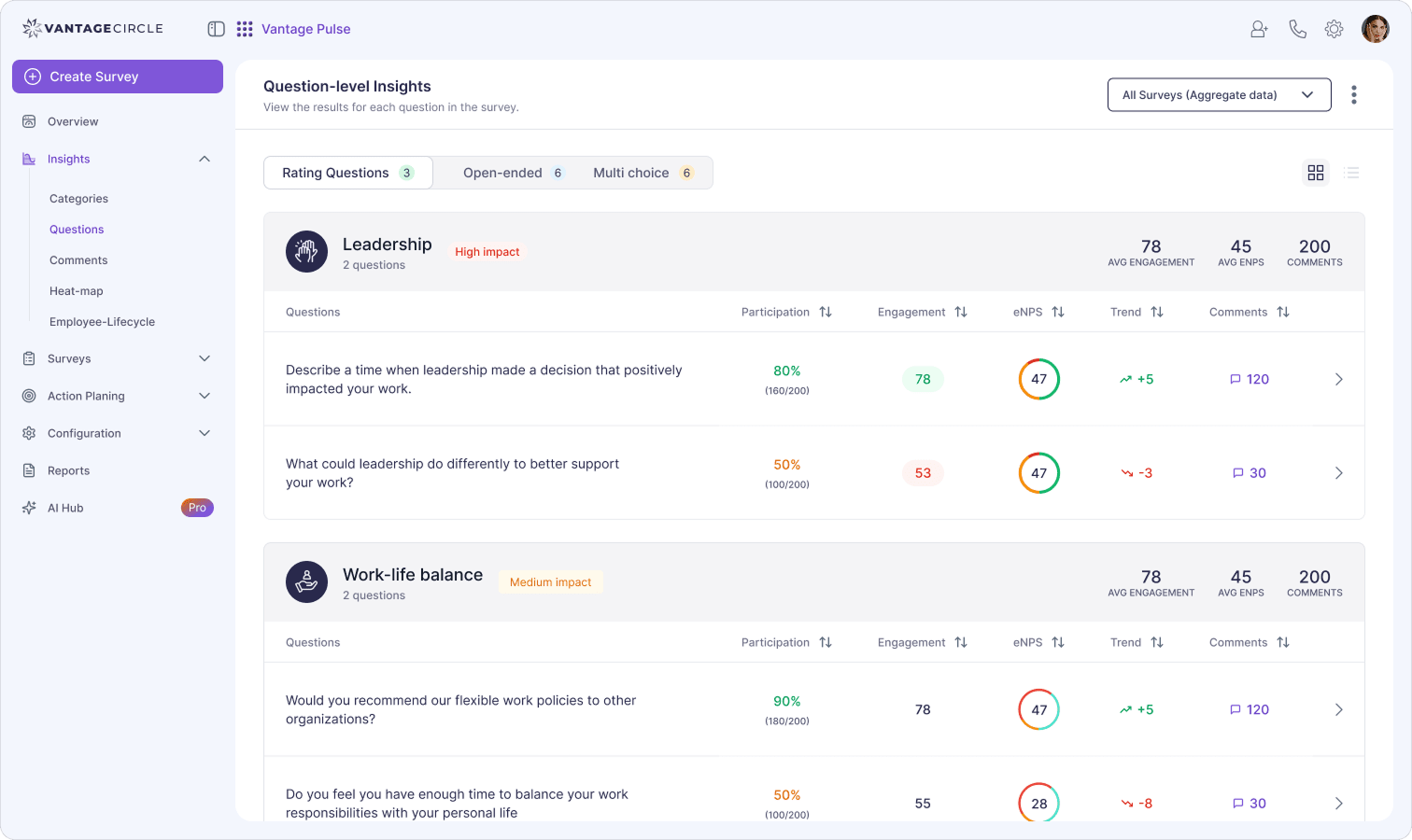
The Vantage Pulse sentiment analysis layer adds another dimension: anonymous survey data that reveals whether your team's collective confidence is trending in the direction your recognition investment suggests. Affirmations work at the individual level; engagement data tracks whether the culture is reinforcing them at scale.
FAQ: Your Affirmation Questions Answered
What is the most powerful affirmation for success?
The most powerful affirmation is the one you believe is possible, not the one that sounds most aspirational. Cohen et al.'s research on self-affirmation consistently shows that affirmations work when they connect to values the individual already holds. For workplace confidence, universally effective starting points include: "I am capable of handling difficult situations," "My contributions are meaningful," and "I learn and adapt quickly." Choose the one that feels both true and challenging to say out loud.
What are 5 positive affirmations?
Five workplace-ready daily affirmations for immediate use:
- "I am prepared for what today brings."
- "My perspective has value in every conversation."
- "I handle pressure without losing my judgment."
- "I am making progress even when I cannot see it."
- "I show up fully for my team today."
Say each one aloud before your first meeting. Speaking activates different neural pathways than reading silently, which strengthens the encoding (Cascio et al., 2016).
Do affirmations work: Is there scientific evidence?
Yes. The evidence for affirmation effectiveness is established across multiple peer-reviewed fields. Cascio et al. used MRI to demonstrate that self-affirmation activates the brain's self-processing and reward systems. Cohen and Sherman documented that affirmations reduce defensive responses to threatening information. For HR applications, affirmations are most effective when combined with structural reinforcement: regular recognition, clear growth pathways, and psychologically safe team environments.
How long does it take for affirmations to work?
Most practitioners report a measurable mindset shift within 21 to 30 days of consistent daily practice. This timeline aligns with synaptic plasticity: repeated activation of a thought pattern strengthens its neural encoding over time. The key variables are frequency (daily practice is more effective than occasional), specificity (targeted affirmations outperform generic ones), and external reinforcement (peer recognition and manager feedback accelerate internal belief formation significantly).
Can affirmations work for anxiety or imposter syndrome at work?
Structured affirmations, practiced consistently, are an evidence-based tool for reducing work-related anxiety and imposter syndrome. They do not replace professional support for clinical anxiety; employees experiencing significant distress should seek professional guidance. Within the normal range of workplace stress, affirmations interrupt rumination cycles and rebuild confidence in specific competency areas. The most effective affirmations for imposter syndrome focus on track record ("I have navigated situations like this before") rather than abstract ability ("I am smart").
How do I pair affirmations with manager feedback and peer recognition?
Pair affirmations with feedback by using them as a bridge between external input and internal belief. When a manager praises your work, reinforce it privately with an affirmation like "I consistently deliver quality results." For peer recognition, anchor it with "My contributions are valued by my team." This transforms fleeting external validation into lasting self-belief, preventing your confidence from depending solely on others' opinions.
Wrapping It Up: Your Affirmation Action Plan
Affirmations are not a substitute for skill, preparation, or sound strategy. They are a mindset tool that clears the internal resistance standing between your current performance and your full potential.
Your 3-step action plan:
Pick 3 affirmations
Choose 3 affirmations from the list above that feel both true and difficult to say out loud. Write them down.
Practice daily for 30 days
Say them aloud each morning before your first meeting. Add a midday repetition before high-pressure interactions.
Close the gap with action
Act as if it is already true. Pick one situation each day where you behave in alignment with your affirmation before you feel ready. Confidence follows action far more reliably than it precedes it.
The gap between where you are and where you want to be is smaller than self-doubt makes it appear. Affirmations, backed by the right recognition culture, are what close it.

Shaoni Gupta is a content marketing specialist at Vantage Circle, with expertise in scriptwriting and copywriting in the field of employee rewards and recognition.
Connect with Shaoni on LinkedIn.