
A team lunch is a surprisingly good test of how well you know your team.
Do they want tacos they can build themselves, or a sandwich they can eat at their desk? Is there a vegan option that is actually filling? Can the person who is gluten-free eat something besides fruit? And, perhaps most importantly, does anyone know why everyone is having lunch together in the first place?
Most team lunches go wrong in small, predictable ways. Someone orders pizza because pizza feels safe. The one vegan on the team makes a meal out of the side salad. Half the room eats with one eye on their inbox. Everyone says thanks on the way out, and by Friday nobody quite remembers what the lunch was for.
The fix isn't a bigger budget. It is a little more thought about what goes on the table and why everyone is sitting at it.
This blog covers team lunch ideas for every group size, ways to handle dietary needs without singling anyone out, ideas for bringing remote teammates into the meal, and simple ways to make the hour count.
What Should You Serve at a Team Lunch?
Below are a few crowd-pleasing lunch formats, grouped by how much planning they take.
Build-Your-Own Stations
Build-your-own stations are the safest bet for any team over 8 people, because they handle most dietary needs by design. Put the proteins, bases and toppings in separate trays, and the menu sorts itself out.
- Taco or burrito bar: Tortillas, rice and beans, two proteins (one plant-based), salsas and toppings. Corn tortillas cover the gluten-free crowd.
- Grain bowls: Rice, quinoa or greens as a base, roasted vegetables, grilled chicken or falafel, and two or three dressings on the side.
- Sandwich or slider bar: Breads and buns, sliced proteins, cheeses and spreads, with a gluten-free bread kept apart.
- Salad bar: A generous version, not an afterthought, with grains, beans, nuts kept in a labeled bowl, and hearty toppings.
- Pasta bar: Two pastas (one gluten-free), a marinara and a cream sauce, meatballs and roasted vegetables.
Crowd-Safe Catered Cuisines
When you want someone else to plan the menu, pick a cuisine that already offers variety on one tray. These rarely draw complaints, and most caterers can label common allergens if you ask.
- Mexican: Naturally flexible, with beans, rice and vegetable fillings alongside meat.
- Mediterranean: Hummus, falafel, grilled chicken, tabbouleh and pita. One of the easiest cuisines for vegetarian and halal-friendly spreads.
- Italian: Pasta trays, salads and focaccia. Ask for at least one tray without meat or cheese.
- Asian noodles and rice bowls: Stir-fries, teriyaki and fried rice. Check for peanuts and sesame before you order.
- Barbecue: Better saved for celebrations than a regular Tuesday. Add grilled vegetables or a plant-based main so non-meat eaters get more than coleslaw.
Low-Effort Options
On a busy week, a simple format done well beats an ambitious one done in a rush. These work when the lunch matters more than the menu.
- Boxed lunches: Individual, pre-labeled and easy to grab. Best for meetings, trainings and teams with many dietary needs.
- Pizza plus a real salad: The classic, upgraded. Order one vegetable pizza and one cheese-free or gluten-free option.
- Potluck: Low cost and high personality. Ask everyone to label their dish with its main ingredients.
- Food truck day: Book one or two trucks to park outside the office. People choose their own meal and still eat together.
Team Lunch Planner: What to Order by Team Size, Budget, and Dietary Needs
| Team size | Best format | Why it works | Dietary tip |
|---|---|---|---|
| 5-10 | Family-style platters or a sit-down restaurant lunch | Everyone can share one table and one conversation. | Ask about dietary needs when you invite people, then order one dish that works for everyone. |
| 10-20 | Build-your-own station (taco bar, grain bowls) | Each person assembles their own plate, so most needs are covered by design. | Keep proteins, toppings and sauces in separate, labeled trays. |
| 20-50 | Catered buffet or a food truck day | Several serving points keep the line moving and give people real choice. | Order a few extra vegetarian, vegan and gluten-free portions beyond the headcount. |
| 50+ | Multiple food trucks or boxed lunches | Individual portions and parallel lines avoid long queues. | Pre-label every box and collect dietary preferences in advance. |
| Remote/hybrid | Meal delivery credits or a shared lunch call | Everyone eats at the same time, wherever they are. | Let people pick their own meal so nobody is stuck with a menu that does not fit. |
| Dietary need | Safe format | What to label |
|---|---|---|
| Vegetarian | Grain bowls, pasta bar, Mediterranean spread | Hidden animal products such as meat-based broths and gelatin |
| Vegan | Build-your-own bowls or a taco bar with beans and vegetables | Dairy, eggs and honey in sauces, dressings and breads |
| Halal | A halal-certified caterer or a Mediterranean spread | Halal-certified items, and keep them apart from pork and alcohol |
| Kosher | Individually sealed kosher-certified meals | The kosher certification on each sealed meal |
| Gluten-free | Corn tortilla bar, rice bowls, salad bar | Wheat in sauces, soups and dressings, and any shared serving utensils |
| Nut allergy | Boxed lunches with ingredient lists, or a dedicated nut-free tray | Every nut and peanut ingredient, including nut oils and sesame cross-contact |
The hardest part is not the ordering. It is finding out what people need. Many employees will not mention an allergy or a religious food restriction in a group chat, and fewer still will mention that they are tired of pizza. An anonymous form gives them a quiet way to say so.
Vantage Pulse anonymous surveys let people flag dietary needs privately, so the order covers everyone without anyone having to explain themselves.
6 Ways to Make a Team Lunch More Than a Meal
Tie It to a Reason Worth Recognizing
A team lunch feels like appreciation only when everyone knows why it is happening. A product launch, a closed quarter, a tough client win, a work anniversary or a new hire's first week all make good reasons.
Say the reason out loud before people start eating. Better still, have the manager name what the team actually did, in specific terms. "Thanks for the hard work" fades by dessert. "You rebuilt the onboarding flow in three weeks and cut support tickets in half" does not.
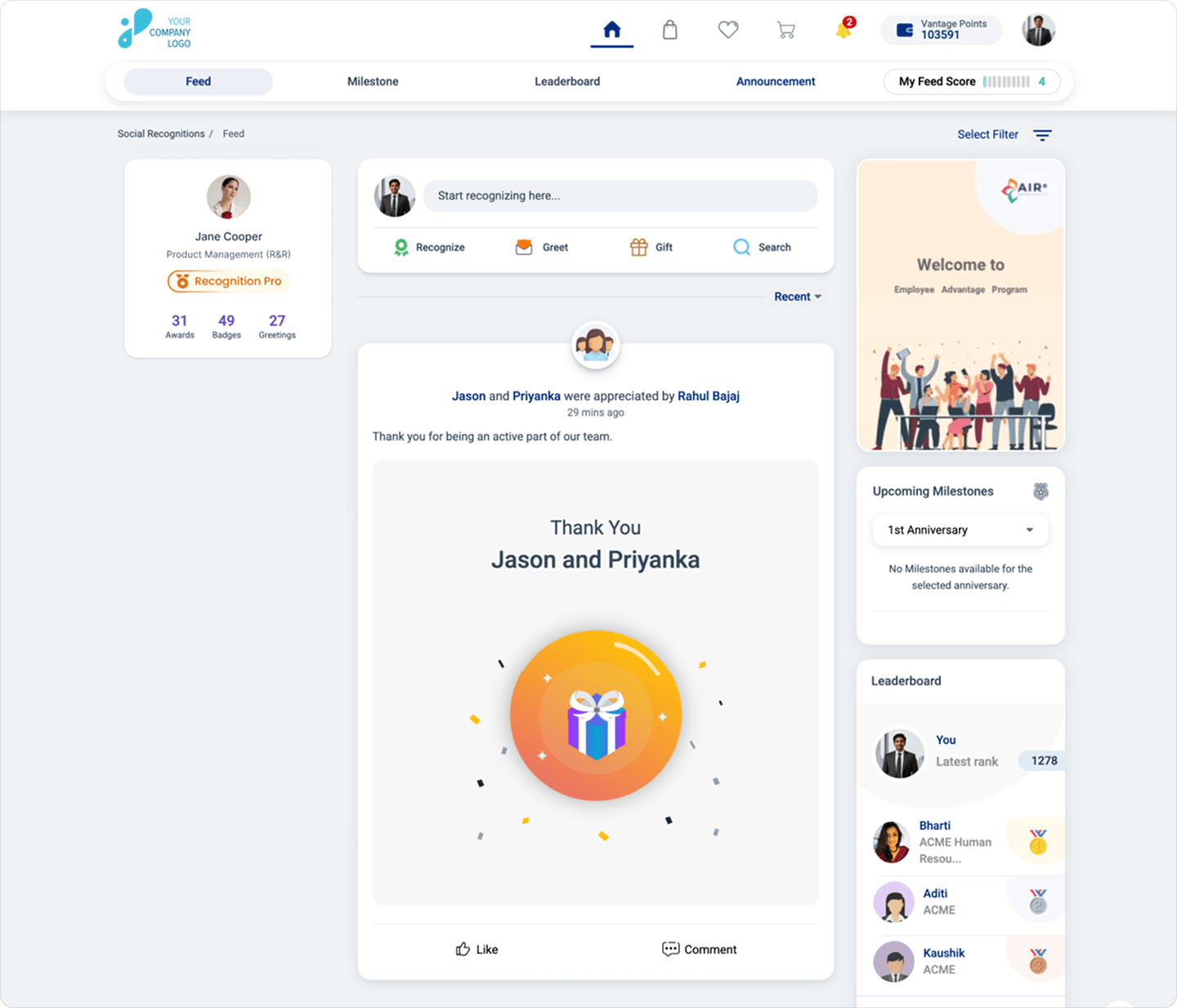
A short post on the company’s social feed can share the achievement with everyone. Mention the win and the people behind it. This turns a team lunch into a moment of public recognition.
Source: Vantage Recognition
Use One Low-Effort Conversation Starter
One light prompt is enough to get a quiet table talking. Pick one and keep it short.
- Office Trivia: Five questions about the company, the team or the office. Mildly competitive, never awkward.
- Salt and Pepper: Each person gets half of a famous pair and finds their match by asking yes-or-no questions. It mixes up who sits with whom.
- Startup Pitch: Small groups pitch a ridiculous business idea in 60 seconds. Good for teams that already know each other well.
For more prompts, browse these icebreaker questions.
Run a Themed Lunch Once a Month
A monthly theme gives the team something to look forward to without adding work to anyone's week. Rotate cuisines, mark cultural celebrations with dishes from that tradition, or fold the month's birthdays into one lunch.
Themed lunches work best as a running program rather than a one-off that quietly stops in month three. Setting them up as a campaign, with a theme, sign-ups and a shared photo thread, keeps the habit going.
Try a Lunch-and-Learn
A lunch-and-learn pairs a meal with a short, informal session, usually 20 to 30 minutes, led by someone on the team. Topics can be a skill, a project retrospective, a tool demo or a teammate's hobby.
Keep the talk short and the questions open. The best ones feel like a conversation with slides, not a training with sandwiches.
Rotate Who Picks the Menu
Letting a different person choose each time spreads ownership and quietly widens everyone's palate. It also means the newest hire, not just the loudest voice, gets a say. Set a simple budget and one rule: the choice has to work for the team's dietary needs.
Keep It Optional and Phone-Light
The lunch should feel like a break, not another meeting on the calendar. Make attendance optional, avoid work talk unless people drift into it, and ask everyone to leave phones face down.
The point is the conversation that happens when nobody is performing. That is where a sense of belonging actually gets built.
Planning something bigger? Karaoke, live music, a stand-up comic and food fairs are great ideas, just not for a lunch hour. They belong at a party. See our office party ideas, or try these team building activities.
Team Lunch Ideas for Remote and Hybrid Teams
Send the meal, share the time. Remote teammates cannot gather around a taco bar, but they can eat at the same moment on the same call, and that shared half hour is what makes it a team lunch.
A few things make virtual lunches work:
- Let people order their own food. A food-delivery or dining gift card puts everyone on equal footing and handles dietary needs automatically.
- Pick a time that respects time zones. For a team spread from New York to San Francisco, early afternoon Eastern lands as late morning Pacific. If the spread is wider, run two lunches rather than asking someone to eat at 9 a.m.
- Keep the call small. Past 8 or 10 people, a video lunch turns into a webinar. Use breakout rooms for larger groups.
- Give hybrid teams one rule: if anyone joins remotely, everyone joins from their own screen, so the people in the office do not become the main event.
- Borrow a prompt. A quick round of trivia or a "show us your lunch" moment breaks the silence that settles over most video calls in the first 5 minutes.
For more ideas that work through a screen, see these virtual team building activities.
Conclusion
A good team lunch doesn't need an elaborate menu or a big budget. It needs food everyone can enjoy and a reason worth gathering for. Build-your-own stations make it easier to accommodate different tastes and dietary needs. A few genuine words about a team's hard work, a recent win, or a milestone make the meal feel personal.
Because people may forget whether lunch was tacos or grain bowls. But they are more likely to remember feeling appreciated, especially when the appreciation is specific, sincere, and shared around the table.
Vantage Influencers Podcast
Wrap It Up With Fun: Year-End Recognition That Sticks
Dr. Bob Nelson shares his insights on making year-end recognition fun and impactful, from personal notes to celebrations that employees get a say in.
Dr. Bob Nelson, President, Nelson Motivation Inc.
Listen to the EpisodeFAQs
What to feed 20 people for lunch?
Build-your-own taco bars, sandwich stations, pasta trays, and grain bowls are great options for 20 people. They are easy to serve, offer variety, and let employees choose what suits their tastes and dietary needs.
What are some quick lunch ideas for colleagues?
Try sandwich platters, wraps, salads, pizza, or pre-assembled grain bowls for a quick team lunch. Add fruit, snacks, or dessert to round out the meal without making the setup complicated.
What are some good staff meal ideas?
Good staff meal ideas include taco bars, pasta dishes, rice bowls, build-your-own salads, and catered buffets. Choose filling options with vegetarian, vegan, and other dietary needs in mind so everyone has something to enjoy.
What are some ideas for a team lunch?
Organize a themed potluck, a build-your-own lunch station, an outdoor picnic, or a catered meal to celebrate a team milestone. You can also use the lunch to welcome a new hire, thank employees for a project, or bring remote and in-office colleagues together.

Shikha Gogoi is a Content Marketing Specialist focused on SEO-driven content around employee engagement, recognition, and workplace culture, helping build people-first workplaces.
Connect with Shikha on LinkedIn.