Before you read any further, answer this honestly: in your last disagreement at work, did you say what you actually thought? Or did you agree just to end it, go quiet, or push back harder than the moment called for?
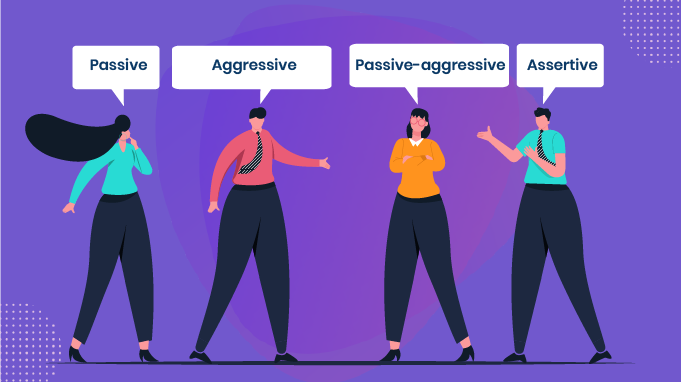
Whatever you just answered is a better read on your communication style than any label you'd choose for yourself. There are 4 communication styles in the workplace, passive, aggressive, passive-aggressive, and assertive, and almost everyone believes they land in the best one. The data says otherwise.
Most People Get This Wrong About Themselves
In a global survey of 1,900+ professionals by the Niagara Institute, 75.3% rated their own communication style as assertive. That number cannot be true in practice. Assertive communication is the style everyone aspires to and the one fewest people consistently practice, especially under pressure, with a difficult manager, or in a meeting where disagreeing feels risky.
That gap rarely goes away with seniority. Senior people have usually just had more practice hiding it. So before you decide which style describes you, walk through what each one actually looks like from the outside, not the flattering version, the real one.
The 4 Communication Styles At A Glance
| Style | What it sounds like | What it costs the team |
|---|---|---|
| Passive | Silence, vague agreement | People stop knowing what you actually think |
| Aggressive | Blunt, dismissive, blaming | Colleagues stop pushing back or volunteering ideas around you |
| Passive-Aggressive | Sarcasm, a "fine" that isn't fine | Trust erodes without an obvious trigger |
| Assertive | Direct, specific, still respectful | The fastest path to being taken seriously |
Skim the table, then read the full breakdown below. Most people recognize a little of themselves in two rows, not just one.
Spot Yourself: The 4 Communication Styles
Passive: You Go Quiet To Keep The Peace
Ask yourself: do you say "it doesn't matter" when it does? Do you agree in the meeting and mention your actual concern to a coworker afterward instead?
Signs: soft voice, poor eye contact, apologizing before you've even disagreed, letting the room decide so you don't have to.
What you'd catch yourself saying: "Whatever you think is best." / "I don't want to make a big deal out of this."
If this sounds like you more often than you'd like to admit, the fix isn't to force yourself to be loud. Pick the smallest disagreement in your next meeting and say it out loud instead of saving it for after, before it turns into three unspoken things. Active listening from the people around you makes that first attempt easier, since it rewards you for speaking up instead of punishing it.
Aggressive: You Win The Room And Lose The Follow-Up
Notice this: do people stop pushing back on your ideas, even when they clearly disagree? Do you interrupt more than you realize?
Signs: harsh tone, crossed arms or closing the distance when you talk, mocking remarks disguised as jokes, deciding before the discussion has actually ended.
What you'd catch yourself saying: "This is your fault, not mine." / "We're doing it my way."
The tell shows up after you leave the room: fewer people volunteer ideas around you, not because they don't have any, but because it doesn't feel worth the friction.
Passive-Aggressive: You Say Yes And Mean Something Else
Check yourself here: have you ever said "sure, fine" and meant the opposite? Do you let sarcasm carry a point you're not willing to say directly?
Signs: mumbling instead of speaking up, smiling while clearly annoyed, the silent treatment after a decision you didn't actually agree with.
What you'd catch yourself saying: "Sure, we can do it your way." (then doing something else) / "No, I'm fine. Why would you ask?"
This style often comes from feeling like direct disagreement isn't safe or won't change anything. If that's true for you, the honest move is naming the actual concern once, clearly, instead of letting it leak out sideways over weeks. Curiosity is the tool that makes this conversation land instead of feeling like an interrogation.
Ignore this pattern long enough and small miscommunication turns into a much bigger, harder conversation later.
Assertive: You Say What You Mean, Kindly
A quick test: can you disagree with someone and still make them feel heard? Do you say no without over-explaining yourself?
Signs: steady eye contact, even tone, comfortable with disagreement, a clean no when a no is warranted.
What you'd catch yourself saying: "Here's what I think, and I want your take too." / "I can't take this on right now, but I can next week."
Genuinely defaulting here, even under pressure, puts you in rarer company than the survey numbers suggest.
Why Your Style Can Change With Practice
Most people carry one default style, but it moves depending on who's in the room and how safe disagreement feels in the moment. Shifting toward assertive communication comes down to practice more than personality.
Start with the nonverbal layer: tone, posture, and eye contact carry as much of your style as the words you choose. Sharpening those interpersonal habits matters more than memorizing which of the 4 styles you fall into.
Recognition is another low-stakes way in. Telling a colleague, specifically and out loud, what they did well and why it mattered is assertive communication with almost none of the risk attached. Teams that build that habit with Vantage Recognition tend to find that harder, higher-stakes conversations get easier too, because saying exactly what you mean has already become normal.
Skip the practice and the cost adds up fast. Grammarly's 2024 State of Business Communication report found that all surveyed knowledge workers experience some form of miscommunication at least weekly, with a quarter facing it multiple times a day, at an estimated $1.2 trillion annual cost to U.S. businesses. Most of that traces back to four different default styles running into each other with no shared language for it, rather than a knowledge gap.
See It In Action
Curious how a platform built around specific, everyday recognition could shift your team's default communication style?
Book a Demo →Frequently Asked Questions
1. What are the 4 communication styles in the workplace?
The 4 communication styles are passive, aggressive, passive-aggressive, and assertive. Most people default to one under normal conditions and shift toward another under stress or in conflict.
2. What's the fastest way to spot someone's communication style in a meeting?
Watch what happens right after a decision is made, not during the discussion itself. Passive communicators go quiet and raise concerns privately later. Aggressive communicators keep pushing after the room has moved on. Passive-aggressive communicators agree out loud, then act against the decision. Assertive communicators state their position once, accept the outcome, and move on.
3. Can your communication style change depending on the situation?
Yes. Most people have a default style with peers but shift with a difficult manager, under a tight deadline, or in a high-stakes meeting. Someone assertive with friends might turn passive in a room full of senior leaders.
4. How do I become a more assertive communicator?
Start small: say the specific thing you noticed out loud the first time you notice it, use "I" statements instead of accusations, and practice giving a clear reason instead of over-explaining when you say no.
5. Is being assertive the same as being aggressive?
No. Assertive communication states your position clearly while still considering the other person's perspective. Aggressive communication pushes a point across regardless of how it affects the other person, which is what makes it harder for teams to work with over time.

Susmita Sarma is a Digital Marketer at Vantage Circle, making employee recognition less of a checkbox and more meaningful - helping organizations say we value our people and truly mean it.
Connect with Susmita on LinkedIn.