
Do you know what, DEI isn't a hiring problem. Yes, that's right!
It's a culture problem, and most companies get that backwards.
Before you launch any diversity, equity, and inclusion initiative, you need to know where your organization actually stands. Real diversity means representing people across cultures, backgrounds, ages, races, and identities—and building a workplace that gives everyone equal opportunity and recognition, no matter who they are or where they come from.
That starts with asking the right questions. This article covers the best diversity and inclusion questions to include in your employee pulse surveys. The ones that drive real inclusivity and boost employee engagement at work.
Let's dive in.
Key Takeaways
- DEI&B are four different things, and a survey that measures only one will mislead you about the other three.
- Employees give honest answers only when they believe the survey is truly anonymous and cannot be traced back to them.
- Never report results for groups smaller than five people, and give every identity question a "prefer not to say" option.
- Ask about specific behavior in a set time window instead of loaded labels, because the wording decides whether people answer honestly.
- Run anonymous surveys to find the patterns, use panels to understand them, and act visibly before the next cycle to keep answers honest.
Why DEI Surveys Need Special Care

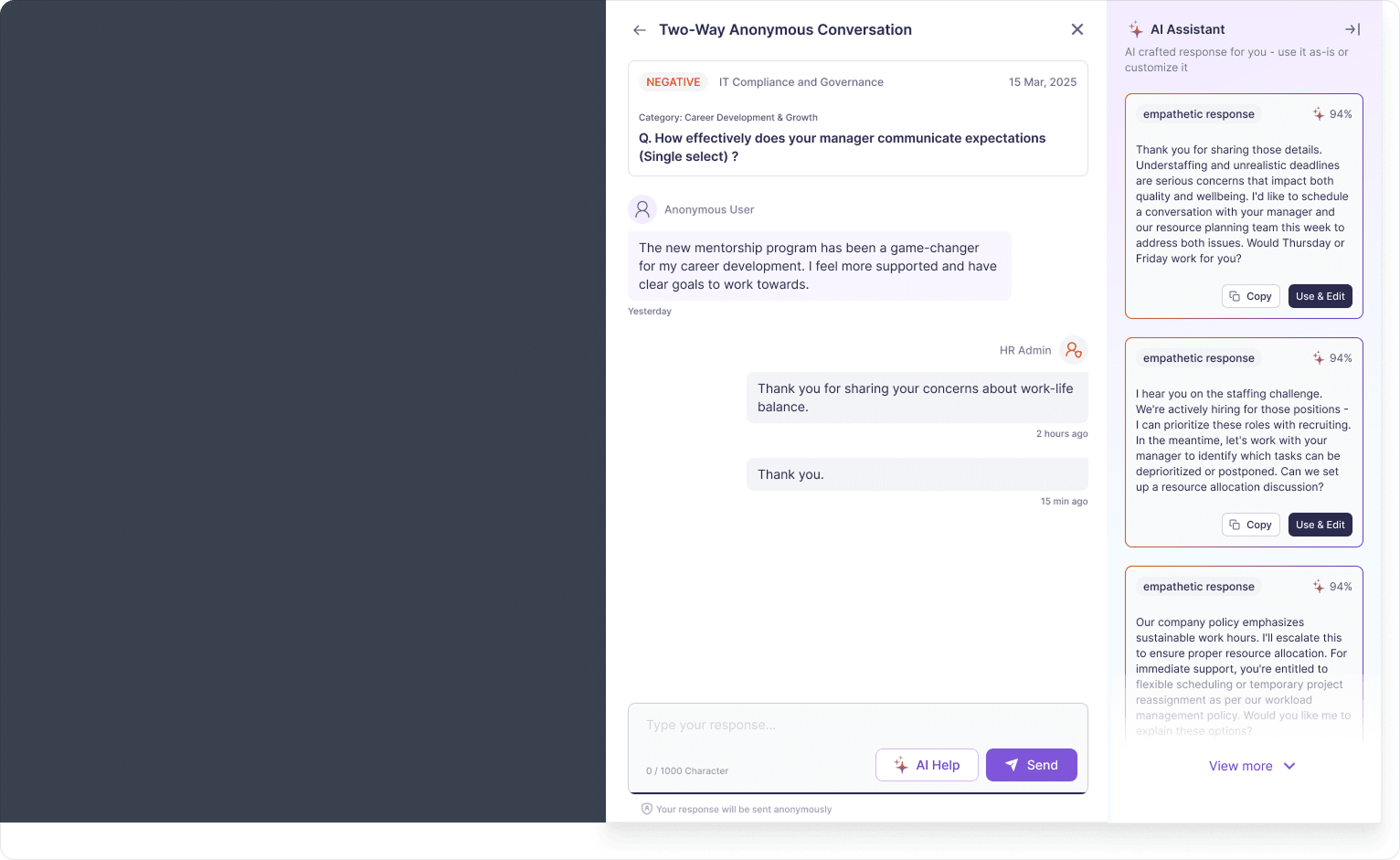
DEI survey questions touch identity, fairness, and safety and employees answer honestly only when they trust the survey. A question about feeling judged for your background gets a very different answer depending on whether the respondent believes it can be traced back to them. Anonymity, here, is the difference between real data and polite data.
The gaps are real:
In Deloitte's 2025 survey, 42% of Gen Zs and 41% of millennials say managers should foster an inclusive culture, but only about one in five say it actually happens. A good survey surfaces that gap before your people conclude it for themselves and leave.
So, the takeaway is, guarantee anonymity and say so in the invitation (Anonymous Responses exist for exactly this). You must give every identity question a "prefer not to say" option and set a minimum reporting threshold, usually five responses, so small groups can't be identified in segmented results.
One last thing. Diversity asks "who is in the room." Equity asks "does the room treat everyone the same." Inclusion asks "does everyone get to speak." Belonging asks "does everyone feel they can stay." A survey covering only one will mislead you about the other three.
Diversity Survey Questions
Diversity survey questions measure representation: whether people from different backgrounds are actually present at every level of the organization, from new hires to the executive team. Diversity is the most visible of the four categories and the easiest to fake with a stock-photo careers page, which is why these questions ask employees what they observe rather than what the company claims.
Start with these 10 representation questions that ask employees what they actually see:
| Question | What It Measures | What a Concerning Answer Looks Like |
|---|---|---|
| How diverse is your executive team? | Representation at the level employees watch most | "Leadership all looks the same" from multiple departments |
| Do you think our company celebrates diverse ideas and people? | Whether diversity is valued or merely tolerated | Neutral scores; celebration seen as performative |
| How well does HR work towards hiring candidates from underrepresented groups? | Perceived commitment in the hiring pipeline | Employees can't name a single visible effort |
| How do you think the company must improve its diversity efforts in the future? (open-ended) | Employee-sourced priorities | Repeated mentions of the same ignored issue |
| Do you feel our teams are made up of people from a wide range of backgrounds? | Day-to-day representation beyond leadership | "Only in some departments" patterns |
| Do you see people with a background like yours succeeding here? | Visible role models and progression proof | Underrepresented groups scoring lowest |
| Does our leadership team reflect the diversity of our wider workforce? | The gap between workforce and leadership diversity | Large perceived gap, especially from tenured staff |
| Are diverse perspectives actively sought out when important decisions are made? | Whether diversity has decision-making influence | "We're consulted after the decision" responses |
| Do our internal communications and imagery represent different kinds of people? | Everyday representation signals | Specific groups report feeling invisible |
| In the past year, have you seen the company act on a diversity commitment it made? | Follow-through versus announcement | High "no" or "can't recall" share |
Question: How diverse is your executive team?
What It Measures: Representation at the level employees watch most
What a Concerning Answer Looks Like: "Leadership all looks the same" from multiple departments
Question: Do you think our company celebrates diverse ideas and people?
What It Measures: Whether diversity is valued or merely tolerated
What a Concerning Answer Looks Like: Neutral scores; celebration seen as performative
Question: How well does HR work towards hiring candidates from underrepresented groups?
What It Measures: Perceived commitment in the hiring pipeline
What a Concerning Answer Looks Like: Employees can't name a single visible effort
Question: How do you think the company must improve its diversity efforts in the future? (open-ended)
What It Measures: Employee-sourced priorities
What a Concerning Answer Looks Like: Repeated mentions of the same ignored issue
Question: Do you feel our teams are made up of people from a wide range of backgrounds?
What It Measures: Day-to-day representation beyond leadership
What a Concerning Answer Looks Like: "Only in some departments" patterns
Question: Do you see people with a background like yours succeeding here?
What It Measures: Visible role models and progression proof
What a Concerning Answer Looks Like: Underrepresented groups scoring lowest
Question: Does our leadership team reflect the diversity of our wider workforce?
What It Measures: The gap between workforce and leadership diversity
What a Concerning Answer Looks Like: Large perceived gap, especially from tenured staff
Question: Are diverse perspectives actively sought out when important decisions are made?
What It Measures: Whether diversity has decision-making influence
What a Concerning Answer Looks Like: "We're consulted after the decision" responses
Question: Do our internal communications and imagery represent different kinds of people?
What It Measures: Everyday representation signals
What a Concerning Answer Looks Like: Specific groups report feeling invisible
Question: In the past year, have you seen the company act on a diversity commitment it made?
What It Measures: Follow-through versus announcement
What a Concerning Answer Looks Like: High "no" or "can't recall" share
Equity Survey Questions
Equity survey questions measure fairness of process: whether pay, promotion, feedback, and opportunity work the same way for everyone, regardless of background. Equity is where DEI becomes concrete. An organization can be diverse and inclusive in tone yet still route its best assignments to the same profile of person every time. These questions find that out.
Ask these 10 practical equity questions:
| Question | What It Measures | What a Concerning Answer Looks Like |
|---|---|---|
| Do you think our promotion and evaluation process is fair and free of bias? | Trust in advancement mechanics | Low scores clustering in specific groups |
| On a scale of 1 to 5, how well does top management support the needs of colleagues with disabilities? | Accommodation and accessibility in practice | Low scores or "I wouldn't know how to ask" |
| Do you believe you are paid fairly compared with colleagues doing similar work? | Perceived pay equity | Sharp differences by gender or background |
| Do employees from all backgrounds have equal access to growth opportunities here? | Distribution of development chances | "Opportunities go to the same people" themes |
| Are stretch assignments and high-visibility projects distributed fairly? | The informal pipeline to promotion | One team or profile always gets the big projects |
| Are workplace policies applied consistently, no matter who is involved? | Rule fairness | "Depends who you are" responses |
| Is the feedback you receive specific and fair, regardless of your background? | Bias in performance conversations | Vague feedback reported by specific groups |
| Do you have the same resources and support to succeed as your peers? | Practical, day-to-day equity | Resource gaps mapping to team demographics |
| When conflicts or complaints arise, are they handled fairly? | Trust in grievance processes | Low trust plus low reporting rates together |
| Is it easy to request and receive reasonable accommodations here? | Friction in the accommodation process | "I gave up asking" answers |
Question: Do you think our promotion and evaluation process is fair and free of bias?
What It Measures: Trust in advancement mechanics
What a Concerning Answer Looks Like: Low scores clustering in specific groups
Question: On a scale of 1 to 5, how well does top management support the needs of colleagues with disabilities?
What It Measures: Accommodation and accessibility in practice
What a Concerning Answer Looks Like: Low scores or "I wouldn't know how to ask"
Question: Do you believe you are paid fairly compared with colleagues doing similar work?
What It Measures: Perceived pay equity
What a Concerning Answer Looks Like: Sharp differences by gender or background
Question: Do employees from all backgrounds have equal access to growth opportunities here?
What It Measures: Distribution of development chances
What a Concerning Answer Looks Like: "Opportunities go to the same people" themes
Question: Are stretch assignments and high-visibility projects distributed fairly?
What It Measures: The informal pipeline to promotion
What a Concerning Answer Looks Like: One team or profile always gets the big projects
Question: Are workplace policies applied consistently, no matter who is involved?
What It Measures: Rule fairness
What a Concerning Answer Looks Like: "Depends who you are" responses
Question: Is the feedback you receive specific and fair, regardless of your background?
What It Measures: Bias in performance conversations
What a Concerning Answer Looks Like: Vague feedback reported by specific groups
Question: Do you have the same resources and support to succeed as your peers?
What It Measures: Practical, day-to-day equity
What a Concerning Answer Looks Like: Resource gaps mapping to team demographics
Question: When conflicts or complaints arise, are they handled fairly?
What It Measures: Trust in grievance processes
What a Concerning Answer Looks Like: Low trust plus low reporting rates together
Question: Is it easy to request and receive reasonable accommodations here?
What It Measures: Friction in the accommodation process
What a Concerning Answer Looks Like: "I gave up asking" answers
How to use this set: equity questions produce the most defensive reactions from leadership, so agree in advance on what threshold triggers action. The single most revealing cut of equity data is comparing answers across demographic groups.
If the average is fine but one group consistently scores two points lower, the average is hiding your finding.
Inclusion Survey Questions
Inclusion survey questions measure everyday experience. Whether people feel safe speaking up, heard in meetings, and able to influence decisions once they are in the room. Diversity gets people through the door. Inclusion is what happens after. It is also where a single survey is least reliable, because inclusion changes with managers, team composition, and workload.
Running these as a recurring pulse through eNPS Surveys shows whether the changes you make after one survey actually move the next one.
| Question | What It Measures | What a Concerning Answer Looks Like |
|---|---|---|
| Do you feel the training and induction you receive promote inclusivity? | Whether inclusion is built into onboarding | New joiners scoring lower than tenured staff |
| On a scale of 1 to 5, how safe do you feel communicating your concerns at work? | Psychological safety | Scores of 1–2 anywhere in the organization |
| Do you think we give priority to inclusion at work? | Perceived organizational commitment | "Words yes, actions no" open-text themes |
| What do you like the most about our company regarding inclusivity? (open-ended) | What is working, worth protecting | Blank or sarcastic responses |
| Do you feel confident enough to raise your opinions at work? | Voice and dissent safety | Minority-group employees notably less confident |
| Do you see career growth in this company? | Inclusion's link to retention | "Growth is for other people" patterns |
| Do you think we need to improve on our D&I initiatives? If yes, how and where? (open-ended) | Employee-directed improvement map | The same fix requested survey after survey |
| Are your ideas heard and credited in meetings? | Everyday voice and attribution | "Heard when repeated by someone else" answers |
| Do meetings and decisions make space for everyone to contribute? | Structural inclusion in collaboration | Same voices dominate; others opt out |
| Can you disagree with your manager without fearing consequences? | Safety with authority | Low scores concentrated under specific managers |
Question: Do you feel the training and induction you receive promote inclusivity?
What It Measures: Whether inclusion is built into onboarding
What a Concerning Answer Looks Like: New joiners scoring lower than tenured staff
Question: On a scale of 1 to 5, how safe do you feel communicating your concerns at work?
What It Measures: Psychological safety
What a Concerning Answer Looks Like: Scores of 1–2 anywhere in the organization
Question: Do you think we give priority to inclusion at work?
What It Measures: Perceived organizational commitment
What a Concerning Answer Looks Like: "Words yes, actions no" open-text themes
Question: What do you like the most about our company regarding inclusivity? (open-ended)
What It Measures: What is working, worth protecting
What a Concerning Answer Looks Like: Blank or sarcastic responses
Question: Do you feel confident enough to raise your opinions at work?
What It Measures: Voice and dissent safety
What a Concerning Answer Looks Like: Minority-group employees notably less confident
Question: Do you see career growth in this company?
What It Measures: Inclusion's link to retention
What a Concerning Answer Looks Like: "Growth is for other people" patterns
Question: Do you think we need to improve on our D&I initiatives? If yes, how and where? (open-ended)
What It Measures: Employee-directed improvement map
What a Concerning Answer Looks Like: The same fix requested survey after survey
Question: Are your ideas heard and credited in meetings?
What It Measures: Everyday voice and attribution
What a Concerning Answer Looks Like: "Heard when repeated by someone else" answers
Question: Do meetings and decisions make space for everyone to contribute?
What It Measures: Structural inclusion in collaboration
What a Concerning Answer Looks Like: Same voices dominate; others opt out
Question: Can you disagree with your manager without fearing consequences?
What It Measures: Safety with authority
What a Concerning Answer Looks Like: Low scores concentrated under specific managers
Panel and Leadership Discussion Questions
Not every question belongs in an anonymous survey. These 12 retained questions work best in panels, focus groups, and leadership reviews, where discussion is the point:
1. For panels and focus groups:
- What is your definition and meaning of diversity?
- How do you define inclusion, and what does it mean in a workplace scenario?
- Why is D&I an important topic of discussion?
- Do you think our D&I initiatives have influenced you?
- Do you think our company has a diverse team, and what new challenges does that bring?
- How far along the D&I journey do you feel the organization is?
- What barriers to diversity and inclusion have you noticed in the company?
2. For leaders and executive teams:
- Do you think your organization successfully implemented diversity initiatives or best practices?
- Did D&I have a positive impact on your company culture?
- How does D&I impact you on a personal level?
- How did implementing D&I initiatives change your leadership approach? What would you invest in next, and why?
The rule of thumb: surveys measure, discussions explain.
Run the anonymous survey first, find the pattern, then bring these discussion questions to a panel or leadership review to understand what is behind it. Reversing the order, discussing first and surveying later, anchors everyone to the loudest voice in the room.
Never let someone's own manager facilitate or sit in on these sessions. In a room with the people who sign off on promotions, candor collapses. Use a neutral facilitator, promise upfront that nothing said is attributed to a name, and have leadership listen far more than it speaks.
How to Get Honest Answers on Sensitive Questions
Employees don't answer the question you ask. They answer the question they think you'll trace back to them. So honest answers come from two things: anonymity they actually believe, and wording that never makes an answer feel self-incriminating.
Start with these five practices:
Wording matters more than you'd think.
Compare "Have you experienced discrimination at work?" with "In the past 12 months, have you seen or experienced behavior here that felt unfair because of someone's background?" The first asks people to brand themselves a victim and their employer an offender. The second asks about specific behavior in a set window. Same topic, very different willingness to answer.
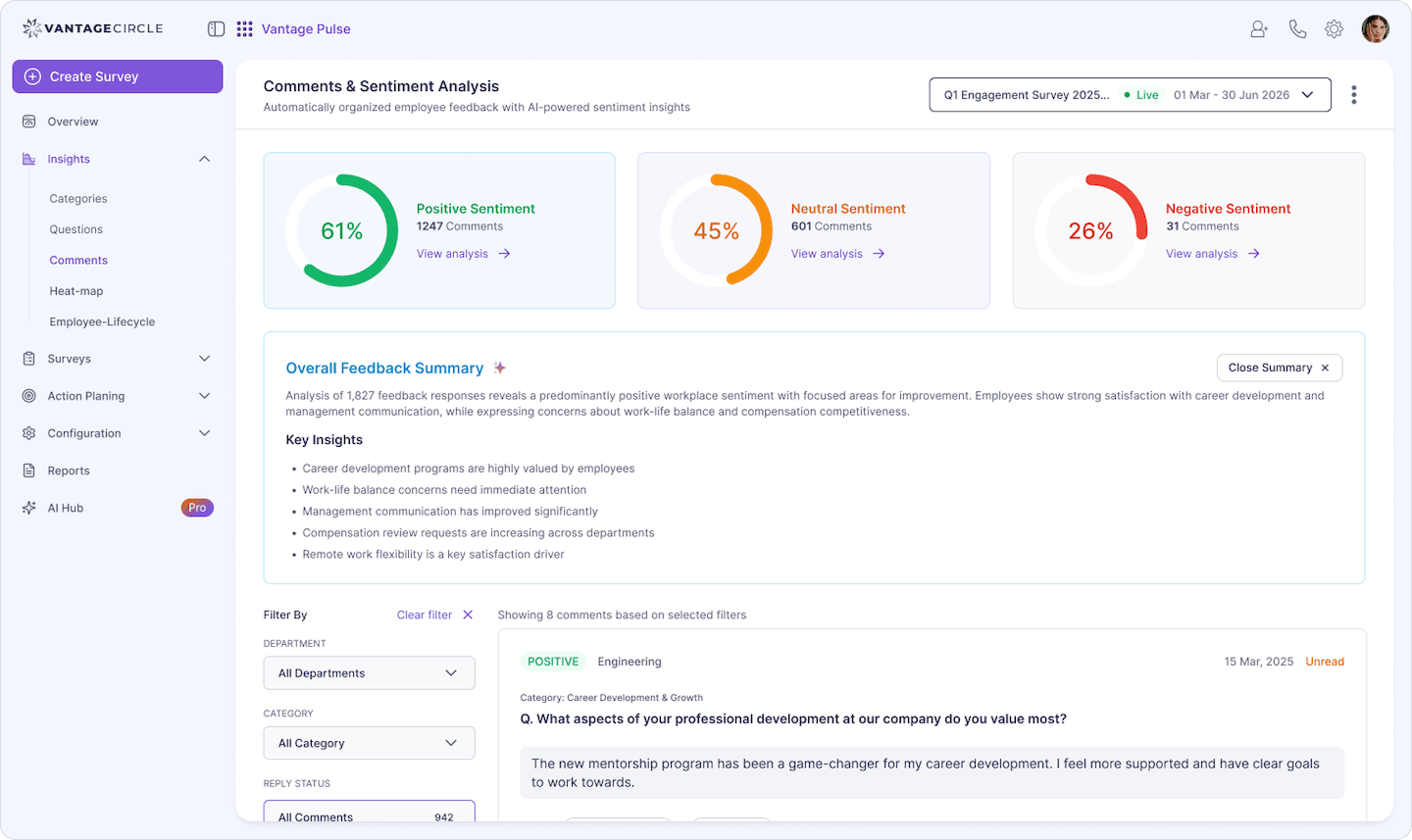
One tip for open-ended questions: they give you the richest answers but the most to read. Sentiment analysis pulls out the recurring themes automatically, so HR doesn't have to comb through every comment by hand. Now, that matters most here, where the honest signal often lives in the free text, not the scores.
Turn these questions into a live DEI pulse
Vantage Pulse runs anonymous, segmented DEI and engagement surveys, with the sentiment analysis and theme-tagging this guide recommends built in. See where your organization actually stands, and act on the honest signal in the free text, not just the scores.
Explore Vantage PulseConclusion
Good questions are only half the job. What really matters is what you do with the answers.
So ask honestly, protect people's anonymity, read the comments as closely as the scores, and actually act before you survey again. Do that, and people keep telling you the truth. That's really all DEI comes down to: keep asking, keep listening, and keep following through.

Sanjeevani Saikia is a Senior Content Strategist at Vantage Circle, where she leads end-to-end content strategy across SEO, thought leadership, brand storytelling, podcasts, and video. She is also the host of the Vantage Influencers Podcast, where she brings conversations with HR and business leaders from top global organisations, including Fortune 500 companies.
Connect with Sanjeevani on LinkedIn.