
The first day at a new job blends excitement, curiosity, and a little nervousness. New colleagues, unfamiliar processes, and the pressure of making a good first impression can make even the most experienced professionals feel like they're starting from scratch.
Now imagine arriving on your first day to find a thoughtfully prepared welcome kit waiting for you. A notebook for your first meeting, a few essentials to help you settle in, and a personal note from your manager welcoming you to the team. These may seem like small gestures, but they can make the transition into a new workplace feel a lot more welcoming.
That's what makes a well-planned employee welcome kit meaningful. It's not about how many items fit into a box or how prominently the company logo appears. It's about choosing things that employees will genuinely appreciate and use, while making them feel valued from the beginning.
So, what should you include to create a memorable welcome experience without overspending? This blog will explore 21 employee welcome kit ideas across different work arrangements, along with practical tips on what to include, what to avoid, and how to get the timing right.
What is an Employee Welcome Kit?
An employee welcome kit is a curated collection of practical essentials and branded merchandise that a company provides to new hires to make them feel welcome, valued, and connected to the organization from their very first day.
You'll hear it called many names. In the US, it's usually a new-hire welcome kit or welcome package. In India and much of Asia, HR teams call it a joining kit for new employees. Some companies call it an onboarding kit or employee onboarding kit because it is part of the broader onboarding process. Onboarding covers everything a company does to help a new hire understand their role, learn how things function, and make them feel part of the team.
Irrespective of what you call it, the purpose stays the same. A welcome kit for new employees turns an abstract promise ("we're glad you're here") into something tangible for them to cherish.
What to Include in a New Employee Welcome Kit?
A new employee welcome kit should include four things: practical work items, a few pieces of high-quality branded swag, essential information for the first week, and a personal welcome note from the manager.
Consider balancing it. Too much merchandise can feel more like a marketing campaign. Too much paperwork, and it feels like a compliance pack. The four parts below keep it human.
Practical Work Items
Include things they'll regularly use. A good notebook, a smooth-writing pen, and an insulated tumbler or water bottle. These practical essentials remain useful long after the initial excitement of unboxing. The idea is to choose items that add convenience and make everyday work a little easier.
Branded Swag
Pick two or three branded pieces people would actually wear or carry by investing in quality over quantity. A comfortable hoodie, a sturdy tote, or a well-designed laptop sleeve can create a stronger sense of belonging than several inexpensive promotional items. Thoughtfully curated new hire swag helps employees feel part of the team from day one.
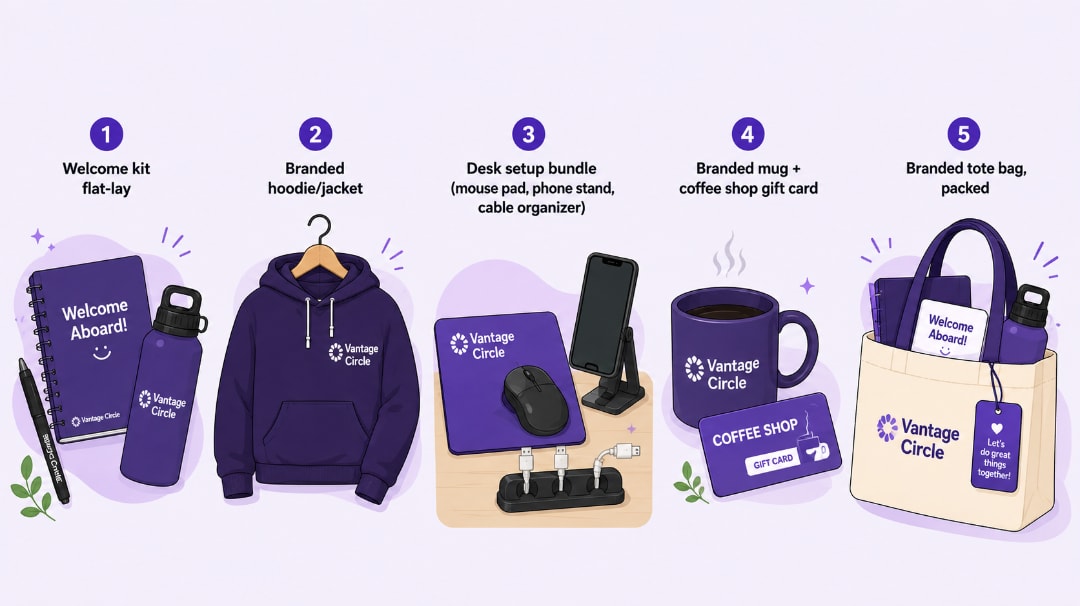 Source: Vantage Swag
Recommended Read: 25 Company Swag Ideas That Actually Get Used (By Occasion)
Essential Information
Provide new hires with essential information to help them navigate their first week without unnecessary confusion. Include their first-week schedule, key points of contact, login instructions for essential tools, and a brief overview of employee benefits.
Keep the information concise and easy to follow. A one-page guide is more useful on the first day than a lengthy employee handbook.
A personal Welcome Note
A handwritten note from the manager is one of the most meaningful additions to an employee welcome kit. It doesn't have to be lengthy. Just three or four sentences expressing why the team is excited to welcome the new hire and what they can look forward to working on can make the gesture feel personal and thoughtful.
However, the welcome shouldn't end with the note. Managers can reinforce this gesture through public recognition during the employee's first week, demonstrating that their appreciation extends beyond the initial welcome. The first few weeks present a suitable opportunity to start a two-way communication.
Why Welcome Kits Matter for Onboarding
Welcome kits matter because they shape a new hire's first impression, leave no room for confusion, and signal belonging before the real work begins.
The first few weeks at a new job are full of uncertainty. And that uncertainty is common. According to a Paychex survey (2022) of 1,002 US employees who had joined their employer within the past year, only 52% felt satisfied with their onboarding experience; While 39% find the onboarding clear, 32% find it confusing, and 22% find it disorganized.
This data emphasizes that a better onboarding experience is needed to ease uncertainty and create a stronger first impression.
A thoughtfully curated welcome kit cannot compensate for an ineffective onboarding process. However, it can contribute to a positive onboarding experience in three key ways:
It makes the first impression tangible. People remember how a company made them feel before they remember the policies.
It provides clarity from the start. An information card addresses common questions and helps new hires find the right information without having to ask for assistance.
It establishes a culture of recognition early on. A thoughtful welcome is a new hire's first experience of recognition, making them feel valued from the very beginning. Recognition also plays an important role in employee retention. In the Recognition Effect Report (2025) by Great Place to Work India and Vantage Circle, 92% of employees in high-recognition cultures expressed an intent to stay.
21 Employee Welcome Kit Ideas
Explore these 21 employee welcome kit ideas, categorized by work style and budget, to find options that best suit your new hires. Rather than including every item, focus on selecting four to six thoughtful additions that offer practicality, value, and a personal touch. A well-curated kit can create a more meaningful experience than one filled with unnecessary items.
| # | Idea | Best for (in-office/remote/both) | Why it works |
|---|---|---|---|
| 1 | Quality notebook and pen | Both | Practical everyday essentials for taking notes, planning tasks, and attending meetings. |
| 2 | Insulated tumbler or water bottle | Both | It can be handy and carried everywhere. |
| 3 | Branded hoodie or T-shirt (size asked in advance) | Both | Creates a sense of belonging and helps employees feel connected to the organization through branded apparel. |
| 4 | Sturdy tote bag or backpack | Both | A practical, reusable accessory for carrying everyday essentials while representing the company beyond the workplace. |
| 5 | Laptop sleeve | Both | Protects work laptops from scratches and minor damage, especially during commutes. |
| 6 | Handwritten note from the manager | Both | Adds a personal touch to the welcome and makes new hires feel appreciated from the start. |
| 7 | Team welcome card signed by teammates | Both | Makes the welcome feel more personal, so new hires feel included before their first day. |
| 8 | First-week schedule and "who to ask" card | Both | Provides clarity on initial activities and key contacts that help employees navigate their first day with confidence. |
| 9 | Perks and benefits quick-start card | Both | Employees can easily understand and access their available benefits from the beginning. |
| 10 | Desk organizer | In-office | Keeps everyday work essentials organized and helps new hires settle into their workspace. |
| 11 | Small desk plant | In-office | Adds freshness to the workspace. |
| 12 | Webcam cover | Remote | Helps maintain visual privacy when the webcam is not in use. |
| 13 | Phone or laptop stand | Remote / Both | Helps position devices at a more comfortable viewing angle, which makes work setups more convenient. |
| 14 | Portable charger | Both | Useful for commutes, business travel, or long workdays |
| 15 | Wireless or noise-cancelling earbuds | Both | Helps employees manage background noise and stay focused during calls and individual tasks. |
| 16 | Local snack box | Both | Adds a thoughtful treat to the first day with locally sourced snacks. |
| 17 | Coffee or lunch gift card for week one | Remote | Encourages remote employees to participate in a virtual welcome lunch or coffee break with their team. |
| 18 | Wellness item (resistance band, yoga mat, or stress-relief tea) | Both | Encourages employees to incorporate small wellness activities into their daily routines. |
| 19 | A book chosen by the team | Both | Introduces new hires to the team's interests while creating opportunities for conversation |
| 20 | Desk calendar with key dates marked | In-office | Keeps important dates, team activities, and initial check-ins visible and easy to remember. |
| 21 | One item personalized with their name | Both | Adds an individual touch that makes the welcome kit feel thoughtfully prepared for the new hire. |
Gift cards make a practical welcome gift when you're unsure of a new hire's preferences. Our guide to gift card incentives for employees offers useful tips on choosing the right options. Ideas 6, 7, and 21 are among the most affordable yet can have a meaningful impact. If you're working with a limited budget, consider prioritizing these items.
Remote and Hybrid Employee Welcome Kits
A remote employee welcome kit should prioritize home-office essentials and opportunities for connection. Items such as useful tech accessories, a webcam cover, a gift card for a virtual team lunch, and a digital welcome message from the team can help remote hires feel included. Ideally, the kit should arrive before their first day.
Unlike in-office employees, remote hires miss out on everyday interactions, such as being introduced to colleagues in person or joining teammates for a casual coffee break. A thoughtfully curated welcome kit can help bridge this gap and make their onboarding experience feel more personal and welcoming.
A remote welcome box for new employees can include:
A laptop or phone stand and a webcam cover
A portable charger or earbuds
A coffee or lunch gift card for a virtual team meal
A printed card with video call links for their first-week meetings
A handwritten note, plus a short video welcome from the team
What to Leave Out of a Welcome Kit
Many onboarding gifts go unused because they are chosen simply to fill the welcome kit rather than for practical use. Here are a few items worth avoiding:
Unnecessary novelty items: Stress balls, figurines, keychains, and decorative coasters may seem appealing initially but often go unused.
Apparel in incorrect sizes: Branded clothing loses its value if it doesn't fit properly. Always confirm the employee's size before ordering.
Low-quality merchandise: Items that break or stop working quickly can leave a negative impression. Prioritize quality and durability.
Lengthy printed handbooks: Share detailed onboarding documents digitally and include only essential first-week information in the welcome kit.
Generic motivational posters: Instead of relying on slogans, focus on thoughtful gestures that genuinely reflect the company's culture.
How to Time and Deliver the Kit
Everything comes down to timing. It can turn a simple gesture into a meaningful one and vice versa.
A kit that arrives in week three feels like an afterthought. A kit that arrives before day one feels like anticipation.
Here are five simple steps to ensure a smooth welcome kit experience:
1. Send a short pre-boarding survey: Once the employee accepts the offer, collect essential details such as T-shirt size, dietary preferences for snacks, and delivery address.
2. Order the kit in advance: Place the order as soon as the joining date is confirmed. Allow additional time for international deliveries to avoid delays.
3. Confirm delivery before day one: Check that the welcome kit has reached the employee a few days before their start date.
4. Extend the welcome beyond the kit: Make the employee feel included from their very first day. A welcome post on the company's social recognition platform allows teammates to greet the new hire and builds a sense of belonging that goes beyond physical gifts.
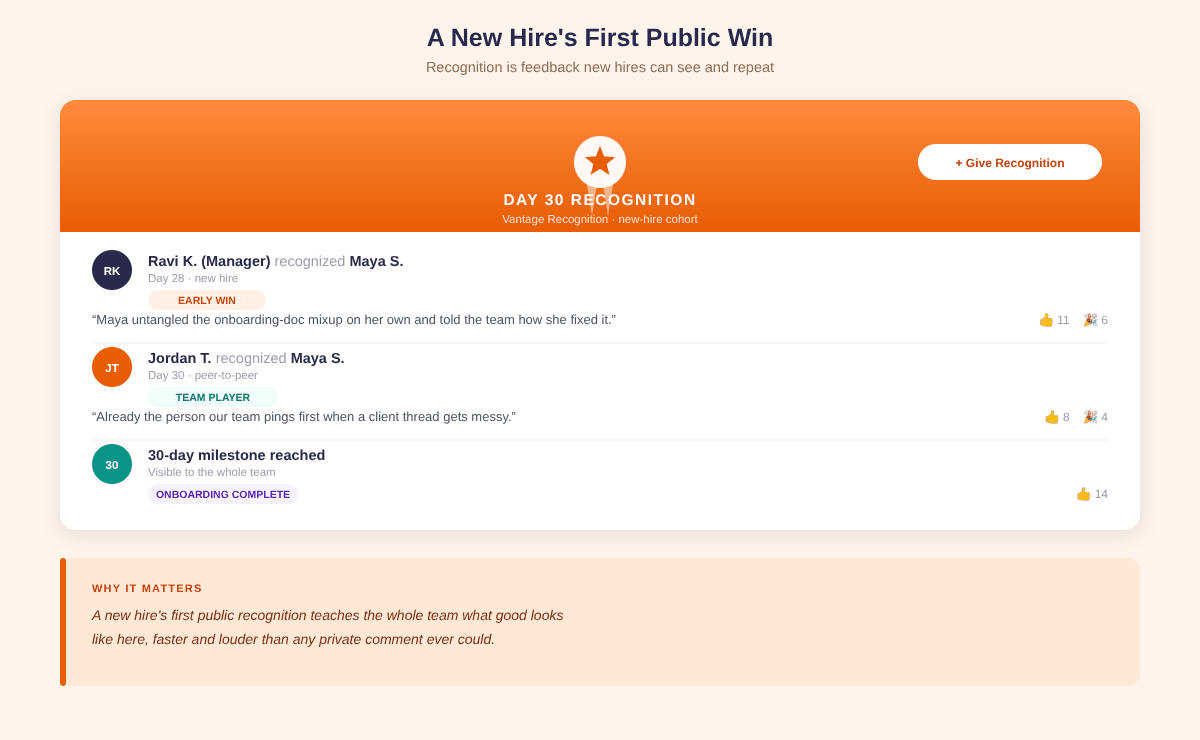 Source: Vantage Recognition
5. Gather feedback: Check in with employees at 30, 60, and 90 days to understand their onboarding experience, including how useful they found the welcome kit.
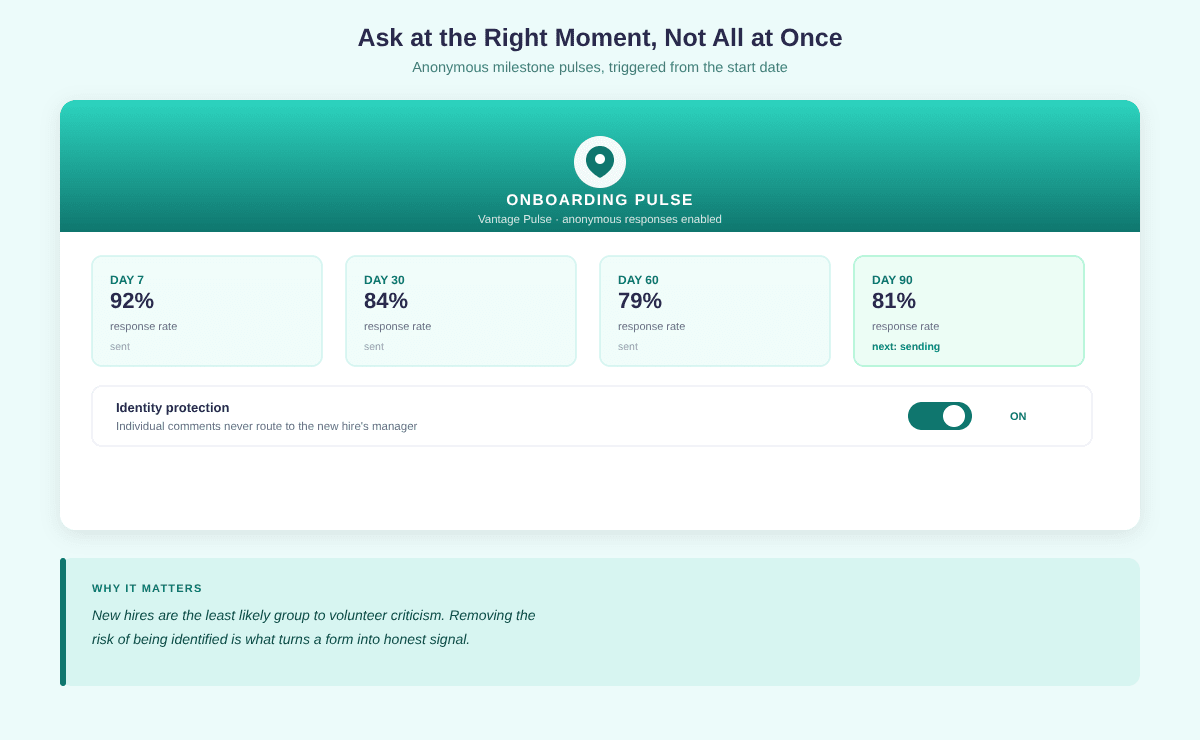 Source: Vantage Pulse
Recommended Read: Employee Onboarding Surveys: 60 Questions to Ask Your New Hires
Building Welcome Kits at Scale
Creating a single employee welcome kit is relatively simple. However, managing multiple kits each month, ensuring the right sizes, coordinating deliveries across locations, and meeting joining dates can become a complex logistical task.
For HR teams, activities such as sourcing products, customizing merchandise, managing inventory, and tracking shipments can be time-consuming, leaving less room to focus on creating a meaningful onboarding experience.
A joining kit service can simplify this process by managing everything from product selection and branding to storage and delivery. Vantage Swag offers a curated onboarding catalog, sample approval before bulk orders, warehousing facilities, and tracked shipping to over 100 countries. This helps HR teams streamline the process and ensure that welcome kits are ready for delivery as soon as a new hire's joining date is confirmed.
Final words
A great new employee welcome kit doesn't need to be expensive. It needs to be useful, personal, and on time. This is your opportunity to make sure every new hire starts their first day feeling expected, not just processed.
So, the next time you're packing a welcome kit, ask yourself: will they still be using this in three months? And will they remember how it made them feel?
FAQs
What to put in a new employee welcome pack?
Put in four things: practical work items such as a notebook, pen, and tumbler; two or three good-quality branded pieces; essential first-week information such as a schedule, key contacts, and a benefits card; and a personal welcome note from the manager.
What is the best welcome kit for new employees?
The best welcome kit for new employees is one they'll actually use. Choose four to six quality items that fit their work style (office, remote, or hybrid), add a handwritten note, and make sure it arrives before their first day.
What to put in a welcome basket for a new employee?
A welcome basket works well for in-office joiners. Fill it with local snacks, a tumbler or mug, a small desk plant, a notebook, and a card signed by the team. Keep it light and useful rather than packed with fillers.
What is the 30-60-90 onboarding rule?
The 30-60-90 rule breaks a new hire's first three months into three stages with clear goals: learning in the first 30 days, contributing by day 60, and working independently by day 90. Checking in at each milestone, for example with a short anonymous pulse on Vantage Pulse, shows you what helped them settle in, including whether the kit was useful. Our onboarding survey questions guide has questions for each stage.
Can the employee welcome kit be virtual?
Yes. A virtual welcome kit can include digital gift cards, e-books, app subscriptions, a recorded video welcome from the team, and an invitation to a virtual team lunch. Many companies pair a virtual kit with a smaller physical box to make it feel tangible.
How can I make the employee welcome kit eco-friendly?
Choose reusable items like tumblers, totes, and cloth notebooks, skip plastic novelties, use minimal or recyclable packaging, and share handbooks digitally. Sourcing snacks and items locally also cuts shipping emissions for remote hires.

Riha Jaishi is a Content Marketing Specialist at Vantage Circle and host of the HR Vantage Influencers podcast, sharing insights that help organizations build recognition-rich, people-first cultures!!
Connect with Riha on LinkedIn.