
Fun activities at work are structured, low-pressure moments, from 5-minute icebreakers to half-day outings, that break up routine and build real connection between coworkers. The best ones match the time and budget a team actually has, instead of defaulting to the same mandatory happy hour every quarter.
This guide sorts 15 of them into four categories, quick icebreakers, interactive team games, creative challenges, and outings, so you can pick one that fits your Tuesday afternoon instead of scrolling through forty ideas with no way to choose between them.
What Makes a Work Activity Actually Fun (Not Forced)?
A work activity feels fun when people choose to show up for it, not when attendance is quietly tracked. Genuine participation depends on three things: real choice about whether to join, an activity that fits the room (a loud trivia night doesn't work for a stressed, heads-down team the week before a deadline), and enough rotation that the same three people aren't winning every time.
The stakes here are higher than they look. 77% of U.S. workers reported work-related stress in the past month, and 57% reported negative effects consistent with burnout, according to the American Psychological Association's 2023 Work in America Survey. Half of employees worldwide are actively watching for or seeking a new job, per Gallup's State of the Global Workplace 2024 report. A single trivia night will not fix either number on its own. But a workplace that never makes room for genuine, low-pressure connection gives employees one more reason to disengage, not one less.
Choose Your Activity by Time and Budget
The fastest way to pick a fun activity at work is to filter by what you actually have right now: how much time and how much money. The table below sorts all 15 activities in this guide into four time bands and three budget levels.
| Time You Have | Free | Low-Cost | Higher-Cost |
|---|---|---|---|
| 5-20 minutes | Birthday Line-Up, Few Truths and a Lie, Team Into Groups | Marketing Concentration | None on this list |
| 30-90 minutes | Trivia Night, Blind Waiter and Leader | The Egg Drop, The Spider Web Challenge, Not So Boring Board Games | None on this list |
| Half-day | The Barter Challenge, Scavenger Hunt | The Lip Sync Battle | The Office Cook-Off |
| Outing or ongoing | None on this list | Outdoor Sports Match | We, the Healthfreaks (fitness outings) |
5-20 minutes
Free: Birthday Line-Up, Few Truths and a Lie, Team Into Groups
Low-Cost: Marketing Concentration
Higher-Cost: None on this list
30-90 minutes
Free: Trivia Night, Blind Waiter and Leader
Low-Cost: The Egg Drop, The Spider Web Challenge, Not So Boring Board Games
Higher-Cost: None on this list
Half-day
Free: The Barter Challenge, Scavenger Hunt
Low-Cost: The Lip Sync Battle
Higher-Cost: The Office Cook-Off
Outing or ongoing
Free: None on this list
Low-Cost: Outdoor Sports Match
Higher-Cost: We, the Healthfreaks (fitness outings)
Budget aside, time and payoff don't scale together. The two highest-payoff, lowest-effort picks on this list are Few Truths and a Lie and Trivia Night: both free, both under 45 minutes, and both reliably better at cutting first-week awkwardness than an hour of small talk. The Office Cook-Off pays off the most of anything here, but it also asks the most of you: a half-day, an ingredient budget, and someone willing to organize it. If you only have time to run one activity this month, start at the low-effort end before committing to the high-effort one.
A half-day outing gets easier to justify once you're not building the budget from scratch. Vantage Perks negotiates discounts on the kind of experiences that make good outings, escape rooms, cooking classes, group activities, so saying yes doesn't automatically mean a bigger line item.
Planning something for the holidays specifically? Holiday-specific office games covers Christmas-party formats that this general list doesn't. And if your team is remote or hybrid, most of these 15 need adapting or swapping out entirely; virtual team ideas covers the remote-specific version of this list.
15 Fun Activities for Work, Organized by Category
Fifteen activities split into four categories here, based on how much time and setup each one needs: quick icebreakers, interactive team games, creative challenges, and outings.
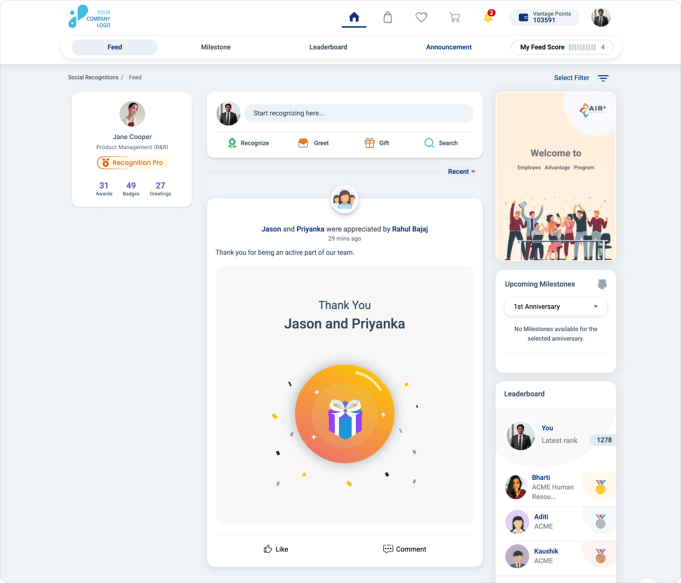
A fun activity that only exists in the moment disappears the moment it ends. Vantage Recognition's social feed gives it a second life, turning a photo from Friday's trivia night into something a colleague who missed it still gets to see and react to.
Quick Icebreakers (5-20 minutes, free)
1. Birthday Line-Up
Birthday Line-Up takes about ten minutes, costs nothing, and works for a group of any size. Split the team into groups of roughly 10, then have them line up in order of birthday, month and date, without speaking. Sign language and gestures only. Watch who naturally takes charge of organizing the line. It usually reveals who your quiet leaders are.
2. Few Truths and a Lie
Few Truths and a Lie is the shortest icebreaker on this list, and it still works after all these years because guessing is genuinely fun. Each person shares a handful of statements about themselves, one of which is false, and the group votes on which one. It scales from a five-person team to a fifty-person all-hands with zero setup.
3. Team Into Groups
Team Into Groups turns a pile of random desk items, a stapler, a water bottle, a phone charger, into a categorization puzzle. Put more than 20 unrelated objects on a table and ask small groups to sort them into logical categories, then explain their logic on paper. There's no losing side here, only different ways of thinking made visible.
4. Marketing Concentration
Marketing Concentration is a company-branded spin on the classic memory game, and it takes about 15 minutes with a set of printed tiles. Lay 30 tiles face down, each with a matching pair somewhere in the grid, then let participants flip two at a time hunting for matches. Swap in company slogans, logos, or inside jokes to make it recognizably yours instead of generic.
Interactive Team Games (30-90 minutes, free to low-cost)
5. Trivia Night
Trivia Night needs about 30-45 minutes, one person willing to compile questions, and optionally a small prize budget. It doubles as a genuine icebreaker for new hires, since answering (or badly guessing) trivia together flattens the usual first-week awkwardness faster than small talk does. Icebreaker questions for work has a ready-made bank if nobody wants to write the questions from scratch.
6. The Egg Drop
The Egg Drop is a classic for a reason. Teams get limited materials, straws, tape, rubber bands, and 45-60 minutes to build a package that protects an egg through a 2-3 story drop. Whoever's egg survives wins, and ties get settled by raising the drop height. It tests problem-solving under a real constraint, not just brainstorming.
7. Blind Waiter and Leader
Blind Waiter and Leader runs in teams of 4-5 and takes 20-30 minutes. One sighted leader has to verbally guide blindfolded waiters to locate a drink and serve it, with everyone else timing the attempt. It's a fast, slightly chaotic way to expose exactly how clearly, or badly, a team communicates under pressure.
8. The Spider Web Challenge
The Spider Web Challenge takes 45-60 minutes and a length of string strung between two fixed points to build a web of gaps. Teams of 6-7 earn a point for each member who passes through a gap without touching the string, and each used gap closes for the rest of the round. It rewards planning the order of who goes through which gap, not just brute effort.
9. Not So Boring Board Games
Not So Boring Board Games is exactly what it sounds like: a 30-60 minute session built around games people actually want to play, not whatever's gathering dust in the break room closet. Mix up the pairings so people aren't stuck with their usual desk neighbor, and run it during work hours rather than squeezing it into a lunch break. Running it as an after-hours optional event usually kills turnout.
Creative Challenges (half-day, low-to-medium cost)
10. The Office Cook-Off
The Office Cook-Off needs a half-day and a modest ingredient budget, but it consistently produces the most memorable photos on this list. Let employees sign up as either cooks or judges, group cooks into small teams, and have each group register their dish category in advance so you don't end up with 13 versions of the same apple pie. It surfaces leadership and creativity from people who rarely get to show either at their desk.
11. The Lip Sync Battle
The Lip Sync Battle takes about an hour of prep and an hour to run, and it's reliably the loudest, silliest event on this list. Split the office into small groups, give them a few days to pick a song and choreograph something, then let them perform. It works precisely because it's a little embarrassing. That's what makes people remember it.
12. The Barter Challenge
The Barter Challenge takes 60-90 minutes and tests negotiation as much as problem-solving. Give equal-sized groups identical jigsaw puzzles, then secretly mix pieces from each group's puzzle into the others. The only way to finish is to negotiate, trade, or swap members with rival teams, which makes it a sharper read on how a team handles competing incentives than most team-building exercises manage.
13. Scavenger Hunt
A Scavenger Hunt takes 60-90 minutes and needs nothing more than a list of clues and a building to search. Write ten to fifteen clues that lead teams to specific locations, objects, or coworkers around the office, taking a photo at each stop as proof, and set a time limit so it stays a sprint instead of a slow wander. Keep the clues specific to your own office, a plant only marketing waters, the loudest printer on the floor, so the hunt rewards actually knowing the place, not just guessing.
Outings and Wellness Activities (half-day or ongoing, low-to-high cost)
14. Outdoor Sports Match
An Outdoor Sports Match needs a park or open company property, a couple of hours, and whatever equipment the sport calls for. A pickup game, cricket, football, volleyball, does more for how a team reads each other's strengths under pressure than most structured exercises, because the dynamics are real, not simulated. If outdoor space isn't an option, more office game ideas covers desk- and break-room-friendly alternatives instead.
15. We, the Healthfreaks
We, the Healthfreaks covers fitness activities employees can do together, indoors or out, in a single afternoon or as an ongoing challenge. A company-wide step challenge or a weekend hike does double duty: it drives engagement the way any shared activity does, while also giving quieter, less performative employees a way to participate without needing to perform in front of a group.
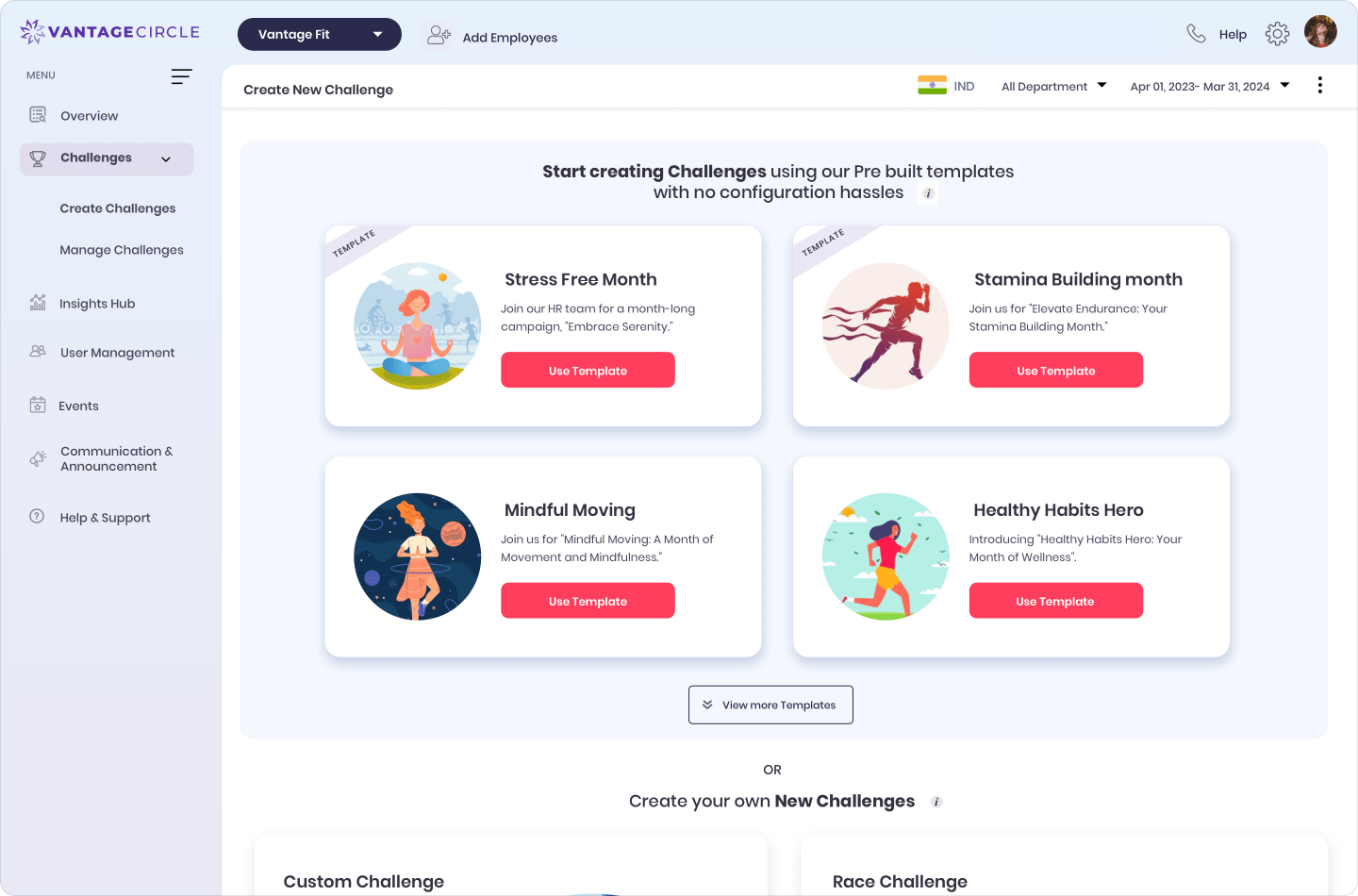
Running this as a one-off event gets a single good afternoon. Vantage Fit's challenge system turns it into something trackable, so a step challenge that starts as a fun activity can keep running long after the original event ends.
If the occasion is bigger than a single afternoon, structured team building for larger events covers facilitator-led activities built for a full offsite instead of a lunch break.
How Do You Actually Get People to Participate?
Getting real participation, not just headcount, comes down to making the activity opt-in and making showing up worth something socially, not just logging it as attendance. The fastest way to kill a fun activity at work is to make it mandatory. The moment attendance gets tracked or tied to a performance review, it stops being fun and starts being one more obligation people quietly resent.
Recognition is what turns a one-off event into a habit people want to repeat. Peer-to-peer recognition means showing up gets noticed by teammates, not just logged by HR, and that shift matters more than it sounds. "Did you go to the trivia thing" turning into something a colleague actually brings up the next day, unprompted, is the difference between an activity people tolerate and one they look forward to.
How Do You Know If It's Working?
Attendance numbers say who showed up. They don't say whether morale actually moved. A quick pulse survey after a run of activities closes that gap, turning "did that help" from a guess into a number worth tracking over time.
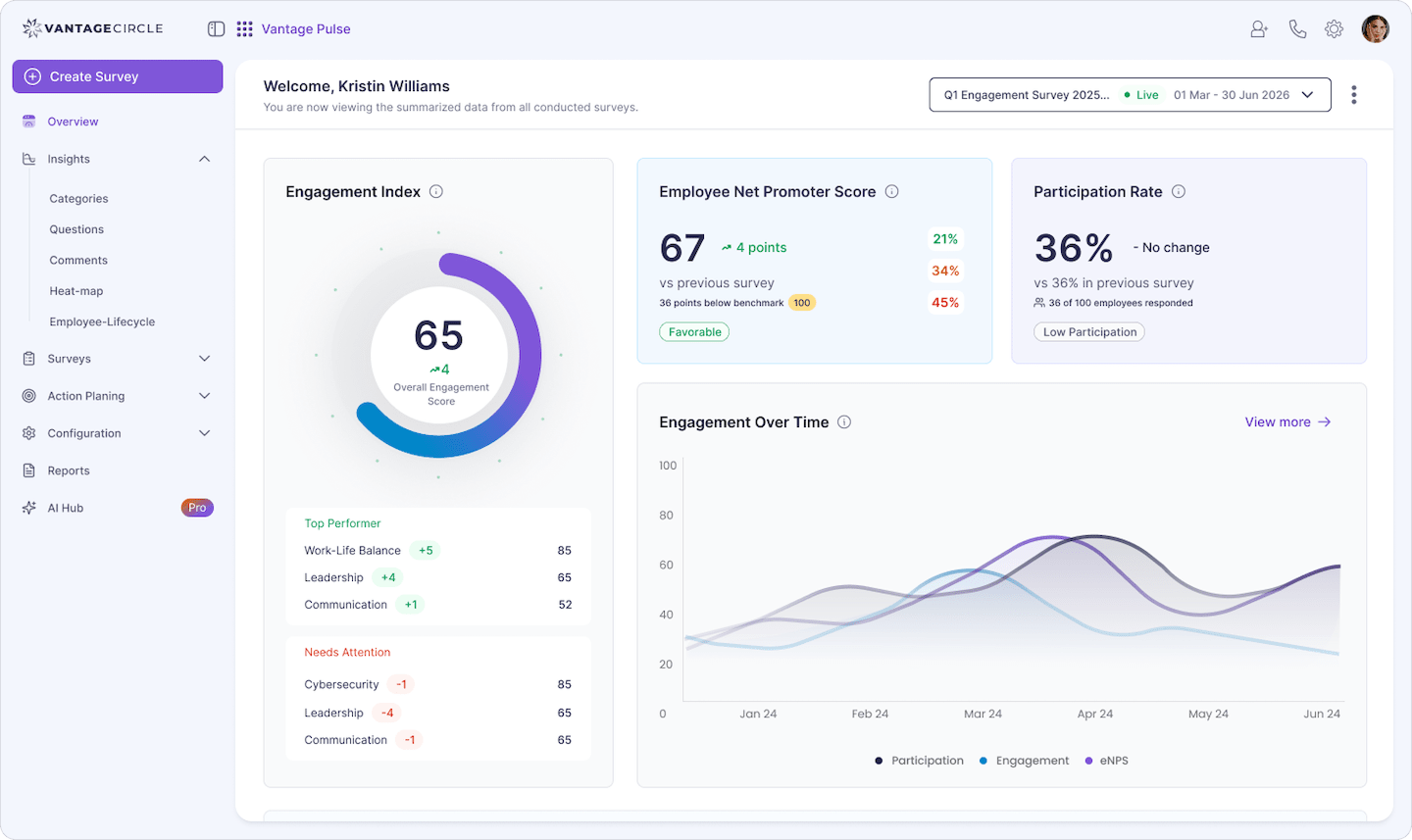
The upside of getting this right is bigger than most teams assume. Doubling the share of employees who strongly agree they received recognition in the past week would save a 10,000-employee organization an estimated $91,989,474 in lost productivity, according to Gallup and Workhuman's 2023 "From Praise to Profits" report. Vantage Pulse's eNPS tracking is built for exactly this: checking whether fun activities and recognition together are actually reducing the disengagement they're meant to address, not just adding another line to the events calendar.
For the strategic version of this question, tying individual activities into a year-round plan, broader employee engagement strategy covers how the fun-activity piece fits into the bigger picture.
One more number worth watching: 37% of new hires leave within their first year on the job, according to the Work Institute's 2020 Retention Report. Fun activities alone won't reverse that. Paired with genuine recognition and a pulse check that actually gets acted on, they're one of the cheapest levers a team has for making the first year feel worth staying for.
FAQs
What are some fun activities I can do at work with my coworkers?
Icebreakers like Few Truths and a Lie or Birthday Line-Up work well with almost no setup, while team games like Trivia Night or The Egg Drop need a bit more planning but still fit inside a normal workday. Pick based on how much time your group actually has free, not on which idea sounds the most impressive on a list.
What are some fun activities for employees at the office?
Office-friendly options that don't require leaving the building include Marketing Concentration, Team Into Groups, Not So Boring Board Games, and a building-wide Scavenger Hunt. All four run entirely indoors, need little to no budget, and work during normal office hours.
What are some fun ideas for work events?
Larger work events suit bigger-scope activities: an Office Cook-Off, a Lip Sync Battle, or an Outdoor Sports Match all work well as a scheduled half-day or afternoon event rather than a quick break-time activity. For a full offsite, structured team building activities are built specifically for that scale.
How can I have fun at work?
Having fun at work starts with picking an activity that matches the time and budget a team actually has, not the longest list you can find. Keep it optional, rotate who's involved, and pair it with recognition afterward so the moment doesn't disappear the second the event ends.

Lupamudra is a content marketing specialist at Vantage Circle, where she has written 50+ articles on employee recognition, rewards, and workplace culture, alongside employee engagement, diversity and inclusion, and HR compliance topics, including how India's tax rules apply to recognition and rewards programs.
Connect with Lupamudra on LinkedIn.