
You already know who it is, the person on your team who used to catch every typo before it went out. Now things slide, because why would they bother. Nobody's fired them, and nobody's said a word. They just quietly stopped trying somewhere around month nine of a reorg nobody explained.
Low employee engagement means an employee has checked out mentally from their job, team, or company goals. It shows up fast: declining work quality, skipped meetings, and doing just enough to get by. Nine times out of ten, the root cause sits with management, a stalled career path, or a lack of recognition.
Key Takeaways
- Behavior changes before performance reviews do. Watch for withdrawal, missed deadlines, and effort that stops at the bare minimum.
- Five causes explain most cases: weak management, a stalled growth path, unclear or unfair pay, thin communication, and employees who never hear a thank you.
- 20%. That's global employee engagement in 2025, the lowest since 2020, per Gallup's 2026 State of the Global Workplace report.
- High-recognition workplaces beat low-recognition ones on customer-service outcomes and retention, per Vantage Circle's own Recognition Effect study.
- Start with listening. A short pulse survey plus a working recognition habit catches disengagement months before an exit interview does.
What Is Low Employee Engagement?
Low employee engagement means an employee is still doing the job, just without any of the extra effort they used to bring to it.
I once sat across from a manager who was convinced her best performer had something going on at home. Turned out the employee had asked for a stretch assignment twice, got ignored both times, and stopped asking a third. That's low engagement up close. Nothing dramatic. Just less.
People use "low engagement" and "employee disengagement" almost interchangeably in most HR conversations, which is fine right up until someone needs to distinguish it from burnout (too much work, too long) or quiet quitting (a boundary someone draws on purpose). Low engagement can look like either from a distance. Underneath it, the real driver usually sits somewhere more specific. Maybe it's a manager who never gives feedback, or a growth path that dead-ended two years ago. Sometimes it's simpler than that: an employee engagement program that never noticed the extra effort employees were already putting in.
Signs of Low Employee Engagement
The signs of low employee engagement start quiet before they turn loud. Withdrawal is usually the first thing a manager notices. Absenteeism and resignation letters tend to come later. An employee who used to speak up in meetings starts staying muted. Someone who volunteered for cross-team projects stops raising a hand. That's the tell, months before HR sees it in an exit interview.
What I've watched repeatedly in engagement reviews is a fairly predictable sequence. Five patterns show up again and again.
- Declining quality of work. Output that used to be careful starts arriving with typos and missed details. This is rarely a skill problem. The employee could do better. They've decided not to.
- Withdrawal from meetings and optional events. Camera off, mic muted, no questions asked, team lunches skipped. I've watched this one specifically predict a resignation more reliably than almost anything else, usually eight to twelve weeks out.
- Doing the bare minimum. Deadlines get hit exactly on time, never early. Tasks get done exactly as scoped, never expanded.
- Rising absenteeism. Sick days climb, and so does the pattern of logging off early. A sudden shift from someone's normal routine is rarely a coincidence.
- High turnover and active job searching. LinkedIn activity spikes and reference-call requests quietly increase. Most people in this stage have already decided and are just working out notice periods in their head.
None of these signs prove disengagement on their own. A busy quarter explains a missed deadline just fine. Two or three signs together, holding for more than a few weeks, is a different story.
What Causes Low Employee Engagement?
I can usually spot two causes stacked on top of each other within the first ten minutes of an engagement review. Rarely just one.
1. Poor Leadership and Management
Management is the single biggest lever on engagement, for better or worse. Gallup's 2026 State of the Global Workplace report found global manager engagement fell from 27% to 22% in a single year, the sharpest one-year drop the report has recorded. That drop lines up almost exactly with the broader engagement slide happening underneath it. Team engagement rarely outlasts a manager's own engagement by more than a quarter or two.
2. Lack of Growth and Development
Employees stall out when the ceiling feels close and permanent. A role with no visible next step starts to feel like a holding pattern. No stretch project, no real conversation about where this goes. I've sat in enough stay interviews to know this is one of the quietest causes and one of the most common, the kind where someone's effort fades for months before anyone connects it to a stalled title change.
3. Unfair or Unclear Compensation
Pay doesn't have to be low to disengage someone. It has to feel arbitrary or out of step with the market, and employees notice fast. WTW's December 2025 benefits research found only 61% of employees felt satisfied with their benefits, down from 66% the year before. That's a one-year drop. It tracks closely with the broader engagement slide already showing up in Gallup's numbers.
4. The Feedback Gap
Long before anyone calls it a communication problem, employees stop hearing how the company is doing or whether their manager even noticed last month's work, and they quietly stop assuming good intent.
A single annual review cycle can't carry that weight. Most companies already know this and schedule feedback like a once-a-year compliance task anyway, even though everyone involved suspects it isn't enough.
5. Lack of Recognition
This is the cause I'd flag as the most fixable and the most consistently ignored.
Vantage Circle partnered with Great Place to Work India in 2025 on a study called The Recognition Effect, drawing on 5.7 million employee data points across more than 1,810 organizations. The gap between high-recognition and low-recognition workplaces showed up clearly in both customer-service scores and retention.
I didn't expect the customer-service link to be as strong as it turned out to be. Recognition is one of the only signals in a typical workplace that tells someone, concretely, that the effort landed.
6. Toxic Culture and Poor Work-Life Balance
Culture and workload get treated as separate problems on most org charts. Employees don't experience them that way. To them it's one question: does this place respect my time and treat people decently? Gallup's most recent global data shows employee wellbeing dropped after five straight years of improvement, the first reversal in that stretch. A toxic culture doesn't need open hostility to do the damage. Constant urgency does it on its own. So does a workplace with no boundaries after hours, or a leadership team that quietly rewards burnout as if it were dedication.
The Cost of Staying Disengaged
Disengagement is expensive before it shows up in an exit interview.
That number is useful for a board slide. It says much less about what one disengaged team costs your organization this quarter. Missed deadlines add up quietly. So do the hours a manager spends managing around a problem nobody has named out loud.
Vantage Circle broke down the real, team-level math of staying disengaged, replacement cost and the ripple effect on the people who stay, in the full cost breakdown. Worth reading before budgeting a fix.
How to Fix Low Employee Engagement
Fixing low engagement starts with listening, before anything gets announced. Most disengagement fixes fail because they skip straight to a program before anyone confirmed what's actually broken.
1. Train Managers and Build Feedback Loops
Since managers are the single biggest lever, start there. Managers need real training in giving feedback. A one-hour compliance module they forget by Friday doesn't count. Pair that with a way to actually hear from employees on a regular cadence.
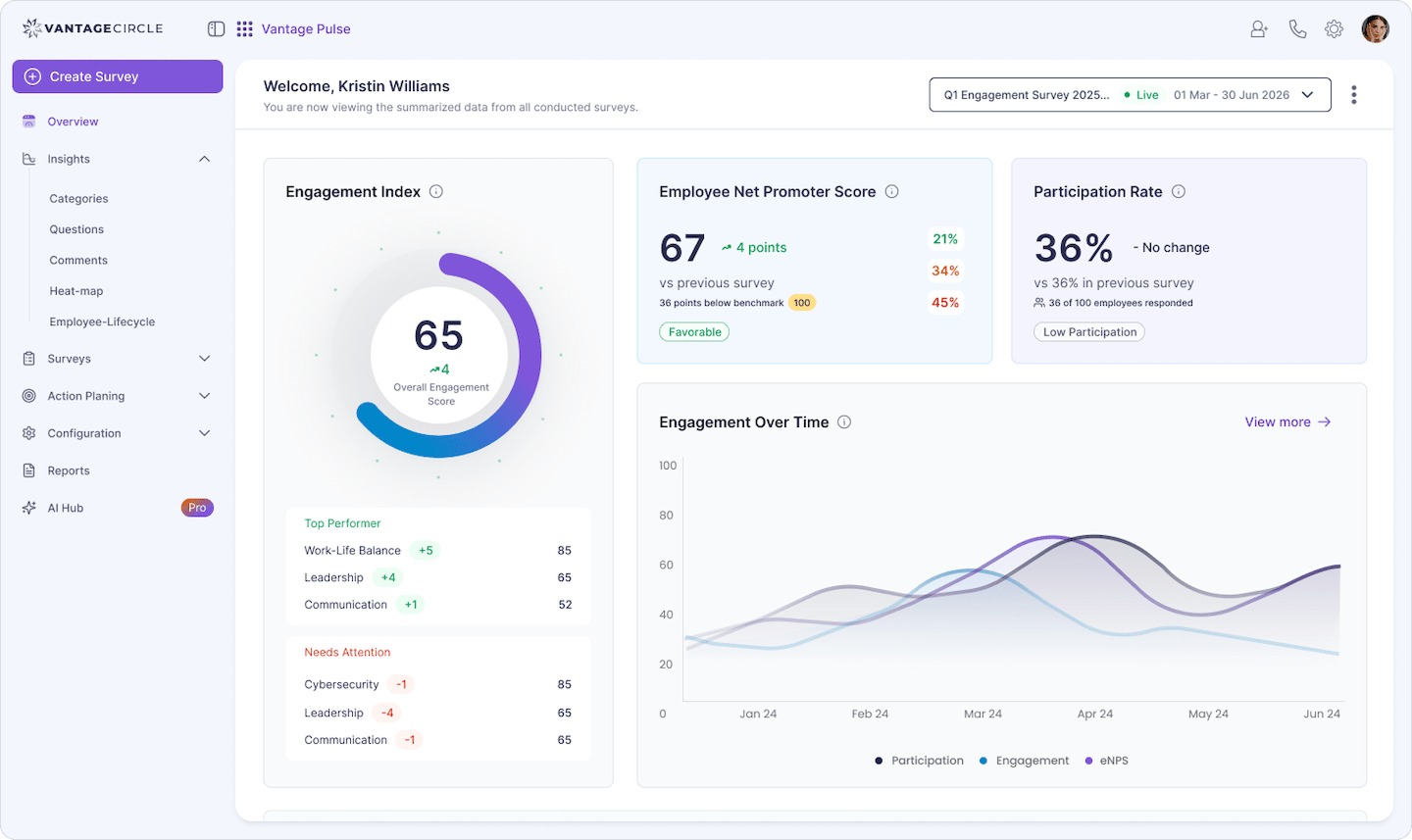
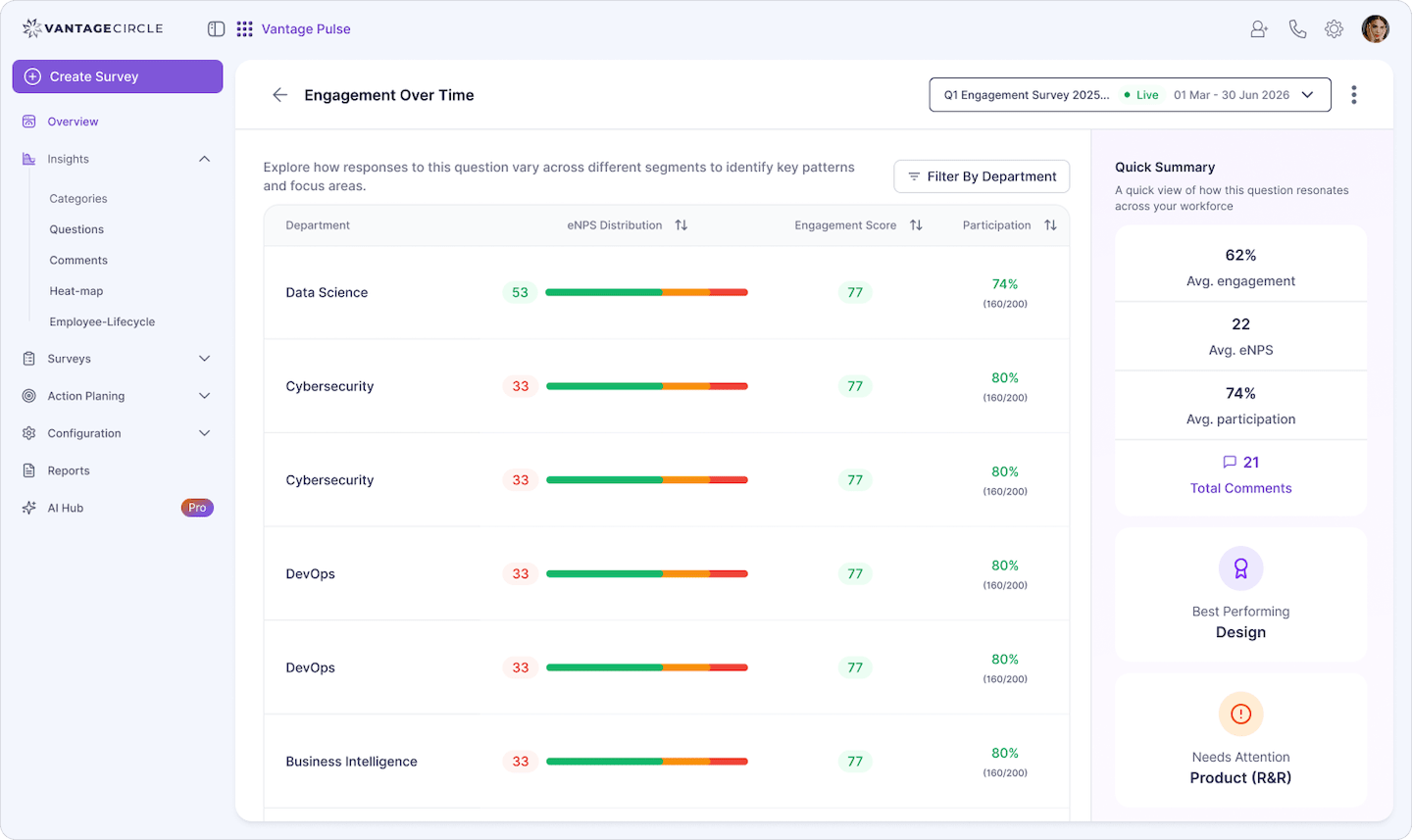
A short recurring pulse survey does most of the diagnostic work here. Run it anonymously and employees will tell you things they'd never put in a performance review. Break results out by department and the picture gets sharper fast. Engagement is almost never company-wide. It concentrates in specific teams, usually under specific managers, and department-level data is what turns "engagement is down" into "engagement is down in this team, starting eight weeks ago." Vantage Pulse runs anonymous eNPS surveys with that kind of department-wise breakdown built in, which catches a dip weeks before it shows up in an exit interview.
(Source: Vantage Pulse)
2. Recognize Contributions Consistently
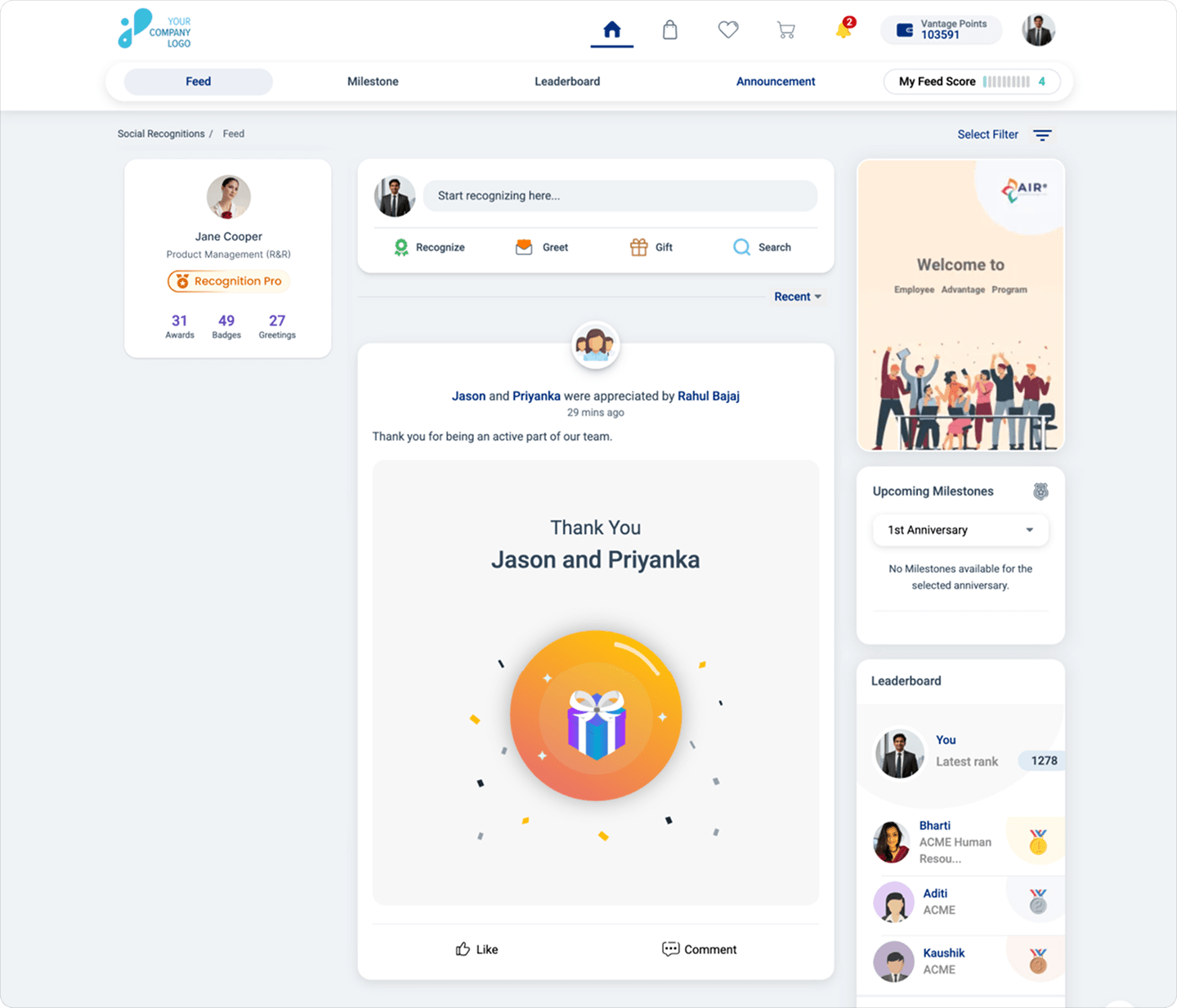
Recognition that arrives a month late has already lost most of its value. The moment matters as much as the gesture. A peer-to-peer recognition system that lets any manager or colleague flag good work the same day it happens closes that gap before disengagement has time to set in.
This doesn't have to be a formal program with a budget line and an approval chain. A social recognition feed that makes appreciation visible to the whole team, beyond just the person who received it, reinforces the behavior for everyone watching. Vantage Rewards handles both sides of this: fast manager recognition and the peer-to-peer layer that catches the good work a manager never sees.
(Source: Vantage Rewards)
3. Fix Compensation and Financial Stress
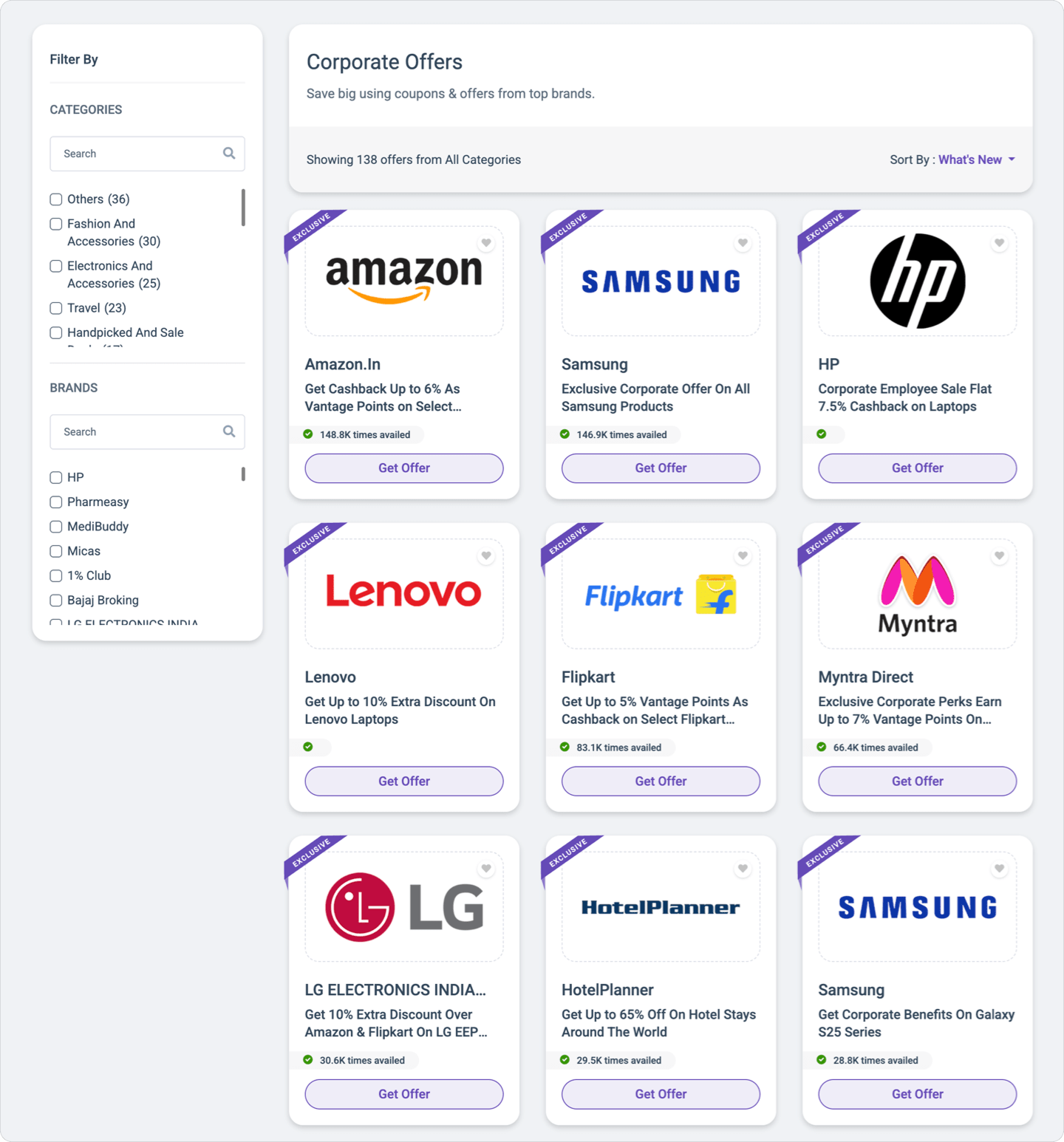
Not every compensation problem needs a base-pay change, which is good, because most companies can't run one mid-cycle. Financial stress drives a real share of disengagement, and it can be eased without touching the pay bands. Vantage Perks covers this ground with corporate discounts and financial wellness benefits that reduce the day-to-day money pressure driving a chunk of the disengagement, no budget cycle required.
(Source: Vantage Perks)
4. Build Psychological Safety and Ownership
None of the fixes above stick if employees don't feel safe raising a problem. Psychological safety gets mistaken for niceness a lot. The real test is whether someone can say "this isn't working" in a meeting without it costing them later. Teams with real psychological safety catch problems while they're still small. Teams without it just get quieter, which looks a lot like engagement improving right up until someone finally quits.
Ownership works better than task lists. Give someone a real piece of the outcome and engagement stops being something HR manufactures from outside. Employee empowerment is the same idea from a different angle, control over how the work gets done, decided closer to the person doing it.
A fix only counts if it moves the number, though. Engagement analytics that track department-level trends over time show whether last quarter's push on recognition or psychological safety actually changed anything, or whether it just felt like it did.
(Source: Vantage Pulse)
5. Foster Community and Shared Purpose
I'd push back slightly on treating recognition and compensation as the whole fix. People also need to feel like they're part of something bigger than their own paycheck. Long service awards and small team rituals do quiet work here. So does a clear, visible line between someone's daily task list and the company's actual mission, something a survey rarely captures directly.
| Cause | Fastest Fix |
|---|---|
| Poor leadership and management | Manager feedback training paired with a recurring pulse survey |
| Lack of growth and development | A named next step, reviewed quarterly, not just at annual review |
| Unfair or unclear compensation | Perks and financial wellness benefits that ease pressure now |
| Inadequate communication and feedback | Anonymous, department-wise eNPS surveys run monthly, not annually |
| Lack of recognition | Same-day peer and manager recognition, made visible to the team |
Conclusion
That employee from the start of this piece, the one who quietly stopped catching typos, never quit loudly. They just did less, for months, until someone finally noticed and asked what changed. That's usually how low engagement goes. It rarely announces itself.
The fix isn't complicated. It's just consistent: notice the signs early, ask why before assuming who, and close the loop with real recognition or a real conversation instead of a program nobody asked for. Do that on a cadence, and the next reorg-shaped silence gets caught in week eight, not month nine.
FAQ
Q. What are the signs of low employee engagement?
A. The clearest signs are declining quality of work, withdrawal from meetings and team events, doing exactly the bare minimum, rising absenteeism, and active job searching. Withdrawal usually shows up first, often weeks before quality or attendance visibly slip.
Q. What causes low employee engagement?
A. Most cases trace back to poor management, a stalled growth path, unclear or unfair compensation, thin communication, or recognition that never happens. Teams rarely have just one cause. Two or three usually stack on top of each other before anyone notices the pattern.
Q. What are 7 habits of highly disengaged employees?
A. Highly disengaged employees tend to withdraw socially, do the bare minimum, miss deadlines they used to hit easily, grow cynical about new ideas, stop giving feedback or asking questions, take more unplanned time off, and lose interest in learning or growth opportunities. Any one habit on its own can mean something else entirely. Several showing up together, and lasting, is the real signal.
Q. What are the 5 C's of employee engagement?
A. The 5 C's are Connection, Communication, Congratulate, Collaboration, and Care, the practitioner framework Vantage Circle uses to break engagement into five things a manager can actually act on. Read the full breakdown for what each one looks like in practice.
Q. Is low employee engagement the same as employee disengagement?
A. Practically, yes. Low engagement describes the state a manager observes from the outside. Disengagement describes the same thing from the employee's side, the decision to stop putting in effort that doesn't seem to matter. Some HR teams treat disengagement as one notch worse than low engagement, a more active, sometimes vocal frustration. Either way, the causes and the fixes overlap almost completely.

He has worked in the human resources environment and has elevated recognition and rewards through his insightful and detailed writing. He aims to enhance the practice of Recognition in the workplace with new ideas and innovation that will help shape the work culture. For any related queries, contact editor@vantagecircle.com