Employer Branding Strategies for the COVID Era
Episode Overview
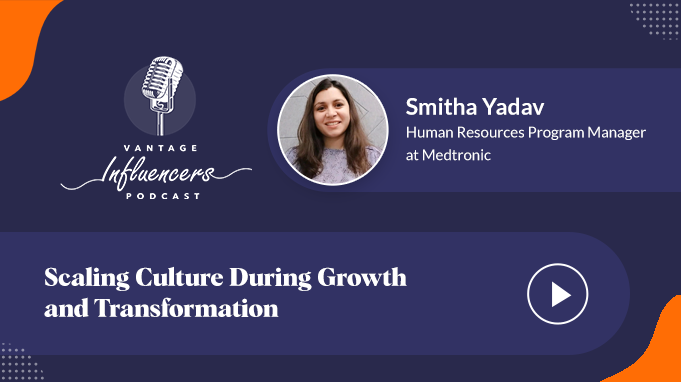
In this episode of the Vantage HR Influencers Podcast, host Rohit talks with Pandi Alagu Raja Mahamuni about building an employer brand that holds up during the COVID era. Pandi opens with the numbers that make the case for employer branding in the first place: candidates who see positive company reviews online will often accept lower pay to join, a strong employer brand can cut cost-per-hire roughly in half, and it meaningfully improves retention. From there he lays out what actually makes a brand name work: it should be simple to pronounce, easy to remember, not too generic to claim a hashtag or domain, and, where possible, carry some meaning tied to the product or service itself.
The conversation then turns practical as Pandi walks through how to run an employer brand audit, while being upfront that the results are always going to be subjective rather than cleanly quantitative. He argues organizations need to define what they are trying to achieve before auditing anything, then look at career pages, social media presence, and the experience given to both new candidates and existing employees, who he calls a company's real brand ambassadors. He also digs into what employees actually want during the pandemic: firm boundaries around work hours, expanded medical coverage and paid leave for COVID-related illness, access to mental health support, and, just as often, a simple check-in call from a manager or colleague.
Episode Highlights
- Pandi opens with employer branding statistics: candidates often accept lower pay when a company has positive online reviews, and a strong employer brand can nearly halve cost-per-hire while improving retention.
- He argues an effective employer brand name should be simple to pronounce, easy to remember, not overly generic, and ideally carry some meaning tied to the product or service.
- On transparency, he says it depends on consistent communication: open channels between leadership and employees, regular town halls and open house sessions, and inviting staff into decisions that affect them.
- He outlines what employees are asking for during the pandemic, from clear boundaries on work hours to expanded medical coverage, paid leave for COVID-related illness, and access to mental health support.
- He frames the employer brand audit as a subjective exercise that starts with defining goals, then reviewing career pages, social media presence, and the experience given to both new hires and existing employees.
- He closes with advice for young HR professionals: master the fundamentals, understand the business you support, build your professional network on social media, and stay comfortable with the technology tools HR now runs on.
About the Guest
Pandi Alagu Raja Mahamuni, HR Business Leader
Pandi Alagu Raja Mahamuni is an HR Business Leader with over 15 years of experience across strategic planning, HR operations, HR business partnering, employee relations, employee engagement, performance management, and training and development, gained largely with startups and mid-sized organizations across IT, ITES, KPO, and IT infrastructure. Before moving into HR, he trained in hotel management, worked as a chef with a few star hotels in Chennai, and spent time working abroad before returning to India and moving into human resources. He is an Executive Committee Member of the NHRDN Chennai chapter and holds a certification in Management of Human Resources from the Loyola Institute of Business Administration.
Connect with Pandi on LinkedIn
Host
Rohit, Vantage Influencers Podcast Host
What You Will Learn
- Why employer brand perception on platforms like Glassdoor directly affects the pay candidates are willing to accept and how much a hire actually costs.
- What makes an employer brand name work: pronounceable, memorable, tied to a hashtag you can actually own, and meaningfully connected to what the company does.
- How to build transparency into a remote-first culture through town halls, open house sessions, and inviting employees into decisions that affect them.
- Which benefits employees are prioritizing during the pandemic, from flexible boundaries around work hours to mental health support and COVID-related paid leave.
- How to run a structured employer brand audit that covers career pages, social media presence, and the hiring and onboarding experience.
- How to build a strong virtual onboarding process for new hires who may never set foot in the office.
Key Topics & Timestamps
| Timestamp | Topic |
|---|---|
| 0:00 | Introduction to Pandi Alagu Raja Mahamuni |
| 1:04 | Pandi's path from hospitality into HR |
| 5:21 | Building a COVID-friendly employer brand |
| 10:56 | Promoting transparency with remote employees |
| 16:03 | Benefits employees are looking for during COVID |
| 24:55 | How to conduct an employer brand audit |
| 37:21 | Creating a strong onboarding process during COVID |
| 44:28 | HR leaders and thought leaders Pandi follows |
| 45:30 | Advice for young HR professionals |
| 48:32 | Where to connect with Pandi |
Full Transcript
Click to read the full episode transcript
Welcome to the Vantage HR Influencers Podcast. This podcast is sponsored by Vantage Circle, the leading employee benefits and engagement platform.
Rohit: I'm Rohit from the Vantage HR Influencers Podcast, and I'm really excited to have Pandi Alagu Raja Mahamuni with us, a competent professional with more than 10 years of experience across diverse areas of HR like strategic planning, HR policies, employee relations, employee engagement, and hiring. Pandi has diverse experience across startups and mid-sized companies, is recognized as a top HR influencer, and holds an MBA. In this session, we'll talk about employer branding strategies for the COVID era. Welcome to the show, sir.
Pandi Alagu Raja Mahamuni: Thanks, Rohit. Thanks for your brief introduction, and it's a pleasure joining you on this podcast today. Looking forward to the conversation.
Rohit: Absolutely, we look forward to it. I wanted to understand how you got into HR, and what got you excited about this field.
Pandi Alagu Raja Mahamuni: That's an interesting question, let me recollect my memories here. I'm originally from Madurai in South India, which everyone knows for its temples. After my schooling, I did my hotel management graduation at IHM Chennai. After that, I worked with a couple of star hotels in Chennai as a chef, because I've loved cooking since my school days. I also went abroad and worked for a couple of years before coming back to India. I've always been someone who loves networking with people, right from my school and college days, and that's one of the key qualities most HR professionals look for. After finishing my hotel management studies and gaining some work experience, I had opportunities abroad but preferred to stay in India, and I realized I was genuinely passionate about people management. In a way, HR was an accidental choice for me. After coming back from Dubai, where I'd worked with a large hotel group, I was chatting with a close friend one evening. I told him I wasn't sure what to do next, since I love networking but IT, which was booming at the time, didn't interest me technically. He told me clearly that I had the networking, connecting, and people-management qualities that most companies look for in HR, and that I should consider it as a profession. He said my passion for hospitality could always come back later, maybe as a restaurant of my own, but as a profession, HR would give my career good weight, especially since I love helping people. Whenever I give someone a job offer, I feel that HR is creating a future for someone looking for a career, and I found that genuinely exciting. That chitchat with my friend gave me the input I needed, and that's the story of how I moved into HR.
Rohit: Interesting. Can we get into how to build employer branding strategies? What can companies do to project an employer-friendly brand, especially during COVID times, where unfortunately there have been a lot of job losses and pay cuts, and the COVID era looks like it's going to stick around for at least a couple more months? How can employers project a friendly brand?
Pandi Alagu Raja Mahamuni: Right, that's an interesting question related to employer branding. First, let me share a few statistics, because the first question that always comes up is: why is employer branding even important? As per the statistics, 67 percent of candidates will accept lower pay than the industry rate if the company has positive reviews online, on Glassdoor or other social platforms. That alone is a strong reason to invest in employer branding. It also brings down cost-per-hire significantly, because candidates, especially at leadership level, are more willing to join a company with strong branding, so cost-per-hire can drop by roughly half. And on retention, statistics show that around 75 percent of employees can be retained more easily when the employer has proper branding in place. That's the key input I want to highlight on employer branding.
Now, whenever an organization is building its brand, there are a few basics to follow. First, the brand name should be simple to pronounce; anything too complicated or too long in spelling gets confusing. Second, it should be somewhat meaningful and relevant to the product or service. Take Geo, for example: it's a very simple, easy-to-remember employer brand, and if you look at the name in a mirror, it reflects as "oil," which ties into the idea that data is the oil of the future. That relevant meaning is baked into the name itself, and it's simple enough that everyone, from entry-level to senior leadership, can remember it. It's also not too generic. If a brand name is too generic, it becomes hard to maintain a unique hashtag on social media, and hard to secure a matching domain for the company website. So my suggestion is: keep the name simple, meaningful to what the company does, memorable, not too generic, not too long to spell, and, where possible, give it a bit of a visual or symbolic treatment in the logo. Amazon is another good example: the arrow from A to Z in the logo simply means you can get any product, across the alphabet, delivered anywhere in the world. That's the kind of relevant meaning tied to the business itself. There are many such examples of well-known employer brands globally, but those are my suggestions here.
Rohit: And how can we promote more transparency with employees, especially when there isn't a lot of face-to-face interaction happening, and a lot of people have been working remotely over the last couple of months? How do we promote transparency with employees and everyone involved in the company?
Pandi Alagu Raja Mahamuni: Right, that's a very important question in this pandemic era. The first thing I believe is that transparency cannot be achieved without smooth, effective communication. Most companies right now are making transparency part of their company policy or vision statement, keeping it as a core focus of the business. It's important that companies establish open communication across all levels of employees, so that leadership can hear feedback without hesitation, and employees can easily reach leadership. Companies also need to encourage more town halls and open house sessions, because these give people the opportunity to ask questions, and that builds transparency and accountability within the organization.
Speaking from my own experience, I've mostly worked with startups and mid-sized organizations, and in all of them I've tried to make transparency a core part of company policy. In every organization I've worked with, we've conducted monthly open house sessions and town hall meetings to hear employee grievances directly, no hide-and-seek. Whenever we encourage employees to ask questions, we also need to actively welcome their suggestions and run a quick poll whenever we introduce a new policy or procedure, so employees feel their input shaped the decision rather than just being handed something. In some cases, we've invited employees into brainstorming sessions before making company-level decisions, so those decisions become more collaborative.
Another suggestion is to actively involve employees in decision-making, especially around new benefits and policies. You can't just roll out a benefit without first understanding what employees actually need. We've also encouraged skip-level meetings; there's nothing wrong with an employee going past their direct manager to meet their manager's manager. That kind of culture, where every employee, regardless of role or reporting line, can interact freely, is something I've implemented in every startup and mid-sized organization I've worked with, and employees genuinely feel proud and happy about it.
Rohit: What do you think are some of the benefits employees are looking for during COVID times? Obviously, the upside is they don't have to travel long distances since they're working from home, but that also leads to a lot of Zoom fatigue and people putting in longer hours. Are there any specific benefits employees are looking for from their employers during these COVID times?
Pandi Alagu Raja Mahamuni: Yes, this is one of the most relevant questions right now. Setting aside work-from-home logistics and equipment, one of the biggest things employees are feeling, after close to five or six months of working from home, is the expectation to be available around the clock, simply because everyone assumes that since you're home, you must be free. What employees actually want is for the organization to respect their normal work dynamics. If my working hours are nine to six, working from home doesn't mean I have no personal time with my family. Having spoken to employees across the industry, a lot of people, especially those managing both household responsibilities and their jobs, feel that constant after-hours calls make this very difficult. Organizations that respect those work-hour boundaries tend to have happier employees, across levels and industries.
The second big expectation is around mental wellness. Everyone's aware that over the last four to six months, people have been largely confined to their homes with limited social interaction, and that takes a toll. A lot of organizations are stepping up support here: some have brought in psychiatrists or counselors for employees dealing with mental stress, and some are offering leave specifically for mental health reasons, since pandemic conditions combined with family pressures can create real strain. Supporting employee wellness is the second major theme. And sometimes, to help an employee relax, all it takes is a simple call from a colleague; after months of isolation with only family for company, hearing from a colleague you're missing means a lot. That's why, in my current and previous organizations, we've encouraged team leaders and leadership to regularly connect with each employee during the pandemic, just to say, "I'm here, don't worry." Connecting with people is one of the most valuable forms of support.
Beyond that, especially in mid-sized companies, employees are expecting increased medical insurance coverage, since a lot of companies only provide relatively modest coverage compared to larger organizations, and raising that coverage in the current climate would benefit employees a great deal. Paid medical leave for anyone in the family affected by COVID is another expectation, along with access to free mental health professionals, whether through a phone line or a WhatsApp-based employee assistance program. There's also a specific expectation from working mothers: in more nuclear-family setups, where both partners work and have one or two children, childcare becomes difficult, so some employees are hoping for caretaker or nanny support from their organization; I know of a few companies that provide a monthly caretaker allowance for working mothers, based on company norms. On top of that, people are looking for virtual workout sessions, since long hours of sitting call for some structured daily exercise, and for employee engagement activities in general, since everyone misses the coffee breaks, tea-time chats, and casual office camaraderie they used to have. Companies are encouraging various engagement activities, even virtual stand-up sessions, just to keep employees happier and relieve some of that stress. That broadly covers the main expectations employees have from their organizations right now.
Rohit: Those are all very relevant points, and I absolutely agree that mental wellness is really important, and what you said about employers and colleagues staying in touch really makes a difference. I want to understand how to conduct an employer branding audit, especially during COVID.
Pandi Alagu Raja Mahamuni: First, we need to understand the purpose of conducting an employer branding audit. I'll say again that the results of an employer branding audit are always going to be subjective rather than purely quantitative. Before a company starts the audit, it needs to define what it's trying to achieve and evaluate, at a macro level: what are the company's goals and values, and how should the employer brand align with them? That needs to be settled first. Companies also need to determine how the employer brand goals align internally with the existing organizational structure and strategy, and identify the key stakeholders who will be involved in the process, making sure they're actively engaged before the audit itself begins.
Once that groundwork is done, the company can move to the internal audit. This starts with looking at the career page and social media, since those are the two main channels job seekers use to apply. You need to understand how many profiles are coming through the career page, how effective that page is, and how strong the company's presence is across LinkedIn, Facebook, Instagram, and Twitter. It's not just about posting job openings; it's about having a proper content calendar and making sure whoever manages that content, whether that's a business development manager or HR, is posting content about the company, its culture, employee engagement activities, benefits, and employee testimonials, not just job ads.
Another important area is the experience the company gives to new joiners and existing employees. For candidates, that means looking at the hiring experience itself: how you're sourcing profiles, through career fairs, walk-ins, campus interviews, or referral programs, and, particularly in the COVID era, how comfortable you're making virtual interviews, given that candidates will often run into connectivity issues, and how clearly you're explaining the role across multiple rounds of video interviews. For existing employees, since they're a company's real brand ambassadors, it's worth looking at how well the company publishes employee testimonials, recognizes long-tenured employees and their achievements, and showcases employee recognition programs on social media.
One more important piece is benchmarking against competitor brands, not to copy them, but to understand how competitors are attracting and retaining talent, so you can identify gaps between industry expectations and your current brand strategy. Once you've identified those gaps, you need action plans, clear ownership of who's responsible, and clear deadlines for closing them. Speaking from my own experience in startups and growing organizations, hiring for technical roles is often the hardest, because many candidates are drawn to bigger, more established brands. To close that gap, we've focused heavily on increasing social media presence, running multiple engagement activities, clearly targeting our audience, and broadcasting not just job openings but the company's future plans and growth trajectory. Posting only job-related content on the career page or social media doesn't carry much weight; you need content that job seekers actually want to see, especially since most candidates check a company's reviews on Glassdoor before applying. If a company gets negative feedback, it should respond to it properly rather than ignoring it; not every review will be positive, and negative feedback should be treated as input for improvement. Broadly, that's the employer brand audit roadmap. The specific timelines depend on company size, so it's never a one-size-fits-all plan, but this roadmap can help any company identify gaps in its employer branding.
Rohit: You've touched on how to leverage current employees to improve employer branding, but I want to understand how companies can build strong onboarding processes, especially during COVID, now that a lot of offices are reopening. What can companies do to make sure onboarding has a positive impact on new employees joining the company?
Pandi Alagu Raja Mahamuni: Exactly, and I've seen a lot of companies focus on continuous onboarding. In the initial months of the pandemic there was a slowdown in onboarding, but it picked back up, and organizations, particularly those hiring for niche and technical skill sets, have done a great job with it since. From my experience, the key is the employee experience you give new joiners. There were genuine questions early on, like how do you get a laptop to a new joiner, or make sure they can attend induction, when everything has to happen virtually. Some organizations set up complete home workstations for new hires, including desks, chairs, systems, and proper internet connectivity, and some provided a work-from-home setup allowance, a fixed amount depending on the company, specifically for this purpose. The idea is that you can't just hand someone an offer letter and expect them to figure out their own infrastructure; new joiners come in with certain expectations, and giving them a proper setup goes a long way.
On the induction side, from what I've seen across different organizations, the approach has still been to run structured induction programs virtually, complete with ice-breakers and fun activities similar to what used to happen in person, and inviting leadership to join those sessions and interact with new joiners directly. That kind of engagement supports recruitment overall, because in this kind of environment, both hiring and onboarding are genuinely difficult, so keeping new hires engaged, formally and informally, creates real value for someone joining the organization. Every organization should build a culture where every employee is valued regardless of role or designation, and I've seen a lot of good onboarding work happening on that front.
Right now, working out of Chennai, I'd say only about 10 to 15 percent of employees in the main IT hub here are physically in office, with the rest working from home, and I understand a lot of large organizations are planning for 60 to 70 percent of their workforce to eventually work from home as a longer-term option, not immediately, but gradually. There are real upsides to that, avoiding commute traffic being one of the bigger ones, and it can support better work-life balance, though it will depend heavily on the industry; manufacturing, insurance, and some service sectors are finding remote work genuinely difficult to sustain. We're hoping a vaccine arrives soon and the situation improves from there.
Rohit: Absolutely, a lot of employees are working from home right now, but hopefully once this is over, it's been a real learning process for everyone; nobody was prepared for a pandemic. I'd love to do a quick rapid-fire round: which HR leaders or CEOs do you follow, and who would you recommend our listeners follow?
Pandi Alagu Raja Mahamuni: That's actually the toughest question, like asking someone their favorite actor. I'd say I draw a lot of inspiration from thought leaders, innovators, and design thinkers across the industry generally, rather than any one specific person. If I had to put it simply, I follow people who bring innovative thinking, thought leadership, and design thinking to HR.
Rohit: And one piece of advice you'd give to young HR professionals, especially those graduating this year in this tough period, anyone hoping to become an HR leader going forward?
Pandi Alagu Raja Mahamuni: Rather than one piece of advice, I'd frame it as three or four pieces of guidance. First, any upcoming HR professional needs to be very strong in the basics and fundamentals of whichever HR function they're working in. Second, they need to deepen their knowledge of the business and industry they're part of; most companies today expect HR to understand the business strategically, not just handle operations. Third, they need to expand their professional network through social media; with far fewer in-person HR forums happening right now, building that network online is only going to matter more, and always aim to be a value contributor in whatever organization you're part of. Last, HR professionals need to be tech-savvy; not necessarily coding or deep technical skills, but being comfortable with the software tools that now run recruitment, performance management systems, and even the creative and engagement tools used to design posters or run virtual engagement activities. Those fundamentals in technology are genuinely important today.
Rohit: And what's the best way for people to reach out and learn more about you?
Pandi Alagu Raja Mahamuni: Anyone can reach me on social media; I'm available on LinkedIn, Twitter, and Facebook, and I'm happy to connect and help with any questions anytime.
Rohit: We'll put that in the show notes. Thank you so much for taking the time to speak with us, I really enjoyed the conversation.
Pandi Alagu Raja Mahamuni: Thank you, Rohit. After a long time, I got to fully revisit my own journey, starting from why I chose HR, and talk about a really trending topic, employer branding. I really enjoyed sharing my thoughts with you.
Rohit: It's been a pleasure.
Thanks for listening to the Vantage HR Influencers Podcast. Please subscribe to the Vantage HR Influencers Podcast on Apple Podcasts and Spotify for new episodes.
FAQ
Why does employer branding matter, according to Pandi Alagu Raja Mahamuni?
Pandi points to statistics showing that 67 percent of candidates will accept lower pay to join a company with positive online reviews, and that strong employer branding can cut cost-per-hire roughly in half while improving retention by around 75 percent. He argues this makes employer branding a direct lever on hiring cost and quality, not just a recruitment marketing exercise.
What makes an employer brand name effective?
He recommends a brand name that is simple to pronounce, easy to remember, and not too long or complicated in spelling. It should also carry some relevant meaning tied to the product or service, and avoid being so generic that it becomes hard to claim a unique hashtag or domain. He points to examples like Geo and Amazon, where the name or logo carries meaning connected to the business itself.
How should companies run an employer brand audit?
Pandi frames it as a subjective, not purely quantitative, process. Companies should first define their goals and how the employer brand should align with them, then run an internal audit covering the career page, social media presence, and the experience given to both new candidates and existing employees. From there, benchmarking against competitor brands helps identify gaps, which should be closed with clear action plans, ownership, and deadlines.
What benefits are employees prioritizing during the pandemic?
According to Pandi, employees want firm boundaries around work hours rather than round-the-clock availability, along with stronger mental wellness support such as counseling access and mental-health leave. Expanded medical insurance, paid leave for COVID-related illness, caretaker or nanny support for working parents, virtual workouts, and simple regular check-in calls from managers or colleagues also came up as recurring expectations.
Related Reading
Also listen on