
Employees don't just want a paycheck. They want to know that their work matters. In fact, employees who receive authentic recognition are 5.2 times more likely to see a path for growth within their organization, according to research by Gallup.
Yet recognition is often reserved for major achievements while countless everyday contributions go unnoticed. Employees solve problems, support teammates, improve processes, delight customers, and consistently go above and beyond to keep organizations moving forward. While these efforts may not always make headlines, they play a critical role in driving business success.
Employee Recognition is more than offering praise. It's about acknowledging the value employees create and reinforcing the behaviors that help organizations thrive. When employees feel genuinely appreciated, they become more motivated, engaged, and committed to contributing their best work.
In this blog, we'll explore the different types of employee contributions that deserve recognition, why recognizing them matters, and practical ways organizations can create a culture where great work never goes unnoticed.
What is Recognition of Employee Contribution?
Recognition of employee contribution is the practice of acknowledging an employee's specific work, behavior, effort, or impact in a way that clearly connects the recognition to the contribution itself.
Rather than offering generic praise, effective recognition helps employees understand exactly what they did well and why it matters to the organization. This distinction is important because recognition isn't simply about making employees feel appreciated, it's about reinforcing the actions and behaviors that drive business success.
Unfortunately, recognition remains a missed opportunity in many workplaces. According to Gallup, only one in three employees strongly agree that they received recognition or praise for doing good work in the past seven days.
To be effective, recognition should follow four key principles identified by Harvard FAS Human Resources:
- Timely: Recognition should be given as close to the achievement as possible.
- Specific: Employees should understand exactly what contribution is being recognized.
- Genuine: Recognition should be sincere and authentic rather than routine or performative.
- Tailored: Different employees value different forms of recognition, so appreciation should reflect individual preferences.
When recognition is timely, specific, genuine, and tailored, it becomes more than a workplace courtesy. It becomes a powerful tool for strengthening employee engagement, reinforcing desired behaviors, and creating a culture where employees feel seen for the value they bring every day.
Importance of Recognizing Employee Contributions
Drives Organizational Success
According to a survey, more than 40% of employed Americans feel that they would put more energy into their work if they were recognized more often. When employees feel their hard work is noticed and appreciated, they're more likely to continue their efforts and even exceed expectations — just one of many employee recognition statistics that make the case.
Increases Employee Engagement
When employees feel truly appreciated, they become more invested in their jobs and the company's success. This leads to higher engagement levels across the organization. They share innovative ideas in meetings, volunteer for new projects, and take pride in representing the company.
Boosts Employee Morale
Recognition is a powerful way to lift spirits and create a positive atmosphere. It ignites a sense of pride and satisfaction among employees, making them feel appreciated and important to the company's success.
Attracts and Retains Talent
Companies today must stand out to attract and keep the best employees. A strong culture of recognition can be a significant selling point, since top performers seek workplaces that frequently recognize their workforce.

Vantage Influencers Podcast
A simple gesture of appreciation can instantly lift workplace productivity, satisfaction, and talent retention.
Featuring Dr. Elia Gourgouris · The Happiness Doctor
Listen to the Episode7 Types of Employee Contributions That Deserve Recognition
Employee contributions come in many forms. Some directly impact revenue and performance, while others strengthen culture, improve teamwork, and enhance customer experiences. Recognizing a broad range of contributions ensures employees feel valued for the many ways they help the organization succeed.
1. Task Achievement
Task achievement refers to an employee's ability to successfully complete assigned responsibilities and deliver measurable results. This includes meeting project deadlines, achieving KPIs, exceeding sales targets, or delivering high-quality work that contributes to business goals.
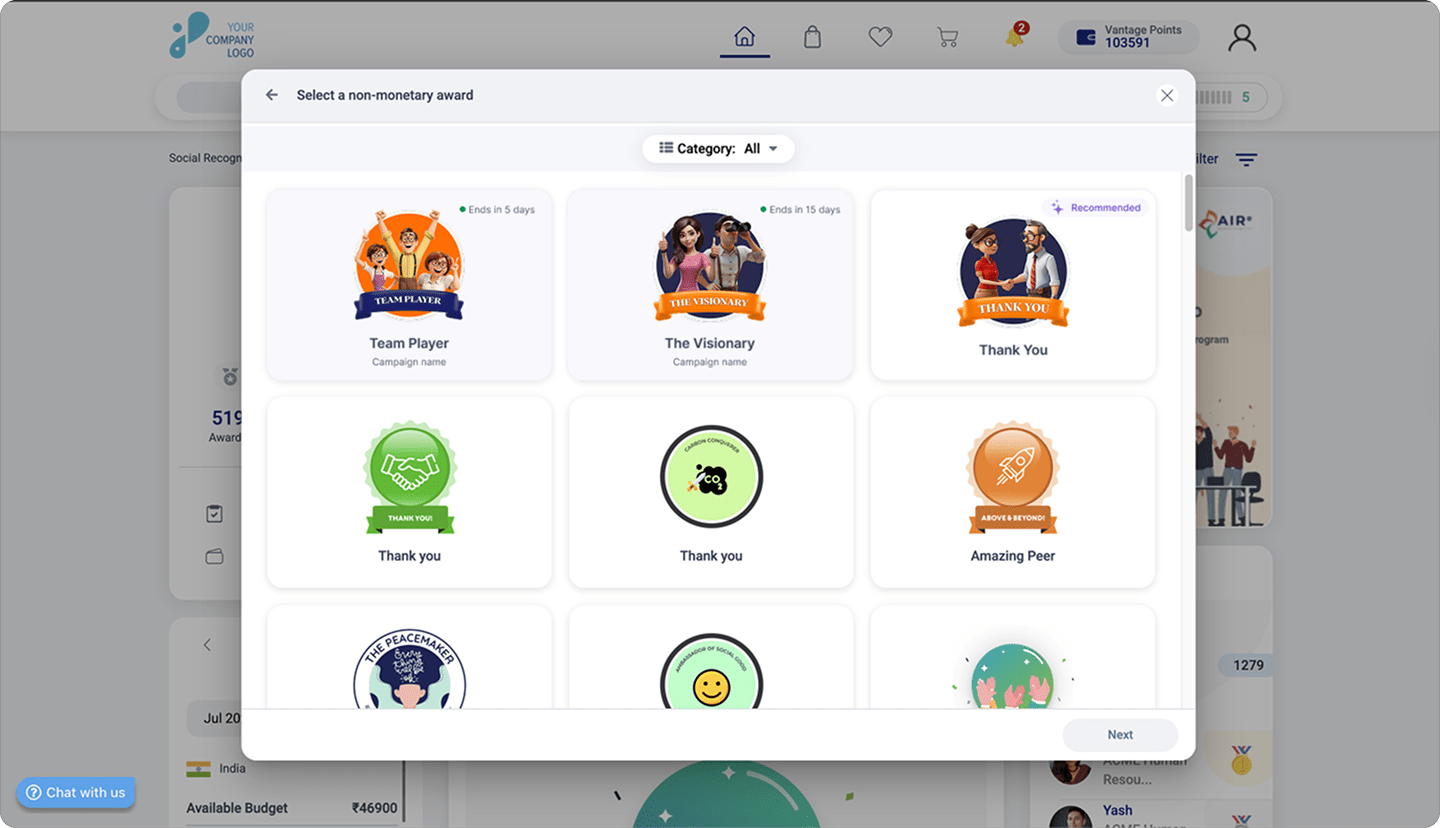
How to Recognize: Publicly acknowledge the accomplishment, highlight the specific impact of the work, and connect it to broader organizational goals. Recognition is most effective when employees understand how their efforts contributed to success.
Performance-based awards, achievement badges, spot recognition, and milestone celebrations work particularly well for recognizing task accomplishment.
Source: Vantage Recognition
2. Behavioral Contribution
Not every valuable contribution can be measured by numbers. Behavioral contributions reflect how employees demonstrate company values through their daily actions and interactions. These behaviors shape workplace culture and influence how teams collaborate and perform.
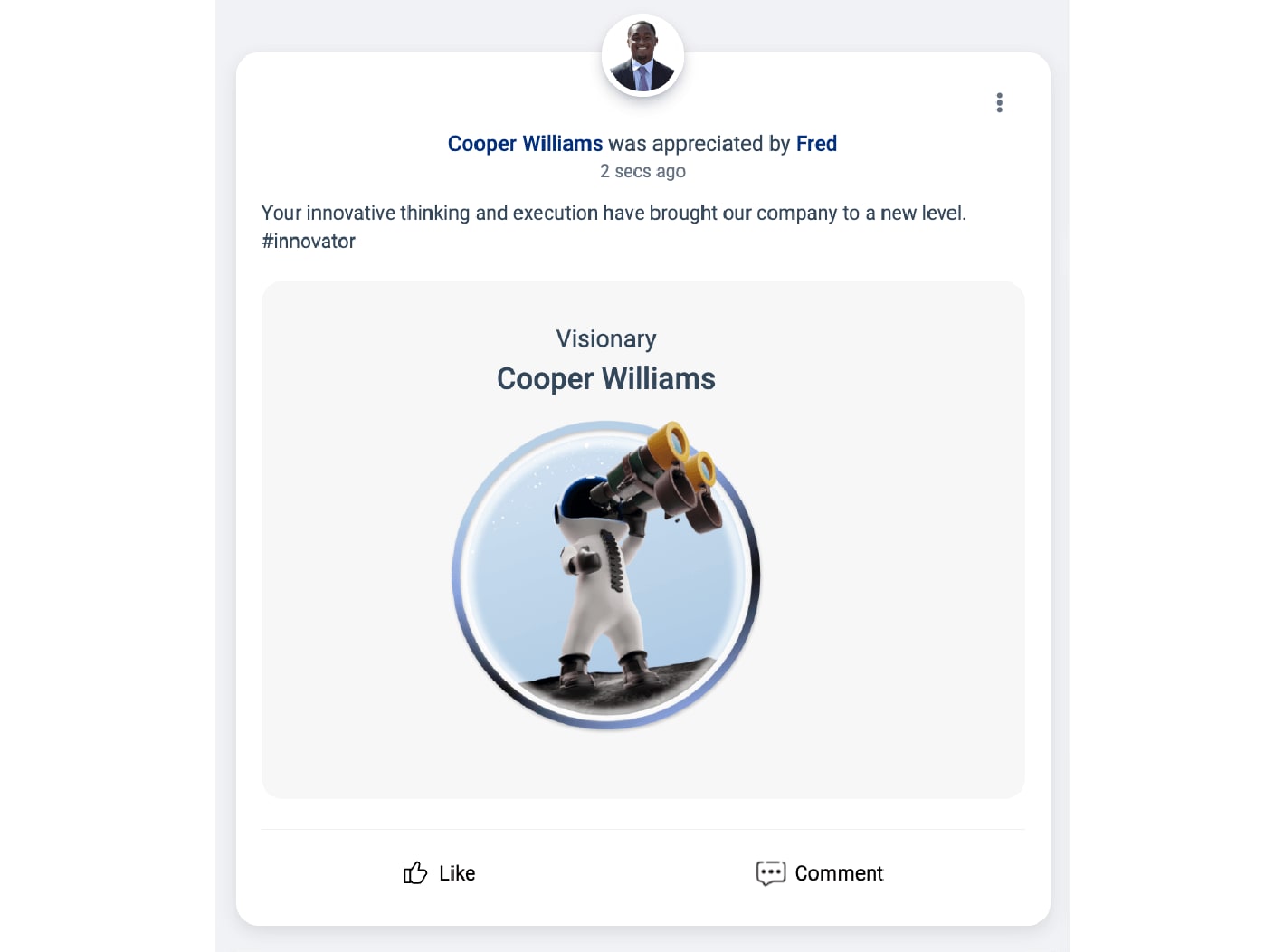
How to Recognize: Tie recognition directly to the behavior observed and the value it represents. Instead of saying "great job," explain how the employee embodied a specific organizational value and why it mattered.
Values-based recognition programs, peer-to-peer recognition, and culture awards can further reinforce these behaviors by making them visible, celebrated, and repeatable across the organization.
Source: Vantage Recognition
3. Initiative & Problem-Solving
Employees who identify opportunities, solve challenges, and take ownership beyond their job description often drive meaningful innovation. Their willingness to act proactively can improve efficiency, reduce costs, and prevent problems before they escalate.
How to Recognize: Highlight both the problem identified and the solution created. Acknowledging the employee's initiative encourages others to think creatively and contribute ideas for improvement.
Innovation awards, idea recognition programs, spot bonuses, and leadership shout-outs can help celebrate proactive problem-solvers.
4. Teamwork & Collaboration
Few workplace successes are achieved alone. Employees who support colleagues, share knowledge, and contribute to collective goals strengthen team performance and create a more connected workplace.
How to Recognize: Focus on the employee's impact on others. Recognizing collaborative behavior demonstrates that success is measured not only by individual achievements but also by contributions to the team's success.
Peer recognition programs, team awards, collaborative achievement badges, and group celebrations can help spotlight these contributions and reinforce a culture where teamwork is valued and rewarded.
5. Dependability & Work Ethic
Reliable employees are often the backbone of an organization. They consistently meet expectations, follow through on commitments, and maintain a high standard of work, even during demanding periods.
How to Recognize: Acknowledge consistency as well as results. Employees who quietly perform at a high level every day deserve recognition, even when their contributions are less visible than major accomplishments.
Consistency awards, manager recognition, attendance milestones, and recurring appreciation programs can help ensure dependable performance is noticed, appreciated, and encouraged across the organization, reinforcing a culture of appreciation.
6. Customer Service Excellence
Employees who create exceptional customer experiences play a direct role in strengthening customer loyalty, brand reputation, and business growth. Their efforts often have an impact that extends well beyond a single interaction.
How to Recognize: Share customer feedback, celebrate service wins publicly, and connect the employee's actions to customer satisfaction and business outcomes.
Customer hero awards, service excellence programs, customer-nominated recognition, and spotlight stories can help amplify these achievements while reinforcing the importance of delivering exceptional customer experiences.
7. Tenure & Loyalty
Long-serving employees contribute valuable institutional knowledge, stability, and continuity. Their commitment often helps preserve culture, support organizational transitions, and mentor newer employees.
How to Recognize: Celebrate service anniversaries in meaningful ways that reflect the employee's unique journey and contributions. Recognition should emphasize impact, not just years served.
Service awards, milestone celebrations, personalized recognition experiences, and career achievement acknowledgments can help honor loyalty while highlighting the lasting value employees bring to the organization.

Source: Vantage Recognition
The 3-Tier Recognition Framework
The 7 contribution types tell you what to recognize. The 3-tier framework tells you how.
Strong recognition cultures run all 3 tiers at once, because each one does a job the others cannot. Daily recognition keeps motivation warm between bigger moments. Formal recognition gives contributions a permanent record. Tangible rewards translate appreciation into something the person can use.
Here is how each tier works.
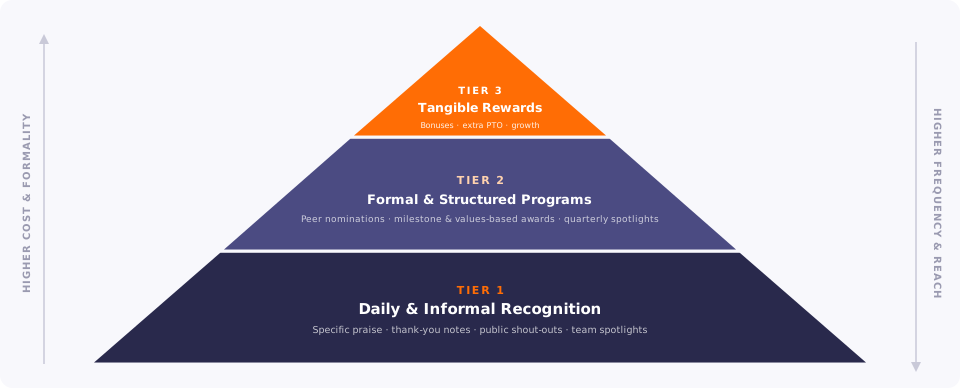
Tier 1: Daily & Informal Recognition
Daily recognition is the highest frequency tier of employee recognition. It focuses on acknowledging contributions as they happen through timely, specific, and meaningful appreciation.
While often simple in execution, daily recognition can have a significant impact on employee motivation and engagement because it reinforces positive behaviors in real time. Employees are more likely to repeat desired behaviors when they understand exactly what they did well and receive acknowledgment close to the moment of contribution.
Common forms of daily recognition include:
- Specific praise: A manager highlights the exact action or achievement that made a difference.
- Private thank-you note: A personalized message expressing appreciation for an employee's effort or support.
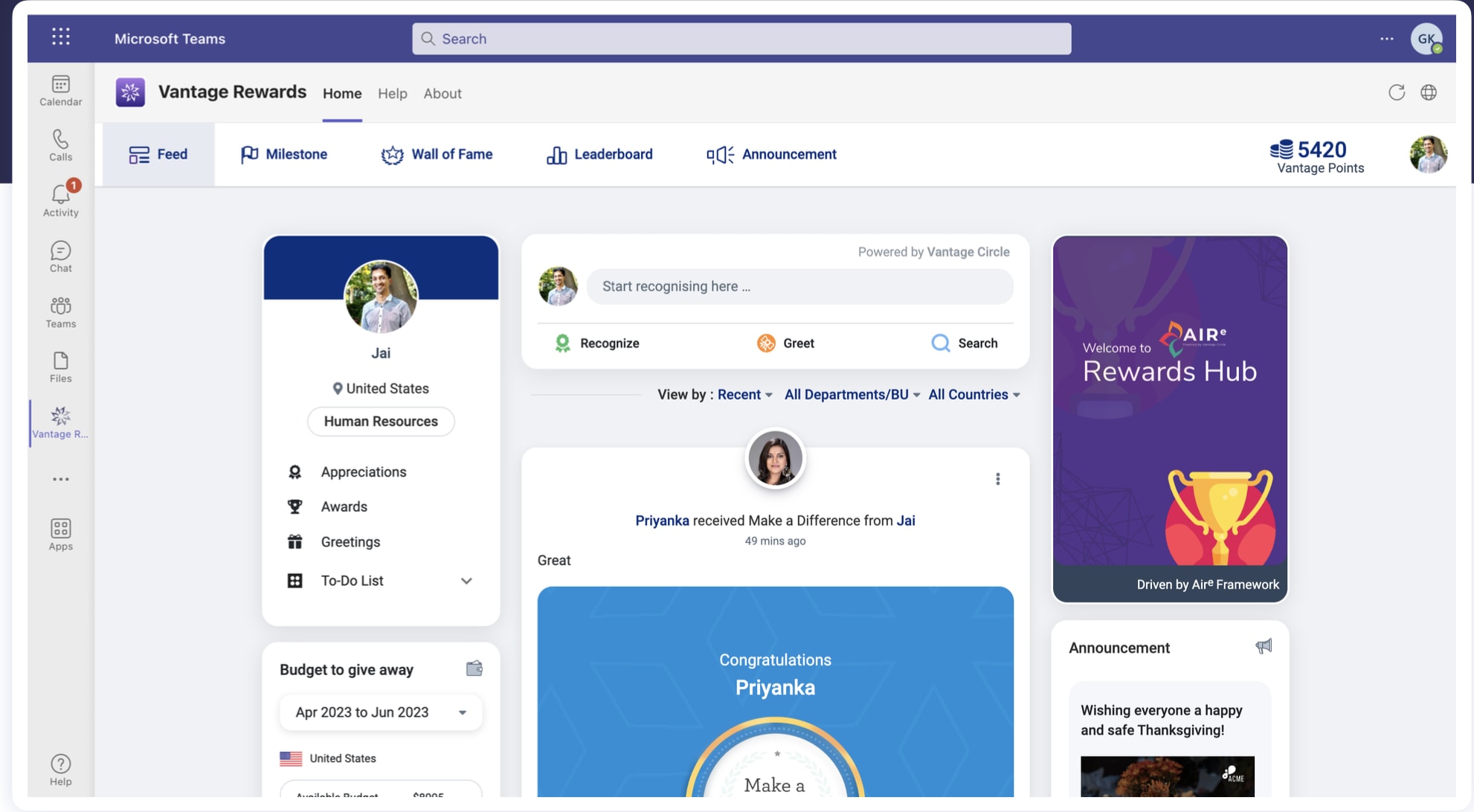
- Public shout-out: Recognition shared through Slack, Microsoft Teams, or company communication channels.
- Team meeting spotlight: Taking a few minutes during meetings to celebrate individual or team contributions.
Source: Vantage Recognition
Tier 2: Formal & Structured Programs
While daily recognition reinforces contributions in the moment, formal recognition programs provide a structured way to celebrate achievements on an ongoing basis. These programs typically follow a defined process, schedule, or set of criteria, helping organizations recognize contributions consistently and fairly.
Formal recognition is particularly valuable for highlighting accomplishments that align with company values, strategic goals, and long-term employee commitment. It also ensures recognition remains a sustained practice rather than relying solely on individual managers.
Common forms of formal recognition include:
- Peer-to-peer nominations: Employees nominate colleagues who have made a meaningful impact.
- Milestone celebrations: Recognition tied to service anniversaries, project completions, or career achievements.
- Values-based awards: Programs that honor employees who consistently demonstrate organizational values.
- Quarterly spotlight awards: Scheduled recognition for standout performers and contributors.
Tier 3: Tangible Rewards
Tangible rewards connect recognition to meaningful material outcomes. While recognition should never depend solely on monetary incentives, pairing appreciation with a reward can amplify its impact and demonstrate the organization's commitment to valuing employee contributions.
The most effective tangible rewards are tied to specific achievements and aligned with employee preferences. They should complement recognition rather than replace it. Employees are most likely to appreciate rewards when they understand why they received them and how their contribution created value. For inspiration, browse these rewards and recognition ideas.
Common forms of tangible rewards include:
- Spot bonuses or gift cards: Immediate rewards for exceptional performance or contributions.
- Additional paid time off (PTO): Extra personal time as recognition for outstanding effort.
- Flexible scheduling: Greater flexibility in work arrangements as a reward for consistent performance.
- Career-growth investments: Professional development opportunities such as certifications, training programs, conference attendance, or mentorship sponsorships.
3-Tier Comparison Table: When to Use Each
| Tier | When to Use | Examples | Cost | Impact Horizon |
|---|---|---|---|---|
| Tier 1: Daily & Informal | In the moment, as contributions happen, to reinforce behavior in real time | Specific praise, thank-you notes, public shout-outs, team meeting spotlights | Low to none | Immediate, short-term motivation |
| Tier 2: Formal & Structured | On a defined schedule or criteria, to celebrate achievements consistently and fairly | Peer-to-peer nominations, milestone celebrations, values-based awards, quarterly spotlights | Low to moderate | Medium to long-term reinforcement |
| Tier 3: Tangible Rewards | When pairing recognition with a meaningful material outcome tied to a specific achievement | Spot bonuses, gift cards, extra PTO, flexible scheduling, career-growth investments | Moderate to high | Long-term commitment and retention |
Recognition of Employee Contribution: 10 Letter Templates
Knowing what to recognize is one thing; finding the right words is another. Use the generator below to pull up a ready-to-use recognition letter for ten common scenarios. Pick a template, copy it, and personalize the bracketed details before you send.
Conclusion
Remember, recognition doesn't always have to be grand or expensive. Sometimes, a sincere thank-you note or a surprise day off can have a profound impact. The key is to make recognition an integral part of your company culture.
As you move forward, consider how you can integrate these recognition practices into your daily operations. By doing so, you'll not only reap the hard work of your team but also build a stronger, more resilient organization. So, start recognizing your employees' contributions today!
FAQs
How to Recognize Employee Contributions?
Recognize employee contributions by acknowledging specific actions, behaviors, or achievements and explaining their impact on the team or organization.
What does Recognize Employee Contributions Mean?
Recognizing employee contributions means acknowledging the value an employee creates through their work, effort, behavior, or achievements.
How to Recognize Staff Contribution?
You can recognize staff contributions through verbal praise, written appreciation, peer recognition, awards, milestone celebrations, or tangible rewards.
What is a Good Recognition Sentence?
A good recognition sentence is specific, meaningful, and focused on impact.

Shikha Gogoi is a Content Marketing Specialist focused on SEO-driven content around employee engagement, recognition, and workplace culture, helping build people-first workplaces.
Connect with Shikha on LinkedIn.