
Performance tells you what an employee achieved. Value recognition tells you how they achieved it.
A salesperson who hits 150% of quota has delivered a measurable result. But what if they also mentored a struggling colleague, helped another team close a difficult deal, or chose a customer-first solution when it was easier to protect the number?
The first is performance. The second is culture in action.
Most recognition programs are built to celebrate the outcome. Far fewer are designed to reinforce the behaviors an organization says it values.
That is the gap value recognition is designed to close.
Value recognition connects recognition to specific company values and the behaviors that demonstrate them. Instead of simply saying, "Great job," it answers a more strategic question: "What did this person do that we want others to repeat?"
Because culture is not built by what organizations put on posters, in handbooks, or on career pages. It is built by the behaviors they notice, celebrate, and reinforce.
This guide shows how to turn that principle into a recognition system: from the nine ways to deliver value recognition to the frameworks, implementation steps, pitfalls, and ROI model that make it sustainable.
What is Value Recognition?

Value recognition is the practice of recognizing and rewarding employees when their actions and behaviors specifically demonstrate a company's core values.
Go back to the salesperson from the opening. Hitting 150% of quota earns performance recognition. Choosing a customer-first solution instead of protecting the number earns value recognition. Both are worth celebrating. Only one reinforces the culture you're trying to build.
Research from Gallup shows that teams that receive adequate recognition experience 19% less turnover than those who feel under-recognized. When that recognition is tied to specific values and behaviors, it also changes what employees do next.
The Strategic Importance of Value Recognition

Value recognition turns company values from statements into signals. When employees see specific behaviors celebrated, they understand not only what the organization says it values, but what those values look like in practice. The effect can extend from day-to-day behavior to broader outcomes such as employee performance, engagement, and retention.
Builds Alignment Between Company Values and Daily Actions
When recognition is tied to values, employees understand what success looks like and why it matters. This alignment turns generic mission statements into concrete, observable behaviors. Rewarding "customer-first" actions reinforces client-centricity as a shared responsibility, rather than a line in the handbook.
Strengthens Employee Morale, Belonging, and Culture
When employees see value-driven behavior acknowledged, it signals to everyone around them what the culture actually rewards. That signal builds belonging and trust, especially in distributed or global teams where culture can otherwise feel abstract.
According to a Blueboard/Wakefield Research study (2023), employees who feel appreciated are over four times more likely to say their coworkers are fully engaged than those who don't feel appreciated. Appreciation, in other words, is contagious.
Connects Intrinsic Motivation with Company Objectives
Gartner's 2025 survey finds that 57% of HR leaders say managers fail to enforce culture consistently. Value recognition closes that gap by connecting what employees want to do with what the organization needs them to do. When personal motivation aligns with stated values, managers spend less time explaining what good culture looks like because employees can see it being reinforced around them.
Improves Retention, Engagement, and ROI
The impact shows up in hard metrics. Vantage Circle's State of R&R 2025 found that 77% of high-effectiveness recognition programs determine award recipients based primarily on observed behaviors, compared to just 27% among lower-effectiveness programs. When behaviors are the basis for recognition, culture becomes something you can actually measure.
9 Ways to Deliver Value Recognition (with Examples)
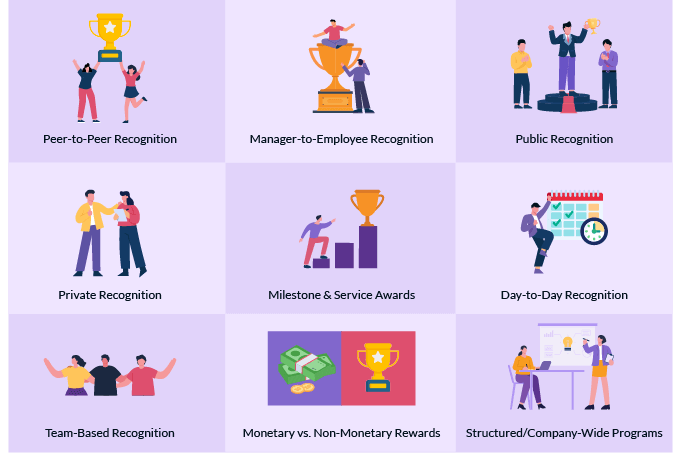
Not all recognition lands equally. Employees value recognition that is timely, specific, and tied to something they genuinely believe in. Here are nine ways to deliver it, each with a real-world example of how values enter the picture.
1. Peer-to-Peer Recognition
Example: An employee uses a company-wide Slack or Teams channel to post, "Big thank you to @Sarah for staying late to help me finish my presentation. You're a perfect example of our 'One Team' value!"
Why it works: The appreciation goes beyond gratitude. It names a behavior that reflects a key organizational value and shows what "living the values" looks like in action. Peer-to-peer moments are especially powerful because they come from colleagues, not managers — the recognition feels earned rather than expected.

Source: Vantage Recognition
2. Manager-to-Employee Recognition
Example: During a one-on-one meeting, a manager says, "I was so impressed with how you handled that difficult client call. Your patience and creative problem-solving perfectly embodied our value of 'Take Ownership.'"
Why it works: The recognition highlights a specific behavior and directly ties it to an organizational principle, showing that the company values both effort and alignment.

Source: Vantage Recognition
3. Public Recognition
Example: At a town hall, a leader says: "This quarter's 'Value Victor' award goes to the engineering team, whose work on Project Phoenix showcased 'Innovation' by cutting costs by 30%."
Public recognition is most powerful when it names the specific value and behavior, not just the result. Everyone in the room now has a concrete picture of what innovation looks like at this company. That is the signal that shapes future behavior.
4. Private Recognition
Example: A team lead sends a direct message: "I don't want to put you on the spot publicly, but I saw how you meticulously checked the data before the launch. That level of detail is exactly what we mean by 'Commitment to Quality.'"
For employees who find public recognition uncomfortable, a private message that names the value lands just as meaningfully. The cultural reinforcement still happens — it just happens one person at a time.
5. Day-to-Day Recognition
Culture is not built at the annual awards dinner. It is built in the small moments that happen every day.
Example: A colleague comments on a shared document: "This project plan is incredibly well-organized and clear. Love how you're living our value of 'Clarity and Focus.'"
Cadence matters here more than formality. A quick comment that names a value reinforces the behavior while it is still fresh. Saved for a quarterly review, the same feedback loses its cultural signal.
6. Milestone and Service Awards
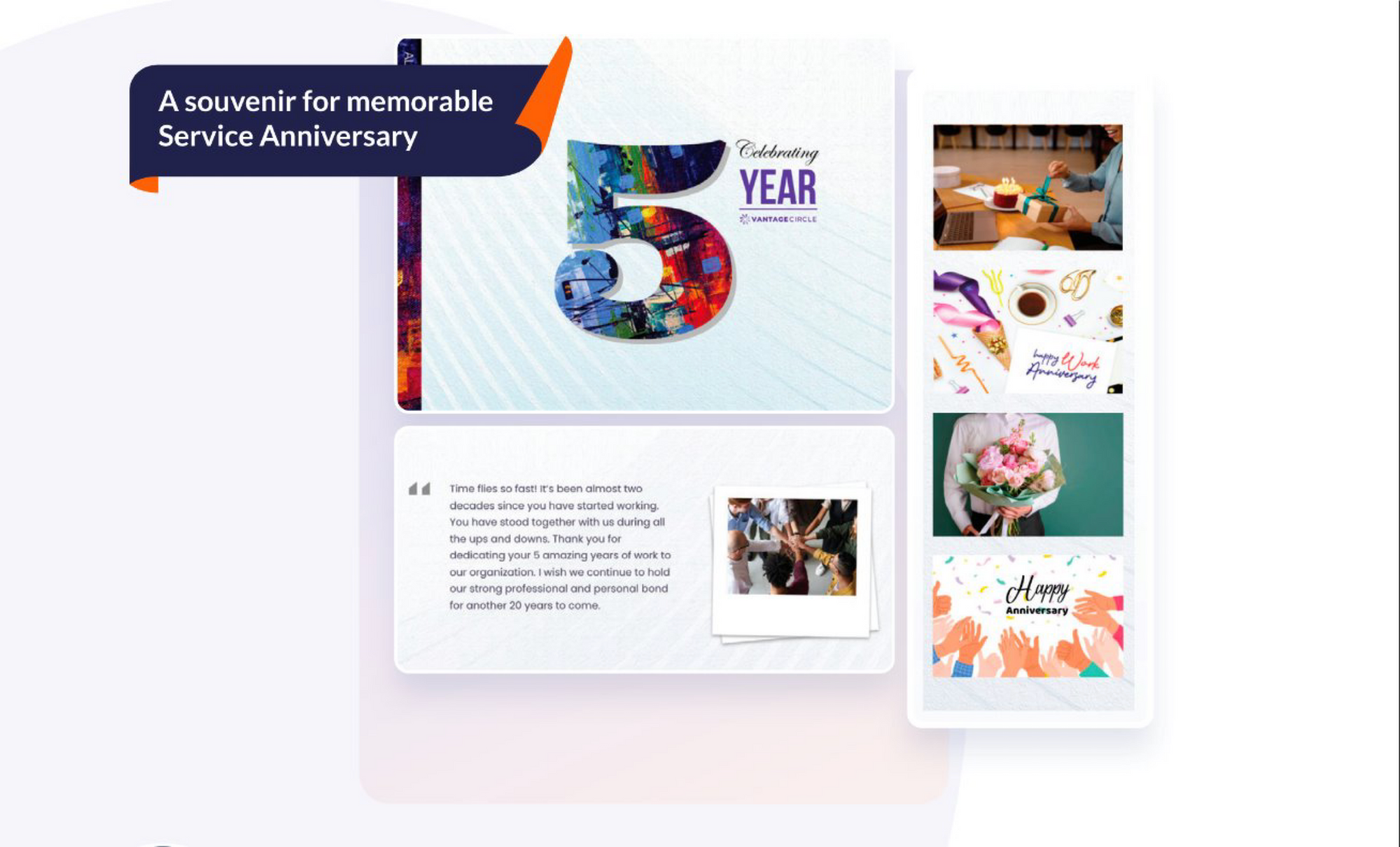
Example: When presenting a 5-year service award, the CEO says, "We aren't just celebrating five years with Mark. We're celebrating five years of him being a role model for our 'Integrity' value in every project he's managed."
Why it works: Linking service milestones with demonstrated values gives longevity a more profound meaning beyond tenure. Vantage Recognition's Service Yearbook feature lets peers collect and share memories for someone's service anniversary, so the moment reflects who the person is, not just how long they've stayed.
Source: Vantage Recognition
7. Team-Based Recognition
Values are not only individual. When a cross-functional team delivers something difficult, the behavior worth celebrating is often how they worked together, not just what they produced.
Example: An award is given to a cross-functional team with a note: "To the Tiger Team: your seamless collaboration between marketing, sales, and product was a masterclass in 'Breaking Down Silos.' Your success is a direct result of living that value."
Team-based recognition signals that culture is a collective responsibility, not something that belongs to high performers alone.
8. Spot Recognition
Example: A manager sends a same-day message after watching a developer stop what they were doing to walk a new hire through a production issue: "That was exactly what 'Lift Others Up' looks like. Sending you a spot award for it."
Why it works: Spot recognition is immediate and discretionary, given when the manager or peer sees the behavior, not at a scheduled review. The reward can be monetary (points, a gift card) or non-monetary (a badge, a public shoutout), but the value connection is what makes it stick rather than feel transactional.
9. Structured Company-Wide Programs
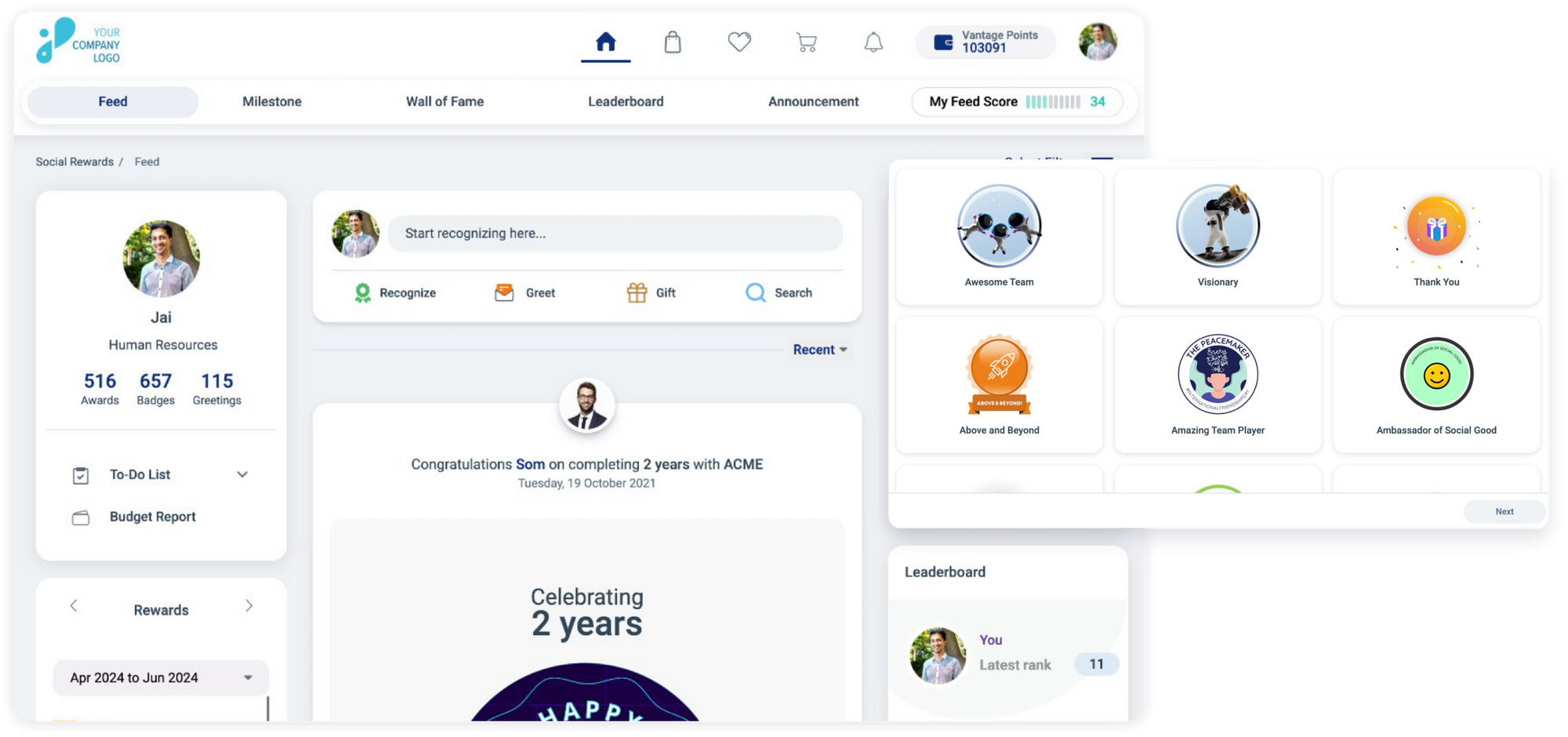
Example: A company launches a recognition platform where employees nominate peers for quarterly "Living Our Values" awards and monthly "Kudos" shoutouts, tied to specific behaviors like collaboration, innovation, or customer focus.
Why it works: Structured programs institutionalize employee appreciation, ensuring recognition is consistent and transparent across all departments and levels. When nomination forms ask employees to name the value behind the behavior, recognition becomes a daily act of culture-building.
Source: Vantage Recognition
Vantage Circle's State of R&R 2025 found that high-effectiveness recognition programs show the biggest adoption gaps in three areas: peer-to-peer recognition (+30 percentage points over lower-effectiveness programs), year-round spot awards (+38pp), and quarterly awards (+37pp). They also show 2x higher adoption of public amplification (shoutouts, social feeds, and wall-of-fame moments) than their peers.
Common Frameworks for Value Recognition Programs
Every sustainable value recognition program runs on some version of the same underlying loop. The names differ. The steps don't.
| Stage | The question it answers |
|---|---|
| Value | What does the organization stand for? |
| Behavior | What does that value look like in observable action? |
| Recognition | How do we acknowledge it when we see it? |
| Amplification | How do we make that behavior visible to others? |
| Reinforcement | How do we repeat it until it becomes cultural default? |
Recognition is only the middle of the loop. The real cultural impact comes from what happens before and after it.
Most recognition programs handle the first three steps reasonably well. The programs that actually shift culture are the ones that invest in amplification and reinforcement, making recognized behaviors visible and then repeating them until they become expected.
Two additional design principles are useful when building the program:
The Social + Monetary Model combines visibility with tangible reward. Social recognition (shoutouts, wall of fame, social feed posts) builds cultural reinforcement. Monetary rewards, whether points, gift cards, or bonuses, add a financial signal that the behavior genuinely matters. Programs that pair both types tend to see stronger adoption than those that rely on either alone.
The Frequency-First Framework treats cadence as the primary variable. Small acknowledgments given often and tied to specific values tend to outperform infrequent large awards. This matters most in distributed or hybrid teams where informal, in-person recognition doesn't happen naturally.
How to Implement a Value Recognition Program in 5 Steps

Recognition programs don't succeed simply because they exist. They thrive when they are purposefully designed, visible, and lived every day.
Step 1: Clearly Define and Communicate Your Core Values
Values must be tangible and actionable, not decorative. Employees should instantly understand what "Integrity" or "Customer First" looks like in their daily workflow. Leaders can bring values to life through storytelling, case studies, and frequent references in meetings, so that every employee knows what behaviors matter most.
Step 2: Link Specific, Observable Behaviors to Each Value
Define behaviors that demonstrate each value so recognition is grounded, fair, and repeatable. "Collaboration" might mean actively helping a teammate meet a deadline; "Innovation" could be proposing a workflow improvement that saves time or cost. When recognition is tied to concrete actions, employees know exactly what to aim for.
Step 3: Choose Tools That Empower Peer Recognition and Visibility
The right platforms, integrated with everyday tools like Slack and Microsoft Teams, make it easy for employees to recognize peers in real time without disrupting their workflow. This seamless experience boosts participation and ensures recognition is visible and celebrated, not buried in an intranet.
Step 4: Create a Ripple Effect with Public Rituals
Recognition becomes culturally powerful when it is visible beyond the person receiving it. Create recurring rituals: team shoutouts, "Value Champion" moments, town-hall stories, or monthly recognition highlights that show employees what your values look like in action.
The goal isn't to create another awards ceremony. It's to make value-driven behavior easier for everyone else to see and repeat.
Step 5: Secure Leadership Buy-In and Active Participation
Culture flows top down. Leaders should model recognition consistently, celebrating employees who exemplify company values and reinforcing the behaviors they want to see. Their involvement lends credibility and signals that recognition is a strategic priority, not a cosmetic one.
Common Pitfalls in Value Recognition (and How to Fix Them)
Inconsistency and Bias
When recognition depends on individual managers, it can feel uneven or unfair. Some employees get noticed often; others are overlooked.
Fix: Set clear criteria for what deserves recognition and train managers to apply it consistently.
Losing Momentum
Many programs start strong but fade after the initial excitement. Without rhythm, recognition slips back into the background.
Fix: Build recurring rituals like weekly shoutouts or monthly awards, and use platform reminders to keep recognition alive.
Remote and Hybrid Gaps
Out of sight shouldn't mean out of mind. Remote employees often miss recognition simply because they're not in the room.
Fix: Use digital-first tools with async visibility so recognition flows across time zones and locations, not just office floors.
Turning Values Into Generic Labels
This is arguably the most common failure mode specific to value recognition. Tagging every recognition "Collaboration" without explaining what the person actually did reduces the value to a label. It stops being a signal and starts feeling like a checkbox.
Fix: Require recognition to name both the value and the observable behavior behind it. "Great collaboration" is weak. "You brought product and sales together to resolve the client issue before launch" makes the value visible and gives everyone else a concrete example to follow.

Source: Vantage Recognition
How to Calculate the ROI of Value Recognition
ROI is harder to prove than participation. Recognition influences retention, engagement, and productivity alongside many other factors. The goal, therefore, is not to claim that recognition caused every positive outcome. It is to build a transparent model that connects investment, behavioral change, and business results.
What Goes Into the Investment
| Cost category | What to include |
|---|---|
| Platform | Licensing fees, implementation, integrations |
| Rewards budget | Points redeemed, gift cards, spot award payouts |
| Administration | HR time to manage the program, nominations, reporting |
| Training | Manager training, onboarding, communications |
What Behavioral Outcomes to Track
These are the leading indicators. They tell you whether the program is running before the business results show up.
- Recognition participation rate: percentage of employees who give or receive recognition monthly
- Value alignment: percentage of recognitions tagged to a specific company value (vs. generic)
- Manager participation: percentage of managers giving recognition at least once a month
- Recognition frequency: average recognitions per employee per quarter
- Cross-functional recognition: recognitions given across team or department lines
What Business Outcomes to Measure
These are lagging indicators. They typically take longer to move and should be evaluated alongside program participation and behavioral data rather than attributed to recognition alone.
- Voluntary turnover rate: compare cohorts with high vs. low recognition participation
- Engagement scores: track before/after program launch and year over year
- Productivity: output metrics in recognized vs. unrecognized team segments
- Absenteeism: days lost per recognized vs. unrecognized employees
- Internal mobility: promotion rates among employees with high recognition activity
The Formula
Once you have baseline data and a comparison period, apply a standard ROI model:
Recognition ROI = (Attributable business value − recognition investment) ÷ recognition investment × 100
The most defensible way to calculate attributable business value is to use your cost-to-replace figure for every retained employee and attribute a conservative percentage of retention improvements to recognition. For example, if your cost to replace one employee is $15,000 and your program contributed to retaining 10 employees who would otherwise have left, that's $150,000 in attributable value against whatever your program cost to run.
The exact attribution percentage requires judgment, not arithmetic. The goal isn't to manufacture a positive ROI number. It is to build a transparent model that makes the assumptions behind your business case visible and defensible.
How a Platform Amplifies Your Value Recognition Strategy
Executing the loop above, from value definition to amplification to reinforcement, requires systems, not just intention.
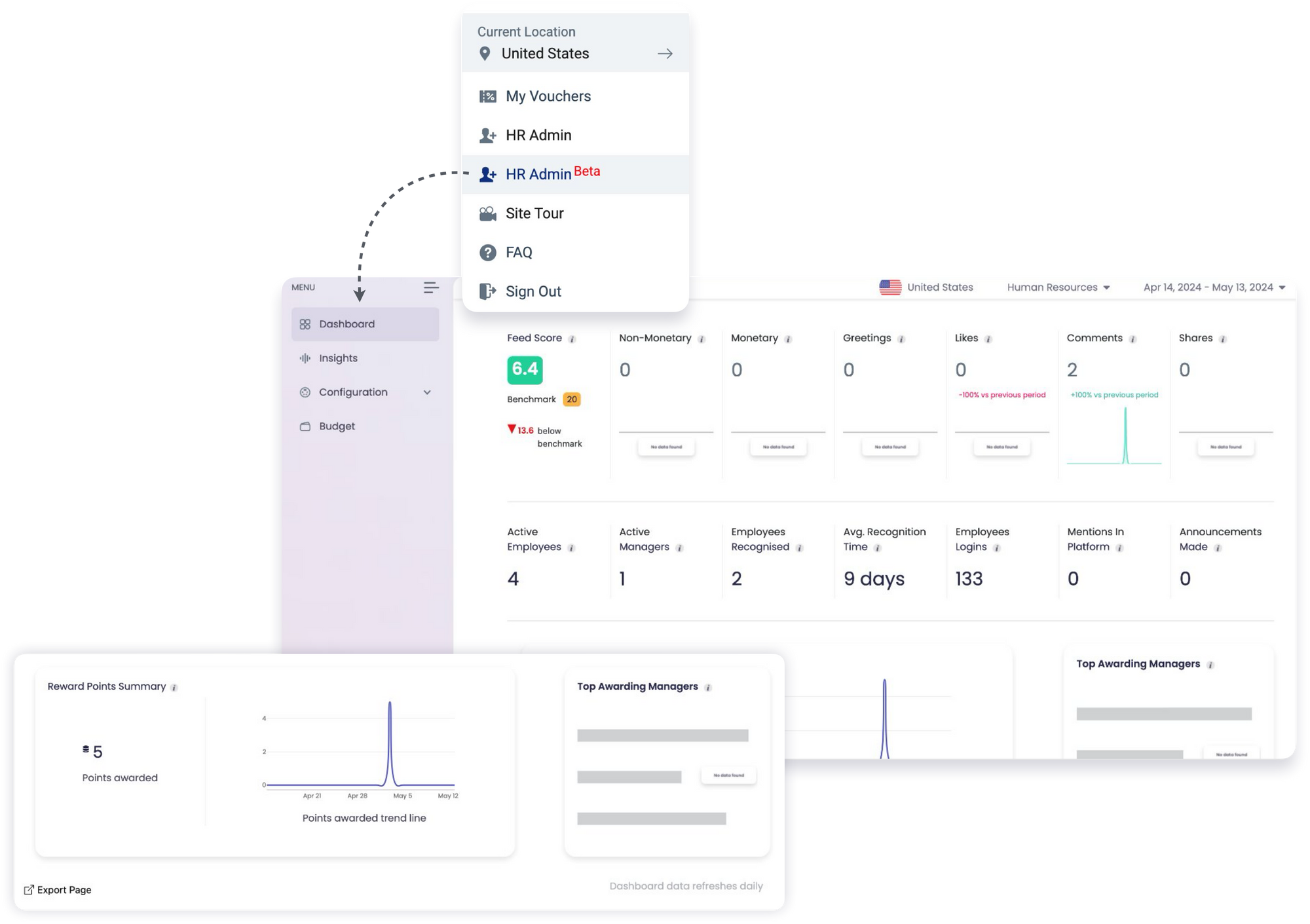
Centralize and Simplify: A recognition platform creates a single source of truth where every acknowledgment, peer-to-peer or leadership-driven, is visible, trackable, and celebrated.
Make Recognition Effortless: Integrations with Slack and MS Teams allow recognition to happen in the flow of work, without switching tabs or filling out forms.
Source: Vantage Circle
Gain Insights with Analytics: Track which values are showing up in recognitions, which teams are most engaged, and how recognition activity correlates with retention and engagement. This is the data that makes the ROI model above credible.
Connect Recognition to Rewards: Points, perks, or spot awards tied to values reinforce behaviors in tangible ways. The right mix strengthens motivation across a diverse workforce.
The right platform should make the entire loop measurable: connecting recognition to company values, embedding it into everyday workflows, and giving HR visibility into participation, behaviors, and outcomes. Vantage Recognition supports this model by integrating with Slack and Microsoft Teams, linking recognition to a global rewards catalog, and giving HR analytics on the participation and behavioral data that matter.
Recommended Resource: How to Recognize Employees with Microsoft Teams?
Value Recognition FAQs
Q: What is value recognition in the workplace?
Value recognition is the practice of acknowledging employees specifically when their actions demonstrate the organization's core values, not just when they hit targets. It makes culture visible and repeatable by tying every "thank you" to a behavior the company has decided matters.
Q: What's the difference between value recognition and performance-based recognition?
Performance recognition celebrates outcomes; value recognition celebrates the behaviors behind those outcomes. An engineer who ships a critical feature ahead of schedule earns performance recognition. That same engineer who spent two days helping a newer teammate work through a production issue, embodying a "lift others up" value, earns value recognition. Both matter, and the strongest programs run both.
Q: What kind of recognition do employees value most?
Employees consistently report that timely, specific, and sincere recognition matters more than the monetary value of the reward. Recognition that names the exact behavior and connects it to a value they believe in lands harder than a generic "great job." According to Vantage Circle's State of R&R 2025, peer-to-peer recognition and public amplification are the two delivery methods with the largest gap between high-effectiveness and lower-effectiveness programs.
Q: What are the common elements of a value recognition framework?
Most effective frameworks run a five-stage loop: define the value, specify the observable behavior that demonstrates it, recognize when you see it, amplify it publicly, and reinforce it until it becomes expected. Programs that invest in all five stages, especially amplification and reinforcement, outperform those that stop at the recognition step.
Q: How do you measure the ROI of a value recognition program?
Start by tracking behavioral outcomes: recognition participation rate, value alignment, and manager participation. Then measure business outcomes: voluntary turnover, engagement scores, and productivity in high-recognition vs. low-recognition cohorts. Apply the formula: (Attributable business value − recognition investment) ÷ recognition investment × 100. The most defensible attribution method is to use your cost-to-replace figure and conservatively attribute a portion of retention gains to the recognition program.

Supriya is a Content Marketing Lead at Vantage Circle, where she writes on employee engagement, recognition, workplace communication, and culture. Her work on remote team recognition draws on primary research from Vantage Circle's platform data and customer deployments across distributed workforces. She spent the earlier part of her career in corporate communications at Burson, ESPN Star Sports, and CBRE, advising organizations on the messages employees actually hear.
Connect with Supriya on LinkedIn.