
Most rewards packages are better than the people receiving them realize. Health cover, a retirement match, a learning budget, a discount platform, a recognition program: all funded, all real, and most of it invisible by the second month of employment. The package did not fail. The memory of it did, and that is what shows up in the exit interview as "compensation."
Key Insights
- What Total Rewards Actually Has to Do With Retention
- The Five Pillars, and Which One Retains
- How to Measure Whether It Worked
- Why Employees Do Not Know What They Get
- What We See in Recognition Distribution
Total rewards affects retention through one mechanism above all others: whether employees can name what they receive. A well-funded package that people cannot describe does not retain them, because the value never registers. That gap is measurable, and most organizations never measure it.
Getting the total rewards strategy itself right is necessary, but it is not sufficient. This piece assumes the strategy is sound and asks the harder question: does it actually keep anyone from leaving, and how would you know either way? Below: which of the five pillars goes unmeasured almost everywhere, and the four indicators that tell you whether any of it is working.
What Total Rewards Has to Do With Retention
Total rewards affects retention at three specific moments: when an employee compares an outside offer, when a life event makes a benefit suddenly relevant, and when a tenure milestone passes unmarked. Everything else in the rewards mix is background until one of those three moments arrives, and a package that only performs well on paper does nothing at the moment that actually matters.
The financial case for getting this right is not subtle. Gallup (2019) puts the cost of replacing a single employee at one-half to two times their annual salary once recruiting costs and the productivity dip are counted. The 2025-26 State of Employee Retention study puts a sharper point on it: 65% of organizations now name total-rewards-related issues as their primary internal driver of turnover.
For years, golden handcuffs were the default answer to that math. A large sign-on bonus or a cliff-vesting grant delays an exit, but it does not touch disengagement. An employee who has already decided the role lacks growth or support will not bring their best effort just because leaving is expensive, and eventually they leave anyway, handcuffs or not. What replaces golden handcuffs is not a bigger number. It is a package employees can actually describe, at the three moments listed above.
This is also why an always-on engagement push, more surveys, more town halls, more culture messaging, rarely moves retention on its own. Engagement work targets how someone feels about the job in general. The three moments above are narrower and more specific: they are the exact points where a rewards package either registers as real or gets forgotten. A strategy built for the general feeling misses the specific moment, which is precisely when someone opens a competing offer.
The Five Pillars, and Which One Retains
Total rewards has five pillars: compensation, benefits, well-being, career development, and recognition. WorldatWork's Total Rewards Model is the framework most organizations build against, and it is worth naming explicitly, since most of what gets published on this topic borrows the model without crediting it. The pillar most often left unmeasured is recognition, which is also the one employees encounter most frequently, weekly or even daily, rather than once a year at review time.
| Pillar | What It Retains | What It Cannot Fix |
|---|---|---|
| Compensation | Removes pay as a reason to start looking elsewhere | A stalled title or a manager who has already lost someone's trust |
| Benefits | Cushions the financial shock that makes a competing offer look better than it is | Disengagement from work that already feels pointless |
| Well-being | Delays the burnout that eventually becomes a resignation letter | A workload that was never sized correctly in the first place |
| Career development | Keeps ambition pointed inward instead of at a recruiter's inbox | A role with a genuinely short ceiling |
| Recognition | Keeps day-to-day contribution visible between formal review cycles | A reward that arrives with no explanation of why |
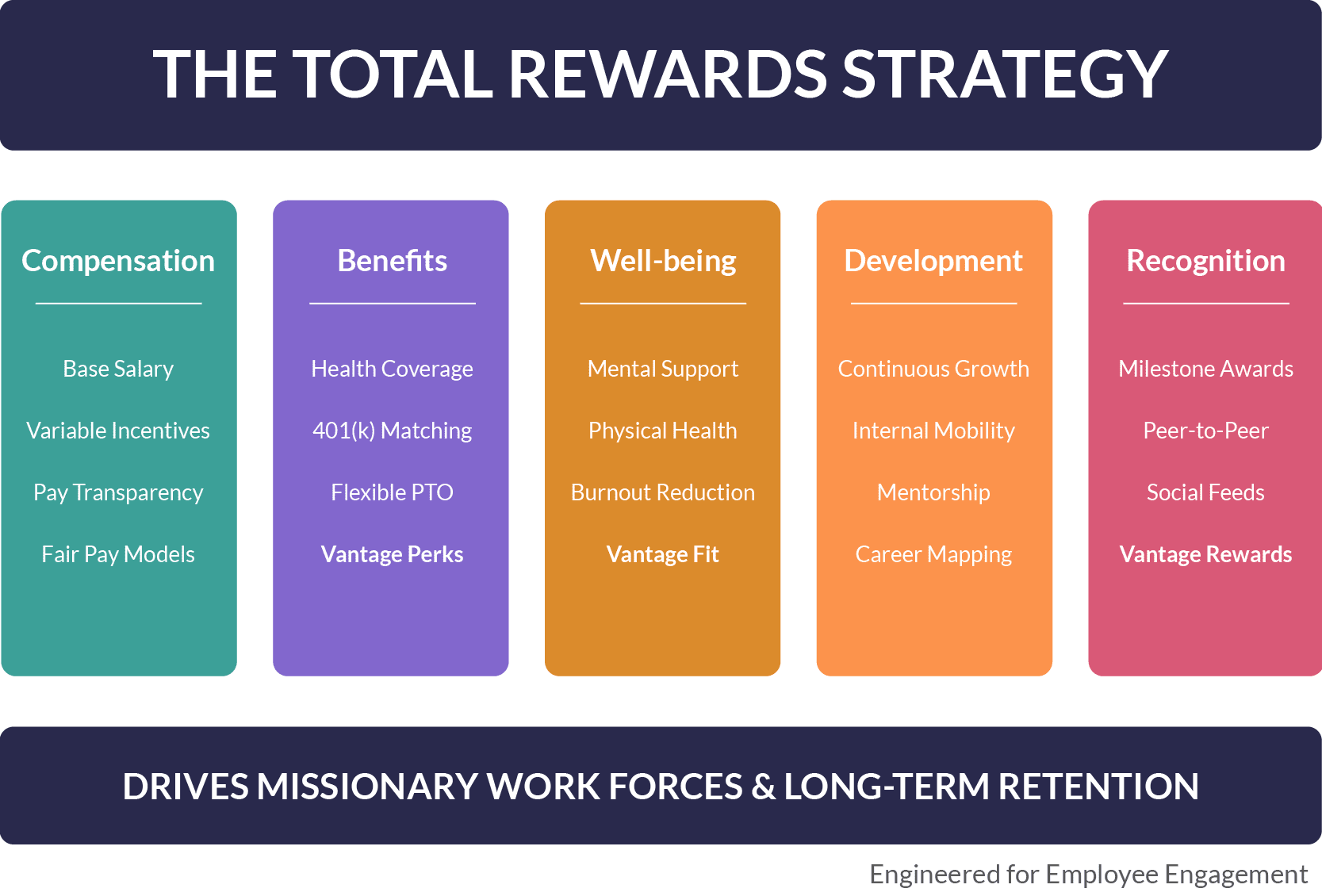
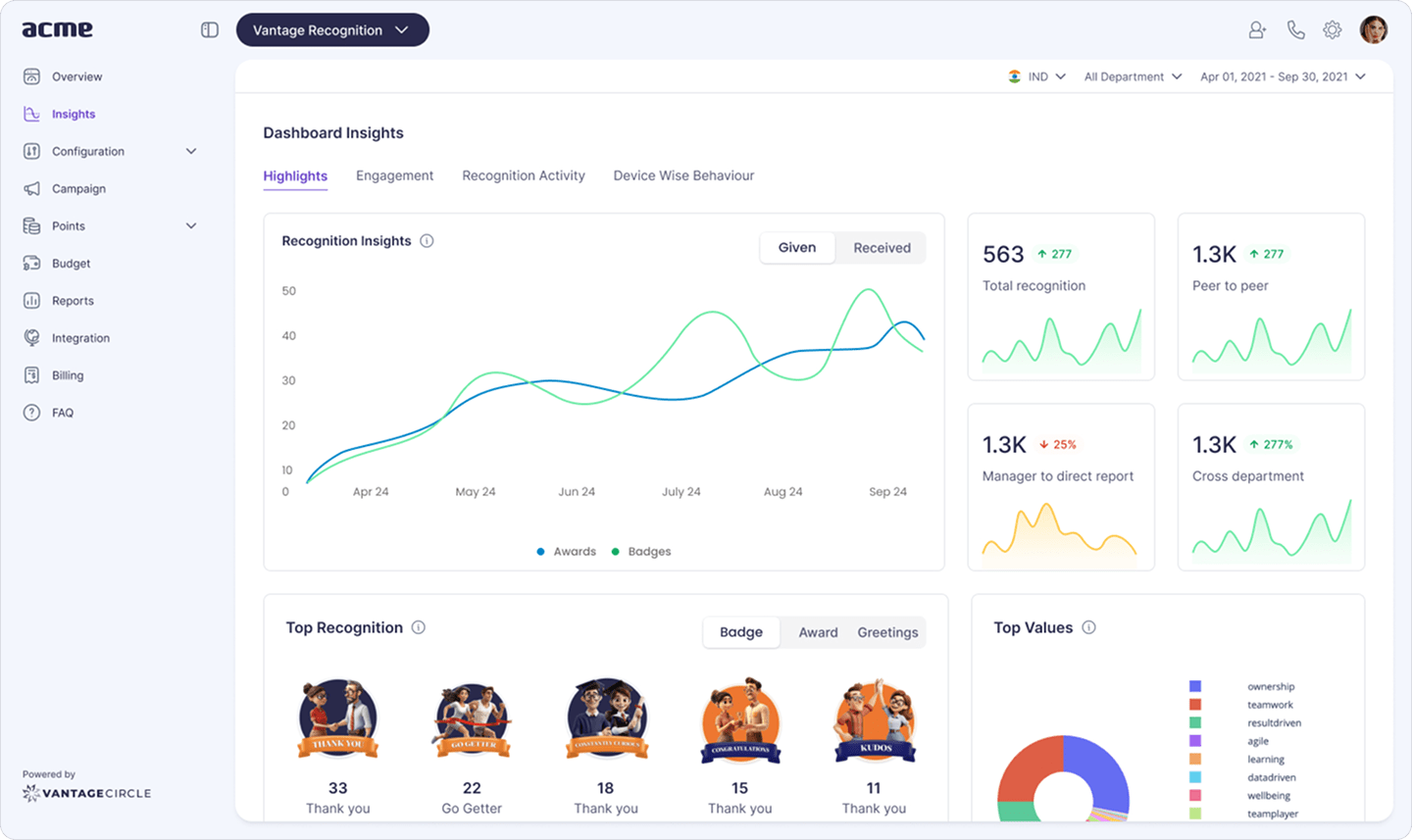
Compensation and benefits are pillars most organizations already track by default, because payroll and enrollment systems produce the data automatically. Well-being and career development are harder to measure, but at least have obvious proxies: participation rates, internal mobility numbers. Recognition has neither, which is exactly why it is the pillar most likely to be run on instinct rather than data. A platform like Vantage Rewards exists specifically to close that gap, turning peer-to-peer recognition and manager recognition into something countable rather than anecdotal.
Corporate discount programs, delivered through something like Vantage Perks, sit inside the benefits pillar. Gamified platforms like Vantage Fit sit inside well-being. Both share the same property: they only retain anyone if employees actually use them, which is a participation number, not a policy decision made once and forgotten.
Why You Will Also See a Four-Phase Version
Some sources describe total rewards as four phases rather than five pillars. That is Mercer's consulting framework: assess, design, implement, evaluate. It is not a rival model, it is the same system described from a different angle. WorldatWork names what the finished package contains. Mercer names the process for building it. If you are running the program day to day, the five pillars are more useful. If you are pitching a budget increase to a CFO, the four phases read as a project plan rather than a benefits list, which is usually the easier sell.
How to Measure Whether It Worked
Measure a total rewards strategy on four indicators: retention rate by tenure band, eNPS (Employee Net Promoter Score) movement between survey cycles, recognition distribution across teams, and the gap between what the package costs and what employees can name unprompted. The last one is the indicator most organizations skip, and it is usually the one that explains why a well-funded package still loses people.
| Indicator | Where to Get It | What a Bad Reading Looks Like | First Response |
|---|---|---|---|
| Retention rate by tenure band | HRIS exit data, segmented by tenure rather than blended into one company-wide rate | Exits concentrated in one band, most often 18 to 36 months | Audit what the package looks like at that exact point in someone's tenure |
| eNPS movement between cycles | Vantage Pulse or any recurring eNPS survey, tracked cycle over cycle rather than annually | A flat or declining score after a new benefit launches | Check adoption data before concluding the benefit itself failed |
| Recognition distribution across teams | Recognition platform analytics, split by team and manager | One team or manager consistently below the company average | Address the specific manager gap, not with a company-wide campaign |
| Cost-to-awareness gap | Total rewards statement value compared against what employees can name unprompted in a survey | Employees underestimate the package's value by a wide margin | Fix communication before adding anything new to the package |
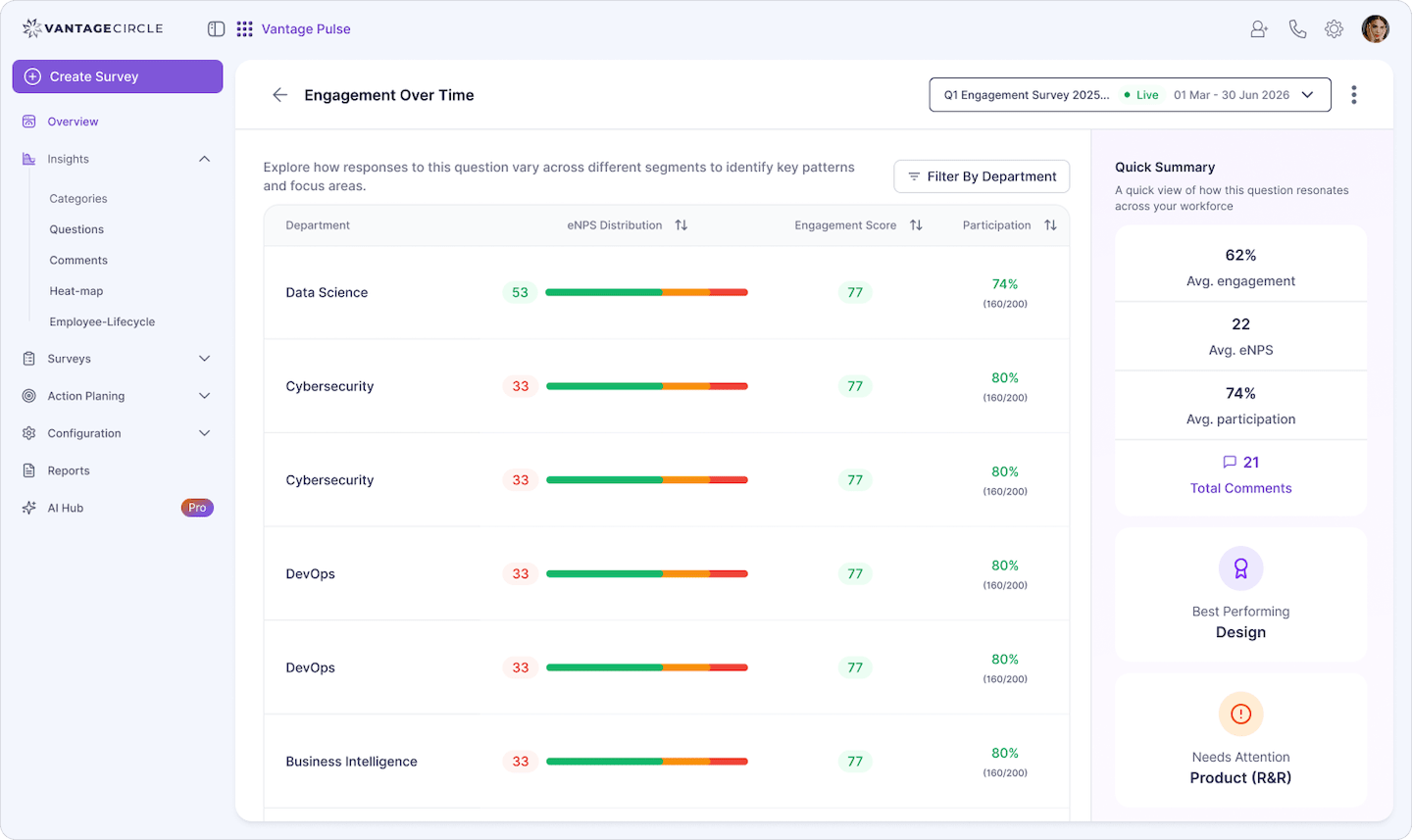
Retention rate by tenure band matters more than a single company-wide percentage, because a blended number hides the moments where people actually leave. eNPS movement is only informative if tracked between specific events, a benefit launch, a policy change, rather than as an annual snapshot. Vantage Pulse is built for that cycle-over-cycle tracking, and its department-wise breakdown answers a question a single company-wide score cannot: whether a weak reading is an organization-wide design problem or one manager who never mentions the benefits package.
Recognition distribution has no natural home in most HR stacks, because it requires the recognition platform itself to produce the reporting, not just a redemption log. This is where Recognition Analytics gives a rewards lead the one thing the other three indicators already have by default: a distribution figure showing who has been acknowledged and who has not, split by team and manager rather than reported as a single company average.
None of these four indicators is diagnostic on its own. A dip in retention tells you something is wrong without saying what. A flat eNPS score after a new benefit launch could mean the benefit is weak or that nobody knows it exists. Read together, tenure-band exits, eNPS movement, recognition distribution, and the cost-to-awareness gap, they narrow the diagnosis from "something is wrong" to a specific pillar, a specific team, or a specific communication failure. That narrowing is the actual output of measurement, not a single composite score.
Why Employees Do Not Know What They Get
Employees underestimate their package because they encounter most of it once, at onboarding, before any of it is relevant to their life. An annual total rewards statement does not fix this on its own. It restates the same numbers people were not reading the first time.
MetLife's 21st Annual U.S. Employee Benefit Trends Study (2023) found that 76% of workers who understand their benefits report being happy at work, and 82% say their benefits give them a greater sense of stability, against just 47% and 52% respectively among workers who do not. Understanding the package, not the size of it, is the variable doing the work.
Fixing this is a communication problem, not a budget problem, and it deserves its own dedicated treatment: see how to communicate total rewards to employees for the specific mechanics of when and how to resurface this information after onboarding, rather than leaving it to a single annual statement.
What We See in Recognition Distribution
The tenure band that goes least recognized is consistently the 18-to-36-month group, which is also the band carrying the highest voluntary exit risk. Employees in this window are past the onboarding-era attention they received in month one, and not yet senior enough to have earned a multi-year service award. They are, in effect, recognition's blind spot, visible to no calendar-triggered program.
Long service awards are usually triggered at the 5, 10, and 20-year marks, which means they arrive well after the 18-to-36-month window has already closed. Placing a scheduled moment of visibility inside that earlier window, rather than only at the traditional milestone years, puts recognition exactly where the data says the gap is, instead of where the calendar happens to already look for it.
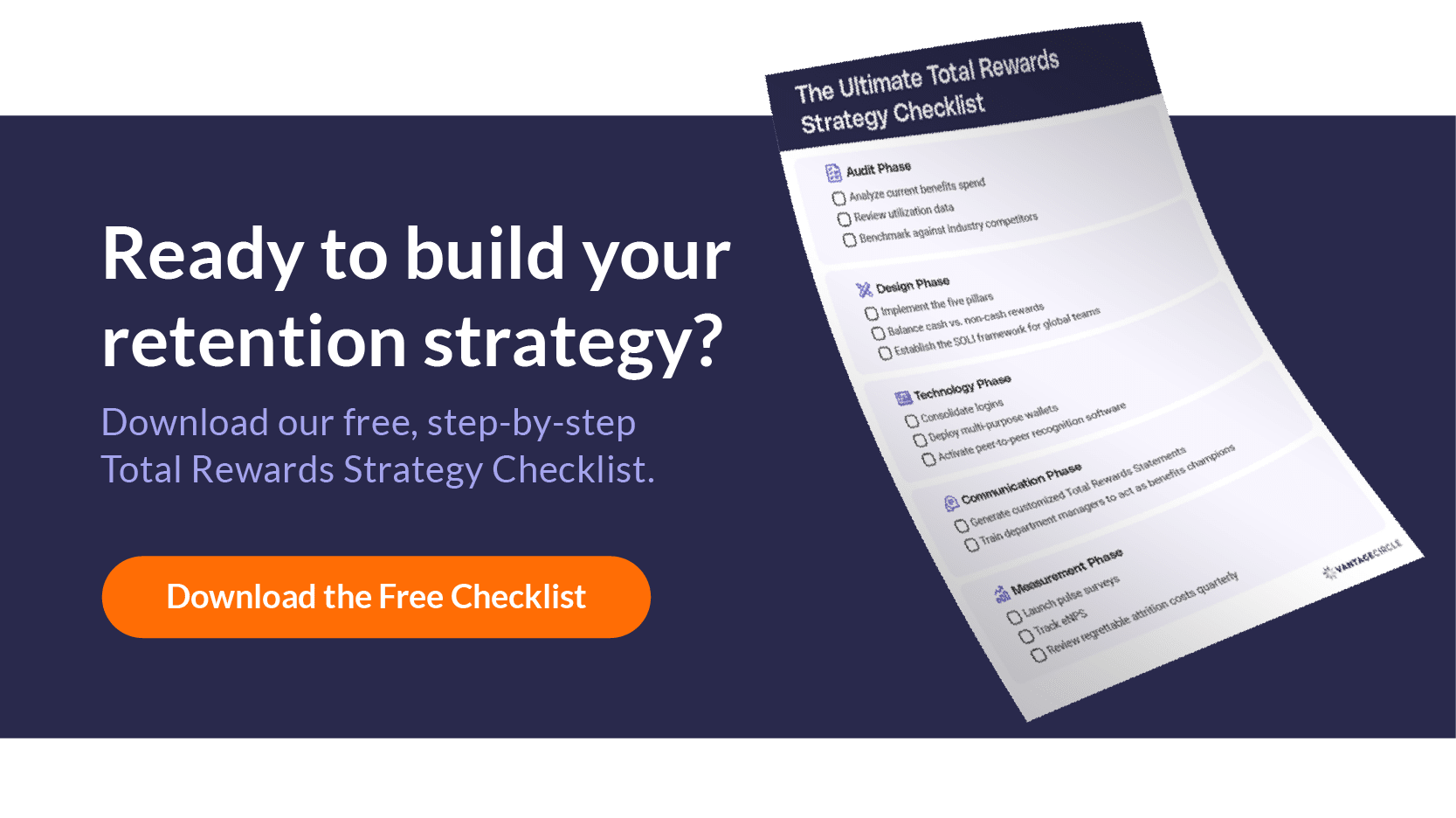
Total Rewards Strategy Checklist
Frequently Asked Questions
What are the 5 pillars of total rewards?
Compensation, benefits, well-being, career development, and recognition make up the five pillars in WorldatWork's Total Rewards Model, the framework most organizations build against. Recognition is the pillar employees encounter most often and the one organizations measure least.
What are the basics of total rewards?
At its most basic, total rewards is everything an employer invests in an employee beyond base pay: benefits, well-being support, career development, and recognition, combined into a single value proposition rather than tracked as separate line items.
What are the four phases of the total rewards program?
The four-phase version (assess, design, implement, evaluate) is Mercer's consulting framework for building a total rewards program. It describes the same system as the five pillars, just from the process side rather than the contents side.
How to design a total rewards strategy?
Designing the strategy itself, auditing the current mix, segmenting by workforce persona, and building a balanced portfolio, is covered in full in our total rewards strategy guide. This page picks up from there: once the strategy exists, how do you know it is working?

Shaoni Gupta is a content marketing specialist at Vantage Circle, with expertise in scriptwriting and copywriting in the field of employee rewards and recognition.
Connect with Shaoni on LinkedIn.