
Employee relationship management (ERM) is the ongoing process of building and maintaining positive relationships between an organization, its managers, and its employees. It uses communication, recognition, feedback, and fair conflict resolution to keep people engaged, productive, and committed. Done proactively, ERM prevents the disengagement and turnover that reactive HR is left cleaning up.
Your employees spend most of their waking hours at work. A 2017 workplace survey by HP found that employees spend 56 percent of their time with their "work family" rather than their natural family. Those same respondents said a familial bond with coworkers lifted both their productivity and their well-being.
That kind of bond does not happen by accident. It is the result of relationships managed with intent. Strong ERM is also one of the most direct ways to lift employee engagement, which remains stubbornly low. Gallup's State of the Global Workplace report found that only 23 percent of employees are engaged at work.
So, let's break down what ERM is, where HR fits in, the challenges to expect, how to measure it, and the tools that make it work at scale.
Key Takeaways
- Concept of Employee Relationship Management
- Importance and Benefits of Employee Relationship Management
- Proactive Vs Reactive Employee Relationship Management
- Role of HR in Employee Relationship Management
- Challenges in Employee Relationship Management
- Best Practices and Metrics of Employee Relationship Management
- Tools and Software for Employee Relationship Management
What is Employee Relationship Management?
Employee relationship management, or ERM, is the process of managing the relationships that hold an organization together. These relationships run in two directions. They connect the organization with its employees, and they connect coworkers working side by side at the same level.
For employees to do their best work, they need a working environment that lets them stay creative. When people have an easy rapport with others at work, it shows in their performance. Communication improves. Collaboration becomes the default. Cooperation replaces friction.
An effectively managed ERM program paves the way for a fulfilling employee experience and a real sense of satisfaction from the work people do.
It helps to clear up a common mix-up here. ERM is broader than employee relations. Employee relations deals mainly with the formal, policy-driven side of the employer and employee dynamic. Think grievances, compliance, and conflict resolution. ERM includes all of that. But it also covers the everyday, proactive relationship-building that keeps people engaged long before any problem surfaces.
Why is Employee Relationship Management Important?
Employee relationship management has become a critical focus for organizations that want to lift engagement, productivity, and retention. The goal is to build positive relationships between employees, managers, and the organization as a whole. When it works, both sides win.
Benefits for the Organization
- Higher engagement and morale: Employees who feel valued and trusted bring more energy to their work. That energy shows up as productivity.
- Stronger retention: Good relationships make people want to stay. That cuts the cost of hiring and training replacements.
- Smoother change management: Engaged employees who trust leadership tend to accept change more readily. Transformation gets easier.
- A better employer brand: A reputation as a great place to work attracts talent. It also lifts how customers see you.
- Earlier warning signs: The open communication built into ERM surfaces problems while they are still small.
- Better collaboration: Strong relationships help teams work together, which is the foundation of every other result.
Benefits for Employees
- Job satisfaction: People who get along with their team and managers find more meaning in their work.
- Career growth: Managers who invest in their people open doors to new skills and advancement.
- A sense of belonging: Positive relationships give employees a support system and a community at work.
- A trusted environment: A culture of openness lets people raise concerns honestly. They feel heard.
- Guidance from leaders: Strong manager bonds give employees access to coaching and feedback that helps them grow.
Proactive Vs Reactive Employee Relationship Management
Not all ERM looks the same. Some organizations build relationships on purpose, before anything breaks. Others wait for problems and scramble to fix them. The difference shows up in trust, morale, and turnover.
| Basis | Proactive ERM | Reactive ERM |
|---|---|---|
| Mindset | Prevents issues before they arise. Builds robust relationships on purpose. | Responds to issues as they come up. Manages relationships only when forced to. |
| Approach | Spots potential issues through surveys and 1-on-1s. Builds in mentorship and recognition early. Keeps communication and feedback continuous. | Waits for conflict or disengagement to get serious. Applies band-aid fixes. Investigates incidents after the fact. Handles grievances case by case. |
| Focus | Relationship-building and engagement. | Fixing specific problems. |
| Impact | Higher trust, morale, and productivity. | Lower job satisfaction and higher turnover. |
| Examples | Weekly 1-on-1s, appreciation events, training leaders to give feedback. | Mediating conflicts after they escalate, exit interviews after people quit, reacting to low engagement scores. |
The takeaway is simple. Proactive ERM costs less and works better. Reactive ERM is just firefighting with a nicer name.
The Role of HR in Employee Relationship Management
HR plays a central role in building strong employee relationships. The work splits into two parts. There are the relationships between coworkers, and there are the relationships between managers and their teams.
Between Coworkers
Peer relationships, cultivated well, lift your whole culture. A good rapport builds camaraderie and morale. When teams work together, people learn new skills, motivate each other, and collaborate naturally. Here is how HR can strengthen those peer bonds.
1. Build Cross-Functional Teams
Cross-functional teams pull people from different departments toward a common goal. They let employees who have never worked together combine their skills.
When experts from different domains solve a problem together, the solutions get sharper. People also drop their assumptions and start to understand how their colleagues think. That makes them more accepting of each other.
2. Encourage Social Interactions
The easiest way to get people talking is over food. At Vantage Circle, we mark major company milestones with team lunches.
It is strange when you think about it. Employees come to work every day, sit in the same space, and barely speak. At large companies, people keep to themselves, even at lunch.
Team lunches and potlucks break that pattern. They give people a reason to meet colleagues from other groups. A relaxed, cordial setting can even turn coworkers into friends.
3. Conduct Team-Building Activities
The benefits of team-building activities add up fast. They make communication more frequent. They sharpen problem-solving and decision-making.
Most importantly, they build trust. When teams collaborate outside their usual work, they exchange ideas and combine experience to reach shared goals.
4. Equip Teams With Communication Tools
Relationships need communication to survive. A lack of it breeds misunderstanding, and misunderstanding breeds conflict.
Cloud-based messaging tools let people share information from anywhere, at any time. They keep remote and hybrid workers connected to the rest of the team. That connection is the thing relationships are built on.
Between the Manager and the Employee
Employees often hold back with their managers. They worry about how it will look on their next review. Managers who can close that gap, without being too soft or too controlling, build lasting relationships with their teams.
1. Hold 1-on-1 Meetings
A 1-on-1 meeting is different from a review. It is a regular, face-to-face conversation between a manager and an employee. The employee can raise ideas, concerns, or issues.
How the relationship grows from there depends on the manager. First, create a space where people feel safe to speak. Then listen with an open mind and work to resolve what comes up. When employees see you take their concerns seriously, they come back. That is how trust deepens.
2. Run Surveys to Understand How Employees Feel
We often hear leaders complain that their people are disengaged and that turnover is too high. But few stop to ask why.
You might offer great insurance when what people actually want is a work-from-home policy. The only way to know is to ask. Employee surveys, from engagement surveys to 360-degree reviews, tell you where you are falling short.
Once you know the gaps, you can fix them. The act of asking also tells employees you care about their needs. That builds trust and loyalty.
3. Pair Transparency With Involvement
One of the worst things a manager can do is keep people in the dark. Employees will not trust you if they feel you are hiding things. So be clear about decisions, changes, and where the company is headed.
Involvement matters just as much. When you share information with only a favored few, everyone else notices. Bring the whole team into the conversation. Give everyone a chance to share ideas and opinions.

Vantage Influencers Podcast
"Employees actually experience work more like a relationship than they do anything else."
— Jason Lauritsen, Employee Engagement Author & Speaker
Listen to the EpisodeChallenges in Employee Relationship Management
Positive employee relations are the bedrock of a healthy culture. But even well-intentioned companies hit hurdles. Spotting these early helps HR leaders protect communication, satisfaction, and productivity.
Aligning With Employee Expectations
Companies often fixate on tasks, deliverables, and short-term goals. In the process, they neglect what employees need: growth, balance, and flexibility.
When development gets ignored, people feel undervalued. They disengage, and relationships erode. The fix is to understand expectations through regular surveys and conversations, then act on them with training, flexible schedules, or new roles.
Minimizing Subjective Assessments
Biased reviews distort performance management. Recency bias, prejudice, and the halo effect all skew feedback. When reviews feel unfair, employees lose trust in the process.
Structured evaluation frameworks fix this. Focus on actual work delivered. Give balanced feedback on both wins and gaps, and apply metrics consistently across people.
Navigating a Diverse Workforce
Today's companies span many cultures, generations, and backgrounds. Ignoring different communication styles and expectations strains relationships and breeds exclusion.
Diversity training, equitable inclusion efforts, and clear anti-discrimination policies help bridge the gaps. They also give underrepresented groups a stronger voice.
Connecting Remote and Hybrid Employees
Virtual and hybrid models disrupt the organic relationship-building that happens in an office. Spontaneous chats and shared moments become rare, which makes connection harder for dispersed teams.
Collaborative technology, paired with inclusive online events, gives remote workers the touchpoints they need. Include them fully in communications and social gatherings so isolation does not set in.
Adapting Amid Rapid Change
Constant change, from restructuring to leadership transitions, creates uncertainty. When leaders go quiet during these shifts, employees feel unsure about their roles and lose trust.
Proactive communication settles nerves. Address concerns, invite input, and explain the reasoning behind each change. Bring people along instead of springing decisions on them.
Overcoming Technological Barriers
Automation and AI bring real efficiency. But used without care, they can dehumanize work. If employees feel monitored or distrusted by tracking tools, psychological safety suffers.
Technology should support human connection, not replace it. Communicate the intent behind any new tool. Pair it with training so no one gets left behind.
Combating High Turnover
Frequent attrition severs bonds and drains morale. Exit interviews, stay interviews, and pulse surveys help identify what is driving people out, whether that is pay, poor managers, or a weak culture.
Better onboarding, manager training, and mentorship lift retention. Relationships rooted in trust give people a reason to stay.
How to Measure Employee Relationship Management
You cannot improve what you do not measure. ERM can feel like a soft discipline, but its health is trackable. Here are five metrics HR teams should watch.
- Case volume and type: The number and category of employee relations cases. Watching these reveals trends and risk areas before they escalate.
- Resolution time: How long it takes to close a case. Faster resolution signals an efficient, responsive process and builds trust.
- eNPS and engagement scores: A direct read on how valued and supported people feel. A rising score means relationships are improving.
- Recurrence of issues: Repeat complaints point to systemic problems. Falling recurrence is proof your approach is working.
- Retention and turnover rate: The clearest long-term signal. Strong relationships keep good people in their seats.
Track these metrics on a fixed cadence, not just after something goes wrong. A quarterly review of eNPS and case trends turns ERM from a gut feeling into a number you can report to the board.
Best Practices of Employee Relationship Management
Open Communication
Communication is the lifeline of healthy relationships. Build open, two-way channels across every level. Offer multiple platforms, from messaging to intranets, so transparency becomes the norm.
Then actively seek out employee voice through surveys, focus groups, and town halls. When people feel heard, engagement and trust grow. According to Forbes, employees who feel heard are 4.6 times more likely to feel empowered to do their best work.
Dispute Resolution
Unresolved conflict breeds resentment. Put clear, trusted dispute-resolution policies in place. Address issues promptly and objectively, whether between coworkers or with a manager.
Train your leaders in mediation. Resolving tension early prevents the damage to morale that comes from letting it fester.
Recognition
Make recognition a regular habit, not an annual event. Celebrate wins big and small, from finished projects to work anniversaries. A simple thank-you goes a long way. Consistent recognition lifts motivation, loyalty, and satisfaction.
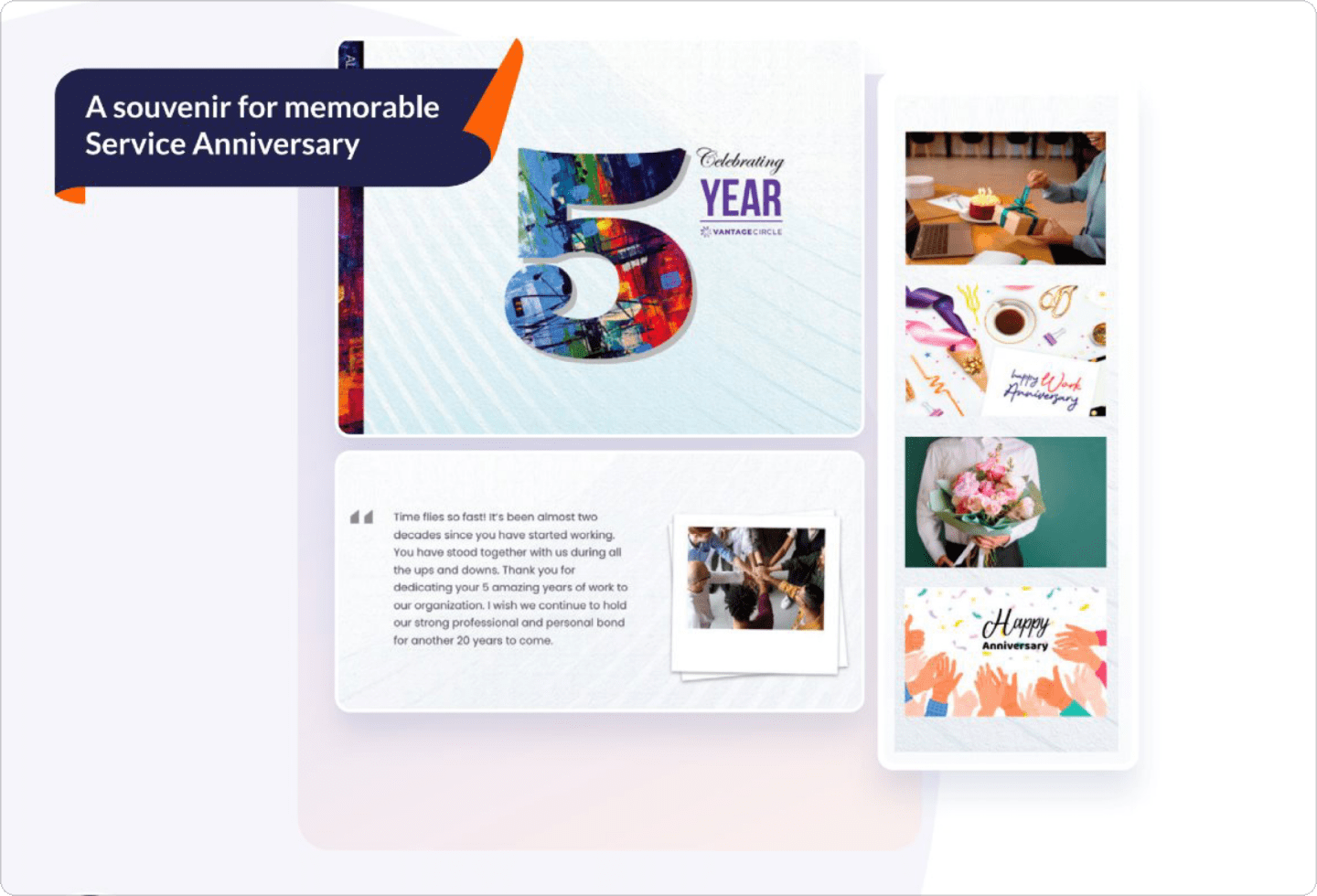
This is where a dedicated platform helps. Vantage Recognition, Vantage Circle's employee recognition platform, makes peer and manager appreciation frequent and visible. It supports points-based rewards, a global redemption catalog, and features like the AI-powered Service Yearbook that lets colleagues collect memories to mark work anniversaries.
Training and Development
Invest in your people, even if they will not stay forever. Offer training, mentoring, and stretch assignments. Sponsor courses and conferences relevant to their growth.
This signals you are serious about their progress. The payoff is a more capable, engaged workforce. And even if they move on, your employer brand benefits.
Feedback Process
Constructive feedback is a gift. Set up consistent check-ins where managers and employees exchange balanced feedback. Make it a regular ritual, not an annual anxiety spike.
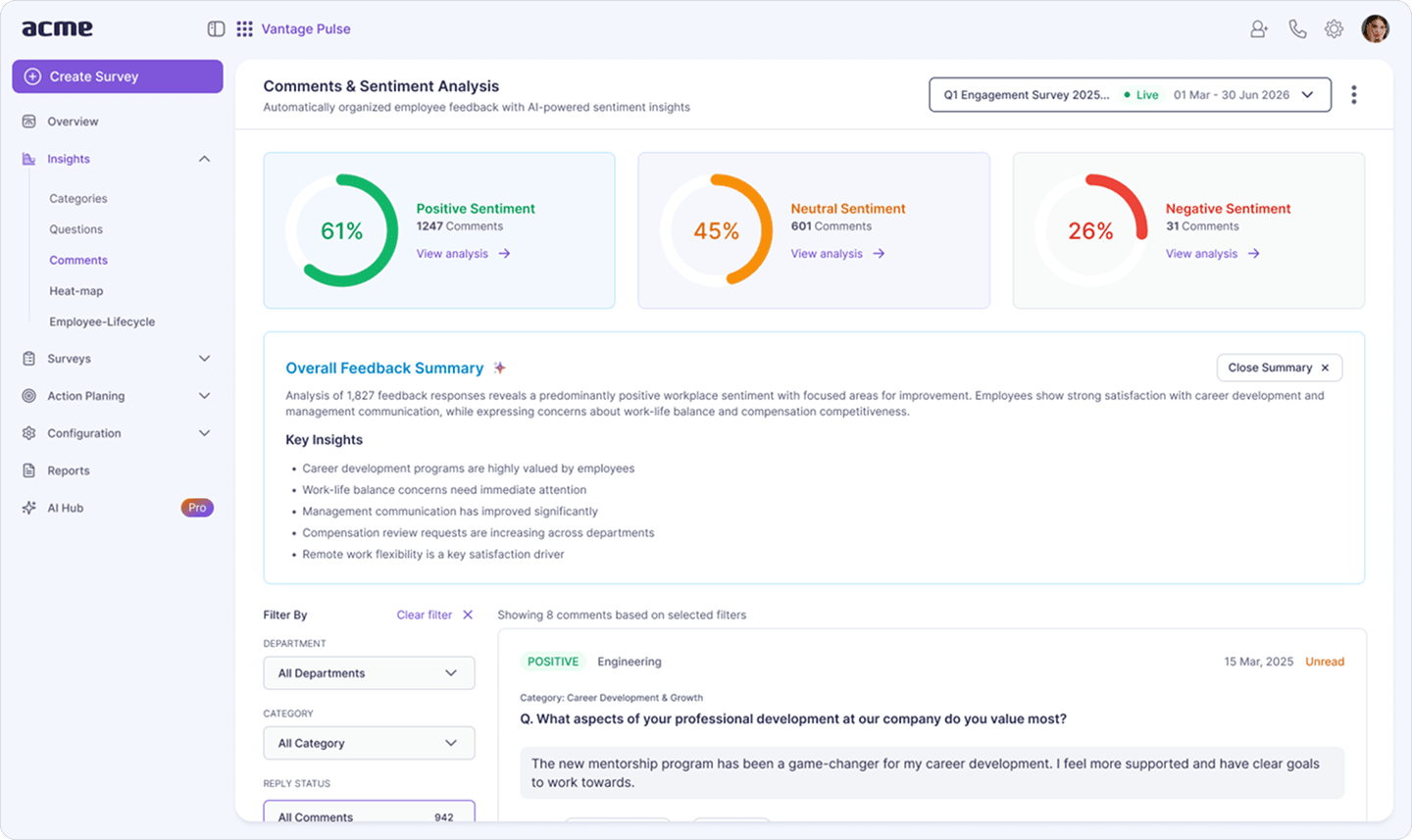
Keep the culture respectful so people give and receive feedback without fear. This is also where continuous listening pays off. Vantage Pulse, Vantage Circle's employee engagement and pulse survey tool, uses an eNPS-based model to track sentiment over time and flag issues early.
Employee Relationship Management Software and Tools
As teams grow and hybrid work becomes standard, managing relationships by hand stops scaling. Employee relationship management software fills the gap. These are platforms that help HR teams listen, recognize, and act on feedback across the whole organization.
A capable ERM toolkit usually combines a few core functions:
- Recognition and rewards: Tools that make appreciation frequent, visible, and tied to company values.
- Continuous listening: Pulse survey tools that surface how people feel before disengagement sets in.
- Communication and collaboration: Messaging and intranet platforms that keep distributed teams connected.
- Feedback and 1-on-1s: Structured tools for regular check-ins, goal tracking, and development.
- Analytics: A reporting layer that turns relationship signals into metrics HR can act on.
The point of ERM software is not to replace human connection. It is to give HR and managers the visibility and consistency to nurture relationships on purpose. Platforms like Vantage Circle bring recognition, pulse listening, and analytics together, so the everyday work of ERM does not depend on memory and spreadsheets.
Ready to see how it works in practice? Book a demo and see how Vantage Circle supports stronger employee relationships at scale.
Summing It Up
Healthy employee relationships are the foundation of a thriving culture. Get them right and you lift engagement, retention, and collaboration all at once.
The core of ERM is simple. Understand your people, meet their needs proactively, and measure whether it is working. Build a workplace where employees feel valued, supported, and heard. When people feel genuinely cared for, they care more in return. That shows up as loyalty, productivity, and performance.
Start with one metric and one habit. Track eNPS, make recognition routine, and let the relationships compound from there.
Frequently Asked Questions
What is employee relationship management (ERM)?
Employee relationship management is the process of building and maintaining healthy relationships between an organization, its managers, and its employees. It combines communication, recognition, conflict resolution, and continuous feedback to keep people engaged and committed.
What is the difference between employee relations and employee relationship management?
Employee relations focuses on the formal, policy-driven side of the employer and employee relationship, such as grievances, compliance, and conflict resolution. Employee relationship management is broader and more proactive. It covers the everyday relationship-building, like recognition and 1-on-1s, that prevents issues before they arise.
What does an employee relationship manager do?
An employee relationship manager oversees the policies, communication, and programs that keep employer and employee relationships healthy. The work includes resolving disputes, gathering and acting on feedback, supporting managers, and ensuring fair and consistent treatment across the workforce.
What are the benefits of employee relationship management?
Strong ERM improves engagement, retention, and productivity. It makes change management smoother and strengthens employer brand. For employees, it means higher job satisfaction, a sense of belonging, and a more trusted environment.
What are some examples of employee relationship management?
Examples include regular 1-on-1 meetings, recognition programs, pulse and engagement surveys, transparent communication of company decisions, structured dispute-resolution processes, and team-building activities.
What is employee relationship management software?
ERM software refers to platforms that help HR teams manage relationships at scale. They typically combine recognition and rewards, continuous listening through pulse surveys, communication tools, and feedback or 1-on-1 features in one place.

Nilotpal M Saharia is an Assistant Manager, Content Marketing at Vantage Circle and a recognition-and-rewards (R&R) strategist with 9 years of experience spanning Marketing, HR, and content strategy. He helps HR leaders turn employee recognition and leadership research into practical workplace programs.
Connect with Nilotpal on LinkedIn.