

Performance appraisals have long been one of the most important tools for improving employee performance and organizational success. But they're also one of the most misunderstood.
The biggest mistake isn't choosing the wrong rating scale or using outdated software. It's running the appraisal process without being clear about what it's meant to accomplish.
When the objectives aren't defined, reviews become a little bit of everything from feedback sessions, career discussions, salary conversations, and goal-setting meetings, all rolled into one. The result is a process that feels time-consuming but delivers little value.
That's why understanding the objectives of performance appraisal matters. In this guide, we'll break down the nine essential objectives, explain why each one is important, and show how they work together to make performance reviews more meaningful.
Why Performance Appraisal Objectives Matter
What is Performance Appraisal?
A performance appraisal is a structured, formal evaluation of an employee's performance over a specific period, typically a quarter, six months, or a year. It assesses how well an employee has met established goals, demonstrated expected competencies, and contributed to business outcomes.
A performance appraisal summarizes progress, and often informs important decisions around compensation, promotions, career development, and succession planning.
The terms performance appraisal, performance review, and performance management are often used interchangeably, but they describe different parts of the employee performance process. Confusing them can lead to unrealistic expectations, ineffective reviews, and missed opportunities for employee growth.
Before we discuss the objectives of performance appraisal, it's important to understand the distinction between these three concepts.
Performance Appraisal vs. Performance Review vs Performance Management
| Aspect | Performance Appraisal | Performance Review | Performance Management |
|---|---|---|---|
| Definition | A formal, structured evaluation of an employee's performance over a set period | A conversation between manager and employee to discuss performance, often used interchangeably with appraisal | An ongoing, year-round process of goal-setting, coaching, and feedback |
| Frequency | Periodic (quarterly, half-yearly, or annual) | Periodic, usually tied to the same cycle as the appraisal | Continuous, throughout the year |
| Primary Focus | Measuring and documenting past performance against set goals | Discussing results, strengths, and areas for improvement | Aligning goals, developing skills, and driving future performance |
| Outcome | A rating or score that informs compensation, promotion, or succession decisions | Shared understanding and documented feedback | Sustained improvement in employee and organizational performance |
| Scope | A single, time-bound event | A single conversation within the appraisal cycle | A broader system that includes appraisals and reviews as components |

VANTAGE INFLUENCERS PODCAST
Kyle unpacks why the traditional annual appraisal keeps failing employees, and what a modern, feedback-driven appraisal process should look like instead.
Kyle Chetty, HR Executive & Young CHRO of the Year 2021
Listen to the Episode9 Top Objectives Of Performance Appraisal For Evaluating Employee Development
Listed below are the top 9 objectives of performance appraisal applicable not only for performance reviews but also for any formal meetings with your employees:
Objective 1: Goal Setting Is Integral To Systematic Evaluation
Every effective performance appraisal begins long before the review conversation. It begins with clear expectations.
Employees can't be evaluated fairly if they don't know what success looks like. Without defined goals, managers rely on opinions instead of evidence, and performance discussions quickly become subjective.
That's why goal setting is the foundation of any effective appraisal process. Well-defined goals give employees direction, help managers provide meaningful feedback, and create a consistent standard for measuring performance over time.
That is why, when setting goals, keep the following pointers in mind:
- Clear Expectations: Setting goals makes it simpler to establish the expected performance standards. However, employees need to understand what you're expecting from them. You must be clear about the criteria used to evaluate job performance when setting goals.
- Involve Your Employees While Setting Goals: Subsequently, allow employees to have a say in the goal-setting process. Discuss how much time, resources, and guidance the employee will need to achieve their set goals.
- Utilize A Goal-Setting Framework: The key to effective goal-setting is to prioritize quality over quantity. Use a goal-setting framework such as SMART to ensure that you are setting high-quality goals.
Objective 2: Provide Frequent Feedback For Increased Job Performance
There's no way to get better at something you only hear about once a year.
— Daniel Pink
The performance review should, ideally, not be the first time an employee hears about their job performance.
Throughout the year, employees should receive constructive feedback from their manager on their performance and what they can do to improve. The annual review should serve as a summary meeting in which the employee is judged on how well they received and acted on feedback. You can also follow certain annual review templates to make the process hassle-free.
Employees, both good and bad, require timely feedback to reach their full potential. The amount and quality of feedback given vastly enhance the performance appraisal process. With frequent and meaningful feedback, an employee:
- Receives regular updates on their work performances. Thus, the employee gets a chance to look at and improve on their strengths and weaknesses.
- Positive feedback motivates employees to improve their performance.
- Regular feedback makes it easier to assess the data later during the performance evaluation.
To get the most out of a feedback process, invest in something more meaningful than the traditional feedback process.
360-degree feedback is a more modern and systematic approach to feedback analysis. Feedback is gathered not only from the manager but also from those who interact and work with the employee. This ensures that the data received is more accurate and up-to-date.
Objective 3: Simplify Promotion Awarding Decisions
A big part of performance appraisal is to give employees what they need the most. And that happens to be career development.
Your employee expects at least something out of their annual reviews. For some, it's to get promoted. For others, it's being given a pay raise. A select few also demand extras like switching teams, changing job roles, or landing a managerial position.
The inability to give employees what they want can end up in employees leaving the company. According to research:
Would at least consider leaving after an unfair or inaccurate performance review.
Source: Reflektive
As a manager, you definitely don't want that to happen.
You ought to be able to balance the company's and your employees' interests during annual reviews. This is how to do it:
- Have regular 1:1 discussions with the employee. Employees will not design new expectations during the day of their performance review. Most likely, it is something that they have already been thinking about. Holding informal discussions with your employees allows you to understand where their demands are coming from. So, when the day of the annual review dawns, you know what to do.
- Lay the groundwork. A month before the official review, ask your employees to jot down the points that they want to discuss during the review. Compare these expectations with the notes you have kept of the employee over the year. If you think employees' expectations are realistic, you can design a plan to fast-track the decision. If not, you can look for other alternatives you can offer them during the review.
Objective 4: Encourage Higher Levels Of Work Quality And Quantity.
An effective performance appraisal system helps companies communicate performance standards and what behaviors are reward-worthy. Here's how it's done:
An effective performance appraisal process establishes a clear standard for the level of work expected of the employee. That, in turn, becomes a roadmap for employees to follow.
For employees who want to further their career development, the performance appraisal process motivates them to perform at the top of their game.
Employees gain insight into their strengths and weaknesses when they receive a thorough report of their work performance.
Performance reviews serve as a wake-up call for underachievers, motivating them to step up and work harder towards their goals.
Objective 5: Counsel Poor Performing Employees
One of the biggest misconceptions about performance appraisals is that they're the place to tell employees they're underperforming. They aren't. By the time the formal review takes place, poor performance should never come as a surprise.
The objective isn't to criticize—it's to coach.
An effective appraisal helps managers understand what's getting in the employee's way, whether it's unclear expectations, skill gaps, limited resources, or inconsistent support. From there, the conversation shifts from identifying problems to agreeing on practical steps for improvement.
When managers approach underperformance as a coaching opportunity rather than a judgment, employees are more likely to engage with the feedback and take ownership of their development. That's when an appraisal becomes the beginning of progress, not the end of a difficult conversation.
Objective 6: Determining Training And Development Needs
Many managers and supervisors believe that once the review is done and dusted, they don't have to worry about it for another year. Such a limiting mindset is not helping your company or your employees in the long term.
An effective performance appraisal system doesn't stop at the review. It delivers an action plan for what happens after the review.
Performance reviews are not just about praising the best workers or criticizing the underachievers. The goal is to enable underperformers to overcome their weaknesses while assisting top performers in capitalizing on their strengths.
That is why it is critical for managers to:
- Assess the training and development needs during the performance review.
- Design a training and development program to help your people enhance their skills and competencies.
After the performance evaluation, managers can better spot areas where employees are falling behind. This, in turn, helps managers decide the type and frequency of training required on a company-wide basis.
Of employees strongly agree that the performance reviews they receive inspire them to improve.
Source: Gallup
Objective 7: Creating A Plan To Improve The Performance Of The Employees
A performance appraisal is a great base to start identifying the areas of strengths and weaknesses of your workforce. These evaluations make it simpler for managers to express their expectations clearly.
But don't let the appraisal end with the conversation. Turn the insights into a clear employee development plan that builds on each employee's strengths, addresses development areas, and sets them up for future success.
However, for that to happen, the action plan needs to:
- Clearly state your expectations to the employees. Transparency is the key here. Unless employees know what is expected of them, they will not be able to work towards the relevant goals.
- Issue a deadline. A deadline makes it easier for employees to stay on track and map their progress over time.
- Introduce a PMS (performance management software). Manually keeping track of your employees' progress is unfeasible and confusing. Especially if you are dealing with a large workforce. A PMS will solve all of these problems and more.
These action plans might include further training and development, additional mentoring, or more efficient goal-setting. The manager should make sure that the employee is kept in the loop with continuous feedback.
Objective 8: Impact-Driven And Meaningful Recognition
Recognition is one of the most important, yet most underused, objectives of performance appraisal. Too often, it's reduced to a quick compliment at the end of the review instead of being treated as evidence of sustained performance.
The most effective appraisals connect recognition to real contributions. They acknowledge not only what employees achieved but how they achieved it. Recognition may include bonuses, merit increases, or promotions, but it can be equally powerful in the form of stretch assignments, leadership opportunities, or public appreciation. These signals reinforce the behaviors an organization wants to see repeated.
Lower voluntary turnover at organizations with strong recognition programs.
Source: Deloitte
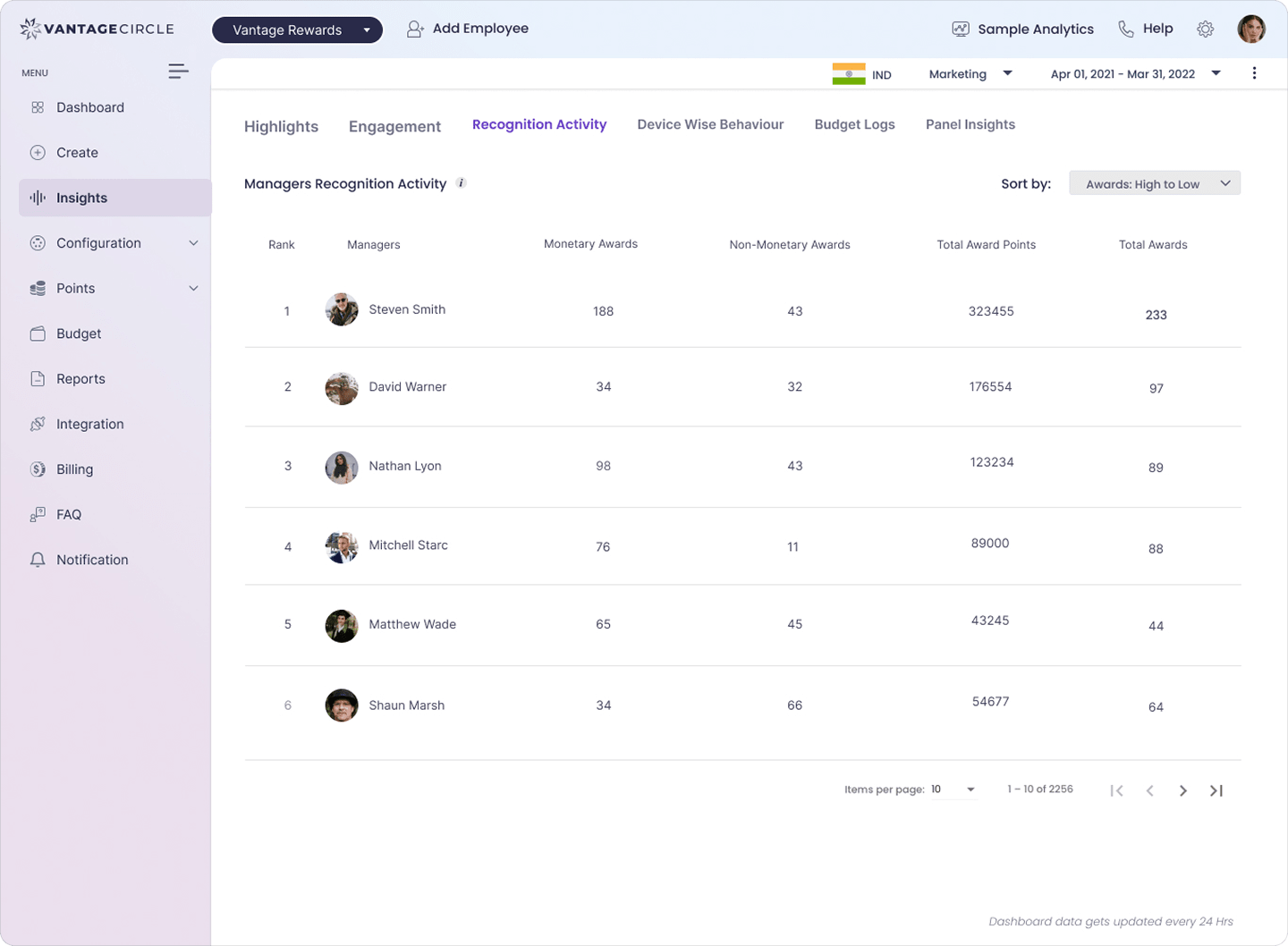
Rather than relying on memory during review season, platforms like Vantage Recognition help managers capture recognition throughout the year, making performance discussions more balanced, credible, and meaningful.
Objective 9: Transparency Behind How Performance Is Evaluated
A performance appraisal is only as credible as the process behind it. When employees don't understand how they're being evaluated, reviews quickly lose trust and open the door to perceptions of bias, inconsistency, and favoritism.
Transparency begins long before the appraisal conversation. Employees should know what success looks like, how performance will be measured, and how ratings influence decisions such as promotions, pay, and development opportunities. Managers, in turn, need consistent training to apply evaluation criteria fairly and communicate feedback with clarity.
A documented performance review framework or handbook helps establish common expectations for both managers and employees. When everyone understands the process from day one, appraisals become more objective, consistent, and trusted across the organization.
From Objective to Practice: How to Actually Achieve Them
The nine objectives of performance appraisal create value only when they're translated into everyday management practices and measured consistently.
Over the years, one lesson has remained constant. Organizations that focus on redesigning appraisal forms rarely improve performance. Those that embed each objective into regular manager habits see far better results.
The difference isn't the appraisal itself. It's what happens before and after it.
The table below maps each objective to the management practice that brings it to life and the metrics that help you measure its success.
| Objective Group | Practice Lever | How to Measure |
|---|---|---|
| Goal-setting & standards (Objectives 1, 4) | Quarterly goal check-ins using a SMART framework, documented in writing | Share of goals reviewed on schedule; goal completion rate at cycle-end |
| Feedback & recognition (Objectives 2, 8) | Weekly manager check-ins paired with recognition logged as it happens | Feedback frequency per employee; recognition participation rate |
| Career decisions & counseling (Objectives 3, 5) | Documented 1:1s and counseling notes maintained ahead of the formal review | Share of promotion or pay decisions traceable to logged conversations |
| Development & transparency (Objectives 6, 7, 9) | Written training plans plus a shared review handbook outlining criteria | Training plan completion rate; employee clarity scores on a pulse survey |
For much of the last century, performance appraisal was treated as an annual event. Managers completed a form, held a review meeting, assigned a rating, and moved on. The process created documentation, but it rarely changed performance.
That shouldn't surprise us. We've been asking one conversation to accomplish what good management should do every week:
- Give feedback
- Recognise progress
- Clarify expectations
- Coach for improvement
- Prepare people for what's next
The most effective organizations don't expect the appraisal to carry that burden. They use it to bring together what has already happened throughout the year. Feedback has been given. Recognition has been earned. Goals have been adjusted. Development has been discussed. The appraisal simply provides a structured opportunity to reflect, document, and plan the next chapter.
In other words, the annual review isn't the performance management system. It's the visible outcome of one.
VANTAGE INFLUENCERS PODCAST
Kavitha breaks down why traditional performance reviews fail to drive growth, and how to build a culture where feedback is continuous rather than saved for review season.
Kavitha Ramaiah, Director of People Development at GlobalLogic
Listen to the EpisodeSumming It Up
Performance appraisal is simply the moment where a year's worth of feedback, coaching, recognition, and development comes together. When organizations treat it as the outcome of continuous conversations, it becomes a powerful tool for growth, fairness, and accountability.
The nine objectives in this blog aren't annual tasks to complete; they're management practices to build into everyday work. Get those right, and better performance, stronger engagement, and greater trust naturally follow.
FAQs
1. What are the 5 Performance Objectives?
Five common performance objectives are improving individual performance, aligning goals with business priorities, supporting employee development, enabling fair rewards, and strengthening accountability.
2. What are Examples of Performance Objectives?
Examples include achieving specific business goals, improving customer satisfaction, developing leadership skills, increasing productivity, reducing errors, or completing professional certifications.
3. What are Good Objectives for a Performance Review?
Good performance review objectives are specific, measurable, achievable, relevant, and time-bound (SMART).
4. What Should I Write in Objectives for Appraisal?
Write objectives that reflect the employee's role, business priorities, and development needs. Focus on measurable outcomes, key responsibilities, behavioral expectations, and growth opportunities rather than broad or vague statements.
5. What are the 5 C's of Performance?
The 5 C's of performance commonly refer to Clarity, Capability, Commitment, Collaboration, and Continuous Improvement.
Written by