
Work etiquette is a standard that controls social behavior expectations in the workplace. It covers a wide range of aspects among employees. Some of these include body language, behavior, technology use, and communication.
Basically, it is about how you conduct yourself around coworkers, potential business partners, and customers. It boils down to treating others with respect, to be aware of everyone present and to be polite overall.
Etiquette makes work easier and more pleasant for you and your colleagues. When someone interrupts you while talking, arrives late for a meeting, or snatches your food from the fridge in the break room, you begin to wonder how an individual could be so disrespectful. These are workplace etiquette violations, and they carry a real cost: 85% of workers say being courteous to coworkers directly affects a person's career prospects.
There is no universal agreement on standard workplace etiquette. It all depends on each workplace's culture. However, specific proper workplace etiquette rules apply to almost every business.
And if you want to promote a professional and civilized environment for yourself and your coworkers, it is essential to adopt the etiquette rules as early as possible. Here are the top 10 workplace etiquette tips that everyone should follow for a better company culture.
Key Takeaways
- 85% of workers say courtesy affects career growth, etiquette is a bigger promotion factor than most people realize
- Workplace incivility quietly drains work hours: one bad meeting or a rude reply-all adds up faster than you'd think
- 71% of meetings are considered unproductive. A clear agenda and a shorter guest list fix more of that than any scheduling tool
- The small stuff, your tone in a group chat, a culturally tone-deaf joke, a messy shared desk, shapes how your team sees you every day
- Companies with inclusive, respectful cultures see 22% lower turnover, real proof that etiquette shows up on the bottom line
Top 10 Workplace Etiquette Rules Everyone Should Follow
1. Be Respectful To Your Coworkers
All of your colleagues deserve respect, even though they are not always respectful toward you. Learn to acknowledge other people's religious views, political opinions, and sexual orientation. You don't have to agree with them all the time, but maintaining respect is proper etiquette.
Sharing a workspace means you'll inevitably overhear or join conversations, especially in open-office layouts. Take turns talking, let people finish a thought, and check that a colleague actually has the time before pulling them into a conversation.
Don't indulge in rumors about coworkers or the business. Keep some distance between your professional and personal life, and when you're socializing with colleagues on personal time, keep things light instead of drifting into office gossip.
This isn't just a nicety. It shows up on the bottom line too. In one Harvard Business Review study, 80% of employees who experienced workplace incivility said they lost work time simply worrying about the incident.
Also read: Master the art of respect in the workplace with these 8 tips
2. Maintain Virtual Office Etiquette
Virtual meetings have become part of our daily work routine, and they come with their own etiquette compared to in-person meetings. Here are six simple things to follow to maintain proper virtual workplace etiquette.
- Take a few minutes to get appropriately dressed and brush your hair before starting your day. That's the first step to be productive while working remotely.
- When you join a virtual team meeting, speak up when you are asked to. Do not keep silent, but make sure not to interrupt when someone else is talking.
- Use attentive body language if you're using your webcam. Sit up straight, don't make weird gestures, and don't let your eyes wander too far.
- Mute your microphone when you are not talking as it will help avoid noises.
- Make sure your work setup is professional. A messy room or background, a screaming child, or a barking dog can be distracting.
- Make proper eye contact in the camera.
Download our Free ebook on Work From Home: A Definitive Guide For Managers
3. Practice Good Email and Chat Etiquette
Most workplace communication now happens over email and chat, not in person. That makes typing etiquette just as important as how you behave in a meeting room.
- Keep subject lines specific so people can prioritize your message at a glance.
- Reply to the sender directly instead of hitting reply all, unless everyone on the thread genuinely needs to see your response. Forbes Coaches Council members call this one of the most common email etiquette mistakes.
- If you're cc'd on a thread, don't jump in unless the sender specifically asks for your input.
- Match your tone to the channel. A quick chat message can be casual, but a client email should stay polished.
- Set expectations around response time so nobody wonders if their message got lost.
4. Run and Attend Meetings Respectfully
Meetings eat up a huge chunk of the workday, and most of that time doesn't feel productive. 71% of meetings are considered unproductive, costing U.S. businesses an estimated $37 billion a year.
Good meeting etiquette can claw some of that time back:
- Send an agenda beforehand so people arrive ready instead of guessing.
- Arrive on time, or a few minutes early. If you're running late, give the host a heads-up instead of walking in unannounced.
- Start and end on time, even if some attendees are late.
- Keep your camera on and your phone away during video calls unless you're handling something urgent.
- If a meeting could be an email or a short async message, say so instead of defaulting to a calendar invite.
- Stick to the topic. Side conversations and tangents are the fastest way to make a 30-minute meeting run an hour.
5. Know What To Wear To Work
What you wear still shapes how coworkers, clients, and leadership size you up before you've said a word. Half of companies now run office etiquette training because employees struggle with appropriate workplace conversation and dress, and dressing the part is one of the simplest ways to look ready for the job you want next.
A clear dress code applies the same standard to everyone, but plenty of companies don't have one. Without a formal policy, use the room you work in as your guide, and dress slightly sharper than the baseline rather than slightly more casual.
If you're unsure what to wear, the safest choice is traditional business colors like black, blue, grey, or white. Keep your clothes clean, ironed, and well-fitted, and avoid too many accessories. If your office has a casual Friday policy, don't take it too far. It's still a workday.
6. Be Accountable and Reliable to Your Team
Personal accountability and reliable teamwork go hand in hand: if you don't own your mistakes, or don't carry your share of the work, the rest of the team ends up compensating for it. Both build or break trust fast.
Accountability means owning your feelings, words, and behavior, especially when you've made a mistake. It's closely tied to honesty and integrity, and it keeps your reputation and your workplace relationships intact.
The same logic applies at the team level. Skipping your part of a project, or taking a personal call during a brainstorming session, shifts the load onto everyone else. That gap creates resentment fast, and it costs the whole team in lost productivity, not just you.
7. Be Culturally Sensitive and Inclusive
Most teams today mix different cultural backgrounds, generations, and working styles. Etiquette that works for one person can land differently for someone else, so a bit of cultural awareness goes a long way.
- Learn how your colleagues prefer to be addressed, and don't assume everyone celebrates the same holidays or observes the same customs.
- Be mindful of humor, slang, and idioms that might not translate across cultures or generations.
- Ask questions instead of guessing when you're unsure about someone's preferences or boundaries.
- Make space for different communication styles. Not everyone is comfortable speaking up in a large meeting, and that doesn't mean they have less to contribute.
The payoff is measurable. Companies with inclusive cultures see 22% lower turnover, 22% greater productivity, and 83% higher engagement among millennial employees.
8. Respect Shared Spaces
Kitchens, breakrooms, and shared desks are where small etiquette lapses turn into real friction between coworkers.
- Label and store your own food, and never take something from the fridge that isn't yours.
- Clean up after yourself in the kitchen or breakroom, even if you didn't make the mess.
- Keep shared desks and equipment the way you found them for the next person.
- Be mindful of strong food smells at your desk if you work in an open office.
- Refill the coffee pot or printer paper if you use the last of it.
9. Make Friendlier Employee Onboarding
A new hire's first few weeks shape how quickly they settle in, and a warm welcome from the team matters more than anything HR puts in an onboarding packet. Introduce yourself, invite them to a team lunch or coffee break, and check in on their progress instead of waiting for them to ask for help.
Answer questions patiently for at least the first few weeks, even ones that feel obvious to you. It helps a new hire adjust faster, and it reflects well on you as someone people want to work with.
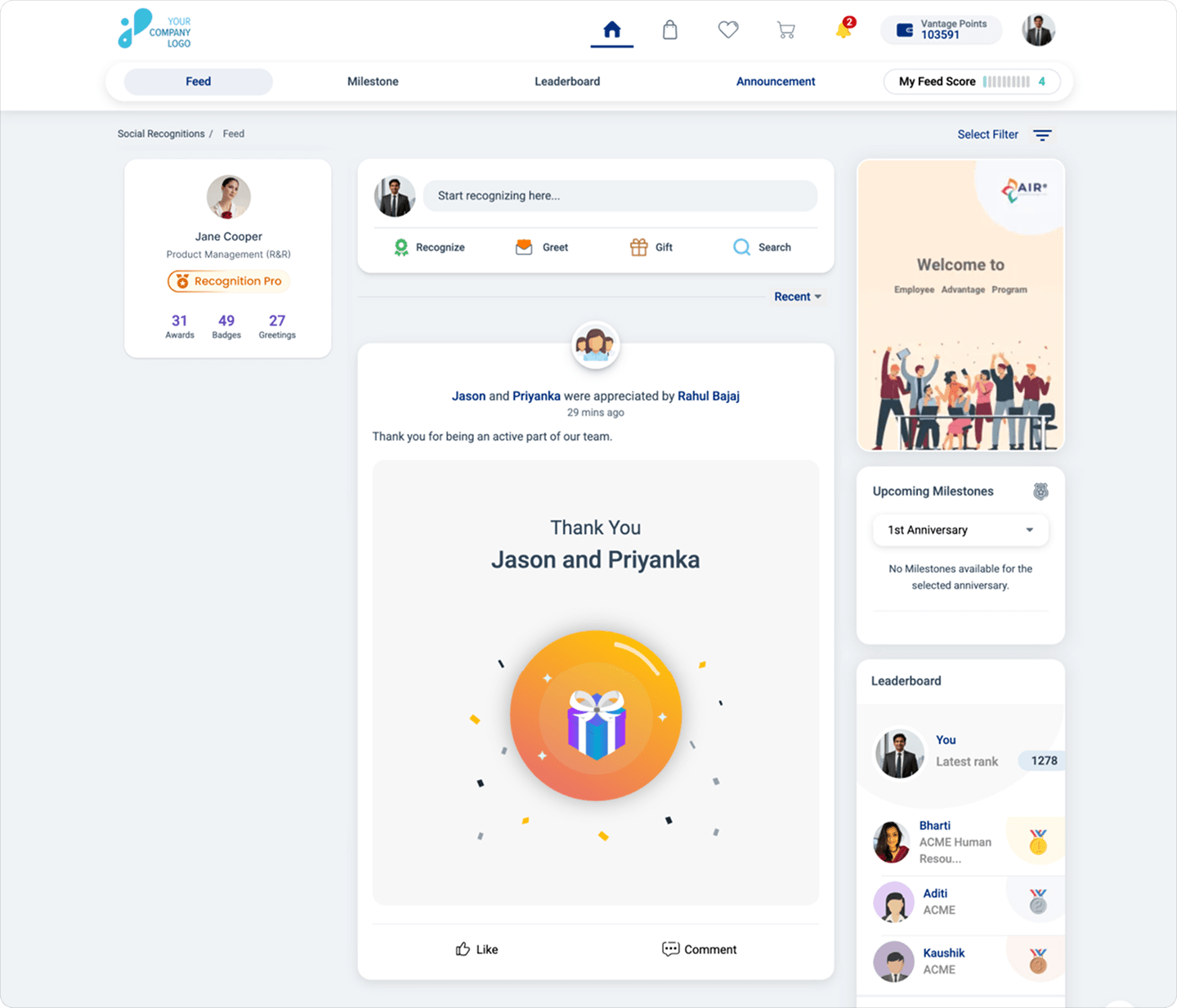
A public shoutout when they hit their first small win, closing their first ticket, running their first meeting, goes a long way too. A recognition platform like Vantage Recognition makes this easy to do consistently instead of leaving it to chance.
10. Filter Your Speech
Every workplace is stressful in its own way, and people bring different personalities, working styles, and pressure points to the table. Clashes are inevitable.
The fix isn't complicated: think before you speak. Respect other people's perspectives, don't fire off a defensive reply, and never make a disagreement personal. If you're wrong, say so and apologize directly instead of letting it linger.
Frequently Asked Questions
1. What are the most common workplace etiquette mistakes?
The most common mistakes are interrupting coworkers, arriving late to meetings, using speakerphone or talking loudly in an open office, and loitering around someone's desk while they're trying to focus. Loud phone conversations and desk loitering consistently top the list of open-office etiquette breaches in workplace surveys.
2. Why does workplace etiquette matter for career growth?
Coworkers and managers use etiquette as a fast, informal signal of reliability and character, well before your actual output speaks for itself. That perception directly shapes who gets tapped for promotions, project leads, and reference calls, which is why the survey cited above found such a strong link between courteous behavior and career prospects.
3. How is virtual meeting etiquette different from in-person etiquette?
The core idea, respecting other people's time and attention, stays the same whether you're in a conference room or on a video call. Virtual meetings add a few extra rules of their own: check your mic and camera before you join instead of fumbling with settings live, ask before you record a call or share a screen with sensitive information visible, and give people in other time zones a realistic meeting window instead of defaulting to your own.
4. How do I introduce workplace etiquette rules to my team without it feeling forced?
Start with a short, informal conversation rather than a formal policy document. Lead by example, especially around meeting punctuality and respectful communication, and revisit the norms occasionally as your team grows or shifts to hybrid work. Framing it around company culture rather than rules tends to land better than a strict code of conduct.
5. What's the etiquette around reply-all and cc'd emails?
Reply-all clutters other people's inboxes with messages that don't need their attention, and it's easy to accidentally send something meant for one person to an entire distribution list. If you were only cc'd, the sender is keeping you informed, not asking for input, so stay quiet unless something changes that affects you directly.
6. How can I make meetings less of a time-waste?
Look at who's actually invited before you look at the agenda. Meetings often run long simply because too many people are in the room; if someone doesn't need to contribute or make a decision, they don't need to attend, they can get a recap afterward instead. Pair a smaller guest list with a hard stop time, and most of the wasted time disappears on its own.

Susmita Sarma is a Digital Marketer at Vantage Circle, making employee recognition less of a checkbox and more meaningful - helping organizations say we value our people and truly mean it.
Connect with Susmita on LinkedIn.