EN
EN  FR
FR  ES
ES  DE
DE 





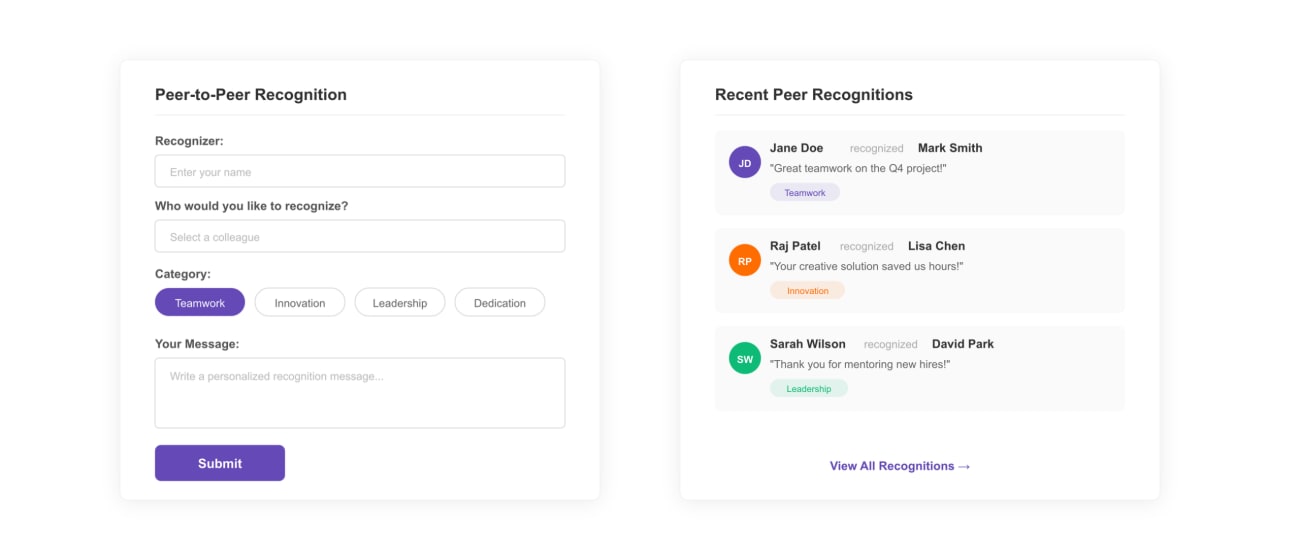
What Is a Peer-to-Peer Recognition Template?
A peer-to-peer recognition template is a pre-written message framework that employees use to thank a colleague for a specific contribution — a project handoff, a deadline rescue, a quiet act of teamwork that a manager rarely sees.
Manager-only recognition misses most of what builds culture. Workhuman / Globoforce research shows peer recognition is 35.7% more likely to improve financial results than manager-only recognition, and Gallup data links regular recognition to a 4x increase in engagement.
This template includes ten copy-paste recognition messages covering the most common peer scenarios: collaboration, milestone wins, mentoring, remote support, project completion, onboarding help, and more. Pair it with structured workflows from the Recognition Templates hub.
How to Use This Peer-to-Peer Recognition Template?
A four-step rollout to make peer recognition consistent, specific, and measurable.
Step 1: Choose the Recognition Channel
Pick where peer recognition will live: a dedicated Slack or Microsoft Teams channel (best for distributed teams), a recognition platform feed, an internal newsletter, or a physical recognition board.
Most modern organizations run a Slack or Teams channel as primary because it removes friction — sending recognition takes seconds instead of minutes.
Step 2: Define Recognition Criteria
Write a one-page guideline employees can read in 60 seconds: tag every recognition with one named company value, name a specific behavior (not "great work"), and keep messages under 80 words.
Clear criteria spread recognition across the workforce. Vague criteria let it gravitate to the loudest voices.
Step 3: Drive Adoption Across Teams
Seed the channel with the first 5–10 recognitions from leadership before opening it to everyone. Pin the recognition guide. Run a Friday digest summary so people see what good recognition looks like.
Set a participation target — 50% of the workforce giving at least one recognition per month is a healthy baseline.
Step 4: Track Participation and Coverage
Measure four numbers monthly: monthly participation rate, average recognitions per employee, cross-team recognition ratio, and value-tag distribution. The template includes a tracking dashboard layout.
Declining participation is a leading indicator of broader engagement issues. Address it the same month you spot it, not the next quarter.
What Makes an Effective Peer-to-Peer Recognition Program?
Six characteristics separate peer recognition that builds culture from peer recognition that fades within three months.
- Frictionless to give: A recognition takes under 60 seconds — Slack/Teams emoji workflow, dedicated channel, or a recognition platform with a saved message template.
- Frequent and timely: Sent within 24–48 hours of the triggering behavior. Recognition delayed by weeks reads as an afterthought.
- Specific: Names the exact behavior and the impact in numbers when possible. "Reviewed my deck the night before client review" beats "great team player."
- Inclusive: Open to everyone. Programs that route through manager approval shrink to manager-curated programs.
- Visible: Shared in a public channel by default. Private peer recognition has its place, but visibility is what spreads the behavior.
- Value-aligned: Each recognition tagged to one named company value. Tagging surfaces the values employees actually live versus the ones on the wall.
10 Sample Peer-to-Peer Recognition Messages
Ten ready-to-use messages covering the most common peer recognition scenarios. Replace the bracketed placeholders with specifics — names, projects, values — and send.
1. Value-Based Recognition
Use for: behavior that demonstrates a named company value.
2. Cross-Team Collaboration
Use for: helping a team outside your own.
3. Deadline Rescue
Use for: a colleague who absorbed scope or stayed late so the team hit a date.
4. Mentoring or Coaching
Use for: a colleague who helped you or someone else grow.
5. Onboarding Support
Use for: a colleague who helped a new hire ramp.
6. Remote / Async Support
Use for: distributed colleagues whose contributions are easy to overlook.
7. Project Completion
Use for: shipping a meaningful project alongside a colleague.
8. Customer Impact
Use for: a colleague whose work directly improved a customer outcome.
9. Innovation or Idea
Use for: a colleague who proposed or built something new.
10. Quick Thank-You
Use for: any moment that deserves a 30-second acknowledgment.
Generic vs. Specific Peer Recognition: A Side-by-Side Example
The single biggest determinant of whether peer recognition lands is specificity.
✗ Generic (low impact)
"Shout-out to David for being a great team player! Thanks for everything you do."
No behavior named. No impact stated. Could have been written about anyone on the team.
✓ Specific (high impact)
"Shout-out to David for staying online late on Thursday to walk the EU team through the new deploy pipeline. Three engineers got unblocked the same evening. That is exactly what 'Team Collaboration' looks like in practice."
Names the behavior, identifies the impact, names the value, ties it to a specific moment.
Explore Employee Recognition & Engagement Templates
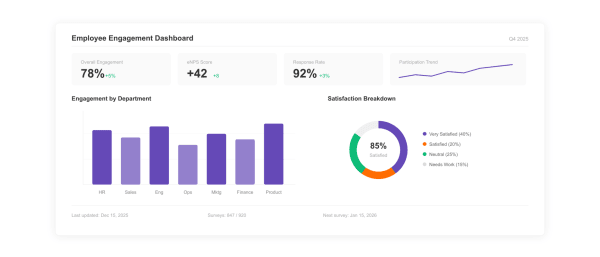
Employee Engagement Dashboard Template
Track and visualize key employee engagement metrics in one place.
View Template ›
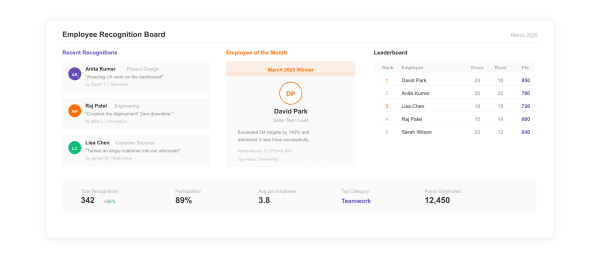
Employee Recognition Board Template
Display peer recognitions on a physical or digital recognition board.
View Template ›
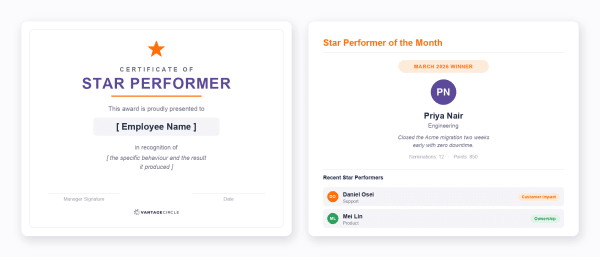
Star Performer Template
Free certificate, of-the-month, and town-hall slide to name your standout performers.
View Template ›